UK Eurovision Choices Face MP Review as Ireland Confirms 2027 Boycott


 See more Architeg Prints stories on Google.
UK Eurovision Choices Face MP Review as Ireland Confirms 2027 Boycott
UK Eurovision choices face scrutiny from MPs after another last-place finish, while Ireland confirms it will boycott the 2027 contest.
A Eurovision Reckoning Is Coming
Eurovision is supposed to be glitter, big choruses, improbable costumes, and the kind of voting suspense that keeps millions of viewers awake far too late. But for the UK, the recent story has been less “douze points” and more “how did we end up here again?”
The country’s Eurovision song and artist selection process is now set to face review by MPs, while Ireland has confirmed that it will boycott the 2027 competition for a second consecutive year.
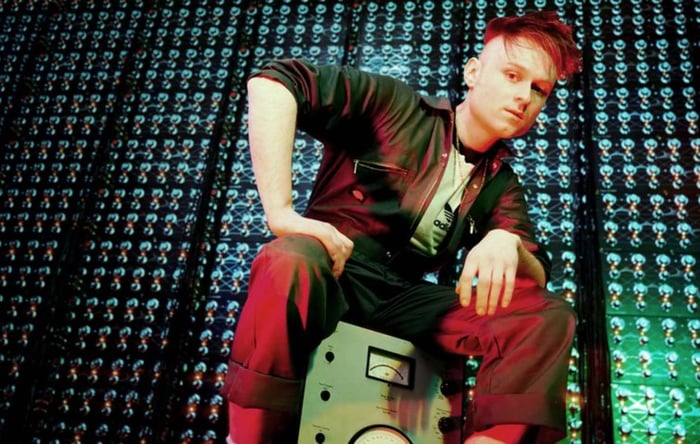
The political scrutiny follows another painful result for the UK. This year, Look Mum No Computer—whose real name is Sam Battle—finished at the very bottom of the table in 25th place. The artist received just one point from the jury vote and, perhaps even more brutally, no points at all from the public.
That result made Battle the third UK act in a row to receive zero points from the public vote. Remember Monday suffered the same fate in 2025, while Olly Alexander received no public points in 2024.
The difficult run stretches back further. Mae Muller finished second from last in 2023, and James Newman came last two years earlier. For a country with a celebrated pop tradition, the scoreboard has begun to look less like a competition and more like a recurring punchline.
MPs Want Answers About the Selection Process
That awkward question—who chooses the UK entry, and how?—is now at the center of a planned parliamentary hearing.
The BBC selects the artist who represents the UK, sometimes working alongside a record label or music management company. Dame Caroline Dinenage, chair of the Digital, Culture, Media and Sport committee, said MPs want to examine the process in detail rather than simply shrugging at another disappointing score.
The committee wants to understand “who chooses our entrant, on what basis and whether our dismal record of achievement in recent years is the result of bad song choice, weak performance… or something else.”
That “something else” is doing a lot of work in the sentence. Eurovision results can depend on staging, songwriting, performance, public voting patterns, jury preferences, and the strange alchemy that turns one song into a continental singalong while another disappears before the confetti has settled.
A committee hearing is expected to take place over the coming months. Figures from the BBC and music-industry experts may be called to give evidence before the cross-party group of MPs. Written submissions are also likely to be accepted.
The hearing will form part of the committee’s wider State of Play inquiry. Under that process, members of the public and other interested parties can request an evidence session focused on a specific issue that has attracted concern or public interest.
Dinenage explained that the application caught the committee’s attention because the UK has developed a reputation for scoring “nul points,” finishing last, or hovering dangerously close to last place in recent Eurovision contests—even though the country has world-class songwriters and musicians.
That contrast is hard to ignore. The UK has no shortage of pop expertise, studio talent, performers, or experienced music professionals. So why has the Eurovision formula proved so difficult to crack?
The UK’s Recent Eurovision Record
The uncomfortable numbers make the need for a review feel fairly obvious.
The UK has finished higher than 15th place only once in recent years. That exception came in 2022, when Sam Ryder finished as runner-up with “Space Man.” It was the nation’s best Eurovision result since 1998 and briefly felt like a glorious reset button.
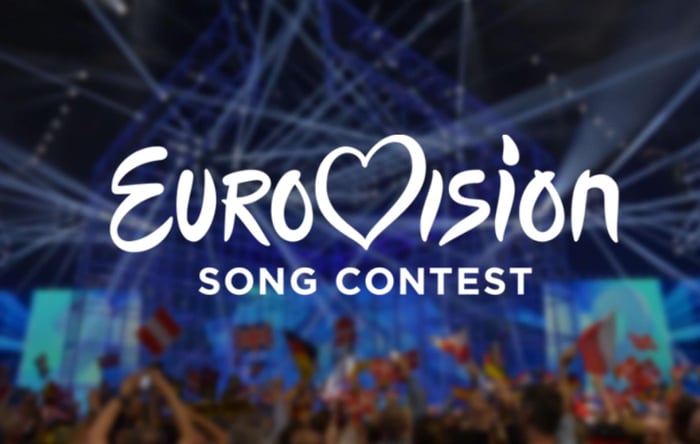
Ryder’s performance had the ingredients Eurovision audiences tend to reward: a memorable song, a charismatic performer, a vocal moment built for television, and an atmosphere that felt genuinely celebratory. For many fans, “Space Man” was the rare recent UK entry that made the country seem fully invested in the contest rather than politely stopping by.
The next competition will take place in Burgas, Bulgaria. It will also mark 30 years since the UK’s last Eurovision victory, when Katrina And The Waves won with “Love Shine A Light.”
That anniversary adds a little extra sting to the present situation. Three decades after the UK’s last win, the contest remains one of the country’s most popular music television events, with millions of viewers watching the final and staying up for the famously dramatic voting sequence.
The audience is still there. The appetite is still there. The question is whether the selection process is giving that audience an entry capable of meeting the moment.
Could a Public Selection Return?
The UK is not the only country that has wrestled with how best to choose a Eurovision representative. Numerous nations use a publicly televised selection process, allowing viewers to participate before the main contest begins.
The last time the UK used that approach was in 2019, through a show called Eurovision: You Decide. Michael Rice was selected to represent the country, but he ultimately finished last at the contest in Tel Aviv that year.
That result may explain why the public-selection model has not returned, at least so far. Still, one unsuccessful attempt does not necessarily settle the broader argument. A national final can create excitement, build an audience around the artist, and make viewers feel connected to the choice. On the other hand, it can also produce a winner who is not ready for the pressure or the unusual demands of Eurovision.
No timetable has been set for the committee hearing. Once MPs have reviewed the evidence, the committee may produce a short report containing recommendations for the BBC.
Whether those recommendations lead to a new selection system, a change in creative strategy, or simply a clearer explanation of how decisions are made remains to be seen. For fans, even transparency would be a welcome start. Eurovision followers can forgive a risky choice; they are less forgiving when the choice feels mysterious.
What Sam Ryder’s Success Revealed
The UK’s strongest recent result may offer clues about what worked.
Sam Ryder’s “Space Man” was selected by TaP Music, the music publishing and management company associated with artists including Dua Lipa, Lana Del Rey, and Ellie Goulding. The company’s Ben Mawson had previously managed Lipa and discussed the UK’s Eurovision problem while reflecting on Ryder’s entry.
“Why do we do so badly every year? We’re one of the homes of some of the best pop music of all time. Is it political, or is there more to it than that?” — Ben Mawson
Mawson said the team questioned whether politics alone could explain the UK’s poor results. Instead, they believed more attention needed to be paid to the song itself and to the contest’s highly specific formula.
“We weren’t convinced that you could blame it on politics. We thought that more effort should go into thinking about the song. It’s a particularly unique formula. We got to thinking about what that was.” — Ben Mawson
That idea may be central to the coming review. Eurovision is not simply a standard pop showcase. A song needs to work on a huge live stage, communicate quickly across language barriers, create a visual identity, and leave an impression during a packed broadcast featuring dozens of competing performances.
Sometimes the cleverest studio track is not the best Eurovision track. Sometimes the oddball song wins the room. Sometimes the big vocal lands like fireworks. And sometimes, despite everyone’s best intentions, the whole thing feels like a rehearsal that accidentally went live.

Ireland Steps Away From Eurovision Again
While the UK’s debate is focused on song selection, Ireland’s decision is tied to the wider controversy surrounding the competition.
Irish broadcaster RTÉ has confirmed that Ireland will not broadcast or participate in next year’s Eurovision Song Contest. The country also boycotted the 2026 edition, alongside Iceland, the Netherlands, Slovenia, and Spain, because of Israel’s inclusion in the event.
In a statement, an RTÉ spokesperson said Ireland’s participation could not be justified because of the continuing loss of life in Gaza and the humanitarian crisis affecting civilians there. The broadcaster also said it remained deeply concerned about the continued denial of independent access to international journalists seeking access to the territory.
Ireland has won Eurovision seven times between 1970 and 1996, making it one of the contest’s historically dominant countries. Its relationship with the event is therefore not casual or distant; Eurovision has been part of the country’s television and musical culture for generations.
During the latest boycott, RTÉ replaced the Eurovision final with an episode of Father Ted—a very Irish bit of scheduling, and one that gave viewers a familiar comedy comfort blanket on a night normally reserved for sequins and voting drama.
More Countries Reconsider Their Participation
Ireland’s decision is part of a growing dispute around the 2027 contest.
The Dutch public broadcaster Avrotros recently announced that it would also withdraw from Eurovision 2027. Its statement pointed to the severe humanitarian suffering in Gaza, continuing restrictions on press freedom, and the increasing divisions surrounding the contest.
The host city announcement came after Eurovision introduced rule changes concerning countries at war during the competition. Despite the backlash surrounding the 2026 event, Israel finished second behind Bulgaria. The country had also been runner-up in the 2025 competition.
At the same time, the 2027 contest will welcome a new participant: Canada is confirmed to be entering Eurovision for the first time.
That combination—withdrawals, controversy, new rules, and a debuting country—means the next competition is already shaping up to be unusually complicated before the first note is sung.
A Contest at a Crossroads
For the UK, the parliamentary review could become an opportunity rather than merely another post-result autopsy. The country still has the audience, the musical talent, and the cultural reach to produce a memorable Eurovision entry. What it needs is a process that turns those ingredients into a performance built for this particular stage.
Ireland’s boycott, meanwhile, underlines how Eurovision has become entangled with larger political and humanitarian questions. The contest may be designed as a celebration of music, but its participants and broadcasters do not exist in a bubble.
The next few months could reveal whether the UK changes how it chooses its representative—and whether the wider Eurovision family can find a way through its current divisions.
FAQ
- Why are UK Eurovision choices being reviewed by MPs?
MPs want to examine who selects the UK’s Eurovision entry, the criteria used, and whether repeated poor results are caused by song choice, performance, or another factor. - Who represented the UK in the latest Eurovision contest?
Look Mum No Computer, whose real name is Sam Battle, represented the UK and finished 25th, receiving one jury point and no public votes. - When did the UK last achieve a major Eurovision result?
Sam Ryder finished as runner-up with “Space Man” in 2022, giving the UK its best result since 1998. - Why is Ireland boycotting Eurovision 2027?
RTÉ said Ireland’s participation could not be justified because of the ongoing humanitarian crisis in Gaza and concerns about restrictions on independent press access. - Which country will make its Eurovision debut in 2027?
Canada is confirmed to be entering the Eurovision Song Contest for the first time in 2027.
If Eurovision’s mix of unforgettable songs, dramatic stages, and cultural history speaks to you, browse our favorite album cover posters. They’re a warm, stylish way to keep that music-loving feeling on your wall long after the final votes are counted.
 | DISCOUNTGET 30% OFF*Use code on your next order:
|
* This post may contain affiliate links, meaning we earn a commission if you make a purchase through these links, at no additional cost to you.