Rotel DX-5 Review: Compact Amplifier Between a Rock and a Hard Place


 See more Architeg Prints stories on Google.
Rotel DX-5 Review: Compact Amplifier Between a Rock and a Hard Place
Explore the Rotel DX-5, a compact integrated amplifier designed for personal audio setups, balancing size and sound in a competitive market.
A Small Package with Big Ambitions
Have you ever wished for a high-quality audio amplifier that won't hog your desk space? Enter the Rotel DX-5 — what the brand calls a “personal integrated amplifier,” or simply put, a sleek desktop amp. Its modest footprint fits comfortably where full-sized gear would never dare, making it a dream come true for anyone craving top-tier sound without the bulk.
But let's be honest: the DX-5 finds itself stuck between a rock and a hard place. On one side, the market is flooded with tiny amps that punch above their weight and cost a fraction of the price. On the other, the DX-5 carries a steep price tag that sets it up to compete with full-sized heavy hitters.
In short, it’s not enough for this little powerhouse to just look good and be compact—every dollar must be earned with flawless sound performance.
Size Does Matter: How Compact Is the DX-5?
Judging by the numbers, the DX-5 is impressively tiny — it occupies less desk space than a standard A4 sheet of paper. Whether you slot it on your work desk, a bookshelf, or an audio rack, there’s still plenty of breathing room around it. Despite running on an A/B class amplifier design, it stays surprisingly cool, though I’d still recommend giving it a bit of space for proper ventilation.
Power-wise? The DX-5 offers a modest 25 watts per channel at 8 ohms, inching up slightly to 33 watts at 4 ohms. Not exactly earth-shattering figures, especially for the price point. It’s a modest powerhouse for sure, but don’t expect to fill cavernous rooms with thunderous sound.
Connectivity: Plenty of Digital Options, Sparse Analog
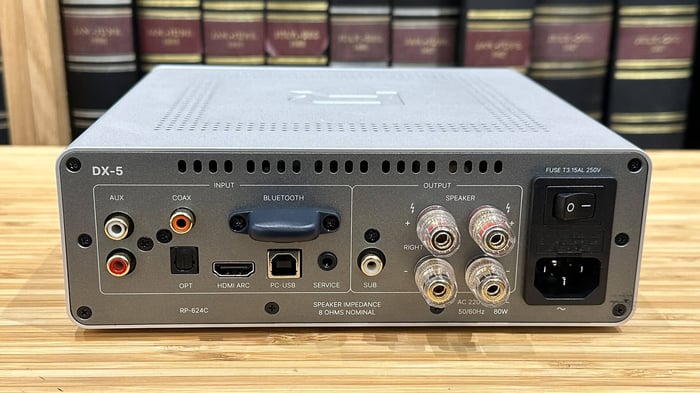
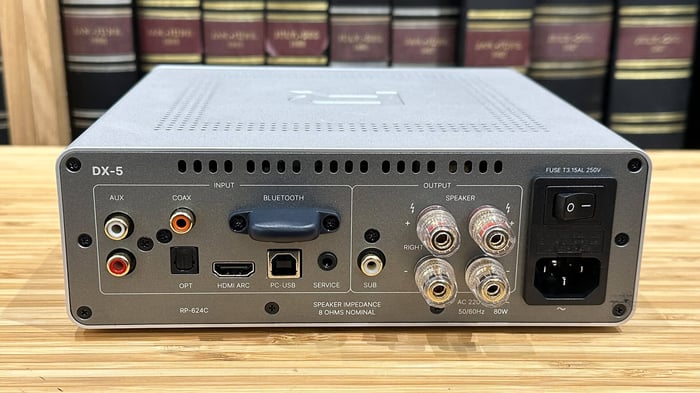
Peeking behind the DX-5, you’ll find a respectable array of inputs. Digital ports include USB Type-B, optical, coaxial, and the ever-useful HDMI ARC — a fantastic feature for seamlessly hooking up your TV and sending its audio straight to your speakers. Trust me, having this simple connection option is a game changer for anyone integrating audio with home entertainment.
For wireless streaming, the DX-5 supports Bluetooth with aptX HD codec. I tested it with iPhone 14 Pro Max smartphone (iOS 26.3.1), and pairing was instant and rock-solid. While I wouldn’t rely on Bluetooth for critical listening sessions, it’s undeniably convenient for those times when you just want to blast a track from your phone.
On the flip side, the analog inputs left me wanting more. There’s only a single stereo RCA line input — which feels a bit stingy. Adding a couple more inputs would make hooking up various analog sources much easier. Oddly enough, Rotel skipped including a phono stage, which seems like a missed opportunity in this vinyl revival era. Vinyl lovers might feel a bit left out here.
The speaker terminals on the rear are quality but sit quite close together, so thicker speaker cables need careful handling. Up front, there’s a full-sized 6.3mm headphone jack, crucial for a personal amplifier like this, giving you headphone lovers a dedicated and robust connection.
Audiophile-Grade Digital Core
Inside, the DX-5 packs the ESS ES9039Q2M Sabre DAC chip, a real powerhouse. It handles high-res audio with ease—PCM up to 32-bit/384kHz and DSD256 (quad DSD) are no problem. That means this little amp can play back nearly any audio file you throw at it, save for the most obscure formats.
| Feature | Specification |
|---|---|
| Type | Integrated amplifier |
| Power Output | 25 W per channel |
| Phono Preamp | None |
| Inputs | 1 x RCA line, Optical, Coaxial, USB Type-B, HDMI ARC |
| Outputs | Subwoofer |
| Bluetooth | aptX HD |
| Headphone Output | 6.3 mm |
| Dimensions (HxWxD) | 7.6 x 21.5 x 25.1 cm |
| Weight | 4.1 kg |
Availability and Pricing
Currently, the Rotel DX-5 isn't officially available in some markets. You can purchase it via international shipping services from the US and Europe or from unofficial sellers on major marketplaces that import audio gear. Given its premium nature, the estimated cost including shipping and taxes hovers around $2300-$2800. Keep in mind, without official local support, warranty service depends solely on the seller.
As the DX-5 doesn’t tie into any region-specific cloud services or subscriptions, you won’t face any usability issues. Wired connections like optical, HDMI ARC, and USB work plug-and-play with your TV or computer. Bluetooth aptX HD streaming is also universally compatible. A word of caution: if buying from the US, ensure you get the right power supply version (110V vs. 220V), or you’ll need a quality step-down transformer.
Design and Build Quality: Elegance Meets Precision
Peek inside this compact powerhouse, and you’ll find a meticulously designed circuit board loaded with high-quality components, including a shielded toroidal transformer. Space is tight, but generous ventilation keeps things cool during long sessions.
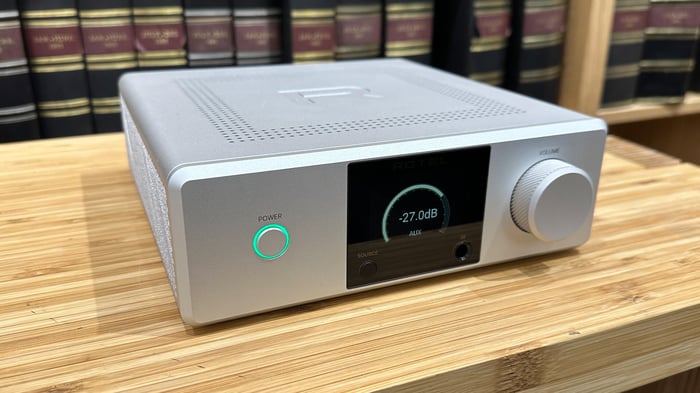
The aluminum chassis is nothing short of luxurious, offered in two timeless colors: silver and black. This refined aesthetic is a refreshing shift for Rotel, a brand usually known for utilitarian and pragmatic designs. Here, the DX-5 sports a new, elegant style that really suits it.
The large, clear display is a joy, though the menu font might be a tad small for some. The volume knob turns with just the right amount of resistance — it feels solid and gives you a real sense of control. The included metal remote control is equally impressive — well-built, weighty in hand, and intuitively simple to operate. Overall, the DX-5 feels like an uncompromising premium device.
For testing, I paired the DX-5 with top sources like the Naim ND555 streamer, MacBook Pro laptop running Audirvana, and a solid Cyrus CD player. I also auditioned a wide range of speakers, from bookshelf models like KEF LS50 Meta speakers and Acoustic Energy AE1 40th Anniversary speakers to floorstanders PMC Prodigy 5 floorstanding speakers — and even threw in big studio monitors ATC SCM50 studio monitors for fun.
How Does It Sound?
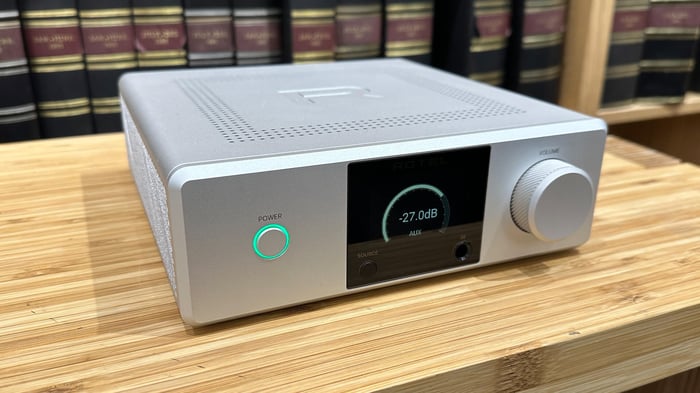
If your plan is to use the DX-5 on a desk, those modest watts won’t hold you back at all. In nearfield setups with KEF LS50 Meta speakers and Acoustic Energy AE1 40th Anniversary speakers, there was more than enough volume to fill the space comfortably. The sound comes through powerful, confident, and spot-on for what you expect from a personal amp.
Feed it a digital signal, and the DX-5 reveals a stunning clarity and transparency. It teases out tiny details and weaves them seamlessly into the musical tapestry. I ran the gamut—from Rachmaninoff’s Piano Concerto No. 2 to Kendrick Lamar’s iconic To Pimp a Butterfly album, and the electronic frenzy of 65daysofstatic’s Wild Light album. The DX-5 handled all genres with ease and finesse.
Tonally, the amp is astonishingly balanced and neutral. No frequency range steals the spotlight, maintaining a cohesive sound from deep lows to sparkling highs. The bass is tight and punchy — never bloated, yet delivering complex bass lines with authority and energy.
Mids shine with remarkable responsiveness; vocals are crystal clear. Lamar’s intense, fiery delivery on The Blacker The Berry cuts through thick instrumentation with an unyielding presence.
High frequencies are crisp but gentle, sparing your ears from harsh sibilance even on average recordings. The amp is transparent enough to reveal mixing flaws but never ruins your listening pleasure by highlighting them aggressively.
Rhythmically, the DX-5 is locked in. It nails groove and momentum, handling microdynamics with exquisite precision. Sudden volume shifts hit hard and full-scale. Play a top-notch recording, and you’ll find it hard to stop listening.
A pleasant surprise: the sound character stays consistent when switching to analog input — clean and balanced, which is a rarity among digital-centric amps like this.
The headphone output also impressed. Tested with Grado RS1x headphones, Austrian Audio The Composer headphones, and Yamaha YH-5000SE headphones, the DX-5 paired effortlessly with all, maintaining the same sonic signature as through speakers.
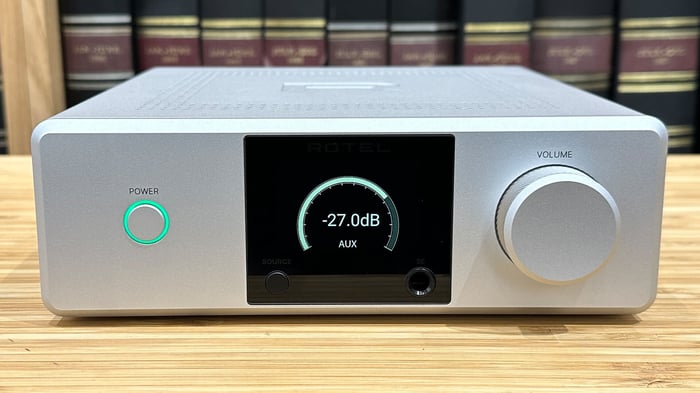
No issues with driving power, background noise, or volume headroom cropped up during headphone listening. The tonal fingerprint remains intact, delivering pure sonic bliss whether through cans or speakers.
However, when pushed as a traditional stereo amp with speakers spaced apart, the DX-5’s limited power shows its hand. The soundstage lacks the breadth and scale of competitors like the acclaimed Arcam, and it misses the grandeur and muscle of Rotel's own A15+ model. Epic orchestral climaxes, for instance, don’t quite send chills down your spine.
If you prefer cranking up music to full tilt or gravitate toward bass-heavy, dynamic genres, this little Rotel might not be your best bet. You can soften the power constraint by pairing it with highly sensitive speakers, but even then, amps like the Arcam remain more flexible with speaker choices.
Still, on other fronts, the DX-5 bests competitors easily. It sounds more neutral and delivers a tighter, more coherent sonic picture. The difference in detail and smooth transitions isn’t massive — both units nail these aspects with flying colors.
Final Verdict
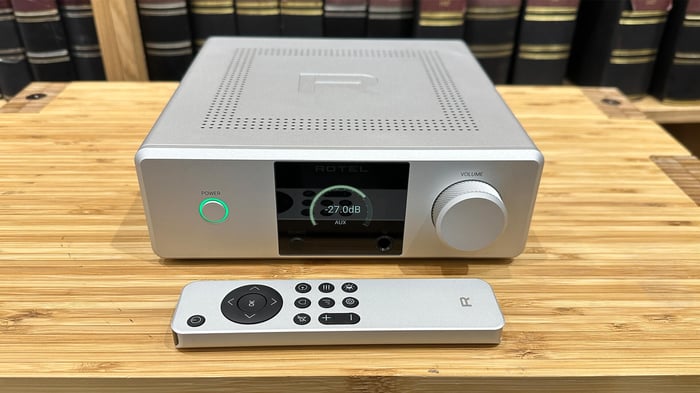
As I mentioned earlier, the Rotel DX-5 is a truly unconventional piece of gear. If a compact form factor is your priority, this is simply the best option on the market. It excels as a desktop amplifier and slips effortlessly into a home theater setup as a TV companion.
Yes, its modest power means you’ll need to invest some thought into speaker selection for large rooms. But put in that effort, and you’ll be rewarded with sound on par with the best full-size amps in this price range.
"Rotel DX-5 sounds powerful, confident, and balanced — a perfect fit for a high-end desktop setup."
FAQ
- What is the power output of the Rotel DX-5?
It delivers 25 watts per channel at 8 ohms and about 33 watts at 4 ohms, suitable for small to medium rooms and nearfield listening. - Does the DX-5 include a phono stage for turntables?
No, it lacks a built-in phono preamp, so vinyl enthusiasts will need an external phono stage. - What digital inputs does the DX-5 have?
It offers USB Type-B, optical, coaxial, and HDMI ARC inputs, covering most modern digital sources. - Can I use the DX-5 with headphones?
Absolutely, it features a 6.3mm headphone jack that performed excellently with high-end headphones. - Is Bluetooth streaming supported?
Yes, it supports Bluetooth with aptX HD for high-quality wireless audio streaming.
Enhance your audio sanctuary with a stunning album cover poster from our store — the perfect complement to your listening experience. Browse the collection today at Architeg Prints.
 | DISCOUNTGET 30% OFF*Use code on your next order:
|
* This post may contain affiliate links, meaning we earn a commission if you make a purchase through these links, at no additional cost to you.