The UK Indie Scene Revisited: Chaos, Clubs, and Creative Freedom



The UK Indie Scene Revisited: Chaos, Clubs, and Creative Freedom
A new book explores the wild nights, rising bands, early internet culture, and unforgettable creative energy of the UK indie scene in the 2000s.
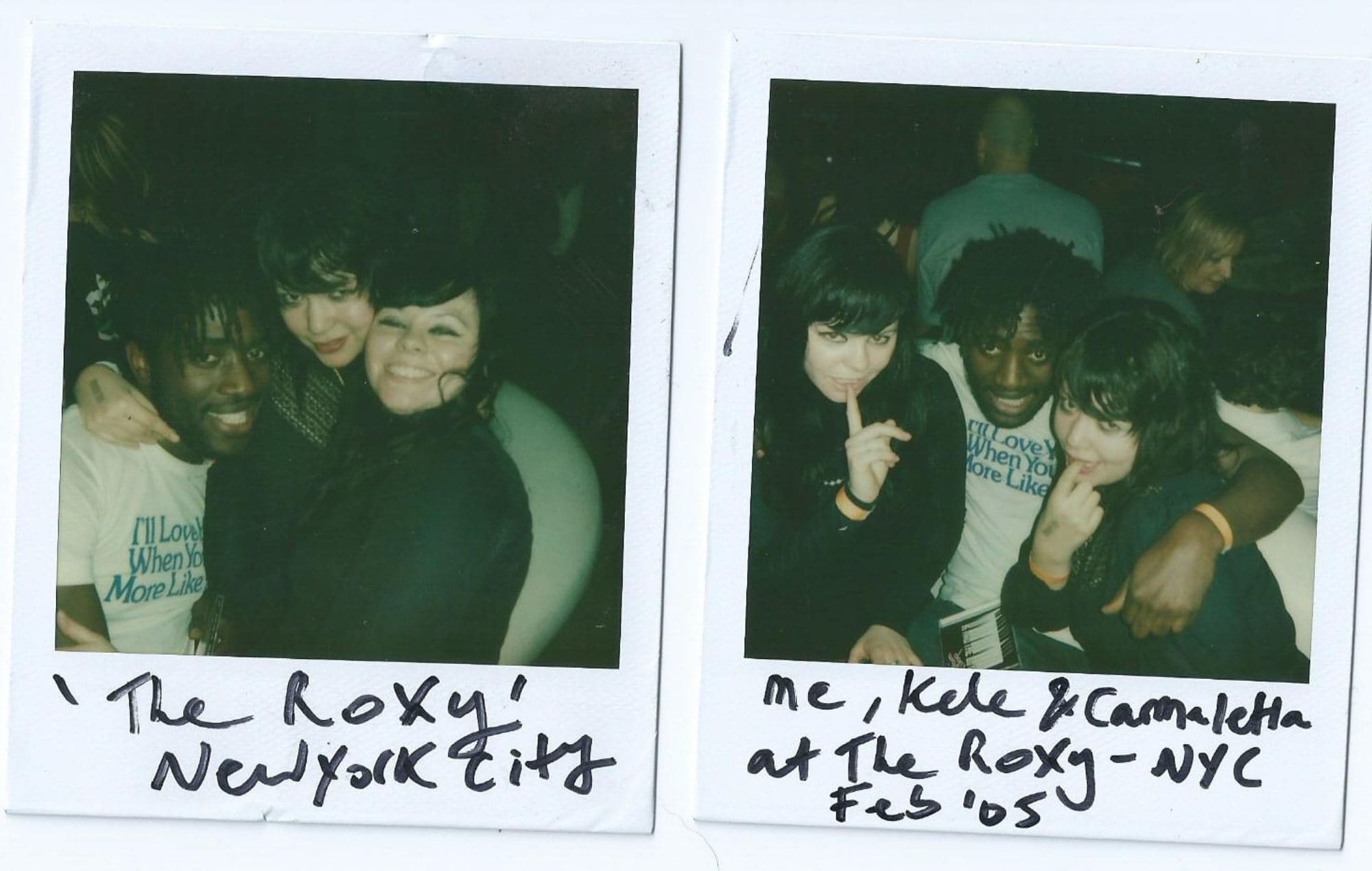
A Decade That Still Feels Loud
Some music eras fade into the background. Others cling to your jacket like smoke from a packed club. The UK indie scene of the 2000s belongs firmly in the second category: messy, stylish, ambitious, and impossible to experience from the sofa.
Janine Warren’s new book, The World Was a Mess But His Hair Was Perfect: The Last Indie Music Scene 2000–2010, revisits that chaotic decade through interviews with artists, friends, industry figures, and familiar faces from the time. The book explores a “chaotic, creative, and utterly unrepeatable moment” when British guitar music collided with club culture, cheap nights out, early social media, and an almost reckless sense of possibility.
Warren’s background gives the story plenty of first-hand texture. She worked as a publicist for artists including Johnny Marr, Bloc Party, Franz Ferdinand, The Libertines, Marianne Faithfull, and Mick Jones of The Clash. For her, the book is not simply a playlist with captions. It is an attempt to capture how the period actually felt before every night, outfit, backstage pass, and questionable haircut could be documented on a phone.
“If you were there, then it will bring back some memories. If you weren’t, I hope it gives you an insight into what it was like in this pre-digital space and how it felt before you could record everything on your phone.”
The book also includes a foreword from Franz Ferdinand frontman Alex Kapranos and previously unseen photography by Andy Willsher, whose images documented the era from the pit, the wings, and the blurry backstage corners where much of the magic happened.
From a Quiet Label Office to a Life-Changing Gig
The story began for Warren when she moved to London at the turn of the century to work at Beggars Banquet. She arrived with the understandable excitement of someone who had landed a dream job at a respected independent label connected with 4AD and XL.
Then came the silence.
She remembered expecting a whirlwind of signings and new music, only to find that very little seemed to be happening. Her conversations with 4AD’s head of A&R, Ed Horrox, often ended with the same answer: nothing much was moving.
That changed when Warren took a role as a press officer at Coalition. Her interview for the job involved seeing The Strokes at their first gig at The Barfly, then known as The Monarch, in February 2001.
“It was like, ‘Yes, this is exactly what I’ve been looking for: noisy, sexy, rock’n’roll’. That’s what I signed up for.”
The show hit her like a flashbulb. The room was packed with music-industry figures, many of whom seemed to understand immediately that something important was taking shape. At the time, the British scene was still full of softer, acoustic-leaning acts. Warren recalled wanting something more thrilling — music with sharper edges, bigger attitude, and enough electricity to make a room sweat.
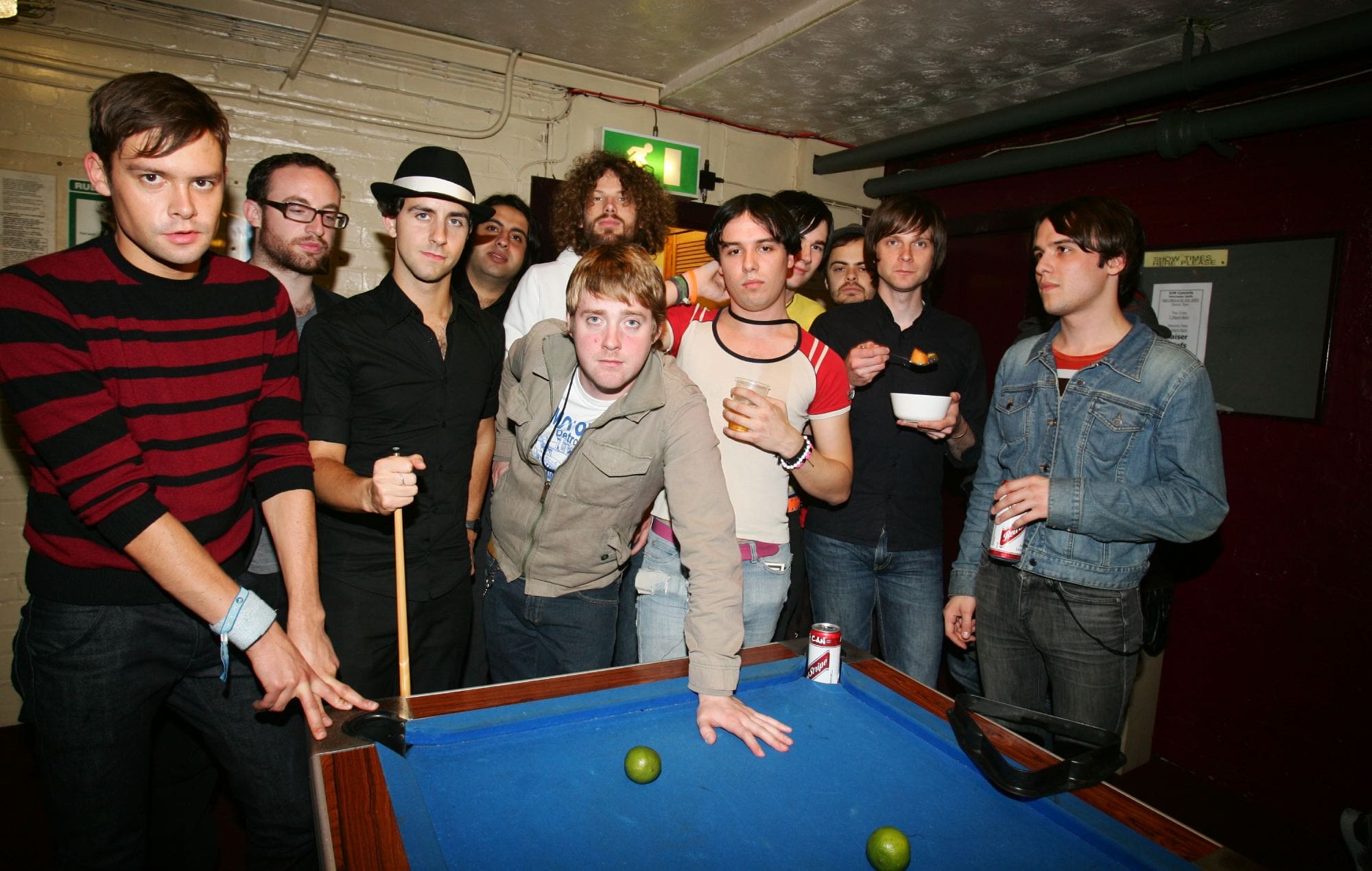
Kaiser Chiefs, The Cribs, and Maximo Park backstage in Manchester, 2005. Credit: Andy Willsher/Redferns/Getty Images
The Strokes Opened the Door, but Britain Had Its Own Story
The first wave after The Strokes was largely international. American acts such as The White Stripes, The Von Bondies, and Yeah Yeah Yeahs arrived alongside The Hives, The Vines, and The Datsuns. Detroit and New York became especially important reference points.
British labels, however, were still trying to work out where to place their money. The UK had the audience, the clubs, and the appetite, but the local movement had yet to fully reveal itself.
Warren saw that change beginning with The Libertines. She remembered visiting a rehearsal space near Old Street with James Endeacott and Tony Linkin. The band’s relationship was immediately magnetic: Pete Doherty and Carl Barât were funny, fast-talking, and seemingly capable of finishing each other’s sentences. They were less like a conventional frontman-and-guitarist pairing and more like a chaotic double act who happened to write songs.
The band’s orbit mattered, too. They brought people to the pub, introduced them to one another, and created a social world around the music. Before the wider public knew what was happening, a small network of artists, fans, journalists, and industry hopefuls was already forming.
The Libertines did not become an overnight sensation everywhere. Their first major cover appeared before they had released music, which meant the attention was initially concentrated in London and within the music business. Outside the capital, many listeners still had no clear reason to know who they were.
That shifted when the band began releasing singles and playing alongside acts such as The Vines and The Strokes. Franz Ferdinand soon followed, and suddenly the UK had its own answer to the international guitar explosion.
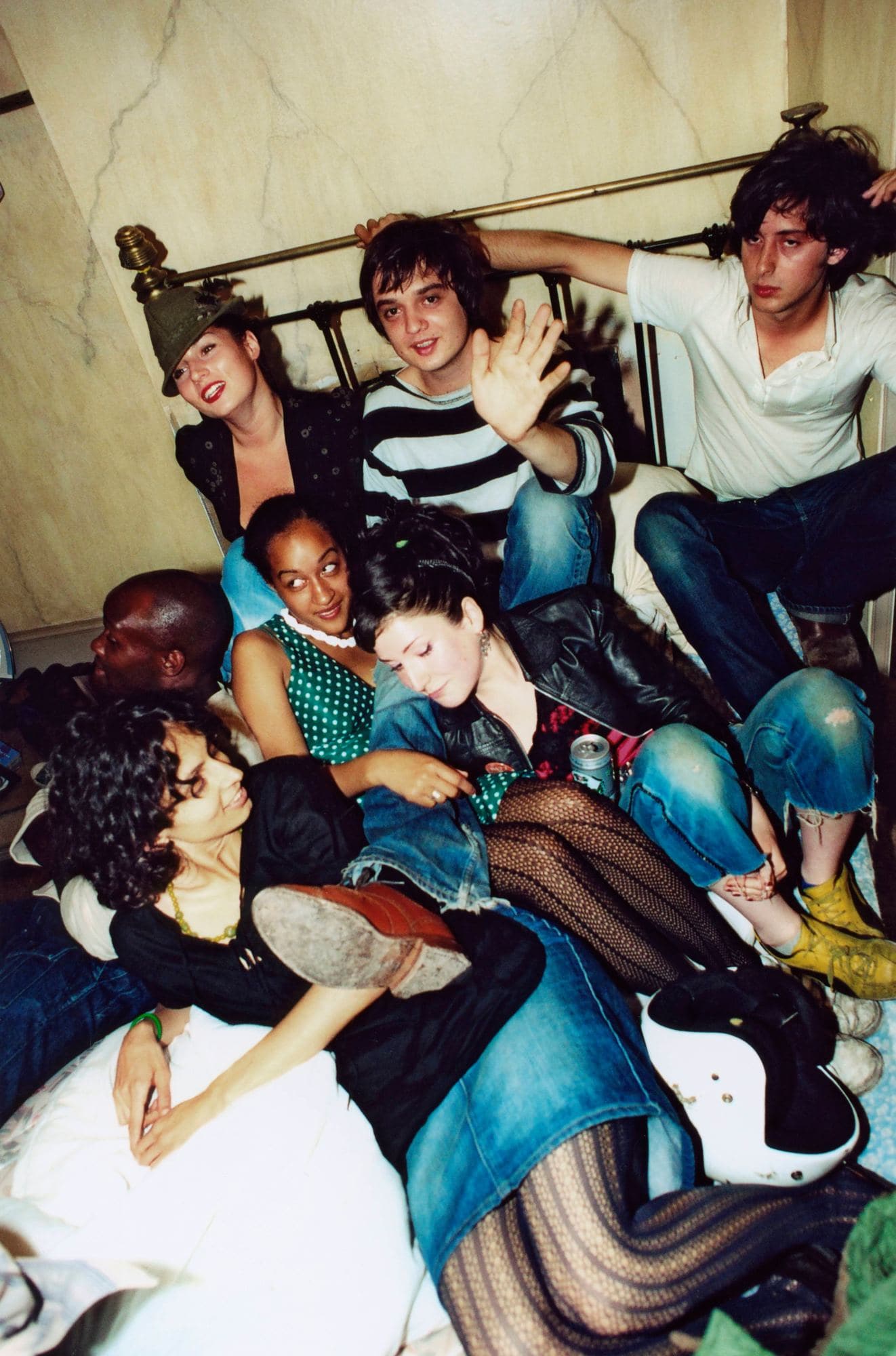
Pete Doherty, Carl Barât, Gary Powell, and friends at the Albion Rooms in Bethnal Green, London, 2002. Credit: Patrick Ford/Redferns
A Scene Built from Similar Energy, Not Identical Sounds
It is tempting to package the decade as one neat movement, but the reality was far more scattered. Warren argues that media narratives often group artists together to make a scene feel bigger and more exciting. Bands rarely want to be told they belong to a category, yet categories help audiences understand that something is happening.
Franz Ferdinand and Bloc Party, for example, shared an interest in dance music and in making guitar songs that people could move to. Still, their influences, visual identities, and musical personalities were distinct. What connected them was less a single sound than a common pulse: angular, fast, sharp-edged guitar music with a sense of motion.
Club nights helped stitch these different strands together. Events in London inspired nights in Nottingham, Leeds, and other cities, giving local audiences somewhere to gather around music that refused to stay in one lane.
Before this period, indie clubs and dance clubs were often treated as separate territories. The new nights were more open-minded. If a song worked on a dance floor, it could be played — whether it came from a guitar band, a hip-hop artist, or somewhere in between.
That simple attitude created room for people who might never otherwise have crossed paths. A club could feel like a tiny cultural laboratory: sweaty, loud, occasionally ridiculous, and full of ideas that made more sense at 1 a.m.
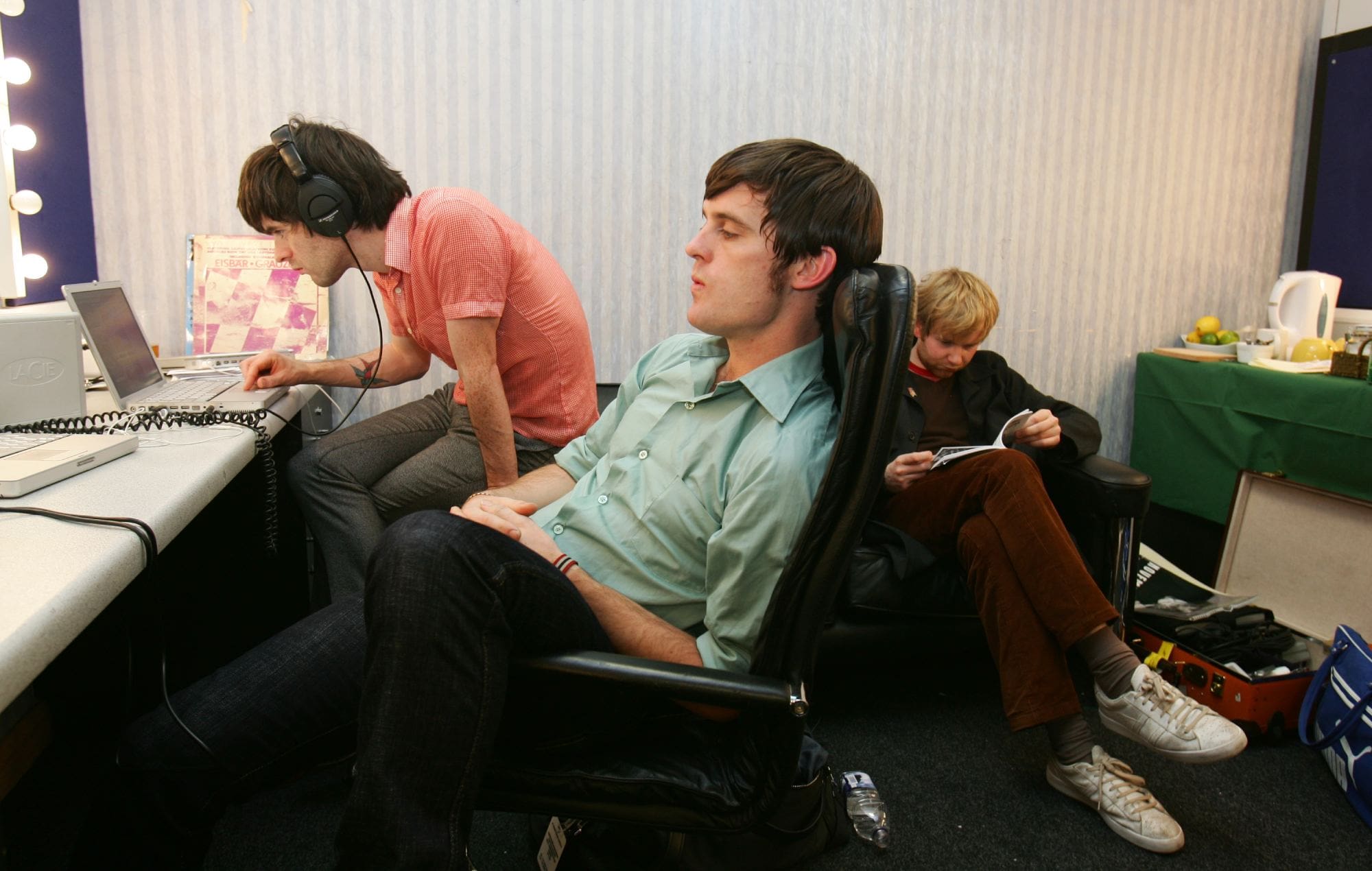
Franz Ferdinand backstage at the Brighton Centre, 2005. Credit: Andy Willsher
The Internet Before It Became a Machine
The era also sat on an unusual technological fault line. Young people were moving between the physical world of gigs and clubs and the early online spaces of message boards, Friendster, and MySpace.
Warren describes that transition as a pendulum swinging from analog to digital. For a short while, the internet seemed open-ended and unruly, like a new kind of fanzine that could travel instantly. The adults had not yet figured out how to monetize every corner of it, which gave young users a sense of freedom.
The Libertines’ online activity was particularly important. Through Libertines.org, Pete Doherty connected with fans in a way that felt unusually direct. The band could appeal to people drawn to poetry and art films while also reaching listeners from football culture. That unusual overlap was part of their power.
Other bands, including The Cribs and Arctic Monkeys, used the site to promote their own shows and music. It became a meeting point where audiences and emerging acts could find each other without waiting for traditional gatekeepers to approve the connection.

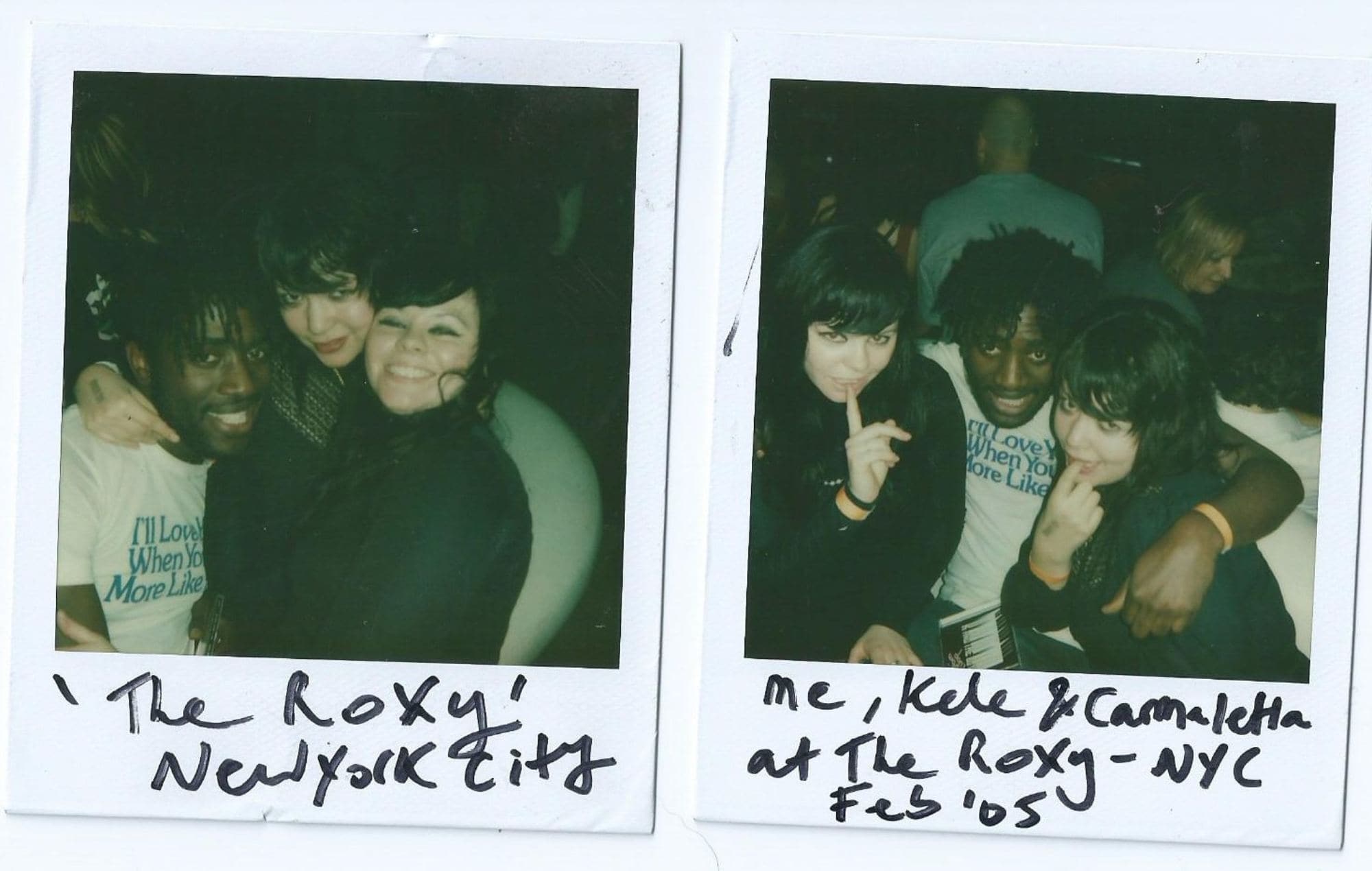
A selection of backstage passes and photographs with Bloc Party. Credit: Janine Warren
Hedonism, Anxiety, and High Ideals
Kapranos describes the period as being driven by “hedonism and high ideals,” and Warren sees both sides clearly.
The hedonism came from the sense that staying home meant missing something. There was always another night, another club, or another band playing somewhere across town. Trash, Frogs, and the Queens of Noize night at The Barfly all offered different versions of the same promise: get out, get involved, and see what happens.
Yet the decade was not carefree. It followed 9/11 and unfolded alongside a growing awareness that terrorism could strike at any time. That tension appeared in the lyrics of groups such as The Rakes and Bloc Party, whose songs often captured the unease of moving through a city under threat.
The high ideals were visible in the way artists thought about their identities. Many bands had a clear manifesto covering how they wanted to look, sound, and communicate. Franz Ferdinand, The Long Blondes, Bloc Party, and others approached their work with a strong sense of design and intention.
Behind the parties were ambitious people building long careers. Warren points to producer Paul Epworth and Mairead Nash, who embraced the nightlife while also moving toward major professional success. The decade’s social energy was not separate from its career momentum. In many cases, the two fed each other.
Backstage memories connected with Bloc Party. Credit: Janine Warren
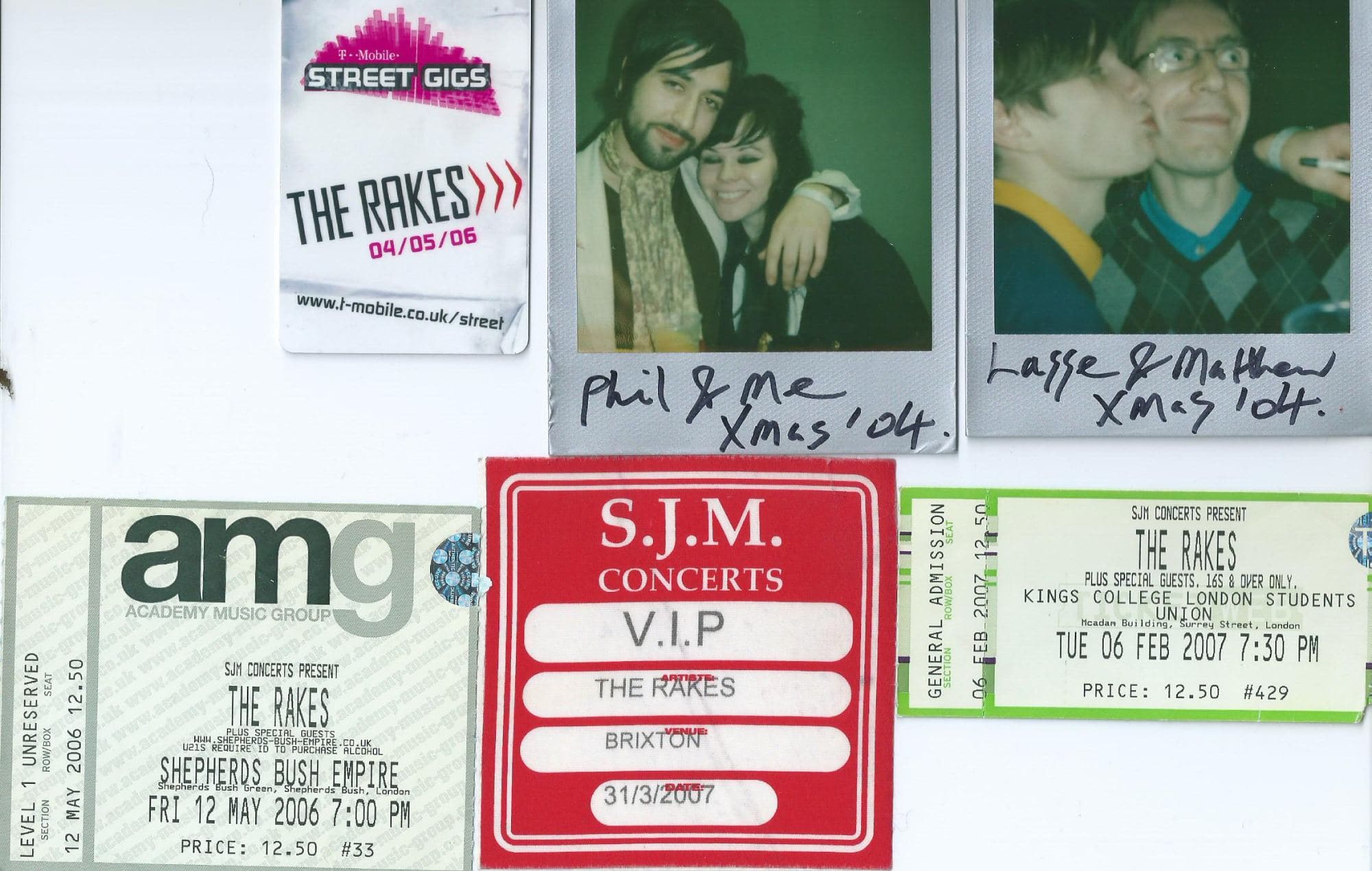
A selection of backstage passes and photographs with The Rakes. Credit: Janine Warren
The Cribs, Petrol Money, and the MySpace Dream
Some of the book’s most revealing stories come from Ryan and Gary Jarman of The Cribs. Their early touring life was powered by message boards and MySpace contacts. Even when they were supposed to be writing a new album after a label-organized tour, they would head to places such as Coventry or Wetherby because someone had offered petrol money and beers.
That grassroots approach helped build their career. They played towns that other bands might have ignored, reaching listeners directly and creating a following one modest show at a time. Warren believes that model would be far harder to sustain now because touring costs have risen so dramatically.
Then there was the surreal possibility of The Cribs becoming the first signing to MySpace Records.
At the time, almost everyone had MySpace Tom automatically listed as a friend, and many users wondered whether he was a real person or simply part of the website’s strange digital scenery. He was real, loved The Cribs, and invited them to America with a plan for arena tours that would double as MySpace meetups.
He even suggested changing the label’s name for the band. The group declined because the arrangement did not feel right for them. After the meeting, Ross was so nervous that he became sick into a plant pot outside the office. The story was never discussed again, which somehow makes it even more perfectly of its time.
When the Bubble Finally Burst
Warren places the turning point around 2006, when Arctic Monkeys became unexpectedly enormous. Their success encouraged major labels to chase the next big guitar band, often signing groups before they had developed enough songs or live experience.
The result was a familiar industry cycle. New acts arrived with enormous expectations, failed to match impossible sales demands, and disappeared when the numbers did not follow. The excitement began to thin out.
Several bands were also reaching natural breaking points. Bloc Party entered a hiatus after years of touring and internal strain. The Rakes fell apart. Ryan Jarman experienced a breakdown. The Futureheads faced mental health struggles, while the singer of The Long Blondes suffered a stroke.
The movement did not end because one switch was flipped. It wound down through exhaustion, changing circumstances, commercial pressure, and the ordinary human cost of living at full speed for too long.
Why “Indie Sleaze” Does Not Quite Fit
Warren is not comfortable with the later label “indie sleaze.” The artists she interviewed did not recognize it as a term they used for themselves, just as they had resisted earlier descriptions such as the “new rock revolution” and the post-punk scene.
Still, she understands why the label has endured. Online accounts continue to share photographs, outfits, and club images from the period because the aesthetic remains instantly recognizable. Fashion and music are always looking backward, often on roughly twenty-year cycles, and this decade has become newly attractive to people who did not experience it the first time around.
The label may be imperfect, but the renewed interest proves that the music and imagery still have a pulse.
Could Another Wave Happen?
Warren remains hopeful. The bands are still here, but a major movement requires more than talented musicians. It needs clubs, media, audiences, independent spaces, and a wider cultural atmosphere that allows separate threads to become one visible wave.
New groups such as Geese suggest that the appetite for guitar music has not vanished. Social platforms like Instagram and TikTok have their uses, but they will eventually give way to something else. Warren believes the next major shift may come from a format or community that has not yet been invented.
That optimism feels fitting. People once assumed books were finished, yet independent bookstores continue to open because readers still want places to browse, linger, and share discoveries. Music may work the same way. Digital tools change, but the need to gather around something exciting never really disappears.
The World Was a Mess But His Hair Was Perfect: The Last Indie Music Scene 2000–2010 is available through Omnibus Press.
The UK indie scene was never as tidy as later nostalgia makes it appear. It was a collision of ambition, accidents, awkward internet experiments, unforgettable club nights, and bands trying to turn fleeting excitement into something lasting. Which part of that decade do you remember most clearly?
FAQ
- What is The World Was a Mess But His Hair Was Perfect about? It is Janine Warren’s oral history of the UK indie music scene between 2000 and 2010, combining interviews, memories, and previously unseen photography.
- Which band helped ignite the UK indie revival? The Strokes played a major role in sparking excitement, but British acts such as The Libertines, Franz Ferdinand, Bloc Party, and The Cribs soon shaped their own distinct movement.
- How did early social media affect the scene? Message boards, Friendster, MySpace, and Libertines.org helped bands promote gigs, connect with fans, and reach audiences without relying entirely on traditional industry channels.
- Why does Warren dislike the term “indie sleaze”? She says many artists from the period did not recognize the phrase and never used it to describe their own music or culture.
- When did the 2000s indie era begin to decline? Warren places the major turning point around 2006, when the success of Arctic Monkeys led major labels to sign large numbers of newer bands, many of whom struggled under commercial pressure.
Bring a little of that backstage energy home with a favorite album cover poster from Architeg Prints. It is a warm, stylish way to keep the music — and the memories — on your wall.
 | DISCOUNTGET 30% OFF*Use code on your next order:
|
* This post may contain affiliate links, meaning we earn a commission if you make a purchase through these links, at no additional cost to you.