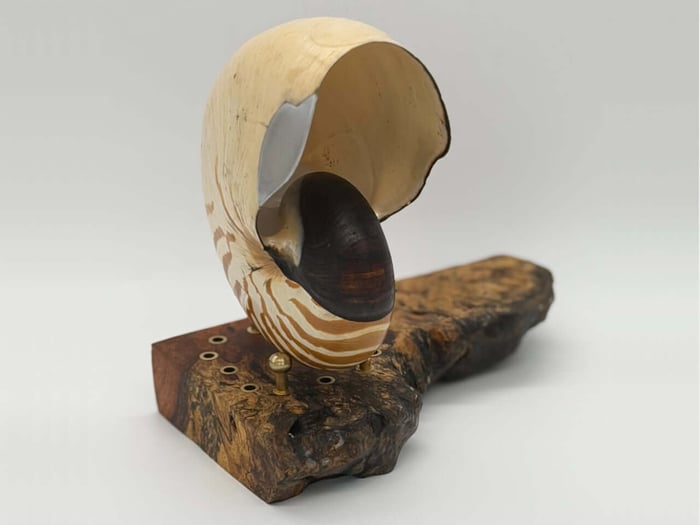
This 500-Million-Year-Old Nautilus Shell Transformed Into a Stunning Speaker


 See more Architeg Prints stories on Google.
This 500-Million-Year-Old Nautilus Shell Transformed Into a Stunning Speaker
Explore how a 500-million-year-old nautilus shell became a unique haptic speaker, blending ancient beauty with modern audio art.
A Nautilus Shell’s Second Life: From Lottery Loss to Audio Innovation
Have you ever lost out on a lottery and thought, “Well, I’m just going to build something way cooler”? That’s exactly what happened to a maker named hide-key after missing out on the elusive Sazae Radio lottery in Japan. Back in 2016, only 100 of these turban shell radios were available, but with 8,350 hopefuls, the odds were a steep 83.5 to 1. A tough break, sure, but out of disappointment came an inspiring project: the Steampunk Nautilus, an extraordinary haptic speaker crafted from a living fossil.
The idea? To take the concept of a shell radio and push it into the realm of audio art. And not just any shell would do—the choice was a nautilus shell, a marvel of nature that has remained virtually unchanged for 500 million years. Plus, the name “nautilus” rang a bell thanks to Jules Verne’s iconic submarine. With this poetic nod, hide-key set three guiding principles for the project: celebrate the shell’s imperfections through steampunk-kintsugi metal repairs, ensure all adhesives used could be reversed without damage (acetone-friendly!), and transform the shell itself into a vibrating speaker diaphragm. In short: a marriage of ancient form and futuristic function.
The Magic of the Nautilus Shell: Nature’s Perfect Speaker Cone
Early attempts with bulkier sea snail shells didn’t go so well—those shells were too thick and dense to vibrate properly, basically dead weight. But the nautilus was a game-changer from the start. Its thin, lightweight structure, designed by nature for buoyancy, behaves much like a violin body or a traditional speaker cone. The internal ribs add resonance without adding heavy mass, turning the shell into a natural acoustic marvel.
This project quickly became more than just a design challenge; it evolved into a study of bioacoustics where the biology of the shell itself dictated its ability to produce sound. Heavy shells? They just don’t sing. But the nautilus? It sings beautifully.
Repairing the Past: Embracing Flaws with Steampunk Kintsugi
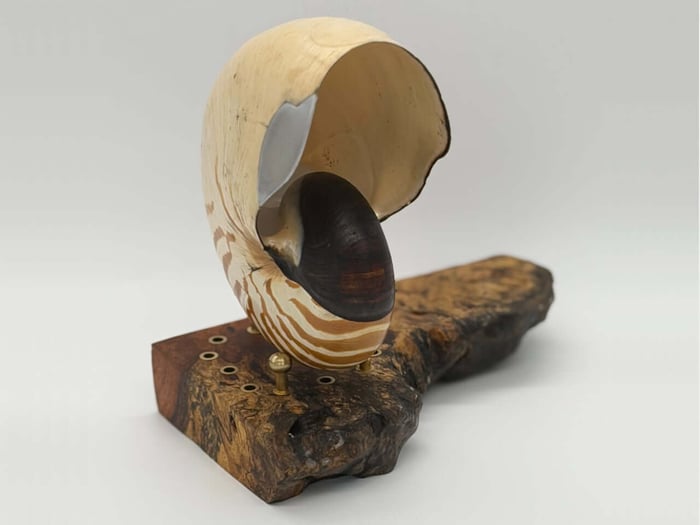
The shell started its new life cracked and chipped, but rather than hiding these flaws, hide-key chose to celebrate them. The broken areas were carefully traced, and then a 1.2 mm aluminum sheet was hammered and filed by hand to match the organic curves of the shell. Polished to a mirror finish, this metal patch was attached using cyanoacrylate and brass-colored epoxy putty.
Importantly, all adhesives used were chosen for their reversibility — they can be dissolved with acetone, ensuring the shell remains intact beneath its new steampunk armor. This approach respects the shell as a specimen, preserving its natural history while adding a new dimension of function and beauty.
The Heart of the Project: A Custom Haptic Speaker Drive
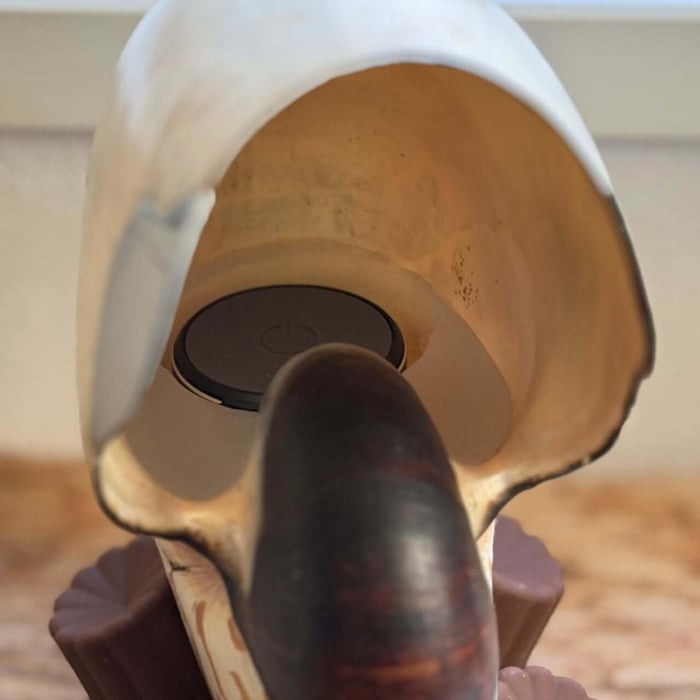
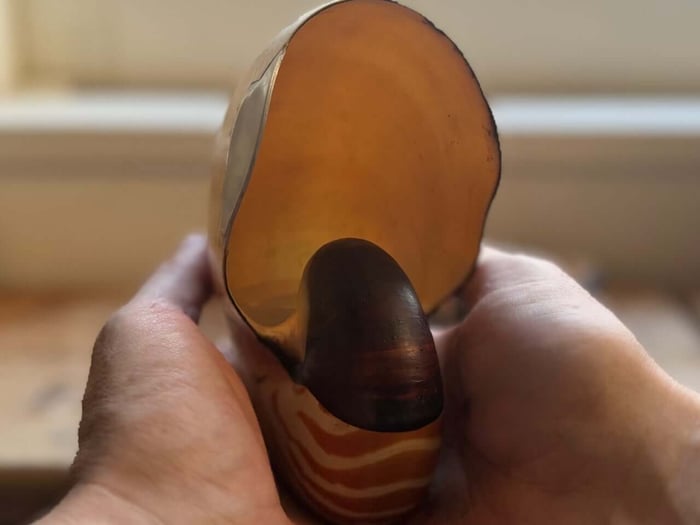
Gone are the days of boring internal speakers. The Steampunk Nautilus uses a vibration exciter speaker cleverly mounted in a custom silicone cartridge that snugly fits inside the shell’s living chamber. This chamber measures just 50 cc in volume, precisely measured using water displacement, and Shore 15A silicone molds the perfect seat for the exciter.
A transparent hair band cleverly acts as a hidden pull tab, while a silicone cap conceals the exciter itself, diffusing its faint blue LED into a heartbeat-like glow deep within the spiral. It’s both a technical marvel and a visual delight.
The Artful Base: Quince Burl and Brass Elegance
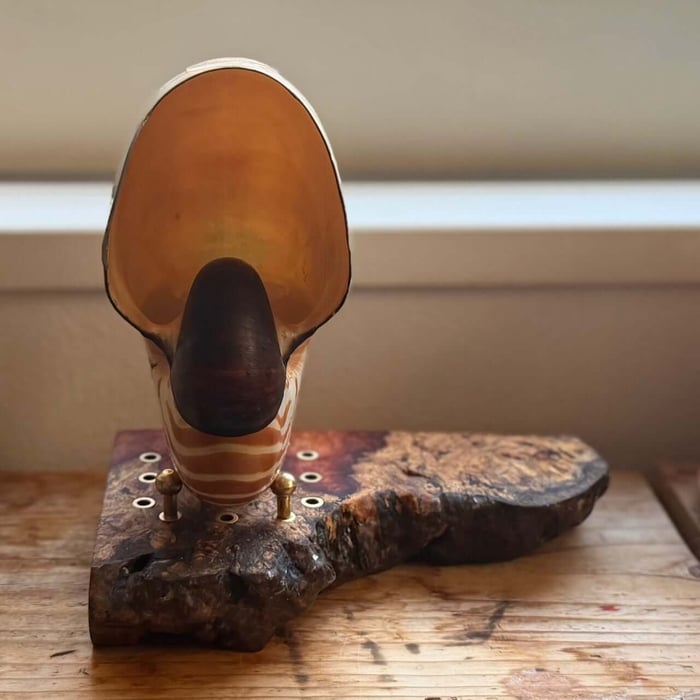
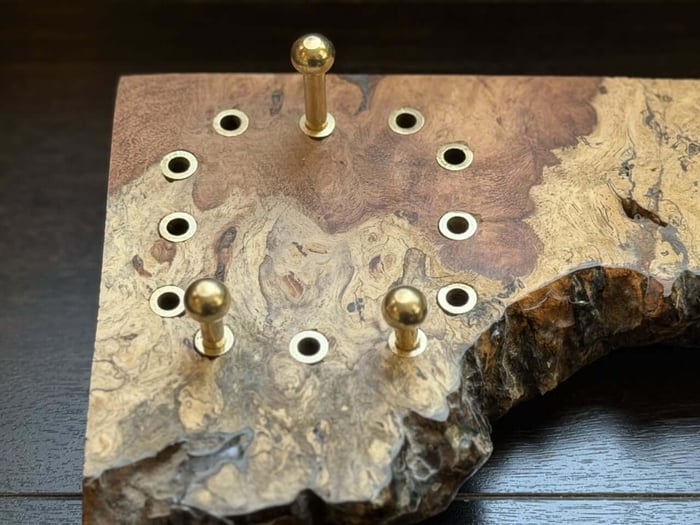
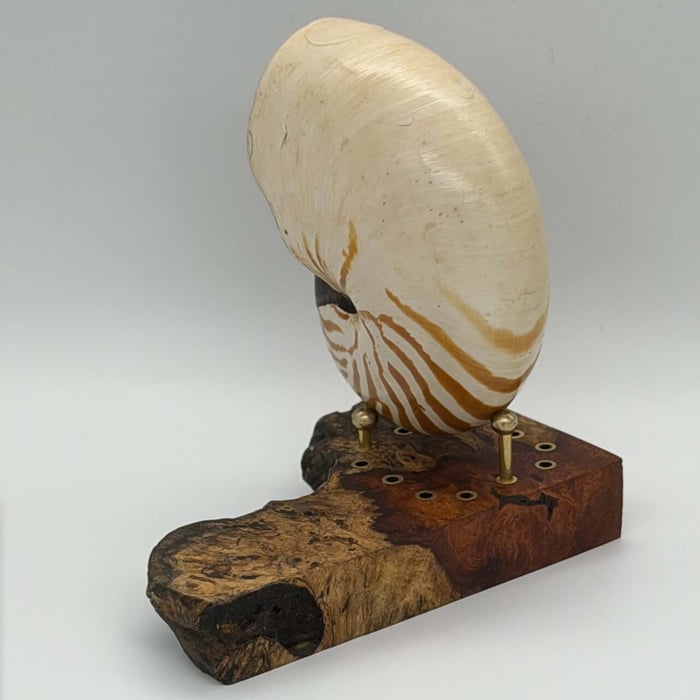
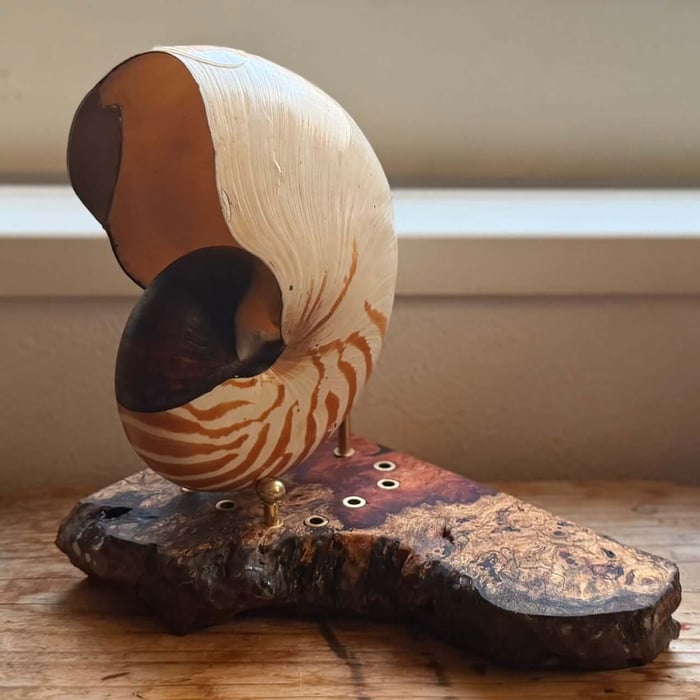
The shell doesn’t just rest on any stand. Its base is crafted from Quince burl wood, prized for its striking red, white, and black grain that echoes the natural patterns of the shell itself. The design uses a Magic Circle layout of brass bushings, allowing the shell’s angle to be adjusted by moving three brass pillars.
Threaded brass rods with ball nuts cradle the shell, while tiny drops of soft UV resin at contact points prevent any buzzing. The effect? The heavy fossil appears to float silently, mechanically quiet yet visually captivating.
Three Listening Modes: More Than Just a Speaker
The Steampunk Nautilus isn’t a one-trick pony. It offers three distinct modes to enjoy:
- Bone-Conducted Haptic Listening: Hold the shell in your hands and feel the vibrations directly, blending touch and sound.
- Sound Profile Shifts: Move the exciter between internal and external mounts to switch from a warm, lo-fi radio vibe to a crisper, more direct tone.
- Stereo Dream: Imagine pairing two shells for a full stereo experience—an idea left open for the future.
This project beautifully transforms a broken, once-disappointing shell into a reversible, vibrating instrument that invites you to feel the music as much as hear it. It turns a lottery loss into tactile magic, blending science, art, and history in one mesmerizing piece.
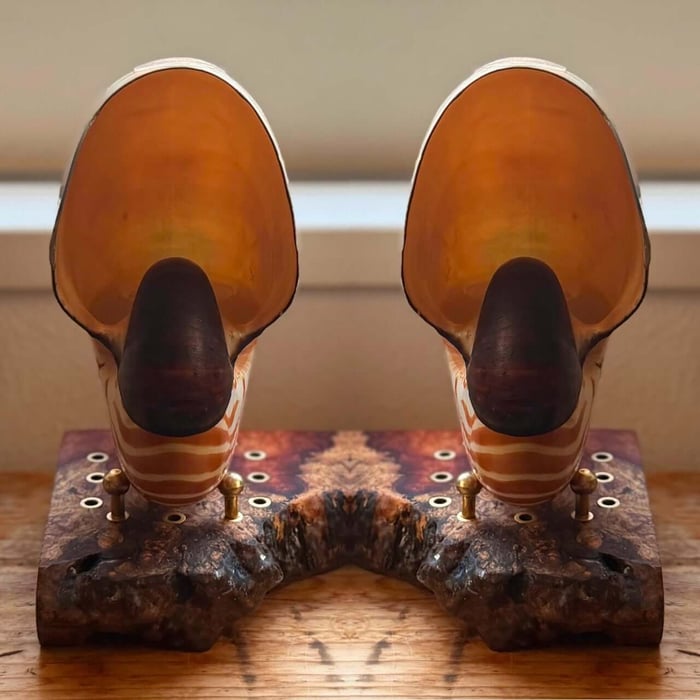
"The Steampunk Nautilus turns a broken specimen into a reversible, vibrating instrument that asks you to feel the music as much as hear it." – hide-key
Conclusion
Who knew that a 500-million-year-old shell could be reborn as a cutting-edge speaker? It’s a testament to creativity, patience, and the power of blending natural beauty with modern technology. Whether you’re a fan of bio-acoustics, steampunk art, or just love unique audio gear, the Steampunk Nautilus is a captivating story of transformation and tactile sound.
What would you listen to if you could hold this piece of ancient history in your hands and literally feel the music? Let us know your dream playlist!
FAQ
- What makes the nautilus shell ideal for a speaker?
Its thin, lightweight structure with internal ribs provides natural resonance, similar to a violin body or speaker cone. - How does the repair method respect the shell?
The metal repairs celebrate imperfections using reversible adhesives that can be removed without damaging the shell. - What is a haptic speaker?
It’s a device that uses vibrations on a surface you can touch, letting you feel the sound as well as hear it. - Can the speaker be adjusted for different sound profiles?
Yes, moving the vibration exciter between internal and external mounts changes the sound from lo-fi to sharper tones. - Is it possible to have a stereo setup with these shells?
The maker envisions pairing two shells to create a stereo system, though this remains a dream for now.
If the Steampunk Nautilus inspired you, why not bring a piece of that magic home? Shop your favorite album cover poster at our store and celebrate the art of sound and history together. Explore now.
 | DISCOUNTGET 30% OFF*Use code on your next order:
|
* This post may contain affiliate links, meaning we earn a commission if you make a purchase through these links, at no additional cost to you.