Unitra WSH-805 Review and Testing: A Retro Audio Revival with Modern Challenges



Unitra WSH-805 Review and Testing: A Retro Audio Revival with Modern Challenges
Explore the unique blend of nostalgic design and audio performance in the Unitra WSH-805 integrated amplifier.
Ever wonder why we’re so irresistibly drawn to the warm glow of needle meters and hefty metal toggles? Why do we willingly part with serious cash for gear that looks like it just teleported straight from the early 1970s? Is it a genuine longing for an era when engineers built gear to last decades, or are we just clever prey to slick marketing tricks?
Marketers know something crucial: in our tech-saturated world, our eyes often decide a purchase long before our ears get a chance to weigh in. Keep that thought simmering—later on, we’ll unpack this phenomenon. But for now, let’s dive deep into a device that masterfully plays on our deepest nostalgic strings.
The Story Behind Unitra: Poland’s Audio Giant Reborn
Unitra might not ring bells outside Poland or neighboring Eastern Bloc countries. Founded in 1961, this colossal brand was a massive conglomerate of Polish factories specializing in electronics and communication gear, employing around 100,000 people at its peak.
However, the fall of the Iron Curtain in the late 1980s brought a halt to Unitra’s audio production. The brand lay dormant until 2021, when ambitious leadership revived the historic name for the contemporary audio industry.
Their modern philosophy rests on two pillars: uncompromising durability and ease of repair. In an age of disposable electronics, that approach commands respect.
Meet the Unitra WSH-805: A Flagship Flashback
The Unitra WSH-805 is the brand’s flagship integrated amplifier, crafted to pull at the heartstrings of retro enthusiasts with its industrial charm.
Design That Screams 1970s
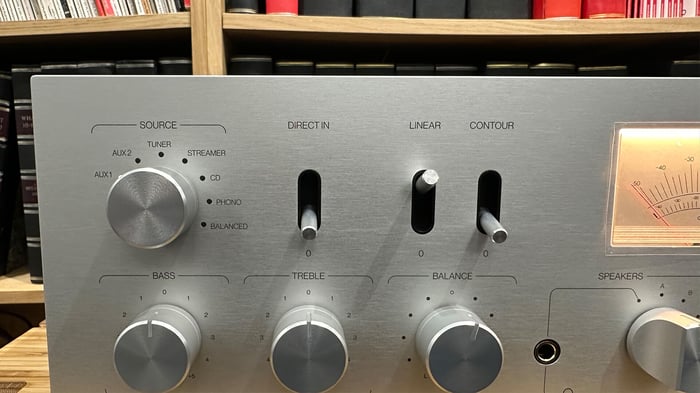
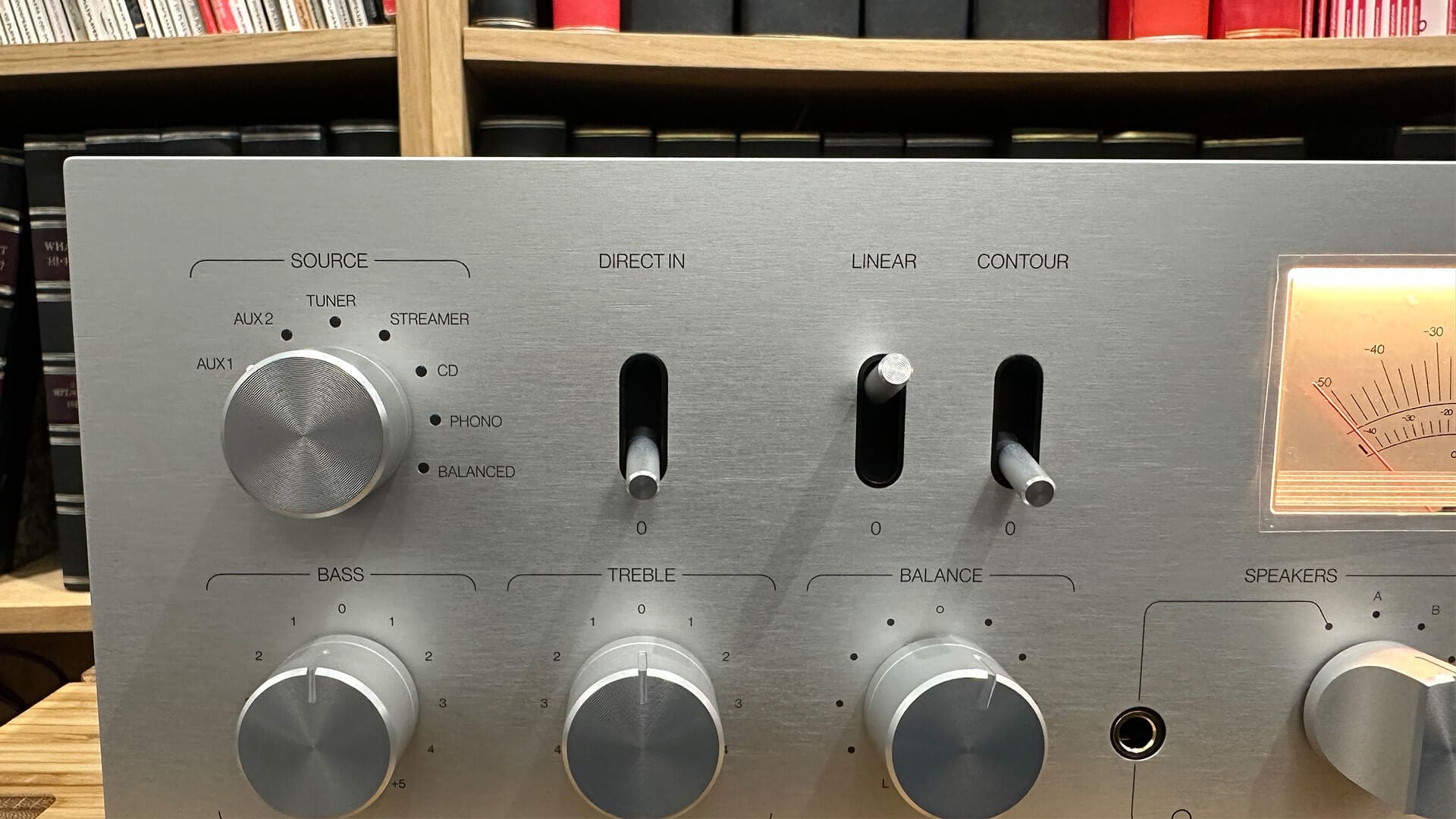
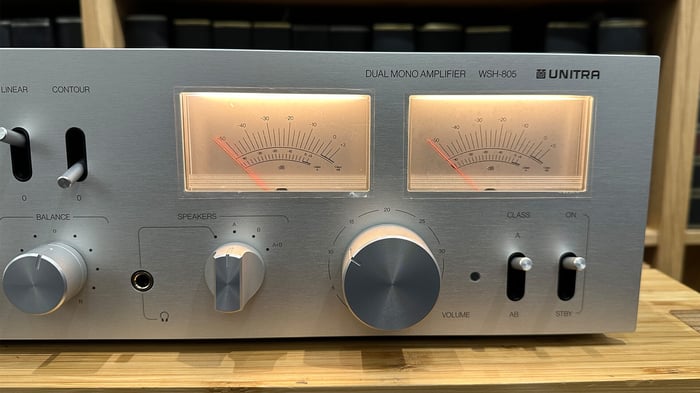
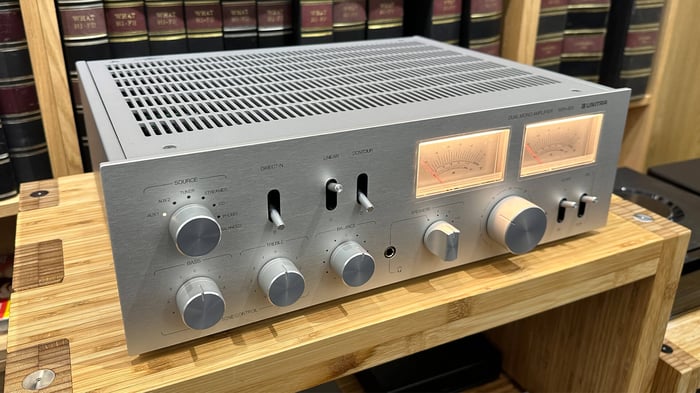
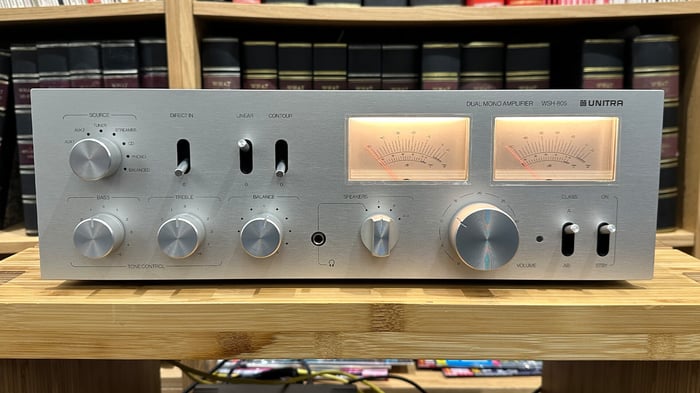
The design unmistakably channels the 1970s: massive output power meters (VU meters) and an array of classic toggles. The functions lineup—speaker selector, tone controls, and a contour switch (their term for tone compensation)—are pure retro heritage, but that doesn't detract from their value.
A welcome addition is the switchable phono preamp supporting both moving magnet (MM) and moving coil (MC) cartridges. Plus, a full-sized 6.3mm headphone jack sits conveniently on the front panel.
Some might lament the complete absence of digital inputs, but from my experience, built-in DACs in stereo amps rarely wow. If you want uncompromising digital processing, an external module is the way to go.
Key Specs At A Glance
- Type: integrated amplifier
- Power: 80W per channel (Class A/B); 8W per channel (Class A)
- Phono Preamp: Yes (MM/MC)
- Inputs: 6 line-level, including balanced XLR; power amp input
- Outputs: Pre-out
- Bluetooth: No
- Headphone Out: Yes (6.3 mm)
- Dimensions (H x W x D): 14.3 x 44.0 x 31.2 cm
- Weight: 18.5 kg
Availability and Pricing
Currently, the resurrected Unitra brand isn’t officially available in Russia. This product is niche even by European standards. However, the WSH-805 flagship can be purchased through specialized European delivery services or parallel import dealers.
Factoring in logistics and customs, expect to pay roughly $5,500-$6,700.
Using Unitra WSH-805 in Local Setups
Technically, the amp poses no hurdles domestically. Fully analog, it has no software locks, regional blocks, or internet dependencies. Its power supply supports European 230V, compatible with local grids.
The only caveat? Lack of official service centers means repairs rely on seller warranties or skilled private technicians. Luckily, the classic architecture promotes easy repairs.
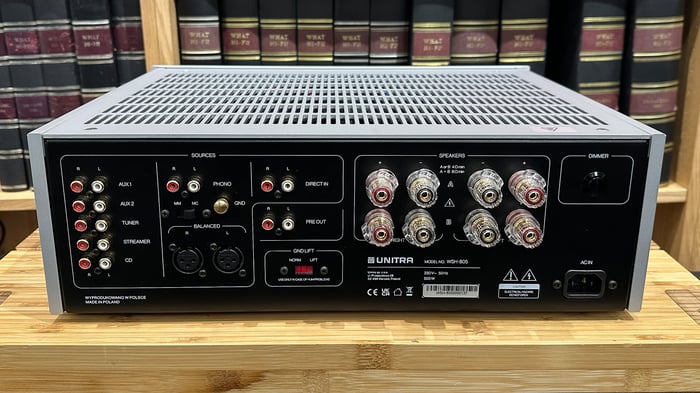
The rear panel offers six line inputs including balanced XLR, pre-out, and direct power amp input—plenty for most classic stereo setups.
Engineers wisely included a "ground lift" switch to tackle ground loop hums, a blessing for many audiophiles. Dual bulky speaker terminals can be used simultaneously or separately, enabling basic multi-room setups.
A neat feature is the ability to toggle amplifier circuitry on the fly between pure Class A and Class A/B modes with a front-panel switch, dropping power from 80W to 8W per channel accordingly.
Inside Look: Craftsmanship and Build
Peeking under the hood reveals top-tier craftmanship: the left and right channels are physically and electrically isolated from preamp stages to output terminals. This “dual mono” design minimizes crosstalk and distortion, sharpening stereo imaging.
The build feels robust and strictly functional, but the tactile feedback isn’t truly premium. Toggles click with authority but lack the smooth finesse I'd expect at this price point. Rotary knobs also feel unexceptional.
The chassis is sturdy but could benefit from better internal damping to silence a slight metallic ring when tapped.
For comparison, the Yamaha A-S3200 integrated amplifier ($8,999) feels far more refined in hand, but even more affordable rivals like Cyrus 40 AMP integrated amplifier ($4,995) and Rega Aethos integrated amplifier ($5,395) outshine the Unitra in tactile polish.
The Showstopper: Motorized Toggles
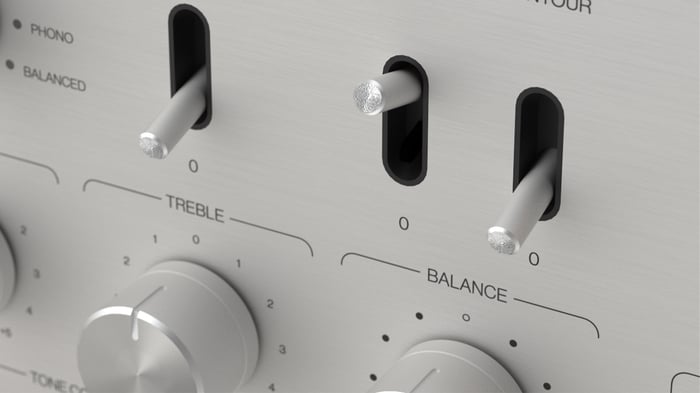
The undeniable highlight? The motorized toggles. They physically flip not only by hand but also via remote commands. Watching a hefty metal switch snap up or down at the press of a button is pure joy.
Even better, toggling line mode bypass and contour engages synchronized dual switch movement—a truly elegant engineering touch.
Partnering the WSH-805 for Testing
Testing this beast calls for serious partners. My main sources were the Naim ND555/555 PS DR streamer and Technics SL-1000R turntable equipped with Kiseki Purpleheart cartridge (MC) and Vertere Dark Sabre cartridge (MM).
I paired the amplifier with a range of speakers: compact KEF LS50 Meta speakers, larger Epos ES-14N speakers, and the gold standard studio monitors, ATC SCM50 studio monitors.
Sound Performance: Power Meets Precision
Though not built to rattle concert halls, the WSH-805 comfortably drives all test speakers, even in its low-powered Class A mode.
Interestingly, the sonic gap between Class A and Class A/B isn’t as dramatic as the power specs suggest. The core Unitra sound remains consistent. Class A mode adds a fuller, smoother, and more expressive tone, while Class A/B delivers sharper attack and better dynamics for epic pieces.
No matter the mode, this amp boasts an open, powerful, and assured sound.
Throwing complex symphonies like Carl Orff’s "Carmina Burana" at it reveals impressive control and academic restraint. The WSH-805 doesn’t shy from dense, intricate arrangements, confidently untangling orchestral layers.
Soundstage is expansive with clear articulation. The tonal balance is tight and crystal-clear, with no artificial emphasis on note attack. The midrange shines with articulate vocals handled skillfully.
Stereo imaging impresses with excellent focus and rock-solid stability. Instruments and voices sit precisely in space, never blurred even as music swells into grand climaxes.
Where the Unitra Falls Short
Despite these strengths, the WSH-805 sometimes feels like it should perform better. Side-by-side with the cheaper Cyrus 40 AMP, it lacks refinement and natural warmth. It tends to smooth over the delicate textures of live instruments and vocals, leaving a somewhat uniform, grayish sonic palette that masks individuality.
Driving rhythmically intense tracks like Michael Jackson’s “Jam,” the Unitra, while rhythmically exact, lacks the spark and drive to fully capture the music’s energy and passion.
This shortfall extends to microdynamics—the subtle nuances that convey vocal passion or the dramatic depth of Beethoven’s “Moonlight Sonata.”
The amp delivers strong, well-defined bass and coherent sound staging but struggles to morph mere sounds into a fully immersive musical experience that truly moves the listener.
A Bright Spot: Phono and Headphone Performance
The built-in phono stage pleasantly surprised me by preserving much of the transparency of line inputs without adding excess noise. Both MM and MC cartridge circuits perform equally well—a rare feat among integrated amps.
The headphone output deserves praise, too. Whether I plugged in Grado RS1x headphones, Sony MDR-Z1R headphones, or Austrian Audio The Composer headphones, sound remained clean and rich.
Conclusion: The Paradox of Industrial Charm
So, circling back to that opening question: why do we blindly trust vintage aesthetics? The Unitra WSH-805 experience offers a clear answer. We live in an era of flawless but often soulless “digital” sound.
Buying a hefty amp with meters and motorized toggles, we subconsciously expect the “golden age” of audio—a warm, enveloping, and deeply musical sound to make us forget today’s chaos. But engineering reality bites hard.
“Massive chassis and dual mono design fool our brains into expecting sonic magic. But true sound quality is more than well-laid circuits or Class A switching. It’s the philosophy of 'voicing'—the subtle tuning breathing life into silicon and copper.”
Competitors like Rega and Yamaha have spent decades perfecting their signature sound that makes gear sing. Meanwhile, Unitra’s engineers focused so much on mechanical resurrection of a legend that they appear to have overlooked the music’s soul.
Reviving Eastern European audio heritage is noble and bold. Creating repairable gear in a throwaway age earns my respect. But as demanding listeners, we can’t let visual charm silence our listening judgment.
Unitra WSH-805 is a stunning piece of industrial art, a fabulous conversation starter, and a stylish interior statement. Until its sound engineers catch up with its industrial designers, it remains more a beautiful relic than a fearsome contender.
Choose with your ears.
FAQ
- How powerful is the Unitra WSH-805 amplifier?
It delivers 80 watts per channel in Class A/B mode and 8 watts per channel in pure Class A mode. - Does the amplifier support modern digital inputs?
No, it lacks digital inputs like USB or Bluetooth; it focuses on analog connectivity for purist listening. - Can the Unitra WSH-805 handle both MM and MC phono cartridges?
Yes, it features a built-in phono preamplifier supporting both Moving Magnet and Moving Coil cartridges. - Is the amp easy to repair or service?
Yes, its classic architecture emphasizes durability and ease of maintenance, although official service centers are limited. - How does the motorized toggle functionality work?
The metal toggles can be switched manually or remotely, physically moving in response to remote commands—an elegant vintage touch.
Elevate your listening space with a classic touch — shop your favorite album cover posters at our store to complement your retro audio gear beautifully.
 | DISCOUNTGET 30% OFF*Use code on your next order:
|
* This post may contain affiliate links, meaning we earn a commission if you make a purchase through these links, at no additional cost to you.