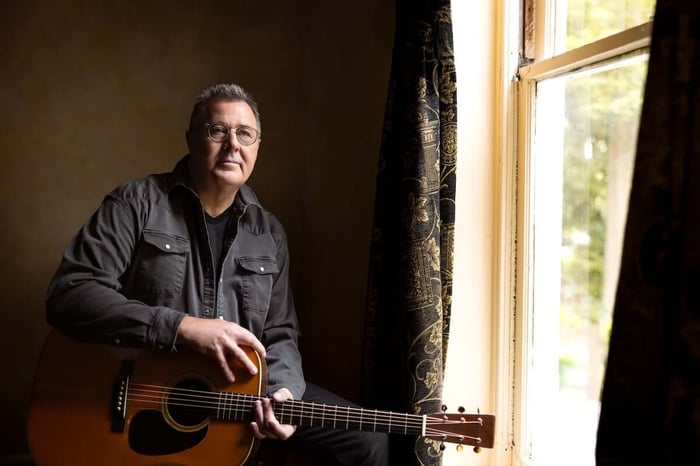
Vince Gill: Still Singing the Truth at 50 Years from Home


 See more Architeg Prints stories on Google.
Vince Gill: Still Singing the Truth at 50 Years from Home
Explore Vince Gill's musical journey and the soulful honesty in his latest project, 50 Years from Home.
The Unforgettable Moment with Don Henley
When a legendary Nashville musician like Vince Gill shares a memory, you know it’s worth your attention. Over twenty years ago, during a rehearsal with the Eagles, Gill recalls the puzzled look on Don Henley’s face as he unleashed some unexpected power chords on “Rocky Mountain Way.” Henley’s surprise was clear—he thought Gill was a bluegrass purist, but here he was rocking out with flair.
“I was just ripping these power chords, and Don’s giving me this odd look. Finally I went up to him and asked him what was up. And he goes, ‘I thought you were a bluegrasser and now you’re playing like a rocker.’ Well, I guess I’m both!” Gill chuckles as he shares the story.
This anecdote perfectly encapsulates Vince Gill’s unique musical versatility. At 69, Gill reflects on moments like these with a blend of wonder and gratitude, still amazed by his ability to traverse musical genres with ease.
A Musical Chameleon Like No Other
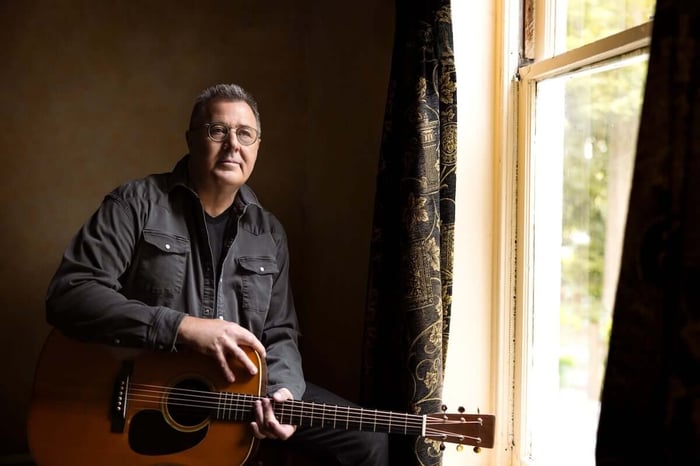
Few artists can claim the range that Vince Gill commands. He’s a rare talent who can comfortably jam with the Eagles, the progressive bluegrass group Boone Creek, and the Western swing ensemble The Time Jumpers—all with equal mastery.
From gospel to jazz, folk to rock, rhythm and blues to every shade of country music—both traditional and contemporary—Gill’s catalog is a sprawling tapestry of American music. His recent deep dive into the origins and implications of this musical range reveals how much he continues to evolve and explore.
Between Tours and Studio Sessions: The Sphere and Beyond
After a whirlwind stint performing with the Eagles in Las Vegas at the Sphere, affectionately dubbed “the big roundy room” by Gill, he returned home with a sparkle of excitement about his ongoing studio work.
“When people ask what it’s like playing the Sphere, I tell them it’s the most people I’ve ever been ignored by. Because they’re all watching the walls and ceiling,” he jokes.
Currently, he’s deeply immersed in his ambitious project 50 Years from Home—a series of monthly EP releases, each featuring freshly recorded songs. This isn’t just a greatest hits compilation but a fresh look at his classics like “Go Rest High on That Mountain” alongside brand-new material.
Diving Deep: The EPs and Their Unique Stories
Each EP in 50 Years from Home carries its own vibe and theme, showcasing Gill’s incredible versatility:
- Down at the Borderline brings roadhouse grit and swagger.
- Nobody Held Her Like Me dives into soulful rhythms.
- Lonely’s What I Do explores the rawness of solitude.
- Secondhand Smoke bathes in nostalgia.
He confesses, “It’s been a ton of work, and I’m spending hours and hours playing and singing and putting it all together and mixing it. You turn in one and then you have to have the next one finished three weeks later. It keeps me jumping for sure.”
His obsessive attention to detail means every note matters—from the bass lines to drum fills to guitar licks. “Every note feels equally important to me, so I try to get proper time and attention to every facet of it. It can make you a little nutty, but there’s an element of fun, like putting together a puzzle.”
Racing Against Time with a Heart Full of Music
Gill conceived 50 Years from Home as both a celebration and a personal memoir, knowing that his creative clock is ticking.
“I started to realize that the opportunities I have to be creative are dwindling because of my age. I just don’t have that much time left to write songs and play them well and sing them well.”
Remarkably, he feels he’s improving with age rather than slowing down. “In all honesty, I feel like I sing better today. I feel like I play better today. And I feel like I write better today than I did when I was younger. In my heart I feel like I’m making progress, which is an inspiring place to leap from.”
Instruments as Autobiography
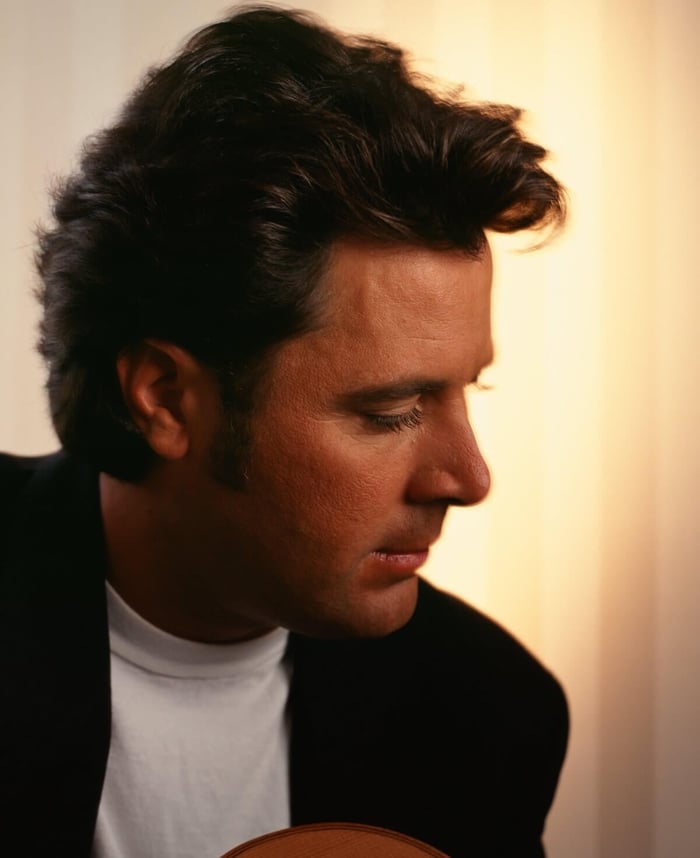
Each EP cover features a different instrument—symbols of his musical journey. From an old acoustic guitar he’s cherished for decades to a weathered Telecaster still humming with power chords, and a mandolin that screams bluegrass tradition, these instruments are more than tools. They’re storytellers.
“I’ve been thinking about these important instruments and how they turned up in my life. These EPs embody everything I’ve loved and learned to play, so I guess they’re an autobiography in a lot of ways. It was certainly easier than trying to write a book!”
From 19-Year-Old Bluegrass Dreamer to Nashville Legend
The roots of this journey reach back to 1975, when a 19-year-old Vince Gill left home for Louisville to join a professional bluegrass band. Already seasoned, his local band had even opened for Kiss!
He remembers that day vividly: “I took a leap of faith, and somehow I’ve managed to put food on the table these 50 years.”
Over the years, Gill’s path wound through bands like Bluegrass Alliance and Boone Creek, fronted Pure Prairie League briefly, played with Rodney Crowell, and did countless sessions in Nashville.
One priceless lesson came early on when a producer told him to “play half of what you know” during a guitar solo. “It was tough to hear, but it was a great lesson to learn. Just play what’s necessary for the song. It’s not always easy to take that kind of criticism. I had a lot of insecurity, but eventually I learned not to try to impress people with my playing and instead try to take them somewhere.”
Chart-Topping Success and Collaborative Brilliance
Gill’s grounding in bluegrass and traditional country helped him ride the neo-traditionalist wave in the 1980s, with a breakout in the early ’90s featuring No. 1 hits like “I Still Believe in You,” “Don’t Let Our Love Start Slippin’ Away,” and “One More Last Chance.”
His career is studded with tributes honoring legends like the Eagles and Bob Wills, and explorations into Bakersfield sound and Oklahoma’s Red Dirt music. Collaborations with artists such as Patty Loveless, Dolly Parton, Barbra Streisand, Ashley Monroe, and even the Muppets highlight his wide-ranging appeal.
A Musical Memoir with a Social Conscience
50 Years from Home isn’t just a nostalgic look back—it’s a bold engagement with America’s cultural and racial history. Gill’s song “Some Times” was born from a profound conversation with Mavis Staples two decades ago, reflecting on the struggles and marches for justice.
“We were talking about all kinds of things but mostly the marches and all the stuff she had seen in her life. We had this beautiful conversation, and she looked at me and said, ‘Brother, we have seen some times.’ It hit me like a freight train. It needed to be a song.” — Vince Gill
Co-written with Mary Gauthier, the song offers a truthful look at history without blame, instead inviting honest dialogue.
Some might find this approach too gentle in today’s charged climate, but Gill stands by the power of unvarnished truth. “People who are critical of that song—I would ask them to point out a lyric that isn’t true. I don’t think they could.”
Embracing Diversity and Acknowledging History
Gill’s respect for the diverse roots of country music underscores his empathy for its many pioneers.
“Country music’s diversity is well founded. The earliest incarnations of the music were heavily influenced by Black music and Black artists, and it’s been the way ever since. Maybe socially we’ve been at odds, but never creatively, never musically.”
He references the haunting song “March On March On,” which confronts painful history with lines like:
“You came here in shackles, picked the cotton in chains. That’s the sin of my people, and I carry the shame.”
Gill shares a personal reckoning with Oklahoma’s dark past: “There was a race massacre in my home state of Oklahoma. It happened in Tulsa in the 1920s, and I didn’t know about it for most of my life. I was horrified that it happened and mortified that I didn’t know about it.”
This honesty informs the tougher, more pointed songs on 50 Years from Home. “I don’t mind that they’re pointed and maybe a little harder to listen to. I’m not afraid of stuff like that, because I know my heart and I know my intention.”
Freedom in the Later Years
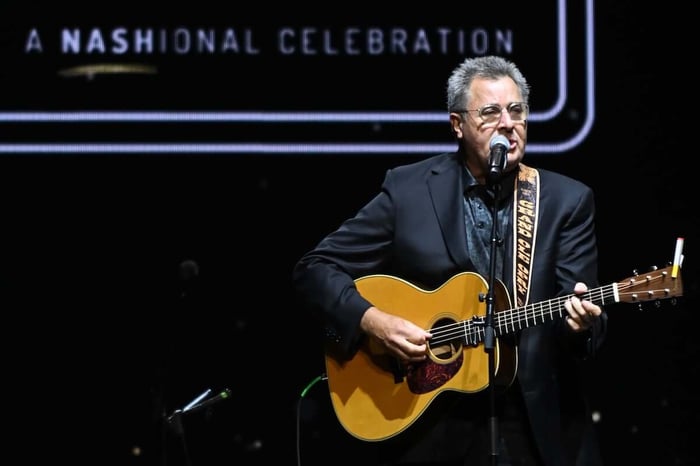
Now, freed from the commercial pressures of chasing chart-topping hits, Gill embraces artistic freedom. “I’m no longer trying to have a big hit record,” he admits. “I’ve been there and been shown the door. But there’s a freedom now where I can do whatever I want and say whatever I want and play whatever I want. I can be as honest as I want to be.”
His latest work is a vibrant map of his mind and spirit—blending love songs, work songs, funeral songs, and even a playful ode to Nashville’s Brown’s Diner cheeseburgers—painting a complicated and beautiful portrait of a true American music icon.

FAQ
- What is Vince Gill’s project 50 Years from Home about?
It’s a series of monthly EPs showcasing new recordings that reflect various phases of Gill’s five-decade career, blending original songs and fresh takes on classics. - How does Vince Gill describe his musical style?
He sees himself as multi-faceted—a bluegrass musician, rock player, country singer, and more—embracing many genres rather than sticking to just one. - What inspired the song “Some Times”?
A conversation with Mavis Staples about civil rights marches and historical struggles moved him to write an honest and heartfelt song about seeing tough times. - How has Vince Gill’s playing and singing evolved with age?
Surprisingly, he feels he sings, plays, and writes better now than when he was younger, finding inspiration in ongoing personal progress. - Why does Gill include social commentary in his music?
His respect for the diverse roots of country music and awareness of historical injustices inspire him to address truths with honesty and compassion.
Looking to bring a piece of Vince Gill’s musical journey into your space? Shop your favorite album cover poster at our store and celebrate the artistry of a true American legend.
 | DISCOUNTGET 30% OFF*Use code on your next order:
|
* This post may contain affiliate links, meaning we earn a commission if you make a purchase through these links, at no additional cost to you.