AI Music Banned on TIDAL as Nearly 30 Million Tracks Vanish

AI Music Banned on TIDAL as Nearly 30 Million Tracks Vanish
AI music is being removed from TIDAL as the streaming platform targets fully generated recordings, impersonation and low-engagement uploads.
The streaming era has always been a little strange—first we went from CDs to downloads, then from downloads to endless playlists. Now, listeners are facing another major shift: AI music is being removed from TIDAL, with nearly 30 million tracks caught in the platform’s latest policy change.
TIDAL Draws a Line Under Fully Generated Music
The big change did not arrive out of nowhere. Artificial intelligence has become increasingly visible across the music business, from songwriting tools and production software to entire recordings generated from text prompts. For casual listeners, the situation can be surprisingly difficult to navigate.
One study cited in the original report found that 97 percent of people could not tell the difference between human-made and AI-generated music. That statistic helps explain why streaming platforms are suddenly paying close attention to how songs are made—not just how they sound.
In June, TIDAL announced a new policy aimed at stopping royalties from being paid to music created entirely by artificial intelligence. The company’s guidelines made an important distinction, though. Musicians would still be free to use AI tools as part of their creative process.
The policy was aimed specifically at recordings made entirely by so-called “text-prompted AI.” In other words, the concern was not necessarily a songwriter using an AI tool to explore an idea, reshape a demo or experiment with an arrangement. The focus was on recordings produced wholly by generative systems, without the kind of human authorship listeners traditionally associate with a finished song.
At that stage, TIDAL said AI-generated material could remain available on the platform, provided it was identified clearly. It also planned to give listeners the ability to filter such recordings from their listening experience. The reasoning was straightforward: people should have the freedom to decide what kind of content they want in their playlists.
That compromise, however, did not last.
The Streaming Platform’s New AI Music Ban
TIDAL has now confirmed that fully AI-generated recordings will be removed altogether beginning next month. The platform previously demonetized and labeled recordings it identified as being entirely generated by AI. Its latest move goes a step further by removing those tracks from the service.
In a social media statement, TIDAL explained:
“Since July, we’ve demonetised and labeled 100 per cent AI generated recordings. Now, we’re banning these tracks from TIDAL entirely. If a distributor tells us a track was created solely using generative AI tools, or if we detect that it was, we’ll remove it from TIDAL.”
— TIDAL
That wording leaves room for two routes of enforcement. A distributor may tell TIDAL that a track was produced exclusively with generative tools, or the platform may identify the recording itself. Either way, the result is the same: the track comes down.
For artists and labels, that creates a practical question. How will platforms determine whether a recording involved AI assistance or was made entirely by AI? The policy clearly targets fully generated work, but the boundary between “used AI” and “made by AI” is not always as neat as a checkbox on a distribution form.
Nearly 30 Million Tracks Removed
The numbers attached to TIDAL’s announcement are substantial. The platform said that only 6 percent of its entire streaming catalog currently carries an AI badge. It also reported that more than 27 million tracks had been removed to comply with the new guidelines.
That figure sits alongside the broader headline that nearly 30 million songs have been taken down, giving the crackdown a scale that is difficult to ignore. This is not a handful of suspicious uploads quietly disappearing in the background. It is a major reshaping of the catalog.
TIDAL also revealed that approximately 66,000 AI tracks were automatically removed because of suspected artist-name impersonation. That issue adds another layer to the debate. AI-generated uploads are not only about synthetic vocals or computer-created arrangements; they can also create confusion by appearing to imitate established musicians or borrow identities that do not belong to them.
The platform shared several other details about the recordings carrying an AI badge:
- 94 percent of AI-badged songs were attributed to the music generator Suno.
- 96 percent of those songs received zero streams during the previous 90 days.
- More than 27 million tracks were removed under the updated guidelines.
- Around 66,000 recordings were taken down automatically because of suspected artist impersonation.
That last statistic feels particularly revealing. A gigantic upload count does not necessarily translate into a giant audience. In many cases, the tracks appear to have generated little or no listener interest. Still, their presence can clutter searches, complicate royalty systems and make it harder for working musicians to be heard.
Why AI Music Is Suddenly Everywhere
The TIDAL decision comes during a dramatic increase in AI-generated uploads across streaming platforms. One study referenced in the report found that AI was detected in almost 40 percent of all music released worldwide in July 2026.
That is a staggering proportion. It also explains why streaming services are no longer treating AI as a niche curiosity. When synthetic recordings begin arriving in such large numbers, platforms have to decide how to label them, whether to pay them and how to keep them from overwhelming human-made music.
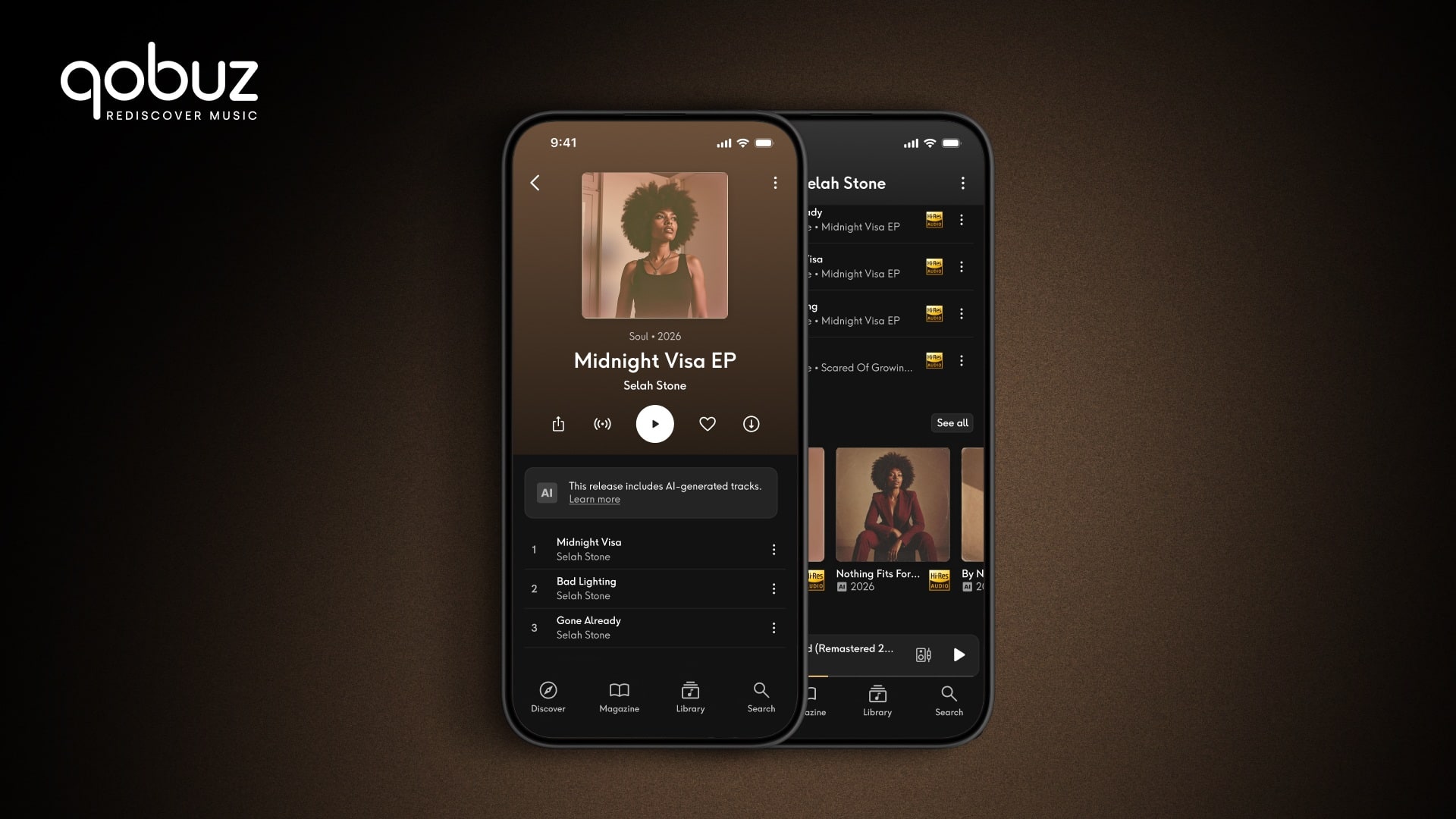
For listeners, the issue is about transparency. Imagine clicking on a new artist because the cover art, name and track description suggest a real performer, only to discover that the recording was generated by software. Some listeners might not mind. Others may feel misled, especially when the music appears to imitate a recognizable artist or style.
For musicians, the stakes are more personal. A working artist may spend months writing, recording and promoting a song, only to find that automated uploads are competing for attention in the same digital storefront. The concern is not simply that AI exists. It is that an ocean of instant content could make genuine human work harder to find.
Other Platforms Are Taking Different Paths
TIDAL is not the only streaming service responding to the surge. Other platforms have adopted a mix of bans, labels, detection tools and new policies.
Apple Music has moved toward labeling music generated with artificial intelligence, giving listeners more information about what they are hearing. That approach keeps the material available while making its origin easier to identify.
Bandcamp, meanwhile, has banned music made with AI. SoundCloud has also clarified its position after strong criticism from users, emphasizing that AI should support artists rather than replace them.
Deezer has taken a detection-focused approach. The service launched a tool designed to identify AI-generated music across playlists from 20 streaming platforms. It later reported that AI-generated songs made up more than half of its daily uploads. That marked the first point at which human-made music was outnumbered by AI alternatives in the platform’s daily intake.
Beatport has announced plans to ban songs that are fully or mostly generated by AI. Spotify has also announced a labeling system intended to help users identify AI-generated artists and content. The platform previously confirmed that it had removed 75 million “spammy tracks” and was targeting impersonators.
For fans who want a more tangible connection to music culture, a music poster collection can offer a physical reminder of the artists and sounds that shaped their lives.
The Copyright Debate Moves Into Government
The conversation has also reached lawmakers. In March, the UK government confirmed that it would abandon plans that could have allowed AI companies to use copyrighted works without permission.
The proposed changes had drawn fierce criticism from musicians and creators who feared their work could be absorbed into AI training systems without payment, credit or consent. Paul McCartney, Kate Bush, Dua Lipa and Elton John were among the artists involved in a campaign urging politicians to protect creative work.
That debate touches the heart of the issue. Music has always borrowed, referenced and reinvented what came before it, but AI systems can process enormous quantities of material at speed. For creators, the fear is that their songs, performances or distinctive styles could be used to build commercial tools without a fair agreement.
At an AI summit held during Manchester’s Beyond The Music Festival, artists, industry leaders and experts argued that creators have both a moral and material claim to be credited and paid for their work.
Ian Murray, Minister for Creative Industries, introduced speakers at the event and said that 66 percent of music creators believe AI poses a direct threat. He also argued that innovation and artists’ rights should not be presented as opposing choices.
“We cannot ask our creators to choose between embracing innovation and protecting their rights.”
— Ian Murray
Murray also said the UK should work toward becoming “the safest place to develop and adopt AI technology in the world.” That ambition depends on finding rules that protect musicians without shutting down useful creative tools.
A Call for Stronger Rules
Clive Dickens, founder of Absolute Radio and chief executive of The Meliora Company, also spoke at the summit. His comments focused on regulation, oversight and the need to prevent harmful AI systems from spreading without accountability.
“AI should be fair-governed,” he began. “It should have regulations and laws that help it operate fairly. We should be looking at mandatory reach reporting across our societies. We need a treaty of non-proliferation around bad AI. You can’t release medicine into society without regulatory approval, and you shouldn’t be allowed to release AI models without pre-approval as well.”
— Clive Dickens
It is a forceful comparison, but it captures the anxiety surrounding the technology. Music platforms are now dealing with automated content at a scale that can affect royalties, identity, copyright and discovery all at once.
TIDAL’s ban will not settle the argument. It does, however, show that streaming services are no longer content to leave the question unanswered. The next chapter may involve better labeling, stronger detection and clearer definitions of what counts as human creativity in a digital recording.
For fans, the old excitement of pressing play remains—but now there is a new question humming quietly beneath the track: who, or what, actually made this song?
FAQ
- What is TIDAL banning?
TIDAL is banning recordings made entirely with generative artificial intelligence, particularly music created solely through text prompts. - Can artists still use AI tools while making music?
Yes. TIDAL’s policy allows artists to use AI tools as part of their creative process, while targeting recordings made entirely by AI. - How many tracks has TIDAL removed?
TIDAL reported that more than 27 million tracks had been removed under its updated guidelines, alongside the broader figure of nearly 30 million deleted songs. - Why were some AI tracks removed for impersonation?
Approximately 66,000 recordings were taken down automatically because they were suspected of using or imitating established artists’ names. - Are other music platforms responding to AI-generated songs?
Yes. Services including Apple Music, Bandcamp, SoundCloud, Deezer, Beatport and Spotify have introduced different combinations of labels, detection tools, restrictions or bans.
If you love the visual side of music as much as the sound, explore a favorite album cover poster for your space at Architeg Prints. It is a warm, tangible way to keep the human side of music close by.
 | DISCOUNTGET 30% OFF*Use code on your next order:
|
* This post may contain affiliate links, meaning we earn a commission if you make a purchase through these links, at no additional cost to you.