Qobuz AI Tags Bring New Transparency to Music Streaming Platforms


 See more Architeg Prints stories on Google.
Qobuz AI Tags Bring New Transparency to Music Streaming Platforms
Qobuz AI Tags now identify releases containing AI-generated tracks, giving listeners clearer information while protecting human artists and royalties.
A Small Label With a Bigger Message
Music discovery has always carried a little mystery. You press play, hear something unexpected, and suddenly a new artist becomes part of your week. Qobuz is adding a new layer to that experience by clearly identifying releases that contain tracks flagged as AI-generated.
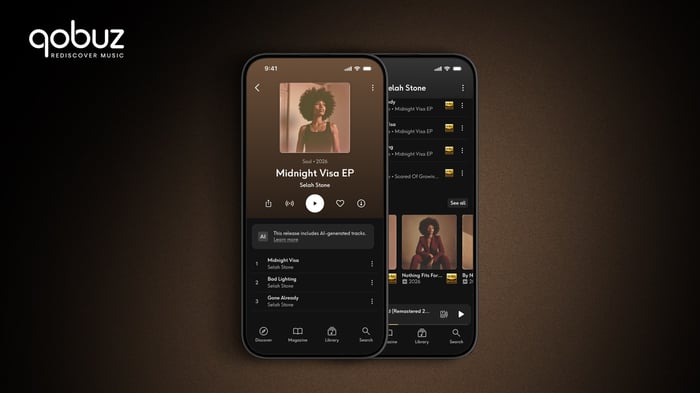
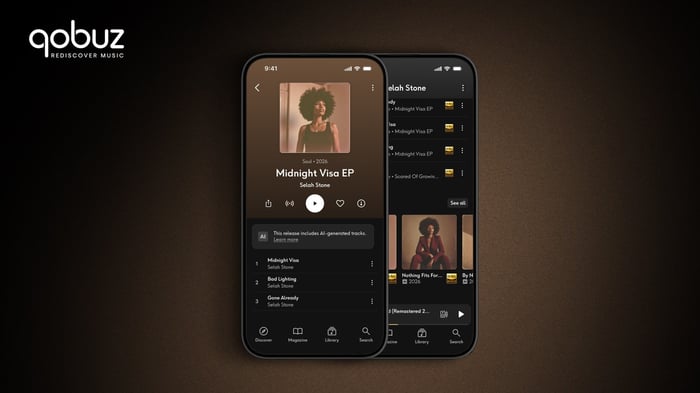
The high-resolution streaming platform has begun displaying an AI notice directly inside its app. On releases identified as containing AI-generated music, listeners will see the message: “This release includes AI-generated tracks.” A nearby Learn more link provides additional information about how Qobuz identifies those tracks.
It’s a straightforward addition, but the wording matters. Rather than hiding the information behind a complicated settings menu or burying it in release details, Qobuz places the notice above the track listing. In other words, the platform wants listeners to know before they settle in for a full album or playlist.
That kind of clarity may become increasingly important as AI-generated music takes up more space across streaming catalogues.
Why Streaming Services Are Paying Attention
The arrival of AI-generated tracks has created a difficult balancing act for music platforms. On one hand, new tools can make music creation more accessible and give people fresh ways to experiment with sound. On the other, large volumes of automatically generated material can make it harder for listeners to understand what they’re hearing—and harder for human artists to compete.
Major streaming platforms are now dealing with growing numbers of AI-generated tracks entering their catalogues. Some of those tracks are linked to artificial streaming activity, where automated plays are used to inflate performance numbers. When that happens, royalty money can be redirected away from artists whose work was created and promoted by people.
That’s the uncomfortable part of the conversation. Streaming numbers may look impressive on a screen, but the figures don’t always represent genuine listener interest. A track can rack up plays without building a real audience, connecting with fans, or creating the sort of musical memory that makes a song stick.
Qobuz’s new label doesn’t solve every issue surrounding AI music, but it gives listeners more context at the moment they’re deciding what to play. Sometimes, a simple signpost is useful. Music discovery doesn’t need another fog machine.
Human Curation Remains Central to Qobuz
Qobuz says its approach to music discovery is guided by editorial judgment. Its playlists and featured selections are created by human curators rather than being shaped solely by automated recommendation systems.
That human-led model has long been part of how the French platform distinguishes itself in a crowded streaming market. Instead of treating every listening decision as a data point, Qobuz emphasizes the role of people who listen, select, organize, and recommend music.
For listeners, that can make the experience feel closer to browsing a thoughtfully arranged record store than scrolling through an endless digital warehouse. You may still encounter unfamiliar music, but the route there has been shaped by editorial choices rather than only by listening history or automated suggestions.
Qobuz says its editorial curation already keeps AI-generated material out of its featured selections and playlists. As a result, the new tagging system is mainly intended for music that appears through search or reaches the service through direct uploads.
That distinction is important. The label isn’t necessarily changing what the platform’s curators recommend. Instead, it gives people more information about releases they find independently—especially when they search for a particular artist, album, genre, or track.
What the New AI Notice Tells Listeners
The wording used by Qobuz is deliberately clear. It doesn’t ask listeners to guess whether a song was created with AI tools, nor does it make a vague reference to “synthetic content.” It simply states that the release includes AI-generated tracks.
The notice appears above the track list, which means it’s visible before someone presses play. That placement allows listeners to make their own decision about whether they want to continue listening, investigate the release, or move on to something else.
“Today, the challenge is no longer just detecting AI-generated music but enabling listeners to identify it clearly. At Qobuz, this transparency—which is our hallmark—comes with a core conviction: musical discovery must remain guided by human choices. Everyone should be able to know what they are listening to and make informed choices”.
— Georges Fornay, Qobuz Deputy CEO
The comment captures the central idea behind the feature. Detecting AI-generated music is only one part of the problem. Once a platform identifies it, that information has to be communicated in a way listeners can actually understand.
There’s no dramatic warning siren here, and there doesn’t need to be. The label works more like a clear sticker on an album sleeve: visible, practical, and easy to interpret.
AI-Generated Tracks Represent a Small Share of Streams
According to Qobuz, tracks identified as AI-generated account for 0.38% of the platform’s total streams. The company connects that relatively small share with its human-led approach to musical discovery.
That figure offers a snapshot of how much AI-generated material is currently being played on the service, though it doesn’t mean every AI-created track is treated in exactly the same way. The important distinction is between music that receives legitimate listener attention and activity that appears to be generated artificially.
Among the streams associated with AI-identified tracks, Qobuz says its anti-fraud systems classify 60% as fraudulent. Those streams are excluded entirely from royalty payouts to rights holders.
The decision is designed to stop fraudulent activity from affecting the royalty pool. If artificial plays were counted in the same way as genuine listening, they could distort the system and reduce the share available to human musicians, songwriters, producers, and other rights holders.
For fans, this may sound like backend accounting. In practice, it affects the music ecosystem they support every time they press play. Streaming payouts are not an abstract concern for working artists; they are part of the difficult math behind recording, releasing, and sustaining a career.
A Focus on Fairer Streaming Royalties
Qobuz also points to its independently audited per-stream rate of $0.01873, which it describes as the highest rate currently offered in the industry.
That figure is part of the company’s wider argument for identifying AI-generated tracks and removing fraudulent streams from royalty calculations. If Qobuz is paying a comparatively high rate per stream, protecting the accuracy of those streams becomes even more important.
The platform’s position is fairly simple: human creators should remain at the center of music-making, and the financial system surrounding streaming should not allow automated activity to siphon away their earnings.
This is where the AI tag becomes more than a cosmetic app feature. It fits into a broader effort to make the catalogue more transparent, monitor suspicious listening behavior, and keep royalty payments tied to legitimate activity.
No streaming system is perfectly simple—far from it. Still, identifying questionable content and filtering fraudulent plays gives artists a clearer chance of being paid for the attention their work genuinely earns.
Millions of Tracks Removed From Search
Qobuz has already taken steps to reduce the amount of inactive AI-generated material available through its service. The company removed more than a third of AI-generated albums that had no listening activity.
That purge removed roughly four million tracks from Qobuz’s search engine. The scale of the removal shows just how much AI-generated content had accumulated without attracting listeners.
Four million is a striking number, especially when placed beside the everyday experience of searching for music. A user may see only a handful of relevant results, but behind the scenes, a platform can be carrying enormous quantities of content that very few people ever play.
Removing inactive releases from search can make discovery less cluttered. It also helps separate music that has at least attracted listener interest from a huge mass of material that exists primarily because it was easy to generate and upload.
For anyone who has ever searched for a favorite album and waded through duplicate, misleading, or irrelevant results, a cleaner search environment sounds like a welcome bit of housekeeping.
The System Was Built In-House
Qobuz says it designed and built the new tagging system internally. The feature represents another step in the company’s AI Charter, which it published in February 2026.
The platform also expects the charter to evolve as regulations surrounding AI-generated content continue to develop across the streaming industry. That ongoing review will likely matter because the technology—and the rules around it—are still changing.
For now, Qobuz’s approach combines several measures: human editorial curation, visible labeling, anti-fraud monitoring, and the removal of inactive AI-generated material from search. Each measure handles a different part of the problem.
The result is not a blanket rejection of technology. Instead, Qobuz is emphasizing disclosure and human judgment. Listeners can decide what they want to hear, while artists have a stronger chance of being protected from artificial competition and fraudulent streams.
The music industry has always changed with new tools, from home recording equipment to digital production software. AI introduces a particularly large shift because it can generate huge amounts of material quickly. Qobuz’s answer is to make the listening environment more legible—one label, one playlist, and one verified stream at a time.
Conclusion
Qobuz AI Tags give listeners a clearer view of what they’re playing, while the platform’s wider policies aim to protect human creators from artificial streams and distorted royalty payouts. Would a visible AI label change the way you explore a new album or artist?
FAQ
- What does the Qobuz AI tag say?
The notice reads, “This release includes AI-generated tracks.” It appears above the track listing and includes a Learn more link. - Where will listeners see the AI-generated music label?
The label appears on flagged releases inside the Qobuz app, directly above the list of tracks. - How much of Qobuz’s total streaming activity comes from AI-identified tracks?
Qobuz reports that AI-identified tracks account for 0.38% of its total streams. - What happens to streams Qobuz classifies as fraudulent?
Qobuz says streams identified as fraudulent are excluded entirely from royalty payouts to rights holders. - How many tracks were removed from Qobuz search?
The platform removed roughly four million tracks after purging more than a third of AI-generated albums with no listening activity.
Bring the feeling of a carefully chosen record collection into your space with a favorite album cover poster from Architeg Prints. It’s a warm, visual reminder of the human music-making that makes listening matter.
 | DISCOUNTGET 30% OFF*Use code on your next order:
|
* This post may contain affiliate links, meaning we earn a commission if you make a purchase through these links, at no additional cost to you.