Gankéké Bluetooth Speaker Turns a Wood Sculpture Into a Sound System


 See more Architeg Prints stories on Google.
Gankéké Bluetooth Speaker Turns a Wood Sculpture Into a Sound System
The Gankéké Bluetooth speaker transforms a ceremonial bell shape into a handcrafted wooden sculpture with analog controls, rich character, and cultural memory.
When Everyday Audio Gets Too Predictable
Most Bluetooth speakers have mastered the art of blending into the background. They’re usually round, black, rubberized, and designed to vanish into a shelf, backpack, or beach bag. Practical? Absolutely. Memorable? Not so much.
That sameness has become the quiet trade-off of modern technology. We accept that something can be useful without being beautiful, meaningful, or even particularly interesting to look at. A speaker works, so we stop asking what it says about the room it lives in—or about the people who designed it.
But what if your everyday audio gear didn’t need to disappear?
A Speaker Inspired by a Ceremonial Bell
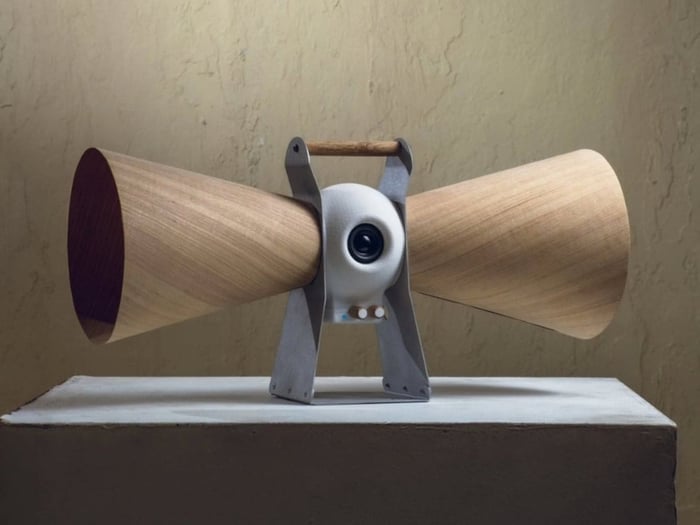
Larry Tchogninou’s Gankéké Bluetooth speaker pushes against that familiar formula by starting with a cultural form rather than a generic gadget silhouette. The design takes its visual language from the gankéké, a double bell used in ceremonial and communal music across Benin, Tchogninou’s country of origin.
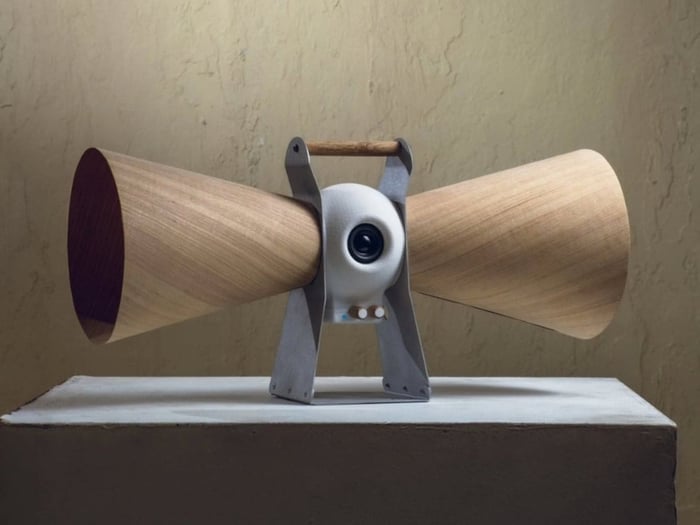
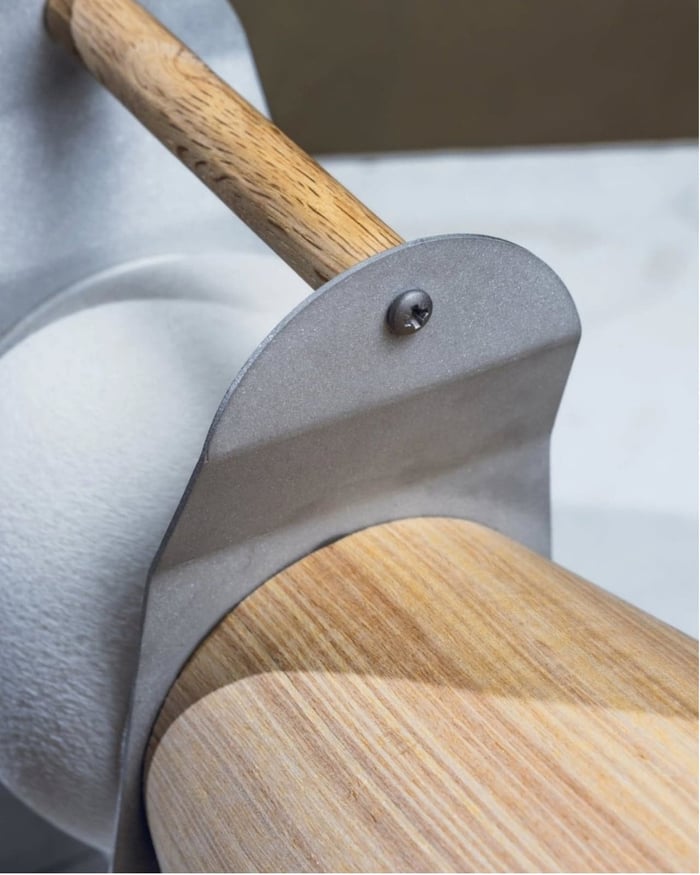
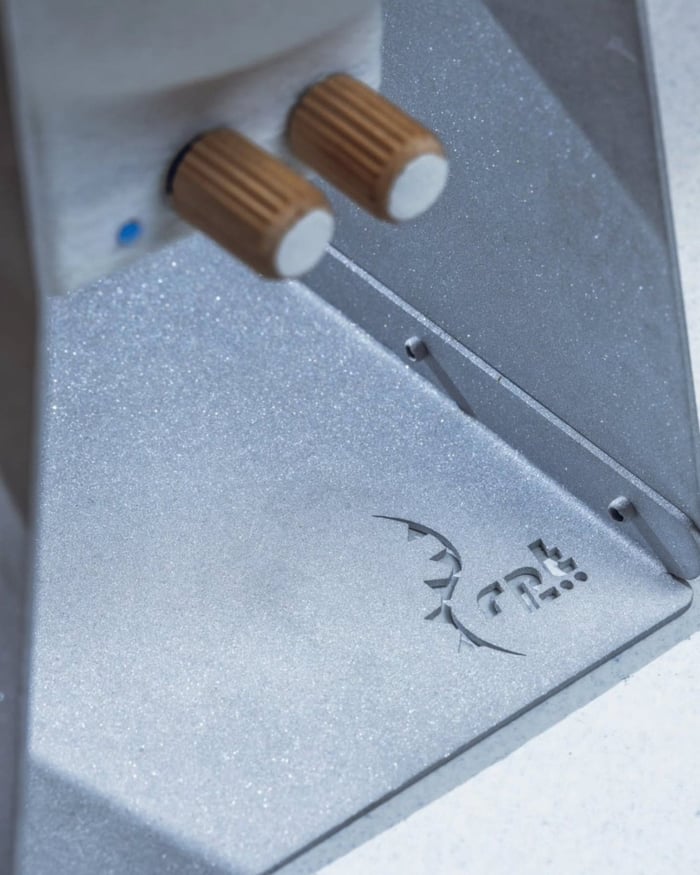
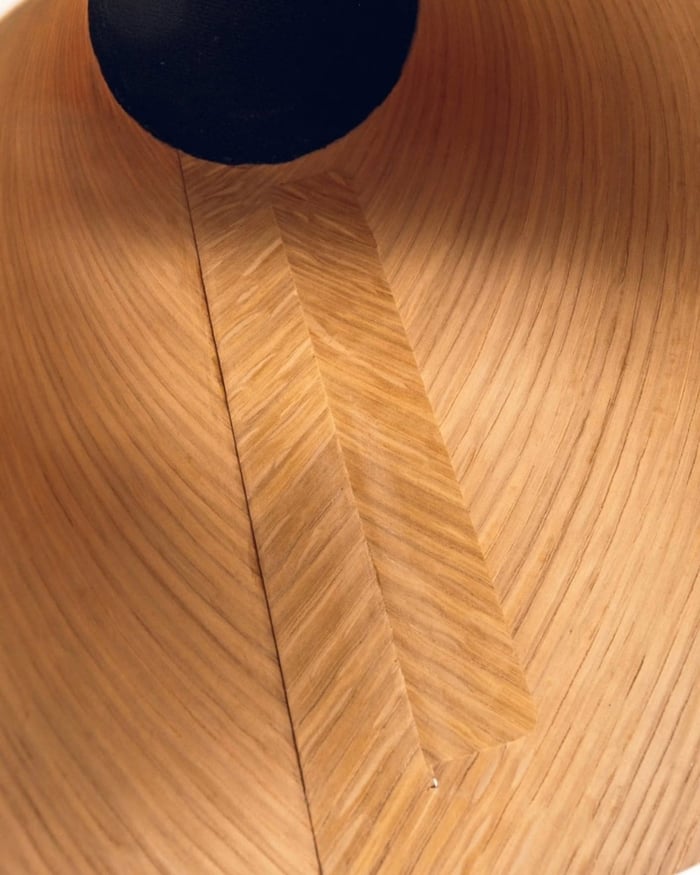
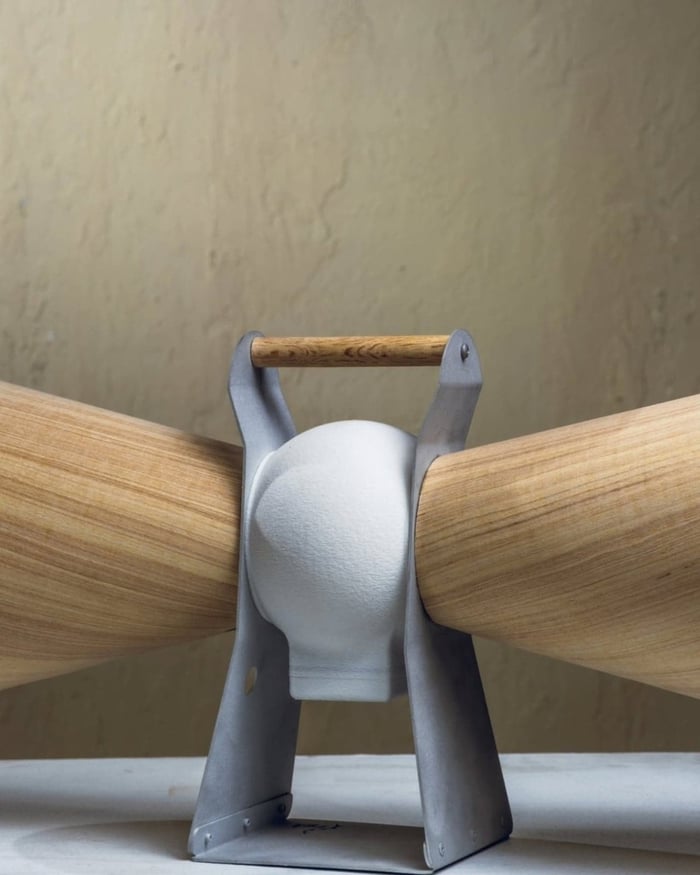
Instead of hiding that inspiration behind a sleek but anonymous shell, the speaker makes it impossible to miss. Two flared cones meet at a central point, creating a shape that feels halfway between a musical instrument and a small piece of furniture. Wood veneer wraps the body, while a sandblasted aluminum frame supports the structure. An oak dowel passes through the top as a handle, adding another tactile, almost handmade detail.
It doesn’t look like a gadget waiting for a charging cable. It looks like an instrument that happens to be ready for your playlist.
A Familiar Shape With a Modern Job
The Gankéké’s appeal comes from the tension between old and new. Its form suggests communal music-making and traditional craftsmanship, while its function belongs firmly to the wireless age. Pair it with a phone, and it becomes part of a contemporary listening setup. Leave it on a shelf, and it still reads as a sculptural object when the music stops.
That dual identity is what makes the design so charming. Plenty of speakers imitate furniture, but this one doesn’t simply borrow a decorative finish and call it character. Its entire body is built around a meaningful shape. The technology follows the form instead of forcing the form into the usual technology-first mold.
Design That Treats Materials as Storytellers
Tchogninou is a Chicago-based architect and designer who was mentored early in his career by Virgil Abloh. That background helps explain the way Gankéké approaches material and meaning. Here, wood, aluminum, plastic, and dowels aren’t simply selected for appearance or function. Together, they carry the identity of the object.
The project began after Tchogninou realized how many audio gadgets he had received over the years without really understanding how they worked. Rather than accepting that distance, he decided to build his own speaker. The result makes the construction visible instead of disguising it beneath a polished, sealed enclosure.
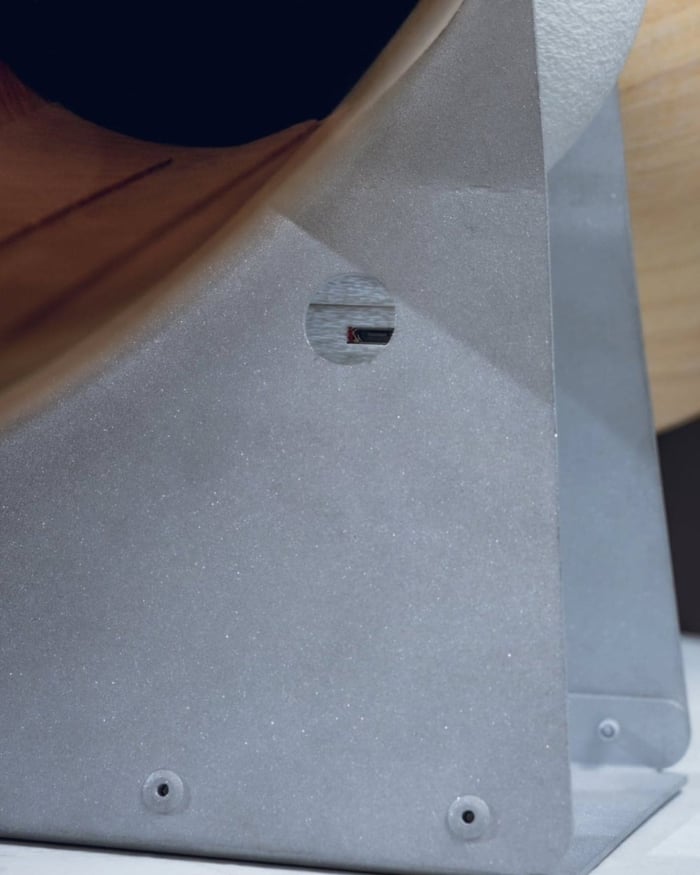
That choice gives the speaker a welcome sense of honesty. You can see the housing, the structural frame, and the physical controls. The mechanics aren’t treated like an embarrassing secret. They’re part of the visual experience.
The Engineering Sits Inside the Horns
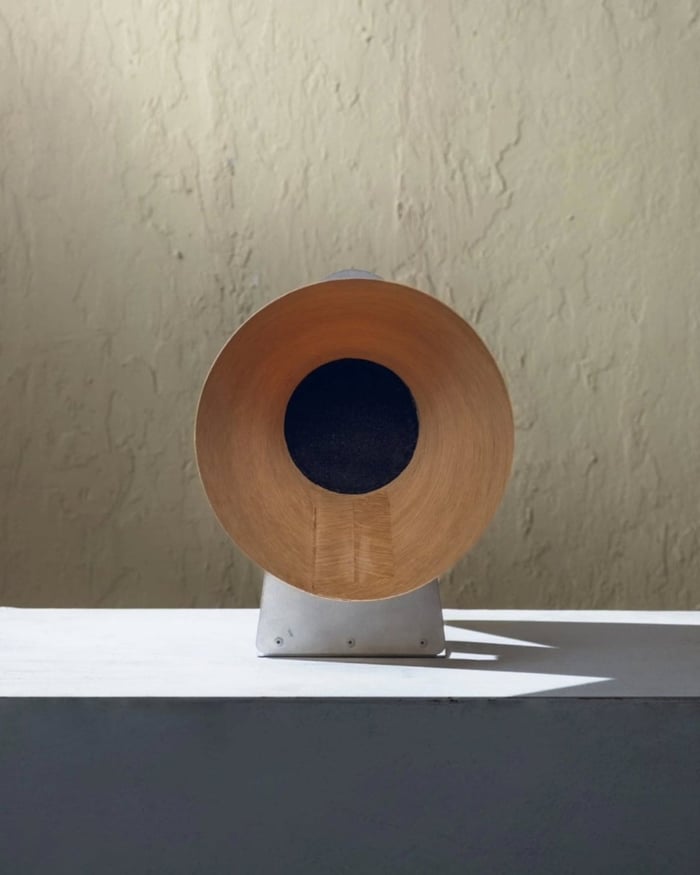
Inside the two wooden horns are lateral speakers, positioned to work with the outward-flaring shape. Between them sits a central subwoofer arranged in a magnet-to-magnet configuration for stability.
That setup gives the speaker a carefully considered internal architecture without disturbing the sculptural exterior. From the outside, the Gankéké remains calm and uncomplicated. Underneath, its components are arranged around the central form rather than packed into a familiar rectangular box.
There’s something satisfying about that approach. The design doesn’t pretend that audio technology is invisible. It simply gives the hardware a more expressive home.
Analog Controls in a Wireless World
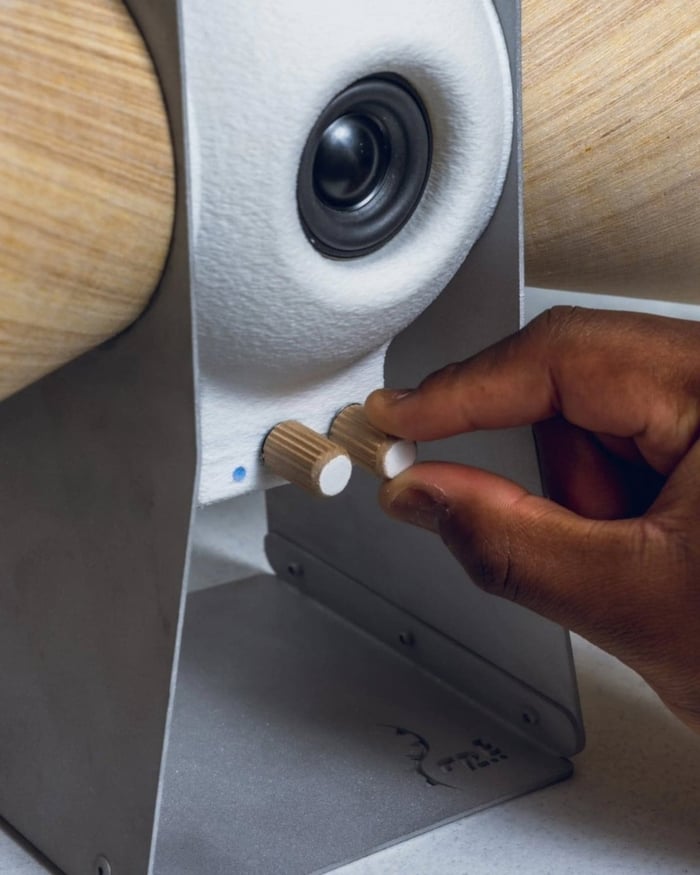
The controls are refreshingly physical for a wireless speaker. Volume and power controls sit on the right side, while a dedicated bass dial is placed on the left. That means adjusting the sound involves turning something real, not tapping through a menu or opening another app.
There’s also a micro USB charging port and a line-in jack for anyone who prefers a wired connection. In a world where even simple products increasingly ask us to navigate software, these details feel almost rebellious. Twist a knob. Plug in a cable. Listen.
The Gankéké offers roughly three hours of playback at medium volume. That won’t carry you through a long flight or an all-day outdoor party, but endurance was never the central promise. This is less of a disposable background companion and more of a considered object for a room, studio, office, or intimate gathering.
Made to Order, Not Rushed to the Door
Every Gankéké is made to order from plastic, wood veneer, dowels, and sandblasted aluminum. The build requires a four-week lead time before shipping, a pace that feels almost unusual now. We’ve grown accustomed to clicking “buy” in the morning and expecting a package by the evening.
That waiting period is part of the point. The speaker is not presented as a mass-produced accessory designed to be replaced when the next model arrives. It’s made with the slower rhythm of a crafted object—something assembled with attention rather than pushed through a giant production line.
Why the $700 Price Tells a Different Story
The Gankéké costs $700, which is certainly a serious price beside the inexpensive speakers filling gym bags and kitchen counters. But comparing the two only makes sense if we’re talking about the same kind of object—and we’re not.
This isn’t just a component hidden inside a plastic shell. The price reflects a small sculpture, a handmade housing, distinctive materials, and a speaker built into the logic of the design. It’s also the work of one designer who began with an understanding of the form before working through the circuitry.
That doesn’t make the price casual or universally accessible. It does clarify what the buyer is paying for. The Gankéké is intended to be lived with, looked at, and kept—not forgotten in a drawer after its battery fades.
Cultural Identity Left in Plain Sight
What I find most compelling is that Gankéké doesn’t flatten its origins in an attempt to seem universally modern. Design made for a broad audience can sometimes sand away every culturally specific detail until all that remains is a smooth, familiar object.
This speaker takes the opposite route. It keeps the bell shape legible. It keeps the name intact. It allows the story to live on the surface rather than hiding it in a paragraph that nobody reads.
That decision gives the object more emotional weight. It feels less like a lifestyle accessory and more like a small act of memory—one that happens to connect to your phone and play music through two wooden horns.
A Speaker That Refuses to Be Forgettable
The Gankéké will never replace the inexpensive speaker tossed into a gym bag, and that’s perfectly fine. It was never competing with convenience alone. Its real opponent is the belief that a speaker has to be forgettable in order to be useful.
It doesn’t.
A speaker can carry a form passed through generations, occupy a shelf like an object worth noticing, and still play music when the moment calls for it. That combination is much harder to achieve than it looks. Cultural references can easily become decorative costume, while functional products can become emotionally empty. Gankéké manages to hold both sides together without losing its balance.
When Technology Feels Personal Again
There’s a particular pleasure in using an object that asks you to slow down for a second. You notice the grain of the veneer. You reach for the bass dial. You remember that sound doesn’t have to arrive from a featureless black cylinder.
The Gankéké turns listening into a more physical experience. Its presence changes the atmosphere even when it’s silent, and its story remains visible whether music is playing or not. That makes it feel closer to a musical artifact than a disposable electronic accessory.
Conclusion
Gankéké proves that a Bluetooth speaker can do more than deliver sound. It can preserve a recognizable cultural form, celebrate visible craftsmanship, and bring a little ceremony back into the everyday act of pressing play. Would you make room for a speaker that feels more like sculpture than electronics?
FAQ
- What is the Gankéké speaker inspired by?
The design is inspired by the gankéké, a double bell used in ceremonial and communal music across Benin. - Who designed the Gankéké Bluetooth speaker?
The speaker was designed by Larry Tchogninou, a Chicago-based architect and designer. - What materials are used to make the Gankéké?
The speaker combines plastic, wood veneer, dowels, sandblasted aluminum, and an oak dowel handle. - What controls does the Gankéké include?
It features power and volume controls, a dedicated bass dial, a micro USB charging port, and a line-in jack for wired listening. - How long does the Gankéké play on a charge?
It provides approximately three hours of playback at medium volume.
Bring the spirit of memorable music objects into your own space with a favorite album cover poster from Architeg Prints. It’s a warm, visual way to keep the soundtrack of your life close by.
 | DISCOUNTGET 30% OFF*Use code on your next order:
|
* This post may contain affiliate links, meaning we earn a commission if you make a purchase through these links, at no additional cost to you.