Astell&Kern Revives Physical Audio Controls with $2,000 PD20 Player


 See more Architeg Prints stories on Google.
Astell&Kern Revives Physical Audio Controls with $2,000 PD20 Player
Experience precision sound like never before with Astell&Kern’s PD20, blending tactile controls and cutting-edge audio tech.
When Buttons Beat Touchscreens: A Fresh Take on Audio Control
There’s something genuinely satisfying about turning a knob instead of swiping a screen. In a world drowning in touchscreens, physical controls are making a bold comeback. From car dashboards at Volkswagen and Subaru to Ferrari’s sleek EVs designed with classic toggle switches, the tactile renaissance is in full swing. It’s not just nostalgia—it’s a smarter, more intuitive way to interact.
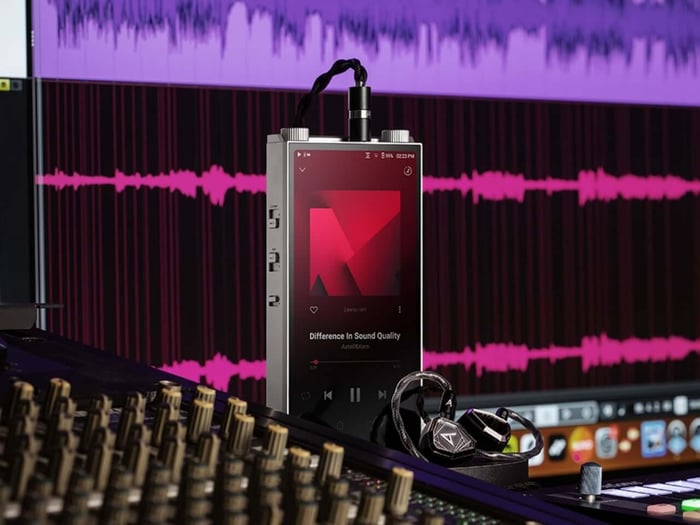
Right in the heart of this movement is Astell&Kern’s PD20, a $1,970 portable digital audio player that boldly ditches the touchscreen-first approach. Instead of a bland, glass slab, it boasts two hefty wheels and a handful of tactile switches that bring a pure, hands-on sound experience.
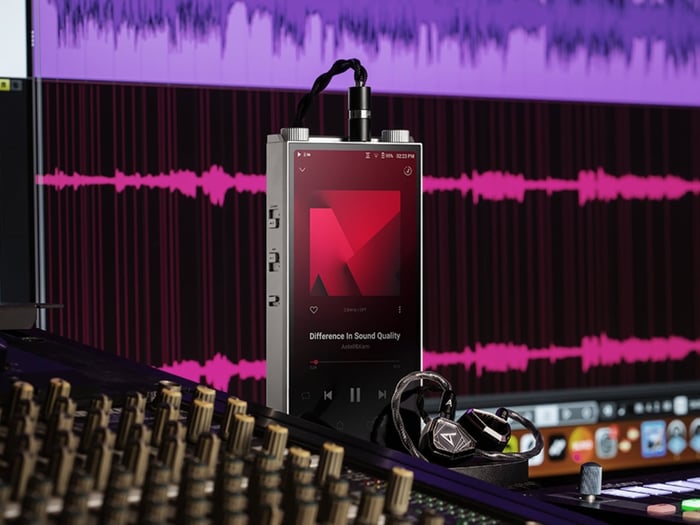
This sleek handheld audio player steers clear of touchscreen dominance with tactile controls.
Sound Lab Control: Where Every Click Counts
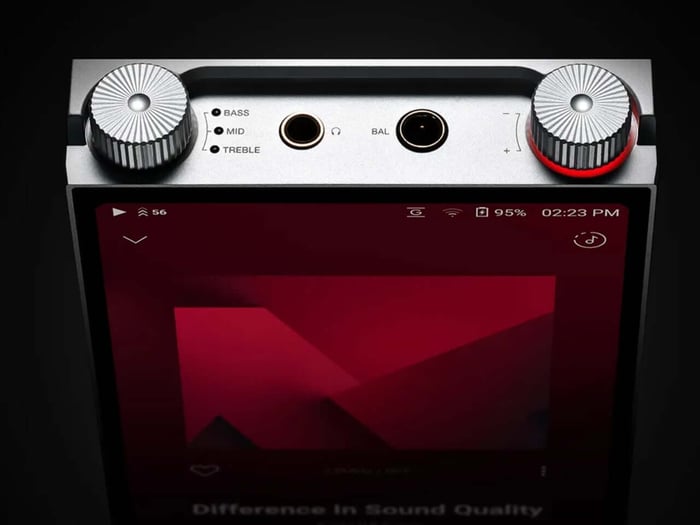
The PD20’s standout feature is the “Sound Master Wheel,” a physical dial that gives you 160 distinct steps for EQ tuning across bass, midrange, and treble. Imagine nudging your music’s vibe in tiny increments, feeling every click beneath your fingertips — total control without ever glancing at a screen. It’s the kind of precision and muscle memory touch sliders simply can’t match.
On top, the symmetrical wheels echo classic mixing consoles—one wheel manages volume, the other, sound tuning. Sliding physical switches on the side switch amplifier modes and current levels instantly; no menus, no fuss. Even the power button doubles as an LED indicator, changing color based on the audio bit depth you’re playing.
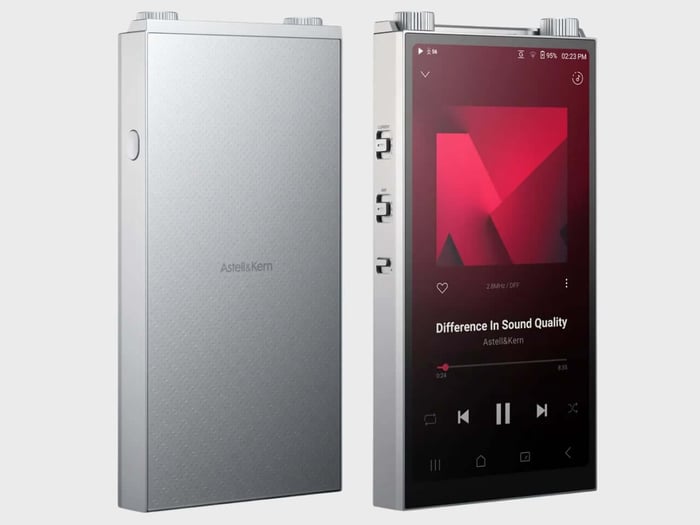
Two large wheels reminiscent of vintage mixers let you master your sound hands-on.
Beyond Retro: A Deep Dive into Personal Sound Technology
While its design nods to analog charm, the PD20 packs seriously modern audio engineering inside. Teaming up with Swedish audio innovators Audiodo, Astell&Kern equipped this player with “Personal Sound” technology. It runs a hearing test through included earphones and crafts a bespoke sound profile tailored to how you hear — balancing left and right channels independently. This is not your run-of-the-mill EQ; it’s a custom sonic fingerprint that no other portable player offers.
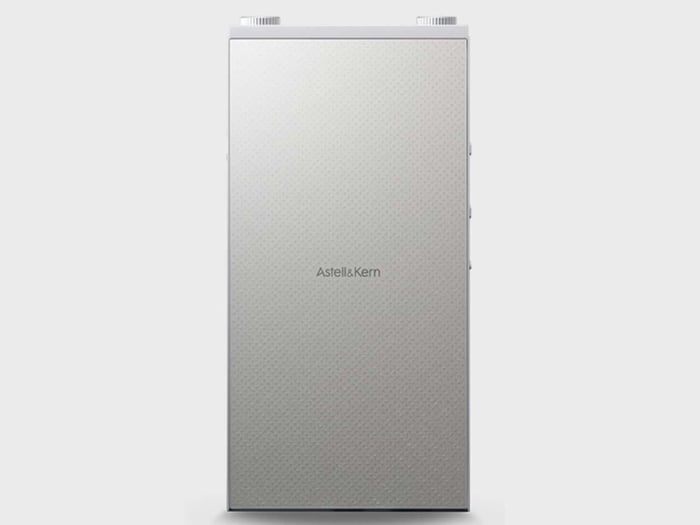
Inside the PD20, innovation meets craftsmanship in a compact design.
Engineered for Audiophiles: Power, Precision, and Flexibility
The PD20’s hardware is built to impress. Four ESS ES9027PRO DACs operate independently in a quad configuration, delivering pristine digital-to-analog conversion. The triple amplifier system is controlled by a physical slider as well, switching between Class A, Class AB, and a hybrid mode. Each mode offers distinct sonic textures:
- Class A: Warm, rich analog vibes beloved by audiophiles.
- Class AB: Efficient and dynamic, perfect for varied listening.
- Hybrid: A balanced middle ground combining the best of both.
Adding to this, a current adjustment slider lets you fine-tune power delivery across three levels, so whether you’re rocking sensitive in-ear monitors or demanding planar magnetic headphones, the PD20 flexes to fit.
Physical sliders let users instantly shift amplifier modes without navigating menus.
Massive Storage Meets Hi-Res Audio Playback
If you’re a dedicated music collector, storage anxiety is a thing of the past. The PD20 ships with 256GB onboard, expandable with microSD cards up to a whopping 1.5TB. It supports everything from everyday MP3s to ultra-high-res audio files like 32-bit/384kHz PCM and native DSD256. These formats deliver breathtaking clarity—even if most ears can’t consciously tell the difference, true enthusiasts will appreciate the headroom.
Streaming isn’t left behind either. Compatible with Tidal, Qobuz, and other high-res services, you get seamless access to your favorite playlists without being chained to offline files. The touchscreen remains as a secondary tool for navigation and track selection, but it never steals the spotlight from the tactile controls that define the PD20 experience.
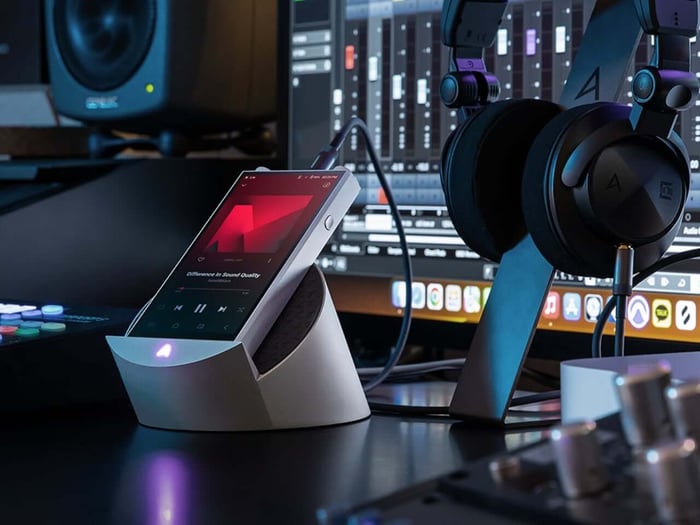
The touchscreen complements the tactile controls, offering navigation when needed.
A Handheld Powerhouse That Feels Like an Extension of You
Holding the PD20, you get the sense it was designed for those who truly appreciate music as an experience, not just background noise. It’s a compact powerhouse packed with features that invite you to interact directly, making every adjustment intuitive and satisfying.
This design philosophy reflects a broader shift in tech: physical controls aren’t outdated relics. They represent a smarter kind of user interface, one rooted in touch, muscle memory, and the joy of hands-on manipulation. This player isn’t merely for convenience; it’s for connection.
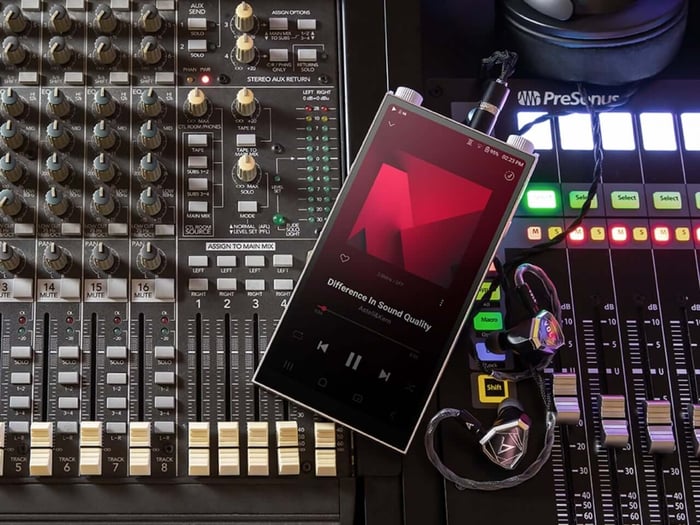
Machined from aluminum, the PD20 pairs durability with a refined tactile feel.
Not Just a Player, But a Statement
The dedicated music player has long been a niche, overshadowed by smartphones and streaming apps. But the PD20 doesn’t compete with your phone; it challenges the idea that every interaction with technology must happen via a flat glass screen. For nearly $2,000, you’re investing in a beautifully crafted object that beckons you to touch, twist, and truly shape your audio.
In a sea of featureless screens, this is a radical, refreshing proposition that reminds us how much pleasure there still is in physicality.
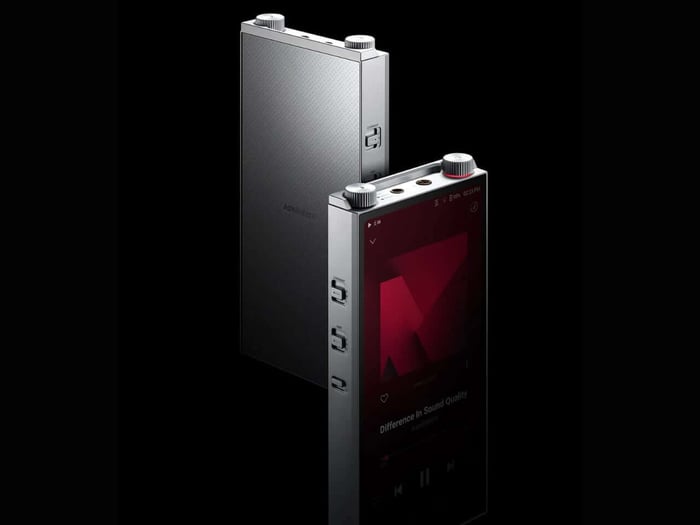
The PD20 invites audiophiles to rediscover tactile control in an age of touchscreens.
“The PD20 represents a growing understanding ... that physical controls aren’t a step backward. They’re a different kind of intelligence.”
— Astell&Kern Design Philosophy
FAQ
- What makes the PD20’s Sound Master Wheel unique?
It offers 160 precise EQ adjustment steps across bass, midrange, and treble with tactile feedback, allowing real-time control without looking. - How does the Personal Sound feature work?
Using included earphones, it runs a hearing test and creates a custom sound profile that compensates for each ear independently. - What amplifier modes are available?
Class A for warm analog feel, Class AB for efficiency and dynamics, and Hybrid for a balanced sound, all switchable with a physical slider. - Can the PD20 handle high-resolution audio files?
Yes, it supports formats up to 32-bit/384kHz PCM and DSD256, plus high-res streaming services. - Is the touchscreen the main control method?
No, the touchscreen is secondary, mainly for navigation and track selection, with physical controls taking center stage.
If you’re captivated by the PD20’s blend of tactile magic and audio precision, why not bring that vibe to your space? Shop your favorite album cover posters at our store here and surround yourself with music-inspired art that speaks as loudly as your playlist.
 | DISCOUNTGET 30% OFF*Use code on your next order:
|
* This post may contain affiliate links, meaning we earn a commission if you make a purchase through these links, at no additional cost to you.