Musical Fidelity M8x DAC Review: The Ultimate High-End Digital Converter


 See more Architeg Prints stories on Google.
Musical Fidelity M8x DAC Review: The Ultimate High-End Digital Converter
Unpacking the sound mastery of the Musical Fidelity M8x DAC, a true powerhouse in high-end digital audio conversion.
If you’re anything like me, a dedicated music lover always on the lookout for that next-level sound experience, the Musical Fidelity M8x DAC might just be your new best friend. Since Heinz Lichtenegger took the helm at Musical Fidelity back in 2018, he’s been shaking up the lineup with fresh entries from entry-level gems to flagship valve-powered marvels. The M8x DAC sits proudly at the top of their digital conversion game, promising to elevate your system’s sound with precision and warmth.
What Does the M8x DAC Bring to the Table?
Musical Fidelity’s M8x DAC is an audiophile’s playground. It offers both fixed-output mode, perfect for pairing with integrated amps or preamps, and variable-output mode, ideal for directly driving power amplifiers or active speakers. I tested both configurations—each with its own appeal. While there’s no built-in streaming, the company suggests coupling it with their MX-Stream streamer, which closely resembles the Pro-ject Stream Box S2 Ultra I used for this review. The sound synergy was impressive.
This DAC is a tweaker’s delight: choose from eight different digital filters, enable or disable upsampling up to 352.8/384kHz, and reclock incoming signals with an internal clock—features often reserved for the serious audiophile. Plus, the M8x sports a must-have I²S input, designed for a forthcoming Musical Fidelity CD transport, which I tested using Pro-ject’s RS2T CD transport.
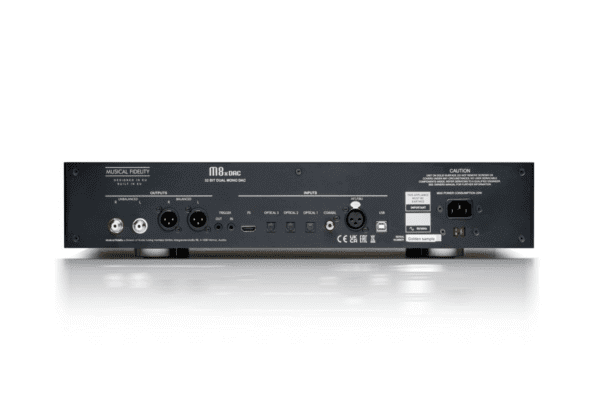
Inputs cover all the essentials: USB-B for computers, coaxial, AES/EBU, plus a generous three optical inputs. Sadly, no standard HDMI, which feels like a missed opportunity. The USB input handles an impressive PCM rate up to 768 kHz and native DSD512. Windows users will need to install a driver—but it’s straightforward, and vital if you want to get the best from software like Audirvana.
MQA fans can breathe easy, as the DAC supports MQA decoding despite Tidal's recent retreat from the format. The coax, optical, and AES/EBU inputs also accept MQA but cap out at 24-bit/192kHz PCM and do not handle DSD. Both single-ended RCA and balanced XLR analog outputs are here, along with headphone outputs boasting 6.35mm and balanced XLR jacks. And trust me, the headphone stage deserves your attention.
The remote control is simple but effective—only a few buttons dedicated to the M8x—but that’s enough to toggle inputs, switch filters, and manage volume when in variable-output mode.
Size and Style: A DAC That Means Business
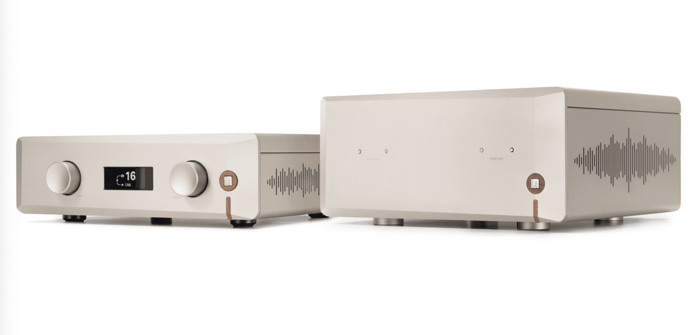
The M8x is a beast, measuring a hefty 483mm wide by 381mm deep—far larger than my usual Mytek Liberty 2 DAC. What accounts for its girth? Discrete components instead of integrated circuits take up room, and the fully balanced design doubles the electronics required. There’s also a sizable toroidal transformer to power the beast, designed to fit aesthetically with other M8 series components.
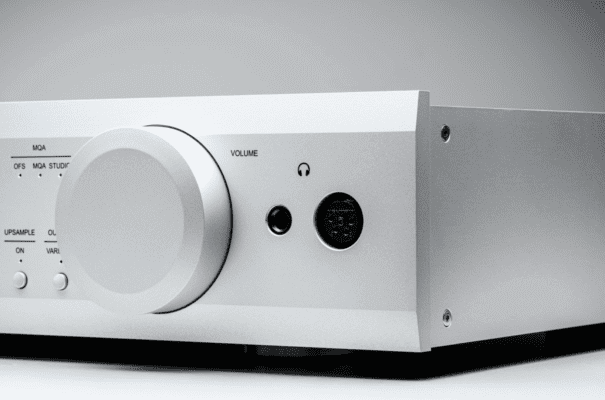
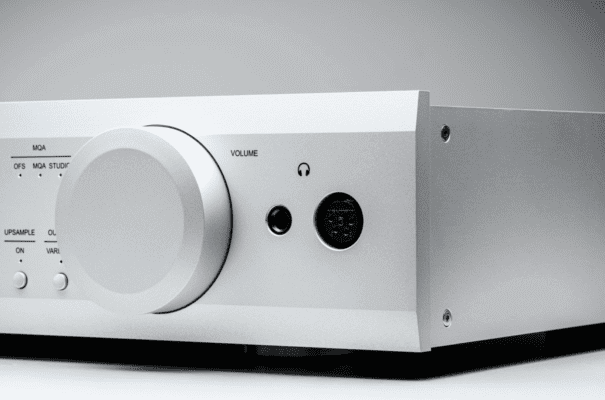
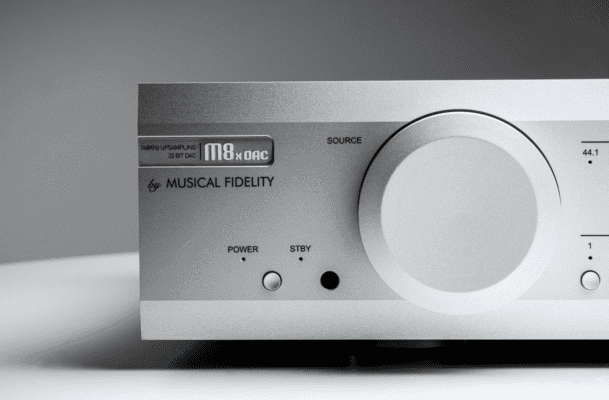
Available in all-silver or black with silver dials, I lean towards the former—sleek and understated. The build quality is solid, though it leans more toward professional studio gear than luxury eye candy. The front fascia sports a cluster of LEDs that light up like a festive display, which, honestly, fits the DAC’s functional vibe.
Engineering Excellence Under the Hood
The M8x is built for sonic purity. It deliberately omits a screen to reduce electromagnetic interference (EMI), and leaves out Wi-Fi and Bluetooth to avoid radio frequency interference (RFI). Inside, discrete Class A amplification and separate power supplies for digital and analog circuits ensure clean, precise performance.
At its core are dual ES9038Q2M DAC chips operating in dual-differential mode—a choice that raised eyebrows. Why use these lower-power chips instead of the fancier Pro versions? Simon Powell from the distributor Henley Audio told me the Pro chips test marginally better, but the overall system design and electronics surrounding the DAC chips matter far more. The flagship Nu-Vista DAC uses the same chips, so Musical Fidelity clearly trusts their capability.
Listening Experience: Pure Magic
Pairing the M8x with the Mytek Liberty 2 DAC, Prima Luna EVO 300H amplifier, and MoFi SourcePoint 8 speakers, with Pro-ject S2 Ultra streamer as the streamer, was a revelation. The M8x immediately sounded more refined, more detailed, with a wider soundstage. Its bass had a richer texture and more punch, making the music feel alive and present.
Take the electronic layers of Telefon Tel Aviv's "I Dream Of It Often". The M8x unraveled the dense soundscape, revealing intricate bass lines and subtle complexities that the Mytek’s raw power glossed over. As I jotted down,
“The music has grown up, it’s not just a powerplay now.”The M8x drew me closer, making each note feel tangible.
Lady Blackbird’s "Slave To The Rhythm" carried the same bold, immersive quality, with a palpable soundstage you could almost stroll around. Orchestrations in Zimmer Live’s Dune: House Atreides burst with power and clarity, with each instrument separated and crystal clear.
Slower jazz pieces like Michel Petrucciani’s Bimini from Power of Three revealed delicate piano nuances and saxophone subtleties that enriched the listening experience.
A Pro’s Perspective
My friend Derek Nash, a veteran recording engineer and seasoned saxophonist, weighed in. He found the Mytek more clinical and studio-like, with sharper clarity and treble. But the M8x? It offered a much more natural, analogue-feeling sound, especially in the bass, making the acoustic environment—like the room—more present. His verdict: the M8x was the more musical and engaging of the two.
We experimented with the digital filters but found little difference between them—typical for such high-end DACs. A best advice? Pick your favorite and leave it be.
I²S Input: The Audiophile’s Curiosity
I²S, a protocol once confined within device chips, is now used to connect components for supposedly better sound quality. Testing with the Pro-ject RS2T CD transport, any difference between I²S and AES/EBU inputs was minuscule—just a whisper of added clarity. For most, it’s a rabbit hole best left unexplored.
Reclocking and Upsampling: Subtle but Worthwhile
Reclocking the signal made little difference with the Pro-ject streamer but helped noticeably with their DS2T CD transport. The clarity of Keith Jarrett and Charlie Haden’s Jasmine improved, so I kept reclocking on.
Upsampling to 352.8kHz was a clear win—treble became silkier, bass firmer, and the overall presentation more relaxed and detailed. Ange Hardy’s By The Tides showcased subtleties between guitars, while Bonnie Raitt’s live-feel track I Can’t Make You Love Me gained a heightened sense of venue ambiance. Upsampling earned a permanent spot in my setup.
Volume Control: A Minor Letdown
When using the M8x’s variable output to directly control volume through the Prima Luna’s HT input, the amplifier’s own pre-amp sounded warmer and more dynamic. The M8x’s volume control, based on the ESS DAC’s on-chip solution, felt cooler and slightly blunt in comparison, missing some refinement and top-end sparkle.
Despite this, the volume control’s performance was close enough to make driving a power amp or active speakers directly a perfectly viable choice. Still, it’s a rare moment where the M8x’s otherwise impeccable engineering leaves a tiny gap.
Headphone Listening: A Class Act
The M8x’s headphone amp, built from discrete components and mostly Class A, packs plenty of power: 3.9W at 8 ohms, enough to drive demanding cans with ease.
Testing with everything from the Drop 6XX (Sennheiser 650s by any other name), Audioquest Nighthawk Carbon, Meze 99 Classics, Grado SR80x, to Koss Porta Pros, the M8x delivered sweet detailed highs and gloriously full, controlled bass without ever becoming harsh or strident.
It compares favorably with high-end headphone amps like the Schiit Jotunheim. The only edge the Jotunheim had was a bit more presence and palpability, likely thanks to its dedicated volume control design. Still, for most headphone lovers, the M8x’s amp is plenty impressive.
Final Thoughts
Some features, like defeatable upsampling, reclocking, and multiple filters, may feel like overkill to “set-and-forget” users. Yet their presence doesn’t degrade sound quality, making them harmless bonuses.
The on-chip volume control was a slight disappointment, especially given the otherwise stellar engineering, but it didn’t overshadow the M8x’s core strength: a beautifully organic, detailed sound with powerful bass that outclasses many DACs in the £1,000–2,000 range.
The M8x lifted my £15,000+ system several notches, bringing fresh vitality and joy to every track. It commands a premium price but fully justifies it, proving itself as no mere range filler but a highlight in Musical Fidelity’s lineup. Bravo to Heinz and team for this sonic triumph!
Musical Fidelity M8x DAC – Specs & Pricing
- DAC
Dual ES9038Q2M chips (dual mono)
8 digital filter options
Total correlated jitter: <100 femtoseconds peak to peak
Output impedance: <100 ohms - Headphone Amplifier
Outputs: 6.3mm stereo jack (unbalanced), 4-pin XLR (balanced)
Power (balanced): 3.9W/8Ω, 3.2W/32Ω, 400mW/300Ω
Output impedance: <5 ohms - Digital Inputs
1x USB Audio Class 2, up to PCM 768kHz, DSD256 via DoP, native DSD512, full MQA hardware decoding
3x Optical: 24bit/PCM 192kHz, MQA 384kHz, DoP DSD 64
1x Coaxial: 24bit/PCM 192kHz, MQA 384kHz, DoP DSD 64
1x AES/EBU: 24bit/PCM 192kHz, MQA 384kHz, DoP DSD 64
1x CD I²S (MCLK out 16.9344MHz) - Analog Outputs
RCA fixed/variable: 2V RMS @ 0dBFS
XLR fixed/variable: 4V RMS @ 0dBFS - General
Power consumption: 70W max, <0.5W standby
Dimensions (WxHxD): 483 x 102 x 381 mm
Weight: 10.6 kg
Price: Approx. $4,299 USD
FAQ
- What types of digital inputs does the M8x support?
The M8x supports USB-B, coaxial, AES/EBU, three optical inputs, and an I²S input designed for high-quality CD transports. - Can the M8x be used directly with power amplifiers?
Yes, it offers variable output with a built-in volume control, allowing direct connection to power amps or active speakers. - Does the M8x support MQA and DSD playback?
Absolutely, it decodes MQA fully and supports PCM up to 768kHz and native DSD512 playback. - How powerful is its headphone amplifier?
The headphone stage delivers up to 3.9W at 8 ohms, capable of driving demanding headphones with ease. - Is the volume control on the M8x high-end?
It uses the DAC chip’s on-chip volume control, which is functional but not as refined as some dedicated pre-amps.
Love the sound of the M8x? Bring a piece of that magic home—shop your favorite album cover posters at Architeg Prints and decorate your listening space with style and soul.
 | DISCOUNTGET 30% OFF*Use code on your next order:
|
* This post may contain affiliate links, meaning we earn a commission if you make a purchase through these links, at no additional cost to you.