Bruno Mars The Romantic Review: Retro-Soul, Zero Shame, Big Flowers


 See more Architeg Prints stories on Google.
Bruno Mars The Romantic Review: Retro-Soul, Zero Shame, Big Flowers
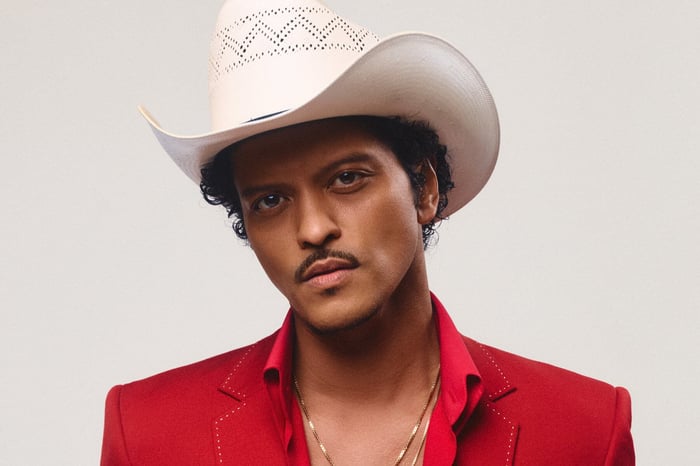
Bruno Mars’ The Romantic doubles down on retro-soul pleasure—disco frosting up front, then a slow-dance sermon that dares you to roll your eyes.
A hook for people who pretend they “hate” smooth music
Some albums try to impress you. The Romantic tries to win you over like it already knows your mother is in the room—and honestly, it works more often than it should.
The title tells the truth (and that’s the whole strategy)
Here’s what’s actually happening: Bruno Mars isn’t being subtle because he doesn’t want to be. Calling an album The Romantic is basically him walking onstage in a tailored suit, pointing at the spotlight, and saying, “Yes, this is the part where you feel something.”
And the wild part is, he’s earned the right to be that on-the-nose. The whole record feels built around a simple argument: his precision-tuned retro-pop obsession isn’t a phase—it’s his permanent home. He’s not borrowing old styles to look clever. He’s using them like tools he trusts more than whatever’s trending this week.
If you came here hoping for reinvention, you’re going to be annoyed. If you came here hoping for competency and charm at a slightly ridiculous level, you’re in danger.
The context: he’s not “back”—he never left the radio
You can hear the confidence of someone who’s been casually stacking massive collaborations lately. Those big, glossy hit moments don’t just boost visibility—they change posture. The Romantic has the posture of a guy who expects the room to already be warmed up.
And then there’s the lead single, “I Just Might,” which kicks the door in with a grin. It’s engineered to go down easy, and it knows it. The groove is pure roller-rink fantasy—Seventies disco comfort food with bubblegum shine—like KC & the Sunshine Band and Hot Chocolate got poured into a modern pop mold and polished until it reflects your own smile back at you.
Bruno even drops that line—“What good is beauty if your booty can’t find the beat?”—and it’s so unserious it circles back around to being a mission statement. I don’t mean it’s “deep.” I mean it’s a refusal to pretend pop needs to be difficult to be worthwhile. In the current climate where everyone’s racing to sound important, he’s basically planting a flag in the sandbox and calling it real estate.
My first impression was wrong: this isn’t a nonstop sugar rush
At first I assumed the whole album would ride that “I Just Might” high: bright, fast, and built for sweaty dance floors. On second listen, it’s obvious that track is the decoy—the lone sugar-rush moment that convinces casual listeners to press play before Bruno pivots into what he really wants: big, slow, romantic theater.
Most of The Romantic is Bruno doing what he does best when he’s not trying to prove he can party: he croons, he pleads, he builds these flower-bearing ballads that feel designed for dramatic eye contact. The singing is the point. The pacing is the point. The “we’re going to sit in this feeling until it behaves” attitude is the point.
It’s not a chaotic album. It’s a controlled one. And that control is half the seduction.
The album’s core move: step away from 80s sparkle, lean into 70s soul
If 24K Magic was Bruno polishing Eighties nostalgia until it gleamed, The Romantic slides back another decade and hangs out in 1970s soul, close to the neighborhood he explored with Silk Sonic. The drums feel warmer. The grooves feel thicker. The arrangements act like they have history, even when the songs are brand new.
There’s a specific kind of comfort this record is chasing: the comfort of music that already sounds like it belonged to your life before you heard it. It’s the “I’ve always known this chorus” trick, and Bruno pulls it off through obsessive detail—bass that sits exactly right, percussion that doesn’t rush, harmonies that land like they’ve been rehearsed for months because they probably have.
And yes, part of it is borderline ridiculous in its devotion. The vibe is so period-faithful it sometimes feels like Bruno would absolutely research which conga drum heads were used on a specific Curtis Mayfield session just to get the texture correct. The album doesn’t wink at the reference points. It commits.
“Risk It All” and the way Bruno weaponizes sincerity
“Risk It All” is where the record lays its cards down. Bruno goes full romantic melodrama—“I would run through a fire just to be by your side”—and instead of sounding corny, it sounds like he’s betting you won’t dare laugh while he’s singing that well.
The acoustic lushness leans into Cuban bolero influence, and it’s not just decoration. The phrasing slows down. The emotion stretches out. It’s a love song that doesn’t want to be clever—it wants to be believed.
A reasonable listener could argue this is too safe, too clean, too “approved by focus group.” I get that reaction. But I think the safety is the point: Bruno isn’t chasing danger; he’s chasing certainty. He wants the feeling to hit every time, like a light switch.
The Latin-R&B stretch: not a detour, a flex
The middle of the album starts showing off in a different way. “Cha Cha Cha” and “Something Serious” lean into that sweet-spot Latin-R&B style often tagged as “brown-eyed soul,” and the grooves feel like they were built for lowrider slow-roll confidence.
“Something Serious” has that “oye-como-va” strut—music that doesn’t hurry because it knows the street is watching. It’s not trying to be modern. It’s trying to be right.
And “God Was Showing Off” makes the intention even clearer: the band counts off in Spanish and the track leaps into a lavish ballad like it’s stepping onto a stage with velvet curtains. Bruno plays the awe-struck lover, the guy on one knee in his head even if he’s standing in the booth.
I’m a little unsure how much of this reads as “personal heritage nod” versus “smart aesthetic choice,” because Bruno’s too smooth to show his work emotionally. But either way, it lands as more than tourism. It’s a way of reviving Seventies sounds without making the album feel like a museum exhibit.
“Oh My Soul”: the moment the musicians start grinning
“Oh My Soul” is where the band gets to strut. There’s Ernie Isley-style laser-beam guitar cutting across a tight, conga-driven groove, and Bruno slides into falsetto like it’s the easiest thing in the world.
This is one of those tracks where the record’s craft stops feeling like craft and starts feeling like chemistry. The percussion doesn’t just keep time—it flirts with the rhythm. The guitar doesn’t just decorate—it snaps the song into focus. Bruno doesn’t oversing, but he also doesn’t underplay it. He aims for that sweet spot where confidence reads as warmth, not arrogance.
If you don’t like retro-soul, you might call it cosplay. I’d call it a deliberate refusal to let modern minimalism bully him out of arrangements.
The “political” undercurrent—maybe, kind of, but also not really
There’s also a quiet power in how this album places Latin-leaning grooves inside Bruno’s very central, very mainstream pop presence. Latin pop isn’t some niche sidebar anymore, and the record seems aware of that—using these textures not as a feature, but as part of its normal vocabulary.
Is that political? Maybe a little, in the sense that taste can be political when someone with huge reach decides what counts as “standard.” But I’m not fully convinced Bruno is making a statement so much as making a calculation: these sounds are classic, and right now they’re also current, so why wouldn’t he plant his flag there?
Either way, it gives the album extra width. It’s not just one shade of nostalgia.
The closing pair: two slow songs that refuse to leave quietly
The album closes with “Nothing Left” and “Dance With Me,” and it’s a smart ending because it doesn’t chase a big finale—it chooses emotional afterglow.
“Nothing Left” is the towering heartsick performance: Bruno sounds like he’s pushing his voice right up to the edge without tipping into melodramatic mess. It’s the kind of track where you can picture the studio lights dimmed, everyone pretending they’re not impressed, and then rewinding it anyway.
“Dance With Me” is softer: a sweet Motown-style slow dance about rekindling a relationship that’s flickering instead of blazing. And that choice matters. Ending on “rekindling” instead of “victory” tells you what this album really wants: not the rush of new love, but the stubborn decision to keep showing up.
The one thing that slightly bugs me (because something has to)
Even when I’m enjoying The Romantic, I kept waiting for one moment of real mess—one risky production swerve, one lyric that feels like it slipped past quality control, one vocal take that leaves a little blood on the floor. Bruno’s version of romance is beautifully executed, but it’s also managed.
That’s not a fatal flaw. It’s more like noticing someone’s handwriting is too neat. Sometimes I want the song to trip a little just to prove it’s alive.
Still, the album’s biggest strength is the same thing: it’s designed to please people on purpose. No apology, no ironic distance, no “you just don’t get it.” It gets you.
Conclusion
The Romantic isn’t trying to update Bruno Mars. It’s trying to confirm him—locking in a specific idea of timeless pop-soul and performing it with such conviction that you stop asking whether it’s new and start asking whether it’s working. And most of the time, it does.
Our verdict: People who like their soul-pop clean, lush, and unashamedly romantic will eat this up—and probably text someone they shouldn’t. If you need chaos, edge, or “experimental” anything, this album will feel like being trapped in a very expensive candle store with perfect lighting.
FAQ
- Is The Romantic more like Bruno’s dance-pop era or his throwback soul era?
It leans hard into the throwback soul lane, with “I Just Might” acting as the one big disco-leaning sugar hit. - What’s the overall vibe of The Romantic?
Slow-dance romance with Seventies soul warmth—lots of crooning, rich grooves, and carefully chosen vintage textures. - Does the album use Latin influences heavily?
Yes, especially across tracks like “Cha Cha Cha,” “Something Serious,” and “God Was Showing Off,” where Spanish count-offs and Latin-R&B grooves shape the mood. - Are there big vocal moments?
Absolutely—“Nothing Left” is built around a towering heartsick vocal performance, and Bruno’s falsetto glides especially well on “Oh My Soul.” - Who is The Romantic not for?
Listeners who want rough edges, left turns, or a modern minimalist sound will likely find it too polished and too devoted to its retro plan.
If you’re the type who hears The Romantic and immediately visualizes a cover-worthy wall print, you can shop album-cover-style poster vibes at our store: https://www.architeg-prints.com
 | DISCOUNTGET 30% OFF*Use code on your next order:
|
* This post may contain affiliate links, meaning we earn a commission if you make a purchase through these links, at no additional cost to you.