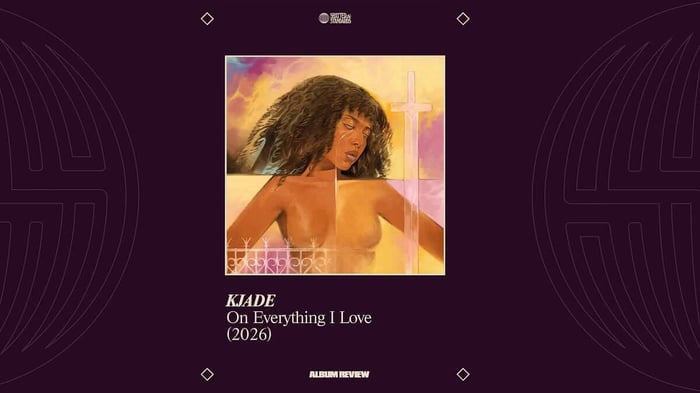
KJADE Album Review: *On Everything I Love* Is a Panic Attack With Purpose


 See more Architeg Prints stories on Google.
KJADE Album Review: On Everything I Love Is a Panic Attack With Purpose
Blunt take on the KJADE album: it drops you mid-crisis, dares you to keep up, and turns pain into a currency it refuses to spend cheaply.
No warm-up lap: this thing starts while the room’s already on fire
Some albums introduce themselves. This KJADE album doesn’t. It just shoves you through the door like you’re late to your own emergency.
I can hear the difference in temperament right away: her debut, The Sound That Trees Make, had that slow-built patience—like someone who’d spent years doing art the long way before ever bothering to record. You can practically feel that background in the way she carries stillness: modeling work, performance art exhibitions, moving from California to Arizona, and only starting to record in 2022. That “I’ll get to music when I’m ready” posture used to be part of the sound.
On Everything I Love doesn’t have that calm. The first track lands like you’ve been dropped into the middle of an argument you didn’t start, and somehow you’re expected to answer for it anyway. Somebody got bit. Somebody wants to “try again.” There’s no gentle ramp, no opening thesis, no “here’s what this record is about.” The decision is obvious: start in the thick of it, keep walking, let the listener scramble.
And honestly, my first impression was that it was almost rude—like, give me thirty seconds to orient myself. But on second listen, that lack of orientation is the point. Confusion is the environment here, not a side effect.
The real question hiding under the bars: how much of you is left?
Once you’re inside the album’s pace, a single question keeps hovering over everything, even when she doesn’t name it cleanly: how much of yourself can you hand over before you can’t recognize what’s left?
“I’d Rather Soften” circles that idea in a way that’s sideways but deadly direct. The line that stuck to my ribs was:
“If I die before I wake, I will still be me.” — KJADE
That’s not a cute affirmation. It sounds like she’s bargaining with annihilation. The people around her have a grip on her, and she’s forcing focus while temptation and escape routes stay wide open. She talks about painting a picture with the K in her name—then closes the verse counting “one, two, three, fourth grade,” like she’s inventorying the years where you learn what you’re allowed to be.
On “Boys Are Afraid of the Dark,” she flattens the honesty until it’s almost ugly on purpose: “I still ugly, but I’m growing.” No flourish. No vocal acrobatics to soften the blow. Then she flips the hook into third person—suddenly it’s “she,” not “I,” like she’s stepping outside herself to report the damage from a safe distance. A reasonable listener could argue it’s just a stylistic trick, but it feels more like survival: when it gets too real, she changes camera angles.
And that’s what she keeps doing: carrying beauty and wreckage at the same time without bothering to reconcile them for your comfort.
“Redbone” is the densest cut—and it earns that weight the hard way
Here’s my hot take: nothing else on this record hits with the same packed, specific density as “Redbone,” and it’s not because it’s “better produced” or “more lyrical” in some generic way. It’s because she refuses to talk in fog.
She asks, “How do I escape it all?” then nails it to an object: contemplating “the base beneath the picture on my wall.” That picture becomes a trapdoor. The “protocol” goes sideways. The unfinished version of herself becomes the only hiding spot that doesn’t betray her.
Then she drops a line that changes the air in the room: “I’m on the hunt for my rapist to kill what weapons inside of me.” Not a metaphor you can politely applaud. It’s an ongoing pursuit—of the person, and of the internal machinery left behind. She’s not asking for sympathy; she’s describing a mission. If you’re listening casually, this is the moment you either lock in or you bounce.
She keeps stacking lives in the same breath: a woman who isn’t here but would be proud; “big girls not crying.” Then she pins it to geography—Phoenix, directly—saying she knows there are people coordinating harm. And right after that, she zooms out: “Keep the raps high just to keep the rent low / I won’t stop till we free the Congo.”
That swing—personal to political without pausing to label the categories—will annoy some listeners. I can already hear someone saying it’s “too much in one verse.” But that’s exactly her point: it’s one life, so it gets one sentence. Neat compartments are a luxury.
Work and money, but not the cute “grindset” version
Next, the record starts talking about labor, and I braced for the usual “hustle as personality” routine. It doesn’t do that. It talks about work like work: extraction, exhaustion, negotiation, and refusing bad deals.
“Pay Me in Pain” makes the thesis blunt: she’s been working graveyard shifts, trying to turn what she carries into a payday. She mentions splitting shins since first grade—an image that feels less like athletics and more like learning early that bruises are a receipt.
Marcel Allen comes in and speeds the energy up with a line that lands like a spit-take: “I’ll be damned if I’m selling out for chump change.” Then it slides into grimier reality—lump sums to numb pain, watering seeds, even flexing something as ridiculous as making queso from steak. That last detail is funny in that calm way, like: yes, of course the survival fantasy includes turning struggle food into something luxurious.
The shared logic between them is tight:
- pain becomes a currency,
- but they refuse to spend it on somebody else’s terms.
On “Superjail,” that refusal gets louder—almost performative—but it still feels sincere. “Fuck going global, I’m going solo.” People pushing commercial expectations, demanding allegiance, making her prove which side she’s on. Then she undercuts the trauma-as-brand impulse: “No better chip on my shoulder just from the trauma.” That’s a line a lot of artists should steal, but won’t, because it kills a profitable narrative.
And “Collect the dub just like Tchaikovsky” is such a specific, odd flex it works. Borrowing from the classical canon and wearing it casually isn’t random—it’s her saying she can pull status from anywhere and still not ask permission.
“Virginia Is for Lovers” makes desire feel like math that won’t balance
From there, the album pivots into desire, but it doesn’t give you romance as a clean getaway. “Virginia Is for Lovers” claims pleasure like it’s property—honey wine, rocked beds, painted nails—yet the chorus keeps a thumb on the bruise: “shit ain’t adding up.”
That contradiction is the whole track. The line “Bridge over troubled water, teaser, don’t starve” reads like a warning wrapped in flirting. It’s hunger, but with a calculator running in the background.
SALIMATA shows up and changes the temperature—warmer, less guarded—talking moonlight on thighs, distance, appetite, time. And the hook lands with the kind of optimism that still feels earned: “More you come, more we find a way.”
The feature doesn’t overshadow KJADE; it highlights her. SALIMATA sounds like she believes in the softness. KJADE sounds like she’s testing it, like she’s tapping the glass to see if it breaks. If you think this album is “just hard,” you’re missing the quieter move: she keeps letting warmth in, then watching it like it might steal something.
“Spilled Milk” is where she stops pretending she owes you a good morning
“Spilled Milk” opens with spoken honesty that made me laugh a little because it’s so unromantic: “Morning, this ain’t no grand rising shit.” That’s not cynicism. That’s boundary-setting.
She’d rather wreck bridges because that’s where the demons live—meaning: the crossings are where the old patterns wait for you. She talks about “growing chances while other people just grow thicker.” That line stings because it’s not poetic; it’s social observation. Some people don’t evolve, they just calcify.
Then she drops this image: “A jade stone found in the sand.” It’s a self-myth, but not a glamorous one—more like a reminder that value doesn’t always come from being displayed. Sometimes it comes from being overlooked and staying intact.
The hook calls words “diabetic”—too sweet, too loaded, carrying more than they can hold. I’m not totally sure the metaphor lands cleanly on first listen, and part of me still thinks it risks sounding like a clever draft line she kept because it’s sticky. But it also fits the record’s whole allergy to sugary language: sweetness here is suspicious.
“Douglas” quietly drops the most gutting admission
“Douglas” is one of those tracks where the verse is so packed you could miss the line that actually breaks the floor.
“They almost killed me when I told ‘em all that you gon’ need some help
Asking a Black woman for something, well, she’ll go kill yourself.”
It’s not written like a motivational quote. It’s written like a memory she still tastes.
The record keeps returning to this image of taking the K out of her name. It’s a small change that becomes a recurring act: shedding the letter that makes her “kJADE,” becoming just Jade—just the stone, just the person underneath the rapper. That’s not branding. That’s self-extraction.
Ovrkast. slides in without crowding the track, which is harder than it sounds. The verse complements her posture—plainspoken accounting of damage, a “half man, half amazing” kind of self-measurement, acknowledging the past like it’s both burden and paperwork. He doesn’t try to win the song. He just sets his experience beside hers and lets it sit there.
“She’s So Heavy” is an invoice—and she expects payment
By the time “She’s So Heavy” hits, the album has taught you not to expect polite metaphors. The first real line aims at a specific kind of person: the one who confuses volume for substance. “You not hard, you just aggressive.” That’s not a diss for sport; it’s a diagnosis.
Then she turns inward: “I’m no God, I’m just confessing / Need my things, I came collecting.” The track treats “heavy” as presence, as cost, as gravity. She’s talking about being the person in the room who won’t shrink to make things easier. Her people lift her up and call her heavy because that’s the accurate word for what she carries.
The second verse widens the target list—shots at fake hardness, references that jump from street to federal, even the devil sending a hungry ghost when he couldn’t reach her directly. And then, just when you think she’ll keep it combative, she drops something painfully human: she needs her mom, her sister, her nan at a funeral.
That’s the move this album keeps making: it dares you to think it’s all armor, then it shows you exactly what the armor is covering. And across twelve sample-heavy tracks, she almost never retreats from what she’s said, even when it would be easier to blur it.
Where it lands for me (and where it almost loses me)
This KJADE album lands in the “great” bracket for me—not because it’s flawless, but because it refuses to decorate the truth into something easier to stream.
Still, I’m not going to pretend every moment is perfectly calibrated. A couple of the densest verses hit so fast that the emotional weight can flatten into information overload, especially if you’re listening in a distracted setting. I kept waiting for one or two hooks to give a little more air back to the room. Maybe that’s the point—maybe comfort would be a lie here—but it did make me rewind more than once just to catch what she meant to land.
The tracks I keep coming back to:
- “She’s So Heavy”
- “Redbone”
- “Douglas”
This KJADE album made a record that doesn’t ask to be liked. It asks to be kept up with. The chaos at the start isn’t messy songwriting—it’s a deliberate way of telling you that the story began before you arrived, and it’s not pausing to explain itself.
FAQ
- Is this KJADE album more aggressive than her earlier work?
It feels less patient and more immediate—like she stopped waiting for the room to be ready. - What’s the core theme of On Everything I Love?
Handing pieces of yourself away, then realizing you still have to live inside what’s left. - Which song hits the hardest lyrically?
“Redbone,” because it stays brutally specific instead of hiding behind general trauma-talk. - Are the features essential or just extras?
They matter—SALIMATA shifts the emotional temperature, and Ovrkast. adds weight without stealing space. - Is it an easy listen?
No, and it’s not trying to be. If you treat it like background music, it’ll punish you by making you miss the point.
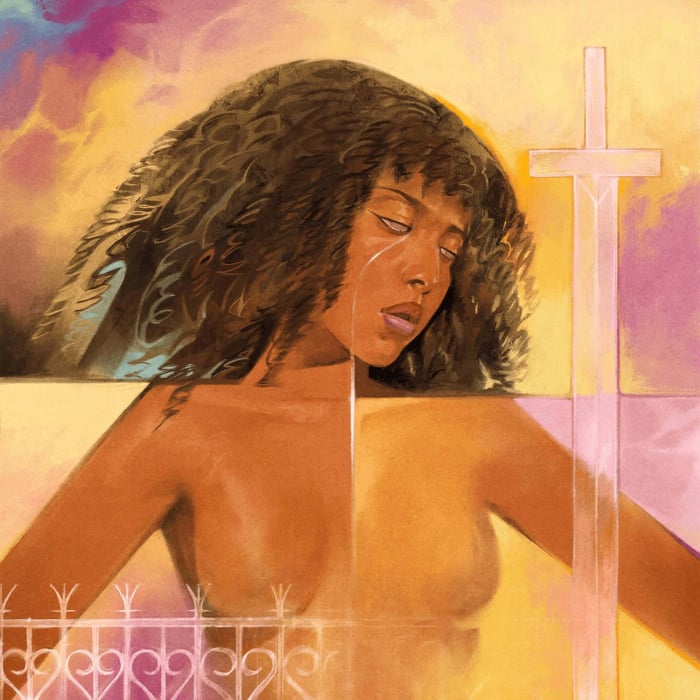
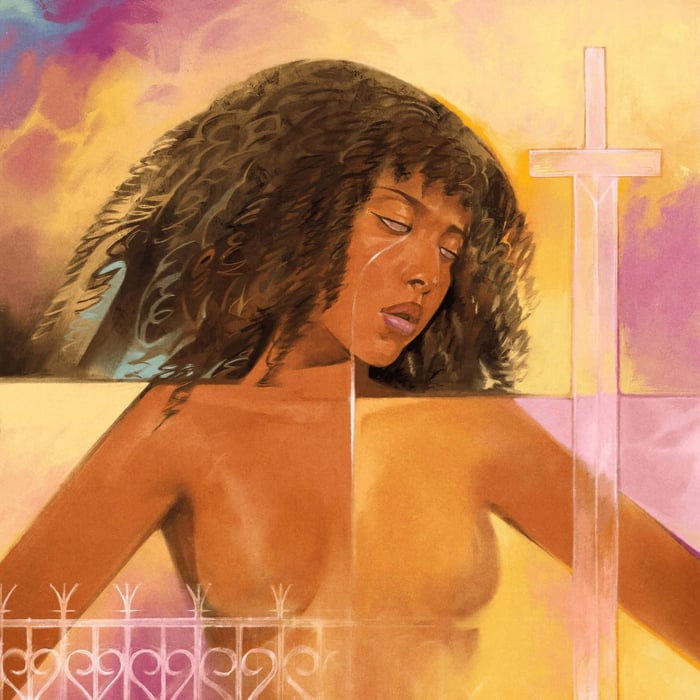
If you’re the type who bonds with an album visually as much as sonically, it’s not a bad idea to grab a favorite album-cover poster and let it haunt your wall on purpose: https://www.architeg-prints.com
 | DISCOUNTGET 30% OFF*Use code on your next order:
|
* This post may contain affiliate links, meaning we earn a commission if you make a purchase through these links, at no additional cost to you.