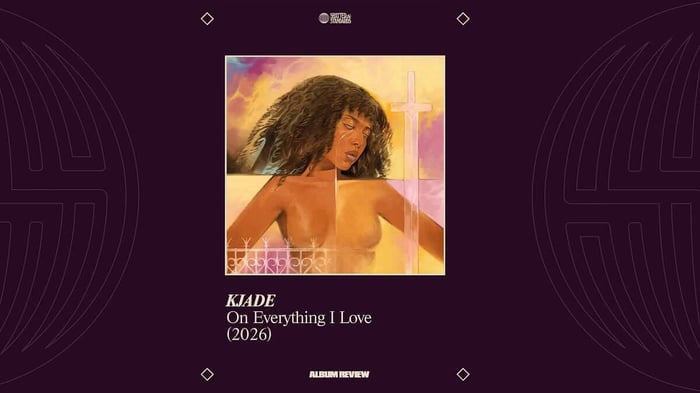
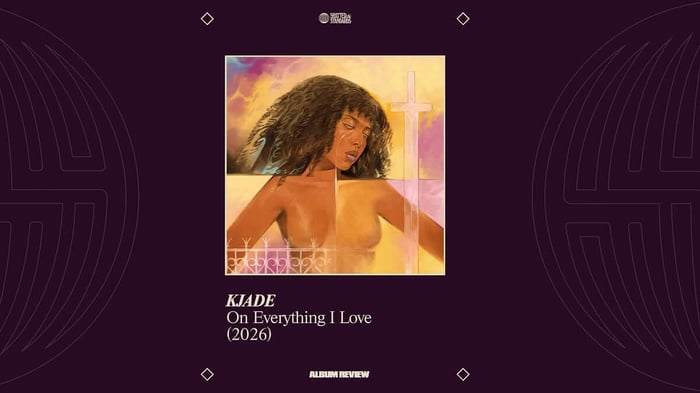
KJADE’s On Everything I Love Review: Chaos With a Pulse (Sorry)

 See more Architeg Prints stories on Google.
KJADE’s On Everything I Love Review: Chaos With a Pulse (Sorry)
On Everything I Love isn’t “vulnerable rap”—it’s a moving target. KJADE makes identity feel like a crime scene you’re still standing in.
A cold open that doesn’t wait for you
Some albums greet you at the door. On Everything I Love yanks you through a side entrance while something’s already on fire in the kitchen.
I can hear the point immediately: KJADE doesn’t want a gentle intro, because the story she’s telling doesn’t start neatly. The first track drops in like I missed three texts that would’ve explained everything. Somebody got hurt. Somebody wants another chance. The vibe is “mid-crisis,” not “welcome to my world.” And that decision matters, because it tells me she’s not trying to make herself legible—she’s trying to stay honest to the speed of her own head.
The blunt truth: this record expects you to keep up while it keeps moving.
The backstory you can hear in the pacing
This album doesn’t sound like a beginner album, even though the timeline behind it is basically that: years of patience before an official debut, then recording only starting in 2022. I don’t need a press bio to clock that kind of patience—it’s in the way she lets ideas simmer and then suddenly refuses to explain them.
Her earlier work had a stillness (the kind you get when a whole project is built slowly with one producer’s hands on everything). Here, the stillness is gone. The sound is more sample-heavy, more crowded, and way less interested in calming down for clarity. That’s not “growth” in the inspirational sense. It’s a switch in tactics: from holding space… to taking it.
And yeah, I thought that would be exhausting. On first listen, I assumed the density would blur into one long mood. But it didn’t—because she keeps making hard left turns into specificity.
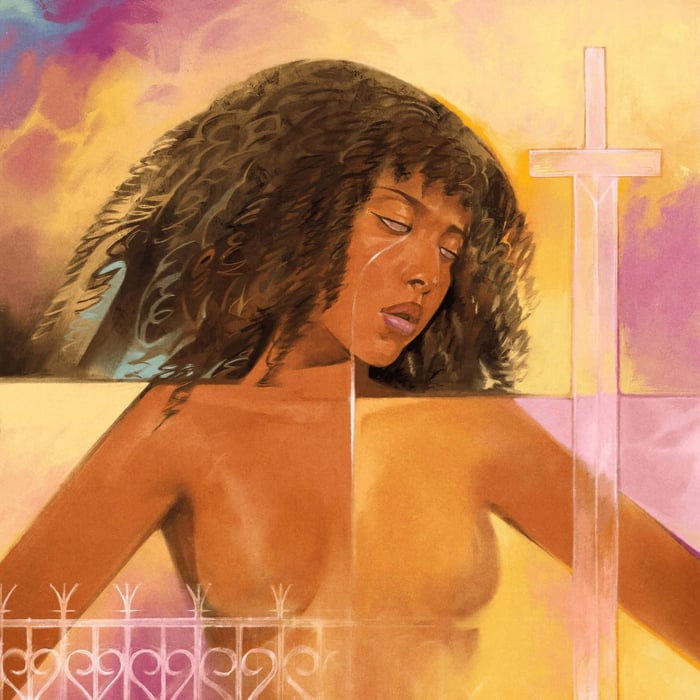
The album’s real question: how much can you give away and still be you?
A single question keeps circling this thing, even when she doesn’t name it: how much of yourself can you hand to other people before you’re basically a receipt of your relationships?
“I’d Rather Soften” comes at that question sideways, like she’s testing the edges of her own identity in real time. The line “If I die before I wake, I will still be me” lands like a self-check, not a poem. Not even comfort—more like paperwork. Proof-of-self.
That’s what she’s doing a lot here: treating selfhood like something that can be stolen, diluted, or misfiled.
“Boys Are Afraid of the Dark” isn’t reassurance—it’s a mirror
When she says “I still ugly, but I’m growing,” she doesn’t dress it up with a performance. No vocal cushioning. No “but I’m beautiful inside” escape hatch. It’s just dropped on the table.
Then she flips into third person in the hook—suddenly it’s “she,” not “I.” I don’t think that’s a cute stylistic trick. It feels like dissociation you can dance to: stepping outside herself to describe the version of her that walks through rooms carrying beauty and wreckage at the same time.
A reasonable listener could call that inconsistent writing. I think it’s the opposite. It’s the record admitting: sometimes the only way to say “me” is to point at yourself from across the room.
“Redbone” is the densest track because it refuses to generalize
Nothing on this album hits with the same density as “Redbone,” and it earns that by being aggressively specific.
The line about escaping—contemplating the base beneath the picture on the wall—doesn’t just sound like imagery. It sounds like someone staring at a physical object until it turns into an exit. Then the “picture cracks open,” the protocol breaks, and suddenly the unfinished version of herself becomes the safest hiding place.
And then she detonates the whole room with: “I’m on the hunt for my rapist to kill what weapons inside of me.”
That’s not a “shock line.” It’s an active sentence. Ongoing pursuit. A plan not only to find the person who did it, but to disarm what got left behind in her.
She threads the personal right into the political without pausing to separate them like polite categories. One minute it’s Phoenix—specific coordination, not for a game but for her harm. Next minute it’s rent, then “I won’t stop till we free the Congo.” It’s not tidy because her life isn’t tidy. That’s the thesis: the same body holds private trauma and public rage, so the bars share a sentence.
I’m not even totally sure the transition is meant to “work” musically. But emotionally? It’s dead accurate.
“Pay Me in Pain” treats labor like a scar, not a brand
This record never slides into hustle-as-merchandise. “Pay Me in Pain” is basically KJADE refusing to romanticize what it costs to keep going.
“I been graveyard to make a payday out the pain I tote.” That’s not “I grind.” That’s “I live at night to convert damage into rent money.” She even reaches back to first grade—splitting shins, seeing what gives—so the grind isn’t framed as ambition. It’s framed as survival with receipts.
Marcel Allen shows up and pushes the pace: he’s not selling out for chump change, he needs lump sums to numb pain, he’s watering seeds, he’s making queso from steak. That last detail is weirdly perfect: it’s flexing and improvising at once, like he’s saying, “I’ll alchemize whatever I have, but I’m not doing it for your approval.”
The two of them share the same logic: pain is currency, but spending it on somebody else’s terms is the only thing they won’t do.
“Superjail” is the album openly refusing the industry fantasy
On “Superjail,” the refusal turns into a slogan: “Fuck going global, I’m going solo.”
That line isn’t about isolation. It’s about control. People are pushing commercial, making her jump hurdles to prove loyalty, like she’s in some invisible audition. She clocks it, rejects it, and then adds a line that matters more: “No better chip on my shoulder just from the trauma.”
That’s the move right there. She won’t let damage become her credential. A lot of artists accidentally turn pain into a résumé. KJADE calls that bluff.
Then she tosses out “Collect the dub just like Tchaikovsky,” which is such a specific, odd flex it circles back to confidence. It’s not “I’m classy.” It’s “I can borrow from the classical canon and wear it like a hoodie.”
“Virginia Is for Lovers” makes pleasure feel unstable on purpose
The lust track here doesn’t pretend it’s simple.
“Virginia Is for Lovers” is full of claiming—honey wine, rocked beds, painted nails—but the chorus keeps refusing to let the pleasure settle: “shit ain’t adding up.” Even when it’s sweet, it’s not safe. Even when she’s getting what she wants, she’s still doing math.
There’s a line that feels like a warning label: “Bridge over troubled water, teaser, don’t starve.” That’s not romance. That’s appetite negotiating with anxiety.
SALIMATA slides in with a different temperature—warmer, less guarded—talking moonlight on thighs, distance, appetite, time. And the contrast is the point. Next to SALIMATA’s openness, KJADE’s guardedness reads like a choice, not a limitation.
I kept waiting for the song to “resolve,” to decide whether it’s tenderness or distrust. It doesn’t. It just keeps both, which is arguably more honest than picking one.
“Spilled Milk” opens with a spoken line that kills the motivational poster
“Spilled Milk” starts by torching any fake-positivity vibe: “Morning, this ain’t no grand rising shit.”
That’s the record in miniature. No inspirational framing. No neat arc. She’d rather wreck bridges because that’s where the demons live—meaning: the danger isn’t across the water, it’s in the crossing itself.
She throws out images like “A jade stone found in the sand,” which feels like a self-myth that doesn’t fully comfort her. And then the hook calls words “diabetic”—too sweet, too loaded, carrying more than they can hold. That’s a brutal way of describing language itself as a kind of sickness when it’s overused or overpromised.
If there’s a mild knock on this track, it’s that the packed writing almost trips over itself. There are moments where the density feels like it’s daring you to miss the point. But maybe that’s also the point: she’s not simplifying herself for easy digestion.
“Douglas” hides its most gutting line like it doesn’t want pity
“Douglas” is so packed you could miss the worst thing she says.
“They almost killed me when I told ‘em all that you gon’ need some help
Asking a Black woman for something, well, she’ll go kill yourself.”
That’s a line about reaching for help and being punished for it. Not metaphorically—socially. Like the world decided her need was an inconvenience worthy of violence.
Then she folds in this recurring image: taking the K out of her name. She keeps shedding the letter that makes her kJADE, becoming just Jade—just the stone, just the person under the rapper voice. It sounds like she’s testing what identity looks like when you remove the branding, when you stop performing the persona.
Ovrkast. shows up and complements without crowding. He drops “Half man, half amazing,” goes back to basics, stacks rings, admits that with enough past, going insane was a hassle. His verse doesn’t hijack her narrative—it sits next to it like an additional entry in the same ledger.
That’s one of the album’s quiet strengths: the features don’t feel like playlist bait. They feel like chosen witnesses.
“She’s So Heavy” is about collecting what’s owed, not being “intense”
“She’s So Heavy” starts with a line aimed at a specific type of person—the kind who confuses volume for depth: “You not hard, you just aggressive.”
Thank you. Somebody had to say it.
Then she pivots into confession and demand at once: “I’m no God, I’m just confessing / Need my things, I came collecting.” That’s not just flex. That’s someone showing up to retrieve pieces of herself.
The weight here isn’t just sadness. It’s presence. It’s the cost of being the person who won’t leave the room until the truth is acknowledged. She talks about chipping her ego and burying it beneath her—like humility isn’t a personality trait, it’s a survival tactic.
And then the most grounding detail: needing her mom, her sister, her nan at a funeral. Not “family matters,” not “generational trauma” as a buzzword—just the plain need for specific people at a specific moment.
The second verse widens the target list—crucifying a hetero, moving light if you move federal, the devil sending a hungry ghost when he couldn’t reach her. It’s wild, a little dangerous, and she barely flinches at her own disclosures.
If the album has a “center,” this is it: she’s heavy because she’s carrying what she refuses to drop.
Where the album works—and where it almost doesn’t
The record’s biggest strength is the thing that could lose some listeners: it keeps piling detail without smoothing the edges. It says specific, risky things across twelve sample-heavy tracks and rarely retreats.
Still, I’ll admit it: there were stretches where I wasn’t sure if I was hearing intentional disorientation or just overload. A couple transitions hit like whiplash. And yet, on second listen, that same whiplash started sounding like structure—like she’s recreating how trauma actually interrupts thought.
So my first impression (“this is chaos for chaos’ sake”) didn’t survive replay. The chaos is curated. Not polite, not always comfortable, but curated.
Conclusion
On Everything I Love doesn’t want to be your “favorite vibe.” It wants to be a document of what happens when someone refuses to turn pain into a brand, refuses to make pleasure simple, and refuses to separate the personal from the political just to keep the tracklist neat.
Our verdict: This will hit hardest for listeners who like rap that talks back—lyrics-first, detail-heavy, allergic to tidy healing arcs. If you need clean hooks and a soothing emotional storyline, this album will feel like getting handed a box of sharp objects with no instructions (and, honestly, that’s on purpose).
FAQ
- What is “On Everything I Love” really about?
It circles one obsession: how to keep a self when other people, trauma, desire, and politics keep tugging pieces away. - Which track feels like the album’s emotional peak?
“Redbone,” because it’s the most specific and the least willing to soften what it’s saying. - Do the features change the album’s direction?
Not really. Marcel Allen, SALIMATA, and Ovrkast. feel selected to underline KJADE’s themes, not distract from them. - Is this album accessible on first listen?
Parts are, but it’s not designed to hold your hand. I had to replay sections to catch how the density is doing the storytelling. - If I only listen to three songs, which ones capture the core?
“She’s So Heavy,” “Redbone,” and “Douglas”—they show the album’s refusal to generalize or clean up the mess.
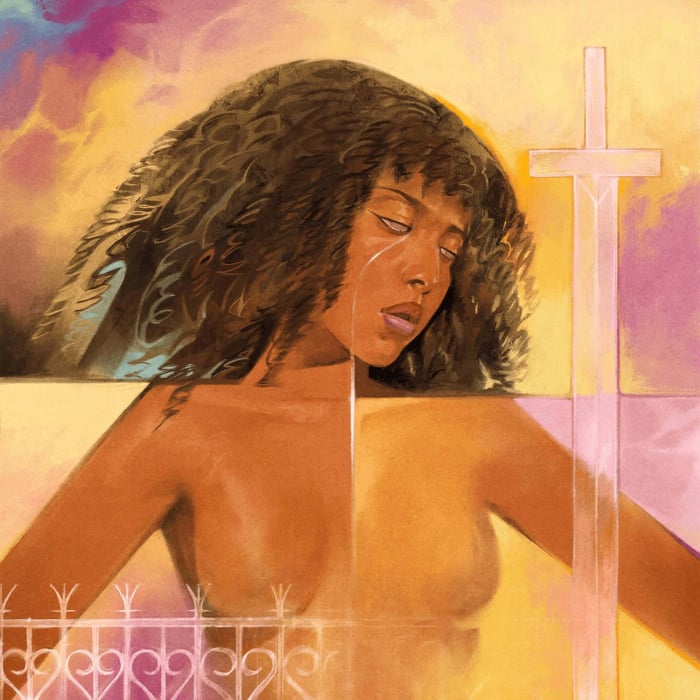
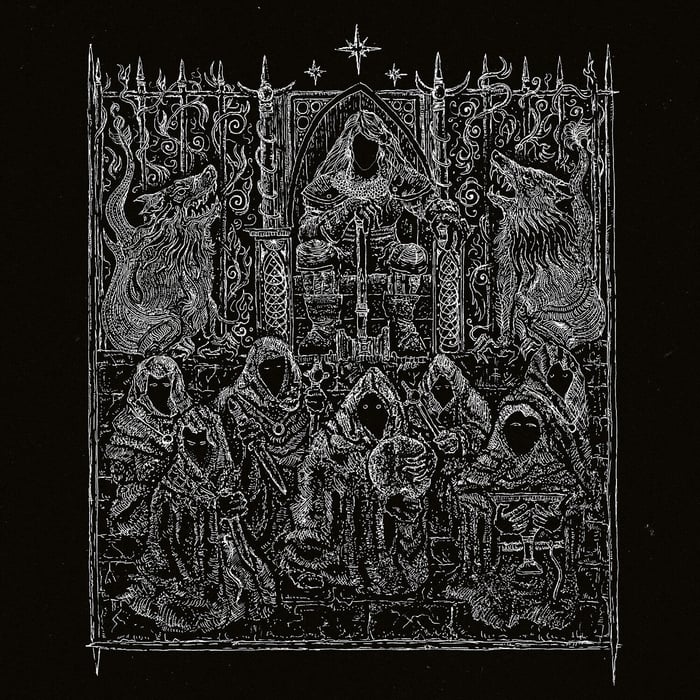
If you’re the type who remembers albums by their covers as much as their bars, you can always pick up a favorite album cover poster at our store: https://www.architeg-prints.com — it fits the whole “live with the art that can’t be ignored” idea.
 | DISCOUNTGET 30% OFF*Use code on your next order:
|
* This post may contain affiliate links, meaning we earn a commission if you make a purchase through these links, at no additional cost to you.