When It All Falls Down Review: Jakhari Smith Turns Grief Into Homework


 See more Architeg Prints stories on Google.
When It All Falls Down Review: Jakhari Smith Turns Grief Into Homework
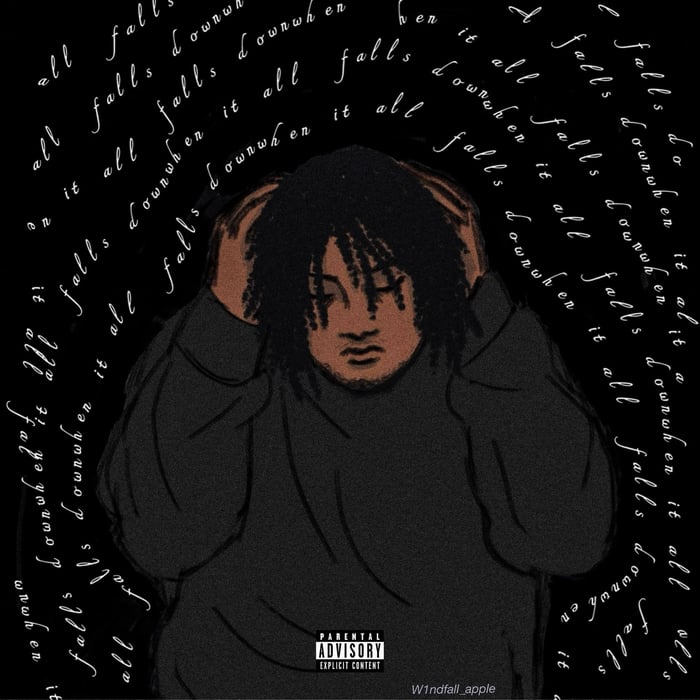
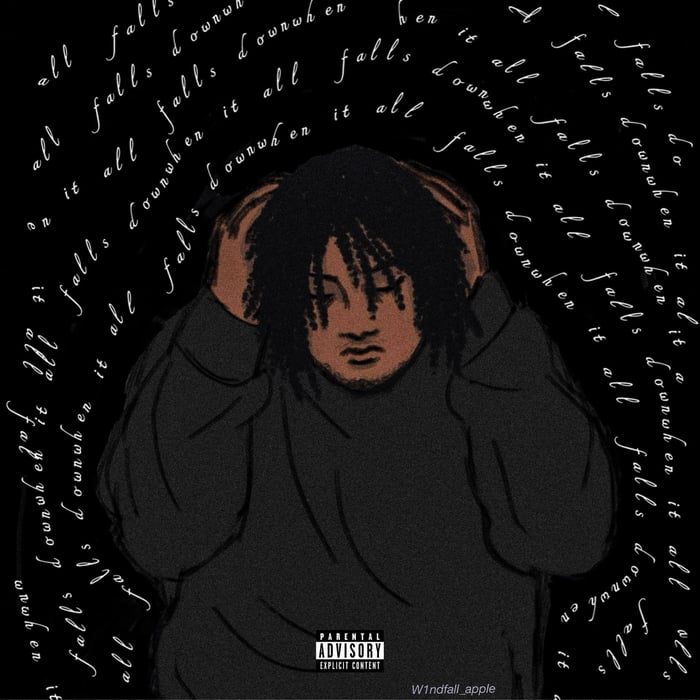
When It All Falls Down is Jakhari Smith turning depression, family voices, and survival math into songs—sometimes clumsy, sometimes brutally direct.
A record that doesn’t “open up”—it blurts
Some albums invite you in. When It All Falls Down doesn’t bother. It talks at you like it’s 2:13 a.m. and the room is too quiet.
And yeah, that’s the point: this is the sound of someone using music the way other people use a notebook they don’t show anyone.
Where this comes from: a city that doesn’t hand you a spotlight
Let’s be real—South Sacramento isn’t a place that reliably spits out national music narratives. The area has a hip-hop lineage, sure, but it’s not the kind of ecosystem where you expect a guy with no musical background to flip grief into a full catalog on sheer urgency.
That’s what makes Jakhari Smith’s trajectory feel less like “industry development” and more like a coping mechanism that grew legs. His grandfather, Charles Tillman Jr., died in April 2020. After that, the journaling started. Then notebooks. Then poetry. By mid-2021, that writing starts bending toward song structure, like the lines are getting tired of sitting still on a page.
Smith was born in 1997 and raised on the Laguna Creek side. And from what I can tell hearing how raw the early choices still are, he really hadn’t recorded anything before the grief set in. By 2022 he was submitting “Far Away” to NPR’s Tiny Desk Contest, and that was enough to turn local heads and build a following.
Now When It All Falls Down shows up as his fourth full-length in three years. That pace doesn’t sound like ambition to me. It sounds like trying not to drown by moving your arms faster.
The central theme isn’t subtle: he keeps wanting to die
Here’s the uncomfortable core: most of When It All Falls Down circles suicidal ideation, and it doesn’t arrive wrapped in metaphor or “cinematic darkness.” Smith just says it.
On “Needs,” he admits he hasn’t responded to texts in weeks. He barely tries because he’s scared to fail. He looks in the mirror and can’t even tell what he’s seeing. There’s a line—“Maybe ‘cause a piece of my soul will live when I’m gone”—and he throws it out like he’s already moved past needing anyone to react to it.
The bluntness is what makes it hit. He doesn’t pause for a moment of significance. He drops it and keeps walking.
At first, I thought that speed meant the songwriting was undercooked—like he was rushing past his own best lines. On second listen, it clicked differently: the refusal to linger is the character. He’s not presenting trauma for applause. He’s documenting it because it won’t leave him alone.
“Questions” turns anxiety into a whole format
The bridge from private despair into something shared happens on “Questions,” and it’s almost comically literal: every line is a question.
- Am I wrong to try to hurt myself?
- Do they notice it’s harder to smile?
- Will they listen to my art when I’m gone?
That structure could’ve been corny in somebody else’s hands. Here, it feels like someone stuck in the loop of their own brain, refreshing the same page and hoping the answer changes.
Jayda Irene opens the track with a spoken-word intro about colorism and not loving her own face, and it matters because it’s a second angle on the same self-erasure. Smith can’t generate that perspective alone, and the record gets stronger the second it stops pretending one voice can carry every shade of doubt.
Then WIDDA K comes in on the chorus pleading with a doctor to take the pain away. The three voices together turn what could’ve been the loneliest moment on the album into something briefly communal—like a group text where everyone admits what they usually hide.
A reasonable listener could argue the song leans too hard on its concept. I get that. But I’d also argue the concept is the point: depression is repetitive. The track refuses to entertain you out of it.
The title track is survival-by-the-night, not hope-by-the-morning
The title track “When It All Falls Down,” produced by Timur Bakirov, starts with the kind of line you’re not supposed to say if you’re trying to sound inspirational: “Therapy can’t save me/I’m stuck up in a maze.”
Then he wonders how depression can be a phase if his demons never leave. And the detail that stuck with me is what he prays for: he prays he makes it to another night. Not a new morning. Not a fresh start. Just getting to dawn.
That’s a specific kind of exhausted spirituality—less “rebirth,” more “please let me not lose this fight in the next few hours.”
nisamina’s hook on the title track gives him a melodic anchor, and honestly, it highlights something important: Smith’s voice has grit, but he doesn’t always have the melodic tools to shape that grit into a hook that holds its own. When a feature brings structure, the song suddenly has a spine.
“Baby Boy” is the album’s biggest emotional trick—and it works
The album has one move that’s so smart it almost makes the rest of the tracklist rearrange itself in my head: “Baby Boy,” written entirely from his mother’s perspective.
The first verse is her talking to her newborn. She promises love, admits she has her own issues, swears she’ll be there. The second verse jumps forward in time and becomes domestic nagging—clean your room, comb your hair, fold the laundry, Mrs. Johnson called about you clowning in class, and the PlayStation’s about to go in the trash.
Before he leaves, she wants her hug and kiss.
The spoken outro is her yelling at him to turn the game off and get in bed.
And what’s devastating is how realistic the affection is. It’s not grand declarations. It’s routine love. It’s irritation that proves she’s present. The care lives in lines like “Boy, you lucky that I love you” and “If you need me, you can call me, Imma answer quick.” It’s parenting as repetition, not poetry.
Nkosana and remy jones give “Baby Boy” a warm, clean pocket to live in. The beat doesn’t fight the concept. It lets the perspective shift do all the heavy lifting.
This is where I’ll admit some uncertainty: I can’t tell if Smith wrote this as a tribute, an apology, or a way to rebuild a memory that depression keeps vandalizing. Maybe it’s all three. Either way, it’s the rare moment where the album stops staring at the void and looks at the furniture in the room.
“Proud of Me” answers the mother-song with a letter across time
Later, “Proud of Me” feels like the adult Smith writing back to that kid on the carpet with a controller, dreaming past the city limits while his mom worked nights.
The questions aren’t abstract—they’re pointed straight at the younger self:
- Does this pain still follow?
- Did you hold on to your soul?
- Are you proud of me?
Then the grown version answers with a kind of gritty encouragement: every step is strength, the music is all he’s got, he planted seeds and left the rest to grow.
The line that seals it is simple: “Baby boy, I’m proud of me.”
That could’ve sounded like a motivational poster. Here it sounds like someone forcing themselves to say it out loud because nobody else will say it the right way.
A listener could argue it’s self-mythologizing. I’d argue that’s exactly why it matters—self-respect doesn’t arrive naturally when you’re writing songs about not wanting to exist.
“Conversations in the Dark” is the album’s boldest risk
Nothing else here takes a swing as big as “Conversations in the Dark.” Smith turns his depression into a character—an old acquaintance who shows up friendly, claims he’s changed, then walks him toward a closet with a locked box and a gun.
The whole track plays like dialogue. Smith begs and insists he’s got more to do, that music has been pulling him out of his worst stretches. The depression character doesn’t care.
What impressed me is how close it comes to being a “skit” and how it avoids that trap. Lee’s production stays sparse enough that the spoken exchanges don’t turn into theater-kid dramatics. And Smith’s delivery during the begging sections—especially when he’s pleading that he’s finally finding happiness and that music is chasing away the blue—sounds like actual panic, not a performance of panic.
Then the trigger gets pulled. It’s permanent. Smith screams.
And then: “Shit, man, it was just a dream.”
That switch is nasty in the way nightmares are nasty: the relief doesn’t feel clean. It feels like your body still believes it happened.
If you only hear one song from When It All Falls Down, it should be this one—not because it’s the prettiest, but because it’s the clearest example of Smith making craft choices instead of just bleeding on the mic.
Features and production: flashes of range, but a blur sets in
The feature list is uneven, and the album doesn’t hide it.
- nisamina helps the title track by giving Smith a melodic anchor he doesn’t always build on his own.
- Yufi on “Lord Knows” pulls the song into a different register entirely, drawing from Islamic prayer, referencing ancestors, and dropping the phrase “the vessel is flawed but all the parts are sailing.” That contrast—devotional steadiness against Smith’s exhausted pleading—makes the track feel wider than much of the record.
- Kiana Alyse shows up on the closer and adds sweetness, but the chorus she sings with him slides into a motivational refrain that could live on plenty of indie R&B records without sounding unique.
And here’s my mild criticism, because it kept bugging me: several midtempo tracks—“Open Your Eyes,” “Lord Knows,” “Stronger,” among them—share a similar piano-and-pad bed. It creates this same-temperature haze where different songs start wearing the same outfit.
That’s frustrating because the production roster actually has teeth:
- Nkosana and remy jones build the warm pocket “Baby Boy” needs.
- Francesco Busi and Jacob Ismael’s beat on “Stronger” gives Smith room to stretch his voice into spots he doesn’t usually go.
But when multiple tracks settle into the same soft glow, the album loses track-by-track identity. If the lyrics are saying different things, the beats shouldn’t all agree to feel the same.
The real gap: he can write verses, but melodies don’t always cooperate
Where When It All Falls Down stumbles is the distance between what Smith feels and what he can do with melody.
He returns to the same emotional ground a lot:
- I’m depressed.
- I don’t know who I am.
- I’m scared I won’t make it.
- I keep going for my family.
And look, that repetition isn’t fake—it’s how a mind works when it’s trapped in the same room. The verses often hit with real specificity. But the hooks tend to flatten that specificity into generic phrasing.
“Life getting harder/My days longer and longer” on “Stronger” and “Lord knows I try/I’ve been working from day to night” on “Lord Knows” basically do the same job, and neither lands with enough surprise to justify its own space.
In plain terms: Smith’s verse writing is often stronger than his chorus writing. So the parts where he says the most keep getting interrupted by refrains that say less.
A listener could disagree and call the hooks “relatable.” Sure. But relatability isn’t the same thing as impact. The best lines on this album don’t aim to be universal; they aim to be true.
“Fate (Interlude)” says the quiet part out loud
The clearest Smith gets on any of his records is “Fate (Interlude).” He drops singing entirely and just talks about why he writes. Behind the beat, it’s just a guy explaining that writing was the only thing that cleared his head at night.
It’s so direct it almost makes the surrounding tracks feel like they’re wearing extra layers.
It also made me wonder—maybe too loudly—whether the album would’ve hit harder if more songs were built with that same plainspoken honesty instead of forcing everything into chorus structures that sometimes don’t fit him yet.
The closer doesn’t claim victory—it circles the finish line
Smith closes with “Momma, I Made It,” and the crucial detail is the tense. He doesn’t say he made it. He says he can’t wait to say it.
So the final moment isn’t triumph. It’s longing aimed at a finish line he hasn’t crossed. The album ends on wanting—still driving, still not sure the road is going to let him off easy.
That ending choice is a little brutal, and I respect it. A fake “happy ending” would’ve been the real lie.
Conclusion
When It All Falls Down isn’t trying to be polished; it’s trying to be survivable. When it locks into specific scenes—“Baby Boy,” “Proud of Me,” “Conversations in the Dark”—it stops being “music about depression” and becomes a set of lived moments you can’t unhear.
Our verdict: People who like emotionally blunt, diary-close songwriting (and don’t need perfect hooks to stay engaged) will actually like this album. If you require every chorus to stick, or you get impatient with midtempo sameness, you’ll bail halfway through and blame it on “vibes”—which is a very polite way of saying you wanted a playlist, not somebody’s real week.
FAQ
- What is the core theme of When It All Falls Down?
Suicidal ideation, self-doubt, and the day-to-day mechanics of staying alive—said plainly, not dressed up. - Which tracks show Jakhari Smith at his strongest?
“Baby Boy,” “Proud of Me,” and “Conversations in the Dark” feel like fully formed ideas, not just emotions poured into a template. - Does the album rely heavily on features?
Not heavily, but the features matter. They widen the perspective, and in spots (like the title track) they provide melodic structure Smith doesn’t always land on solo. - What’s the biggest weakness in the record?
Some choruses flatten the specificity of the verses, and several midtempo beats share a similar piano-and-pad mood that blurs song identities. - Is Fate (Interlude) important or skippable?
Important. It’s the most direct explanation of why he writes, and it reframes the rest of the album as necessity instead of aesthetic.
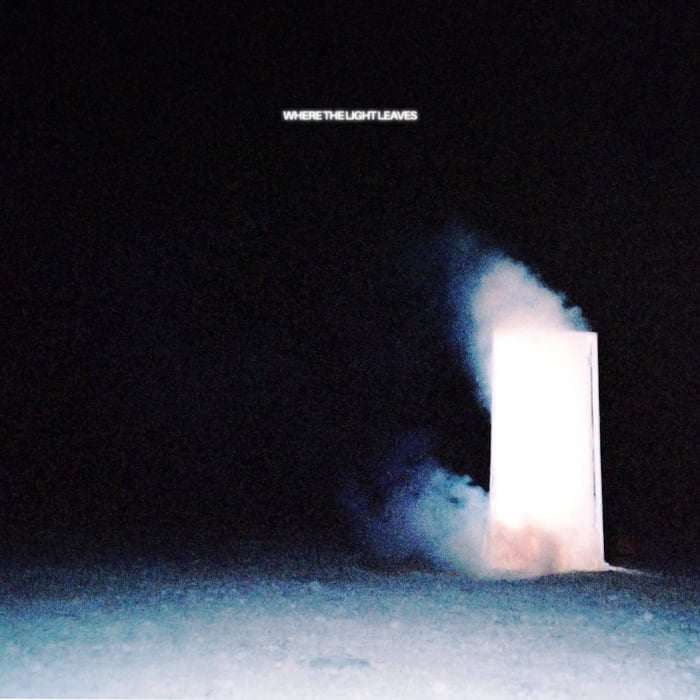
If this record put an image in your head—cover art included—consider grabbing a favorite album-cover poster for your wall at our shop. It’s a quiet way to keep the music in the room without replaying the heavy parts every day.
 | DISCOUNTGET 30% OFF*Use code on your next order:
|
* This post may contain affiliate links, meaning we earn a commission if you make a purchase through these links, at no additional cost to you.