Mutiny After Midnight: Sturgill Simpson’s Disco Detour (Yes, Really)


 See more Architeg Prints stories on Google.
Mutiny After Midnight: Sturgill Simpson’s Disco Detour (Yes, Really)
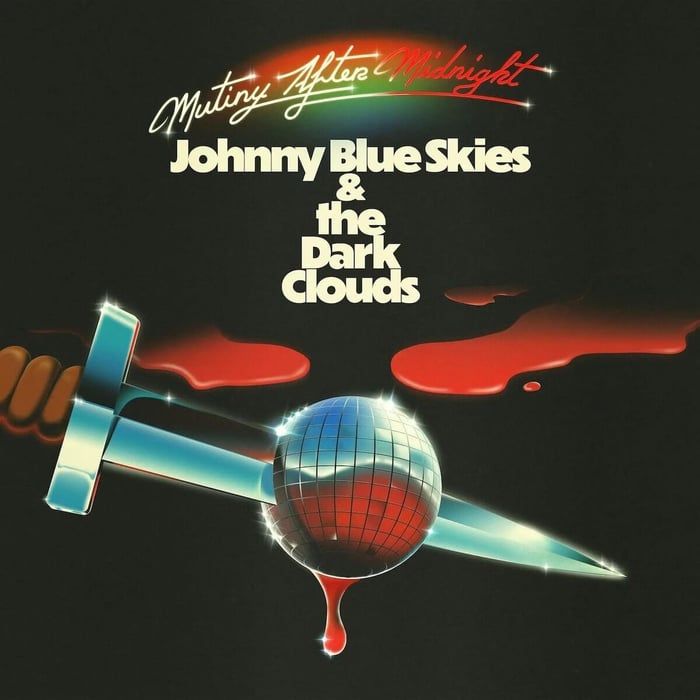
Mutiny After Midnight turns Sturgill Simpson into a late-night disco menace—anti-streaming swagger, horny jokes, and a band built for 3 a.m. problems.
The first thing this album does is break its own rules
Sturgill Simpson teases Mutiny After Midnight like it’s contraband: physical only, no streaming, no “convenient” compressed audio. Vinyl, CD, cassette—pick your weapon. That kind of stubborn, anti-platform posture is exactly the sort of move he loves. He doesn’t just make records; he makes a point while he’s making the record.
And then he undercuts his own lecture by putting the whole thing online anyway. I’m not pretending I know the exact headspace behind that pivot—maybe it was anxiety, maybe it was impulse, maybe it was just him getting bored of being noble—but the reversal is the most Sturgill part of the rollout. The guy can’t help himself. If there’s a fence, he climbs it, then complains about fences, then builds a new one and climbs that too.
Arguable take: the “no streaming” stance isn’t purity—it’s theater. The kind that makes the album feel like an event before you’ve even heard a note.
Johnny Blue Skies isn’t a disguise—he’s permission
Calling this “Johnny Blue Skies” instead of “Sturgill Simpson” isn’t just cosplay. It’s a practical creative trick: a separate name gives him permission to chase a different kind of thrill without having to apologize to anyone who wants the old version of him preserved in amber.
Mutiny After Midnight dives into glittery 1970s corners he mostly sidestepped before—disco, country-funk, hard-driving R&B—stacked together with syncopated guitar scratches and bass lines that feel like they grew up watching Soul Train reruns. This isn’t “country goes disco” as a novelty. It’s him intentionally picking the sweatiest room in the building and locking the doors.
At first, I thought the whole “disco-hedonism” promise sounded like a bit—like he was trolling his own audience. On second listen, it stops feeling like a prank and starts feeling like a commitment. Not a tasteful one, but that’s the point.
Arguable take: this album isn’t him expanding his palette; it’s him choosing a single color—midnight neon—and painting the whole house with it.
The Dark Clouds drag the spotlight away from the frontman (on purpose)
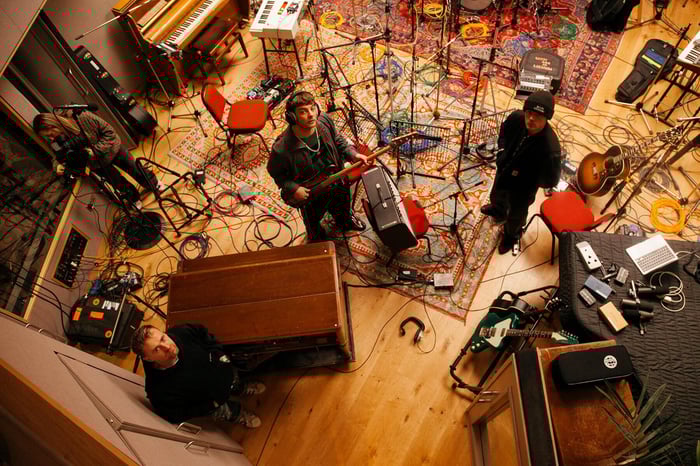
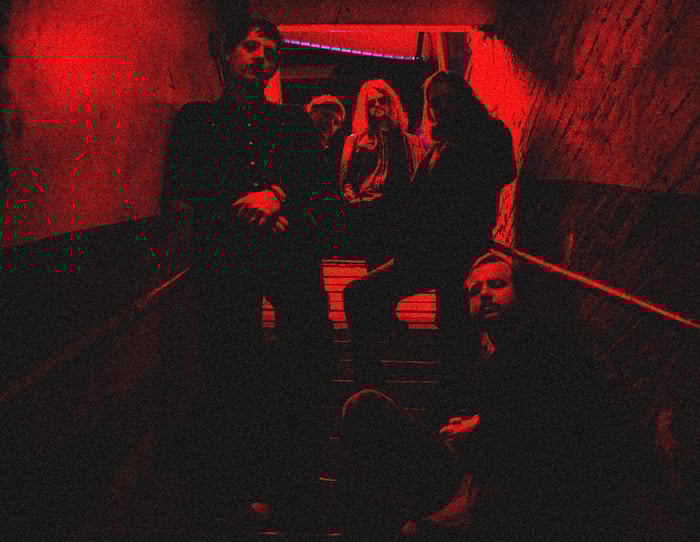
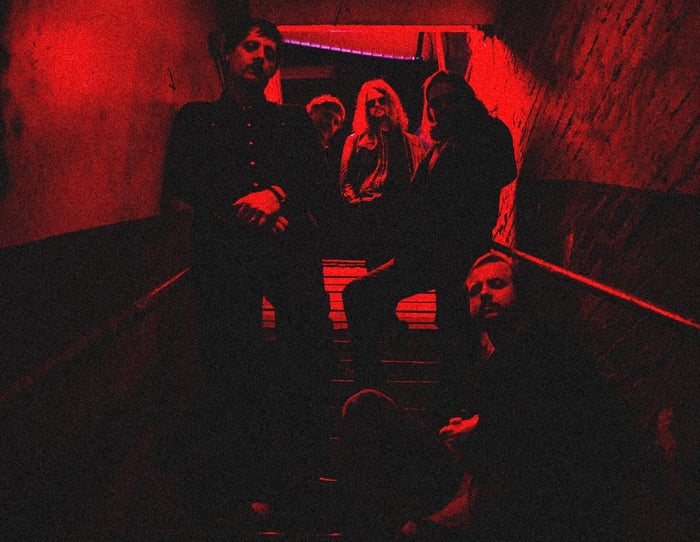
One big shift here: the band feels like an equal lead instead of a backing unit. The Dark Clouds—guitarist Laur Joamets, keyboardist Robbie Crowell, bassist Kevin Black, drummer Miles Miller—don’t just “support” these songs. They set the conditions. They build the room, dim the lights, and put the furniture exactly where you’ll trip over it.
There’s swagger in the way the grooves move: steel, sax, and that arena-seasoned tightness you only get from a group that’s been stretching out in long, three-hour shows. The playing doesn’t sound cautious. It sounds like everyone already knows the ending and they’re enjoying the walk there.
If Passage du Desir leaned more toward “songwriter presents songs,” Mutiny After Midnight leans toward “band presents atmosphere.” That balance change matters because this record isn’t trying to be studied; it’s trying to be inhabited.
Arguable take: the real star here is the rhythm section’s confidence—Simpson just rides it like he called shotgun.
“Make America Fuk Again” sets the tone: roadhouse glitter with a smirk
The opener, “Make America Fuk Again,” is an instant contender for most aggressively committed title choice. And the track earns it. Recorded live at Dan Auerbach’s Easy Eye Studio, it feels built for loud car stereos, shag-carpeted bedrooms, and the kind of nostalgia that smells a little like spilled beer.
It’s mirror-ball throwback energy, but not cleaned up. The edges stay rough, roadhouse country-rock still clinging to the disco suit like a cigarette burn. The song doesn’t politely introduce the album—it kicks the door and points at the dance floor like it owns the lease.
This is where my one real hesitation started, though: the concept is so loud that I kept waiting for the music to collapse under the weight of the wink. For a minute, I wasn’t sure if the album could keep the joke alive long enough to become a mood instead of a gag. It does—mostly—but the opening is absolutely daring you to roll your eyes.
Arguable take: the title is doing half the work, and the band is doing the other half.
Yes, he’s mad about politics—he just refuses to let it kill the vibe
Even while chasing this late-night escape, Simpson still takes swings at Donald Trump. “Ain’t That a Bitch” doesn’t exactly hide the target; it’s mutinous and blunt, taking a shot at the sitting president with the kind of line that lands like a barroom heckle: “a bad cartoon in an ill-fitting suit,” plus the unvarnished jab about “grabbing women by the poon.”
“Ain’t That a Bitch” doesn’t exactly hide the target; it’s mutinous and blunt, taking a shot at the sitting president with the kind of line that lands like a barroom heckle: “a bad cartoon in an ill-fitting suit,” plus the unvarnished jab about “grabbing women by the poon.”
But here’s the thing: the album isn’t built to be a lecture. When politics shows up, it’s more like a flash of harsh fluorescent light in the middle of a dance—momentary, ugly, and then the room goes dark again.
“Excited Delirium” hits hardest in that way, letting a couple lines cut through the sweat: “Hard to move with your knee on my neck/Hard to have a conversation with fourteen fists.” Those words don’t “ruin” the party. They give it weight, like a reminder that escapism isn’t innocence—it’s a coping mechanism with a beat.
Arguable take: the political moments work precisely because he doesn’t build the album around them; if he tried, it would turn stiff and self-important fast.
The horndog heart isn’t subtle—and it’s not pretending to be
There’s simply no disguising what Mutiny After Midnight is really about: what happens after midnight, when the responsible part of your brain clocks out and the body starts making the decisions.
And Simpson writes these come-ons like he’s deliberately testing how far he can push the line while keeping it playful. The lyrics are bold, sometimes ridiculous, and so tongue-in-cheek that you can practically hear the grin. If they were delivered earnestly, they’d be a problem. Because they’re delivered like a dare, they become part of the album’s particular charm.
“Stay on That” goes full goofy with: “Baby, let me be the banana and you can be the split,” and then drives the point into the floor with the refrain: “Stay on that D, baby, ’til you hit that G.” It’s not poetry. It’s not trying to be. It’s the sound of someone choosing vibe over virtue, and not asking permission.
“Everyone Is Welcome” turns the dial even further, basically writing a singalong for multi-partner sexcapades: “Two is enough but three’s a whole lot of fun/Four’s a fuckin’ party where everybody cums.” It’s so blunt it circles around to being almost… cheerful? Like the album is hosting a community event, except the event is indecency.
Arguable take: the raunch is less about shock and more about building an alternate universe where shame isn’t invited.
Improvised lyrics explain a lot—and not always in a flattering way
A key detail you can feel in real time: these lyrics were reportedly written on the spot. That spontaneity shows up as momentum. It also shows up as a certain looseness—like sometimes the groove arrives fully dressed, and the words show up late, still tying their shoes.
This is where I’ll be mildly critical: a few moments lean so hard on strut that they flirt with emptiness. Not because the music lacks muscle—it doesn’t—but because the album occasionally treats “horny + funky” as a substitute for actual songwriting. When it works, it’s hypnotic. When it doesn’t, it can feel like you’re watching someone charismatic repeat themselves because they know you’re still looking.
And yet…I keep forgiving it, because the record’s priorities are obvious and consistent. It’s chasing mood. It’s chasing heat. It’s chasing that specific feeling of not wanting the night to end, even when you know daylight is coming for you.
Arguable take: the album’s smartest decision is admitting it’s not a “thinking man’s record”—it’s a body record.
Conclusion: midnight escapism with teeth
Mutiny After Midnight is indulgent on purpose: a sweaty, glittering, late-night bunker where the groove matters more than the message—until the message shows up for a second to remind you the world outside still sucks. It argues for staying up late not with philosophy, but with electricity: bass lines that drag you forward, guitars that snap in syncopation, and a frontman who’s fully committed to being shameless and funny and occasionally vicious.
Our verdict: If you like your country-adjacent music tidy, earnest, and safe for daylight errands, this will annoy you. If you want a band that can turn midnight into a moving vehicle—and you don’t mind a lyrical horndog at the wheel—Mutiny After Midnight will treat you just fine.
FAQ
- Is Mutiny After Midnight actually a disco album?
It’s disco-minded more than disco-faithful: funk, R&B drive, and mirror-ball attitude, with country-rock grit still under the nails. - Why does the core keyword “Mutiny After Midnight” matter here?
Because the whole record is built around that idea—after-midnight behavior, escape, sweat, and consequences postponed. - Does the album get political or stay purely hedonistic?
It mostly stays hedonistic, but it throws sharp political lines into the mix without turning into a sermon. - What’s the biggest change compared to Johnny Blue Skies’ first album?
The band feels like an equal lead this time—less “songwriter spotlight,” more “late-night ensemble setting the room on fire.” - Are the explicit lyrics meant to be taken seriously?
They land as tongue-in-cheek provocation—still explicit, but performed with a grin rather than a sneer.
If this whole midnight-glitter mood stuck with you, a great way to keep it around is a poster of your favorite album cover—hang it where your good decisions can see it. You can browse options at our store: https://www.architeg-prints.com/
 | DISCOUNTGET 30% OFF*Use code on your next order:
|
* This post may contain affiliate links, meaning we earn a commission if you make a purchase through these links, at no additional cost to you.