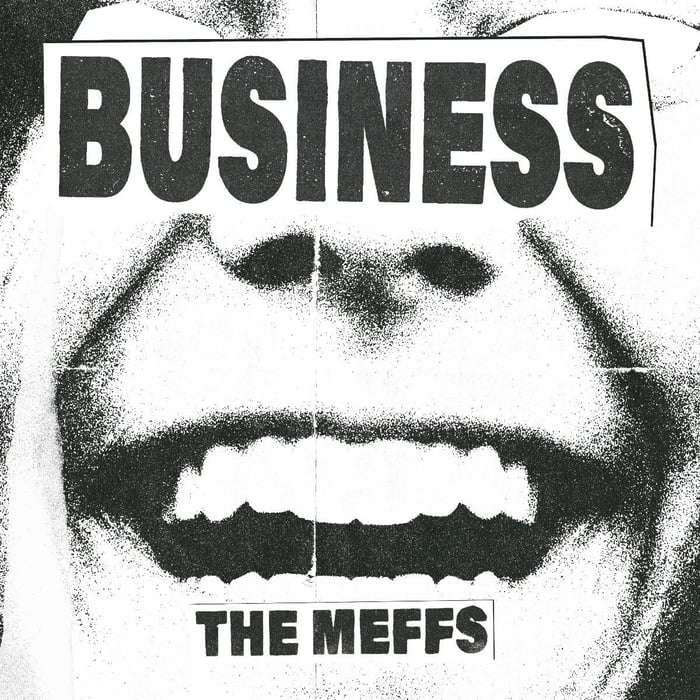
Business Album Review: The Meffs Turn Punk Into a Blunt Object (Sorry)


 See more Architeg Prints stories on Google.
Business Album Review: The Meffs Turn Punk Into a Blunt Object (Sorry)
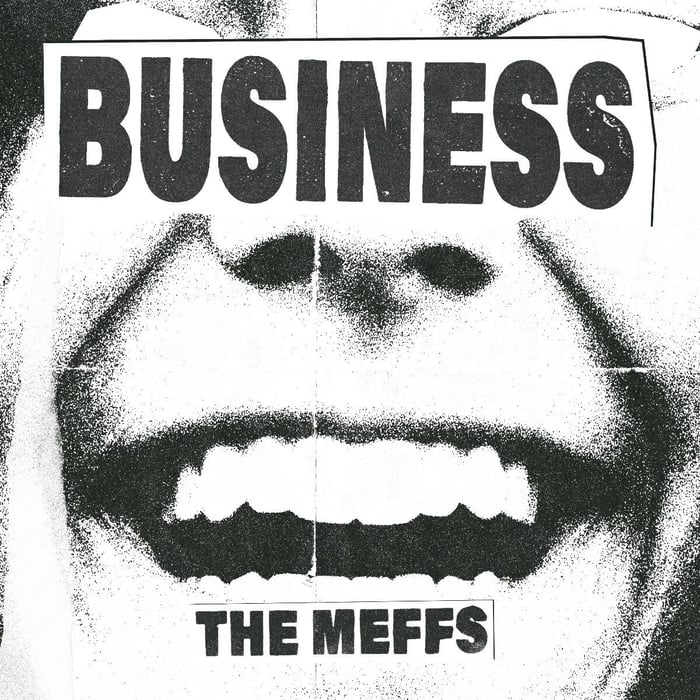
Meffs Business isn’t “the difficult second album”—it’s a 35-minute argument with the world, the industry, and you. Loud, quick, and weirdly grounding.
No warm-up, no pleasantries—just impact
People love saying the second album is the “tricky” one, like bands are obligated to wobble a bit before they get good again. The Meffs doesn’t wobble. It lunges.
I’m coming into this after living with The Meffs as that UK punk duo who already had the groundwork laid—between the Broken Britain EP era and the debut What A Life (2024), they’d already nailed the part where a band convinces you they mean it. Since then, they’ve been playing those sweatbox, sold-out rooms where punk either becomes a lifestyle brand or a threat again. They’ve also ended up in the kind of proximity to big legacy names like Alice Cooper and Joan Jett that can either sand a band down… or sharpen them.
On Meffs Business, they choose sharpening.
And yeah, I’m going to say it plainly: this thing is absurdly effective. Not “nice.” Effective.
Track 1 proves the point: they don’t need an intro anymore
Here’s what’s really happening on the opener: they refuse to frame themselves.
“Dreamin’” starts and that’s it—no cinematic throat-clearing, no “album statement” monologue. Just drums snapping into place, a guitar that sounds like it’s trying to rattle screws loose, and Lily coming in with that signature snarl like she’s already halfway through the argument. The whole thing barely lasts over a minute, which is the point: it’s not a song so much as a shove.
I thought, at first, that a track this short was going to feel like a gimmick—like, “look how punk we are, we don’t even do full songs.” But on second listen, it clicked: it’s a door-kick, not a thesis. When you’re yelling “DREEEAAAMINNNN’” along with it, you’re not admiring the craft—you’re being recruited.
That’s the album’s first trick: it gets you moving before you get to have an opinion.
The anger isn’t vague—it’s pointed, and that’s why it works
The next run—“What A Nightmare,” “Where Did It All Go Wrong?”—doesn’t just keep the speed up. It locks onto a target.
“What A Nightmare” hits with a riff that’s almost too satisfying for what it’s talking about, which is exactly why it lands. The song feels like a disgust response to the way the country can drift toward right-wing lunacy while everyone pretends they’re just “having a debate.” The Meffs don’t politely observe it. They spit at it.
And the thing is, the track has bounce—real bounce. That’s not an accident. They’re making the rage danceable on purpose, because dancing is how a crowd becomes one organism. This is live-music engineering disguised as outrage.
“Where Did It All Go Wrong?” somehow ups the pressure again. It’s the duo at their most locked-in—Lily’s vocals feel sharper here, like she’s stopped explaining and started indicting. I kept waiting for a “big chorus moment” in the usual pop sense, but what I got instead was better: a constant forward shove that makes you miss mosh pits you’re not even in.
A reasonable person could argue this is all too direct—too “tell you what to think.” Maybe. But I don’t hear it as preaching. I hear it as refusing to be gaslit by politeness.
The title track is a middle finger aimed at the right people
Then “Business” arrives and lays out the album’s second target: not just politics, but the machinery that tries to domesticate artists.
The riffs stay kickass, the drums keep punching, but the real move is the tone: anger with wit. Not “clever lines to quote online,” but that specific punk sarcasm where you can tell the artist is smiling through clenched teeth. It takes aim at the music industry and the broader “business” mindset—those invisible rules about what you’re supposed to be, how you’re supposed to look, how you’re supposed to sell yourself back to yourself.
Lily and Lewis play this like they’re refusing a contract in real time. And yeah, it’s inspiring in the way only punk can be inspiring—less “believe in yourself,” more “try and stop me.”
If I’m being picky, this is also where the album’s approach risks becoming a little addictive to itself: when your weapon is the middle finger, you can start using it as punctuation. But the song earns its place because the riffs and drum patterns hang around in your head long after it ends. That’s the difference between posture and songwriting.
“Law” is the album’s thesis, whether they admit it or not
Moving deeper, “Law” is where the record stops merely sprinting and starts staring.
This one tackles systemic rot with a distinctly 1984-esque claustrophobia—like the rules are tightening while you’re standing still. It’s not just “the system is bad.” It’s the feeling of being coerced into conformity while watching rights get stripped away from other people in real time, then being told you’re overreacting.
The lyricism feels unusually dialed-in here, like they edited it until every line did work. And musically, the heaviness doesn’t feel bolted on. It doesn’t sound like they’re trying to impress anyone with volume. It sounds like genuine anger leaking through structure.
Honestly, this might be their best song to date. I’m not saying that as a career summary—just as a listening fact: this is the moment the album stops being a collection of rippers and becomes a statement you can’t shake.
Then “Fight” follows—forty-five seconds of release, like cracking a window in a room that’s filling with smoke. It’s fun, it’s heavy, and it almost makes you feel mosh-pit sweat without the inconvenience of somebody’s elbow in your ribs.
The slower track isn’t “mature”—it’s strategic
“Disorder (Wake Up)” is a rare slower moment on a record that runs about thirty-five minutes total, and it’s placed like they understand pacing, not just speed.
I wasn’t totally sure at first if slowing down would blunt their edge—some punk bands drop tempo and accidentally reveal there’s not much under the noise. But here, the anger stays hot; it just changes shape. The track carries that big, agitating feeling that throws me back to the way Rage Against the Machine can make fury feel like momentum instead of depression.
It doesn’t come off as “using a platform” in the corny sense. It feels like they’re refusing to waste the microphone.
And the bigger point: this is how the duo cram so much into a short runtime without it feeling cramped. They aren’t just stacking fast songs. They’re managing your nervous system.
Choruses that actually stick, and a modernity rant that earns its yelling
From there, “Love To Lose” kicks the pace back up with pit-friendly urgency and a chorus that turns into an earworm whether you want it to or not. You end up shouting “LOVE TO LOSE, IT MAKES YOU FEEL ALIVE” like your mouth signed the contract before your brain read it.
“So Modern (Keep Up)” continues that frenetic run, and it takes a swing at conformity—the weird desperation people have to mirror whatever’s popular. The message could’ve been a little on-the-nose if the performance wasn’t so convincing. But it is. And Lily’s screams here aren’t decorative; they sound like a person refusing to be smoothed out.
If there’s a critique to make, it’s that this section is so relentless it risks making individual songs blur together on a distracted listen. You kind of owe the album your attention. Then again, maybe that’s the point: it punishes half-listening.
“God Complex” asks the question the rest of the album avoids
As the back end approaches, “God Complex” brings in Ingo Donot from German band Donots, and his presence changes the air in the room.
His vocals land almost ghostly, especially on that repeated “who are you?” It doesn’t sound like a hook designed to be screamed back—it sounds like a question that’s meant to stick under your skin. The track takes aim at people who see themselves as better than others, but it also turns the mirror slightly toward the listener. It’s less “you’re wrong,” more “what are you becoming while you’re right?”
This is the album letting a little dread in—just enough to make the anger feel human instead of theatrical.
“Gravity” is the heavy ending that doesn’t let you float away
Then comes “Gravity,” one of the heaviest songs The Meffs have ever done, and it plays like a final shove straight into the ground.
Everything feels desperate here—like they’re throwing the last of the fuel onto the fire. And weirdly, it’s grounding. Not comforting, not cathartic in the easy way. It’s that feeling of realizing something will always pull you back down to earth no matter how hard you try to escape it.
It’s intense, and it’s supposed to be. The album doesn’t want you leaving with a “good vibe.” It wants you leaving with friction.
The bonus cover is placed like a grin after a punch
The “true” ending comes with a bonus track: their cover of The Prodigy’s “Breathe.” If you’ve seen them live, you know it’s a known quantity—a crowd-pleaser with teeth.
It’s smart to place it at the end. After an album that hits hard and keeps hitting, the cover acts like a pressure valve. It captures the feel of the original while still sounding like The Meffs—not imitation, more like translation into their dialect. It’s fun in a way that doesn’t undo the tension; it just lets you unclench your jaw.
So what’s the actual play here?
Meffs Business doesn’t feel like “the next album.” It feels like the duo deciding they’re done asking permission.
It makes sense their rise has been fast: this is a band that comes off genuine, the kind of act that feels like they’d have your back rather than sell you a slogan. The fire here is the kind most modern music politely avoids. And for a DIY punk duo out of Colchester, there’s something satisfying about hearing them sound this sure of themselves.
If I had to put a number on it—against my better judgment—this is the rare record where a 10/10 doesn’t feel like a dare. It feels like a shrug.
Business is out now via FLG.
Conclusion
Meffs Business is the sound of a band turning momentum into a weapon: short songs, heavy riffs, drums that don’t blink, and lyrics that don’t negotiate. It doesn’t ask you to agree—it asks if you’re awake.
Our verdict: People who like punk that actually pushes—fast, political, sweaty, and allergic to polish—will love this album. If you want subtlety, softness, or lyrics that politely imply their meaning from across the room, you’re going to have a long 35 minutes (and you’ll probably complain about the shouting).
FAQ
- Is Meffs Business a fast listen or a dense one?
Fast runtime, dense impact. It’s 35 minutes, but it’s packed like they didn’t trust you to come back later. - What’s the best entry point track if I’ve never heard The Meffs?
“Dreamin’” throws you straight into their world, but “Law” is where the album shows what it’s really about. - Does the album slow down at all?
Yes—“Disorder (Wake Up)” eases off the throttle without losing the anger, which is harder than it sounds. - How does the feature on “God Complex” change things?
Ingo Donot’s vocal presence adds a ghostly edge—less mob chant, more self-interrogation. - Is the Prodigy cover just a gimmick?
It’s placed like relief at the end. It keeps the spirit of “Breathe” while still sounding like The Meffs, which is the only reason it works.
If you’re the kind of person who treats album art like part of the argument, you can shop a favorite album cover poster at our store: https://www.architeg-prints.com — a nice way to keep the noise on your wall even when the speakers are off.
 | DISCOUNTGET 30% OFF*Use code on your next order:
|
* This post may contain affiliate links, meaning we earn a commission if you make a purchase through these links, at no additional cost to you.