FutureSex/LoveSounds: Justin Timberlake’s “Sexy” Pivot Is Basically a Magic Trick


 See more Architeg Prints stories on Google.
FutureSex/LoveSounds: Justin Timberlake’s “Sexy” Pivot Is Basically a Magic Trick
FutureSex/LoveSounds isn’t just “grown-up” pop—it’s a split-personality album daring you to fall for the act.
The setup: a pop star walks into a studio with nothing but vibes
This album doesn’t sound like a plan. It sounds like someone showing up to the studio with a specific itch—“do ‘Cry Me a River’ again, but better, and maybe weirder”—and then getting yanked into a completely different hallway.
Late 2005, Justin Timberlake heads into Thomas Crown Studios in Virginia Beach without a clean concept, without a title, without the neat little storyboard pop albums usually pretend they had all along. That lack of structure is the secret ingredient. Because when Timbaland is nearby—fresh off a Prince fixation—and Danja’s in the room too, “no plan” turns into “let’s see what breaks.”
The origin story that matters is the speed. Timberlake hums over a guitar riff; Timbaland throws drums under it because Danja pushes for it; and “What Goes Around… Comes Around” basically materializes in about an hour. No printed lyrics. No careful notation. Just a singer blurting melody into the air and a producer snapping it into place before it can evaporate.
And then Timberlake says the line that becomes the album’s real mission statement:
let’s do something we’d never do—go far left and see what happens.Ten days later they’ve got eight to ten complete songs. That’s not “painstaking craftsmanship.” That’s a controlled skid.
Arguable take: that’s why the record still feels alive—because it was built fast enough that nobody had time to sand the weird parts down.
The silence before the switch: burnout, acting, and the “is he just a mannequin?” problem
The weird thing about FutureSex/LoveSounds is how much it seems to be answering a question Timberlake didn’t want to hear anymore.
For almost three years, he’s not really “around” musically. The explanation isn’t physical vocal damage—it's something messier: burnout, and the sense that he’d lost his voice because he didn’t know what he wanted to say. So he pivots into movies instead—Edison Force, Alpha Dog, Black Snake Moan, Southland Tales. Hosting Saturday Night Live in October 2003 opens the acting floodgates. A reunion with *NSYNC gets floated and then dies on the vine.
Meanwhile, Justified moves big numbers in the US—four million copies. But commercial success doesn’t cancel suspicion. With the Neptunes producing most of that record, there’s this lingering theory that Timberlake might be more mannequin than designer: a frontman wearing other people’s ideas like well-tailored suits.
“Cry Me a River” is the counterargument—proof he can stand in the center of the song and not get swallowed by the production. And that’s important here, because FutureSex/LoveSounds isn’t just trying to sound good. It’s trying to sound like the artist is driving.
Arguable take: the album is less about sex than it is about credibility—the sex talk is just the loudest way to announce, “I’m in control now.”
The split down the middle: front-half swagger vs back-half confession
This record is literally split in half, and the person singing the front doesn’t match the person singing the back. That isn’t a flaw; it’s the point. It’s like watching a guy switch masks mid-party and refuse to explain it.
On the title track, Timberlake’s basically giving stage directions: move closer, I’m on a mission to please, here’s my tongue, here’s my loss of control. If it feels like low-budget porn dialogue on paper, that’s because it kind of is. He drops “motherfuckers” for the first time on a Timberlake album, and Timbaland ad-libs all over it like he’s co-owning the whole operation.
Then “Sexy Ladies” arrives to inform you—helpfully—that there are, indeed, sexy ladies on the dance floor. Subtle stuff.
And yes, it’s cocky. Sex is in the titles, sex is in the posture, sex is in the marketing-font of the entire thing. If you just read the tracklist, you’d assume it’s going to be exhausting. I honestly thought the album would be pure try-hard the first time I stared at the concept—like a cologne ad that learned how to sing.
But the music underneath carries the bluntness. The production doesn’t wink apologetically; it commits. Timberlake’s earlier influences were Michael Jackson and Stevie Wonder, but here he reaches for a different costume rack: David Bowie, Prince, INXS’s Michael Hutchence, Arcade Fire, Radiohead. He aims to sing like a rock and roll singer, not an R&B singer, and you can hear him actively reshaping his voice to fit that claim.
Distorted electro-funk. New-wave synths. A sound palette that’s trying to feel like the future—even when it’s clearly built from older obsessions.
Arguable take: the record’s “sex” theme works mostly because the production is tougher than the lyrics deserve.
Timbaland and Danja don’t just produce—they haunt the songs
This isn’t a Timberlake solo statement with a few guest spots. Timbaland is everywhere: ad-libs, raps, verses, introductions, even getting his name tangled into track titles. Danja co-writes and co-produces ten of the twelve tracks, and you can feel his engineering fingerprints in the album’s direction—like the whole record is routed through the same circuitry.
The sessions run from December 2005 to July 2006, on Timberlake’s schedule, in his studio world—controlled environment, controlled timeline, controlled vibe. And then comes the pivot: the second song they make is “My Love,” and it reshapes the rest of the album’s spine.
“My Love” is where the trancey synths and stuttering beats show up and basically infect everything after it. The sound design becomes the storyline. T.I. shows up to rap a verse about how he and Timberlake share a similar appeal to women, which is—how do I put this gently—generous.
Internally, they call the set “Thriller 2006.” That’s the kind of hubris that usually ages like milk. But then the reality check hits: three Billboard number-one singles. The album earns the audacity in public, even if the private nickname still makes me squint a little.
Arguable take: “My Love” didn’t just “change the album”—it taught Timberlake how to act like the album was his idea.
“LoveStoned / I Think She Knows”: the moment the character breaks
Here’s where the album gets smarter than its own flirting.
After soaking in Bowie and Prince, Timberlake clearly wants the album to move like one long night—sundown to sunup flow rather than radio singles stacked in a row. And the payoff is “LoveStoned,” which starts as an R&B surveillance snapshot: he’s hypnotized, tracking her movements, calling himself lovestoned—not lovesick. That distinction matters. “Lovesick” is vulnerable. “Lovestoned” is a brag with sunglasses on.
Then the track crashes into “I Think She Knows,” a two-minute falsetto ballad over guitar where the command drains out of him. Bragging stops. The tone turns into something closer to bewilderment—like he got caught feeling something he didn’t schedule.
Those two minutes reframe the album. What looked like a pursuit record suddenly admits it can’t control what it’s chasing.
Arguable take: the album’s best trick is pretending it’s all confidence, and then letting one quiet segue expose the panic underneath.
“What Goes Around… Comes Around”: revenge fantasy that turns into a confession
The seven-minute “What Goes Around… Comes Around” is the album’s big dramatic monologue. He’s been betrayed, and he’s promising payback. Then midway through, the tempo alters—like the song has to physically change shape because the emotion can’t stay in one gear.
The video later reveals Scarlett Johansson as the “other woman,” not Britney Spears as a lot of people assumed at the time. But the bigger reveal is musical: the guy on the mic isn’t the same guy who strutted through “SexyBack.”
He starts asking instead of commanding. Confessing instead of performing. Talking about loss instead of lust. And the album doesn’t bother reconciling these two selves. It just lets them coexist like a fight happening in adjacent rooms.
I’m not completely sure whether that’s intentional storytelling or just what happens when you let sessions move fast and moods change mid-process—but either way, the contradiction is the point you remember.
Arguable take: the song’s length isn’t indulgence; it’s the space required for the persona to collapse.
The “good time” stretch: crunk, soul, and a fling that knows its job
Right when the record risks turning into a self-serious concept piece, it loosens its tie.
“Chop Me Up” pulls in Three 6 Mafia for a Memphis crunk flavor, and Timbaland drops a hilarious detail while rapping about inviting girls over to watch Sex and the City or Desperate Housewives. It’s oddly domestic for a supposed sex-machine album—like the fantasy includes cable TV and snacks.
“Damn Girl,” produced by will.i.am (credited here with Jawbreakers), goes for a ‘60s soul feel and samples J.C. Davis’s “A New Day (Is Here at Last).” Lyrically it’s the familiar “I’ve seen a million women but you’re different” line, which is basically pop’s oldest Valentine. But the sonics are strange enough that you forget you’ve heard the sentiment a thousand times. The production distracts you—in a good way.
And then “Summer Love” shows up to do exactly what summer-fling songs do: light, temporary, knowingly shallow. The reason these tracks work is because nobody reaches for grandeur. They don’t act like every chorus is a life decision. They just move.
Mild criticism: “Summer Love” is almost too good at being disposable. I kept waiting for it to twist or bite a little, and it mostly just smiles and keeps walking.
Arguable take: the album’s most effective moments aren’t the “sexy” ones—they’re the ones where it stops trying to be important.
“Losing My Way”: Bob, gospel choirs, and the strangest left turn that actually lands
Then the album does something that should not work: it introduces Bob.
In “Losing My Way,” Bob is a crystal meth addict. He had a family, a good job, and he lost everything. Timberlake has said the song is based on a documentary about meth addiction, and that he directed the arrangement of the gospel choir.
Yes—there’s a gospel choir. On FutureSex/LoveSounds. On paper, that sounds like a creative-writing dare.
But the performance is so intense it drags you past the “why is this here?” stage. You stop analyzing the placement and start thinking about Bob. Timberlake attacks the vocal like he’s trying to earn the right to tell the story at all.
Arguable take: this is the track where Timberlake sounds the least like a pop star and the most like a guy trying to prove he can carry weight, not just hooks.
“(Another Song) All Over Again”: the deliberate opposite of the album’s engine
After all the distortion and synth fever, the album closes itself down with “(Another Song) All Over Again,” and it’s a deliberately opposite move.
Chris Rock introduces Timberlake to Rick Rubin, and they record the song in Neil Diamond’s studio. The arrangement is stripped: piano, voice, minimal accompaniment. The theme is a never-ending cycle in a relationship—he doesn’t want to write another heartbreak song, but he’s doing it again anyway. The lyric basically admits defeat in real time.
And the sound matches the confession: no distortion, no trance synths, no Timbaland ad-libs. Just the room, the keys, and the voice.
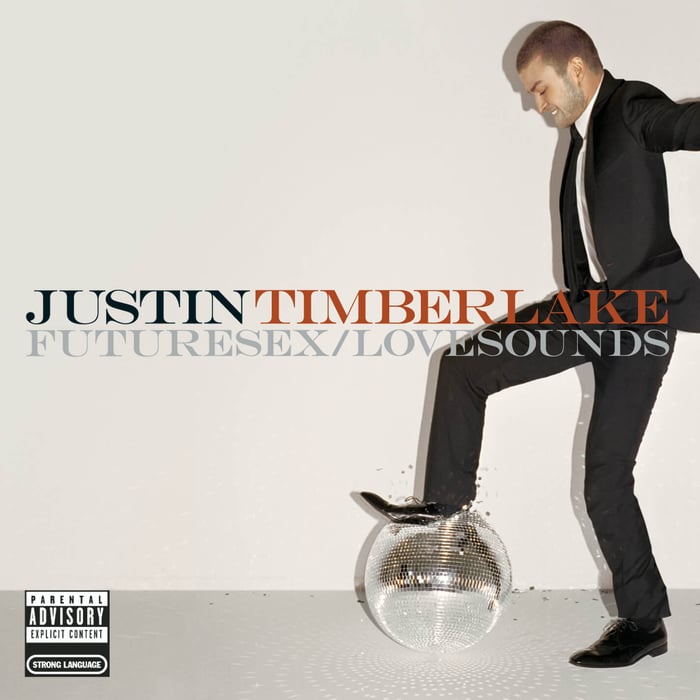
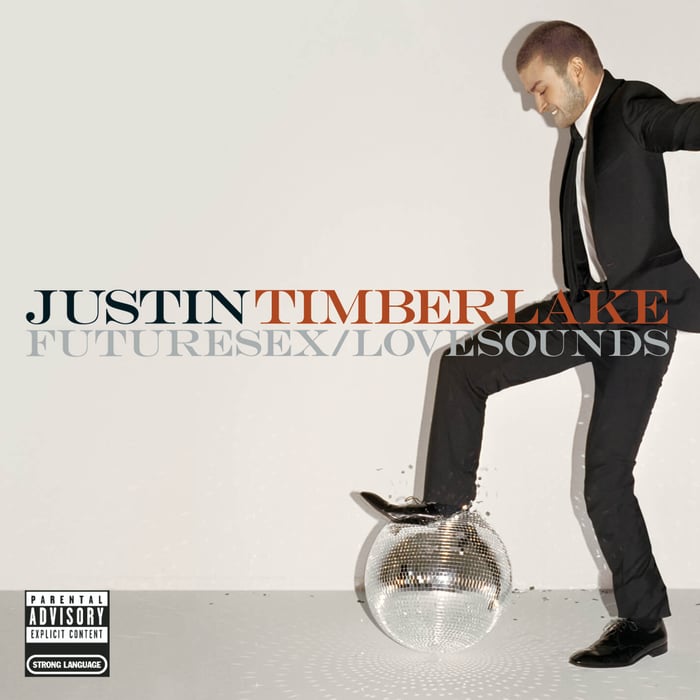
The visual world ties in too. The project’s imagery includes Timberlake in a black suit smashing a disco ball, photographed by Terry Richardson. Timberlake described the whole thing like a fashion editorial—YSL and Gucci suits paired with the sonics. And honestly, that framing fits. The album wears style like armor, but the closing track removes it and stands there in plain clothes.
Arguable take: the final song isn’t an emotional afterthought—it’s the only moment where the album stops “selling” and starts talking.
The aftershock: “SexyBack” as a career reset button
“SexyBack” becomes the turning point where people stop asking about an *NSYNC reunion and start asking what Timberlake will do next. That’s not just a hit single; it’s a boundary line.
The album’s run stacks up: multiple number-ones, four million copies sold in the US, and 10 million worldwide. The FutureSex/LoveShow tour becomes one of the year’s top grossers. Then Timberlake does what he seems to do when momentum peaks—he disappears for a while.
He returns in 2013 with the commercially successful The 20/20 Experience, which also gets critical acclaim. Then comes 2018’s Man of the Woods, which gets critically panned. In March 2024, he releases Everything I Thought It Was, which lands to mixed reviews. In June 2024, he’s arrested for DWI in Sag Harbor, New York.
But none of that changes what FutureSex/LoveSounds feels like in the headphones: the moment Timberlake decides to stop being a product-demo and start being a designer—even if he’s still borrowing other people’s tools to build the thing.
Arguable take: this album didn’t just change his career; it taught pop audiences to tolerate risk as long as the bass hits hard enough.
FutureSex/LoveSounds is the sound of a man sprinting away from his own past—and then realizing, halfway through the run, he brought his baggage anyway. The first half sells control like a luxury item; the second half admits control is mostly performance. The trick is that both halves are convincing in the moment, and the album never apologizes for the whiplash.
Our verdict: People who like pop when it’s dressed like a nightclub and secretly wired like an art project will actually love FutureSex/LoveSounds. If you want “sincere” from the first second—or you can’t stand swagger as a delivery system—you’ll bounce off this thing fast and blame the mirror.
FAQ
- What is the core vibe of FutureSex/LoveSounds?
A sleek, distorted electro-funk night drive that keeps interrupting itself with actual feelings. - Is FutureSex/LoveSounds really split into two halves?
Yes—the energy shifts hard, and the persona in the later songs doesn’t behave like the one chasing the early tracks. - Why do Timbaland and Danja feel so central to the album?
Because their fingerprints are all over the sound: ad-libs, beat choices, synth textures, and the overall direction—especially after “My Love.” - What’s the weirdest curveball on the tracklist?
“Losing My Way,” with its gospel choir and the story of Bob’s meth addiction—somehow it lands because the performance commits. - Does the album stick the landing?
Mostly. “(Another Song) All Over Again” is a deliberate comedown—less spectacle, more honesty—though the shift can feel abrupt if you wanted the party to keep going.
If you’re the type who treats album artwork like part of the music (guilty), you can always shop a favorite album cover poster at our store: https://www.architeg-prints.com.
 | DISCOUNTGET 30% OFF*Use code on your next order:
|
* This post may contain affiliate links, meaning we earn a commission if you make a purchase through these links, at no additional cost to you.