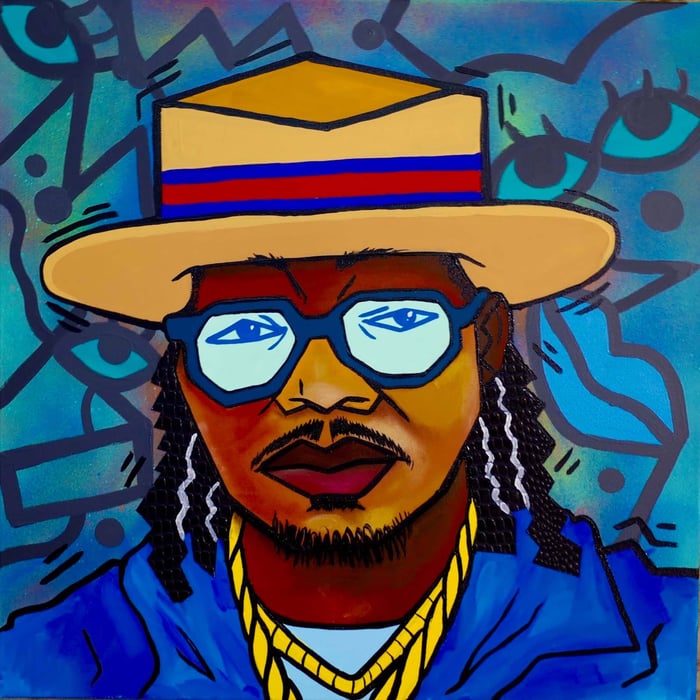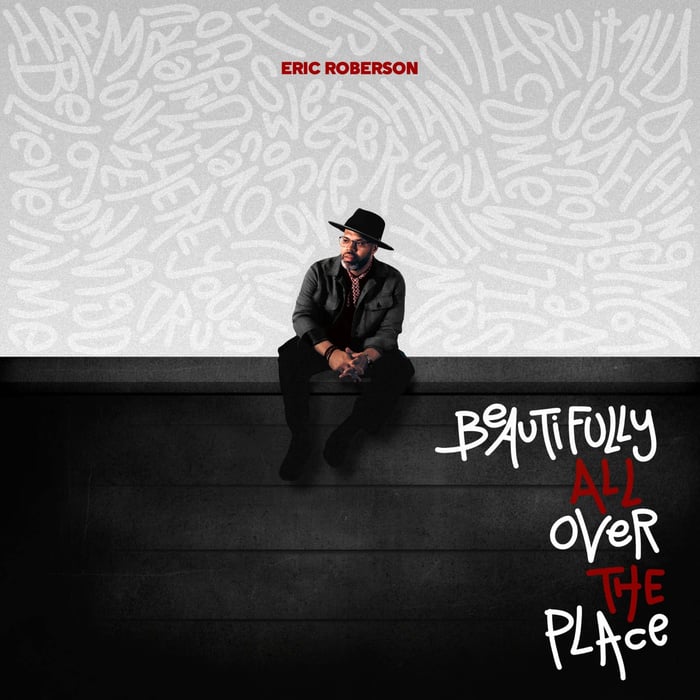
Eric Roberson Album Review: “Beautifully All Over”—Too Neat to Be a Mess


 See more Architeg Prints stories on Google.
Eric Roberson Album Review: “Beautifully All Over”—Too Neat to Be a Mess
Eric Roberson’s album comfort-food soul that pretends to be “all over” while staying obsessively tidy, exploring themes of romantic patience and self-encouragement with warmth and precision.
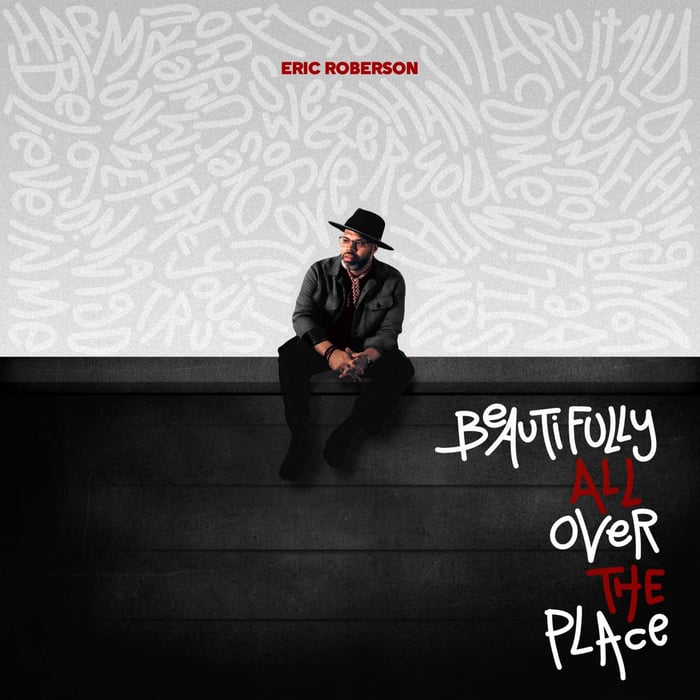
This album’s title is basically a dare
“Beautifully All Over the Place” sounds like it’s about chaos—scattered feelings, messy choices, maybe a few songs that spill wine on the couch and refuse to apologize. Then you press play and realize Eric Roberson isn’t here to splatter paint on the walls. He’s here to straighten the frames.
That’s not a diss. It’s an intention. This Eric Roberson album moves like a grown person’s morning: warm lighting, steady pacing, no surprise phone calls. And honestly, at first I mistook that for the record being a little too safe. On second listen, I heard something else: he’s not chasing disorder—he’s showing you how disciplined love and self-respect look when they’ve survived a few decades.
He’s been trained by disaster, and you can hear it in the control
To understand why this record is so composed, you can practically feel the backstory baked into it. In the mid-’90s, Roberson had the scholarship, the label situation, the early momentum—and then the kind of career sabotage that would make most people spiral: a debut shelved and master tapes gone after a break-in. That’s the sort of plot twist that usually turns into bitterness or a “where did they go?” documentary segment.
Instead, he took it like homework. The long-game response is all over his choices now: he built Blue Erro Soul, handled his own releases, moved serious numbers without a distributor, collected major-industry nods, taught at Berklee for five years, and kept dropping albums with the consistency of someone who refuses to wait for permission. This is album eighteen, and it doesn’t sound like someone begging for attention. It sounds like someone who already knows exactly who’s listening.
Here’s my arguable take: the neatness people might call “predictable” is actually the point. The control is the emotion. This record isn’t messy because he’s not living in that kind of uncertainty anymore—he’s writing from the other side of it.
The romance songs aren’t scattered—they’re one long, polite argument
From the jump, a big chunk of the album runs on one premise: Roberson sees a woman, feels the pull, and tries to make patience sound sexy. That’s a tricky sell, because patience doesn’t naturally pop like drama does. But he commits.
“Come with Me” and the lobby-daydream vibe
“Come with Me” plays out like a clean little scene: a daydream in a lobby, the imagined connection, the snap back to reality when her girlfriend shows up, and then the scramble to translate chemistry into a sentence that won’t scare anyone off. The imagery leans romantic-natural—springtime, flowers, birds, trees—the classic shorthand for “this could be real.”
And yeah, it’s sweet. But it’s also very safe. The song feels like it’s wearing a good shirt to avoid spilling anything.
“Trust in Love” and the gentle-waiting posture
“Trust in Love” strips the situation down even further: she’s been hurt, he won’t rush her, he won’t judge her, he’ll stay nearby until she’s ready. Jayshawn Champion jumps in with a promise to help carry the emotional luggage. It’s meant to be reassuring, and it is.
But I kept waiting for the song to show even a hairline crack—some hint that waiting is hard, or that his patience has limits, or that he might get scared too. It mostly refuses. The track chooses softness over tension every time, which is admirable… and a little smoothing.
“Believe in Me” and the pillow-line tenderness
“Believe in Me” leans into physical comfort as proof of emotional safety: let his chest be the pillow, let her presence finish the story that was fading. This is the sort of line that lands because he sings like he’s not performing it—more like he’s stating the obvious.
Taken one by one, these songs read like real tenderness from someone who means it. Stacked together, though, they start to blur. And I’m not saying they’re bad—I’m saying Roberson’s devotion to patience becomes so consistent that the songs themselves get… patient. Too polite. Too careful. They begin to share a face.
That’s my mild criticism: the record repeats its romantic stance so faithfully that it shaves off some individuality from the tracks. A little more friction would’ve made the sweetness hit harder.
The “encouragement” section: sermon, self-help, and one real gut-check
After the romance-heavy run, the album pivots into uplift mode. These songs split the difference between pep talk and personal reflection, and the difference matters more than it should.
“Fight Thru It All” tries to talk itself into daylight
“Fight Thru It All” points the camera inward—he’s talking to his own reflection, trying to convince himself he deserves happiness, telling himself to dance in the rain while the storm passes. There’s a moment I respect: a verse admits that some days the current is too heavy to paddle. That’s the kind of line that could open a door.
Then the song closes it a bit by returning to the general instruction: fight through it all. I get it—mantras are supposed to be repeatable. But repeatable isn’t the same as revealing. This one brushes up against something real and then backs away.
Arguable claim: it’s not that the message is wrong—it’s that the track doesn’t risk enough specificity to feel like his fight.
“Do Something” goes full motivational-poster
“Do Something” turns outward and starts issuing challenges: encourage a stranger, take the shot, gas yourself up in the mirror, pack the middle of your life with fun. The problem isn’t the sentiment. The problem is it could be printed in calming font and taped to a dentist’s office window.
I’m not above a basic message—sometimes you need the basics. But as a song, it feels like the music is doing the emotional work the lyrics won’t do.
“Where You Gonna Go” finally admits doubt—and it changes everything
Then “Where You Gonna Go” shows up with BJ the Chicago Kid and suddenly the encouragement has a pulse. BJ cracks the whole thing open right at the start by admitting he isn’t even fully sure who the message is for—maybe it’s for you, maybe it’s for him. That uncertainty is the missing ingredient the other motivational tracks avoid. The second somebody says “I might be preaching to myself,” the room gets quiet in a good way.
The writing builds pressure with simple obstacles—mountain, river—and makes the point that nobody else climbs or swims for you. And the bridge lands the real sting: if you don’t go, you’ll end up somewhere you shouldn’t be. That’s consequence, not inspiration. That’s what makes it work.
Hot take (mild, but I mean it): this is the only “pep talk” here that actually earns the right to talk.
“Harmonize” proves he’s best when he stops giving speeches
The album’s sharpest move is “Harmonize,” and it starts with something almost stupidly small: a spoken bit about breakfast. He offers to cook. She chooses cereal. He laughs, surrenders, and goes for the Cinnamon Toast Crunch.
That’s it. Thirty seconds of domestic reality.
And somehow that tiny exchange does more than entire verses elsewhere because it places two people in a space instead of floating them in a concept. No “togetherness.” No abstract love language. Just a kitchen decision and the soft comedy of compromise.
When the song kicks in, the metaphor finally feels earned: he meets a woman whose “melody” he already knows the key to. They sing together until night flips into morning, moon into sun. Micki Miller comes in sounding huge—like the room gets wider just to fit her voice. It’s one of those features that doesn’t just decorate the track; it re-centers it.
Arguable claim: “Harmonize” is the moment the album stops trying to be reassuring and simply becomes believable.
Sweet details, cosmic vows, and the best joke on the record
From there, the album nails two very different flavors of long-term love: the microscopic and the astronomical.
“Sweeter Than You” wins by staying small
“Sweeter Than You” is built out of tiny, specific sweetness. He’d give her his last quarter for the gumball machine, already knowing she’ll bite it in half and hand some back. They drink morning coffee without sweetener because her lips handle that job. Even the alarm clock sounds good because he likes what he wakes up to.
Avery*Sunshine floats through the duet, and the best part is that the song never tries to inflate itself into a “moment.” It stays the size of a real room, not a music-video mansion. The restraint is the charm.
If someone argues this track is too soft, I’d push back: the softness is the flex. Not every love song needs to pretend it’s breaking physics.
“Still Be Loving You” goes full outer space—then winks
Then “Still Be Loving You” swings hard in the other direction: love across cosmic timelines. Dust becomes home. Aliens find their bones. Cars learn to fly. Spaceships drift past. He’s still wrapped around her.
And then he punctures the grand vow with a grounded little wink—he mentions the freaky things she does, and there’s a bridge where doctors warn him off sugar. It’s the best gap on the album: epic promise versus everyday body maintenance. That clash is where the personality shows up the clearest.
I didn’t expect that to be my favorite kind of moment here, but it is. It’s funny without trying to be funny. It’s intimate in a way the more “perfect” romantic tracks sometimes avoid.
Arguable claim: this track works because it refuses to stay sacred. Long love is holy, sure—but it’s also blood sugar and inside jokes.
Who this Eric Roberson album is really for (and where it repeats itself)
By the end, the target audience is obvious, and it’s not teenagers in their feelings. This record is made for adults who actually live with the consequences of moods. Sunday-morning listeners. Couples who know grand gestures don’t matter as much as someone remembering the coffee. People who don’t need chaos to believe something is passionate.
Within that room, Roberson barely misses. The issue is how often he re-enters the room through the same door. After eighteen albums, he’s earned trust. The thing I’m less sure about is whether trust alone—without sharper left turns, without more surprise—can carry brand-new songs past the gravity of the catalog he’s already built.
I thought the title meant variety. Now I think it means something else: “all over the place” isn’t the sound—it’s the emotional territory he’s willing to cover while keeping the house clean.
Standouts and where my ear kept returning
I kept circling back to the tracks that either:
- admitted uncertainty (“Where You Gonna Go”),
- showed a real-life scene instead of a principle (“Harmonize”),
- or used details so specific they couldn’t be borrowed by anyone else (“Sweeter Than You”).
Those are the songs that made the album feel less like a strategy and more like a life.
Conclusion
“Beautifully All Over the Place” sells itself like a beautiful mess, but it’s actually a beautifully managed space: romance handled carefully, encouragement delivered with varying depth, and a few moments where real life peeks through and instantly makes everything more vivid. The best songs here don’t shout—they just let you overhear something true.
Our verdict: If you like your soul music grown, patient, and allergic to mess, this Eric Roberson album is going to feel like home. If you want risk, left turns, or even a little romantic recklessness, you’ll get antsy and start checking the tracklist like it owes you excitement.
FAQ
- Is “Beautifully All Over the Place” actually chaotic or experimental?
No—its “all over” vibe is more about covering familiar emotional ground than taking wild sonic risks. - What are the most replayable tracks?
“Where You Gonna Go,” “Sweeter Than You,” and “Harmonize” are the ones that kept pulling me back. - Does the album lean more into love songs or self-encouragement?
It leans heavily into romantic patience, with a smaller section of motivational tracks in the middle-to-late stretch. - What’s the biggest weakness while listening front-to-back?
Some romance tracks share such a similar tone and approach that they blur together on repeat listens. - What’s the one moment that feels the most “real”?
The breakfast spoken intro on “Harmonize”—it’s a tiny scene, but it does more character work than bigger declarations.
If this album put you in that “grown-love” headspace, it’s also the exact mood that looks good on a wall. If you want to snag a favorite album cover poster, our shop’s here: https://www.architeg-prints.com/
 | DISCOUNTGET 30% OFF*Use code on your next order:
|
* This post may contain affiliate links, meaning we earn a commission if you make a purchase through these links, at no additional cost to you.