Grimes Challenges Elon Musk Over AI Controversy and “Sex Slave” Debate


Grimes Challenges Elon Musk Over AI Controversy and “Sex Slave” Debate
Grimes’ AI controversy with Elon Musk takes a sharper turn as she urges him to “step up,” respect women, and reclaim his sense of responsibility.

Grimes Pushes Back on Musk’s AI Endorsement
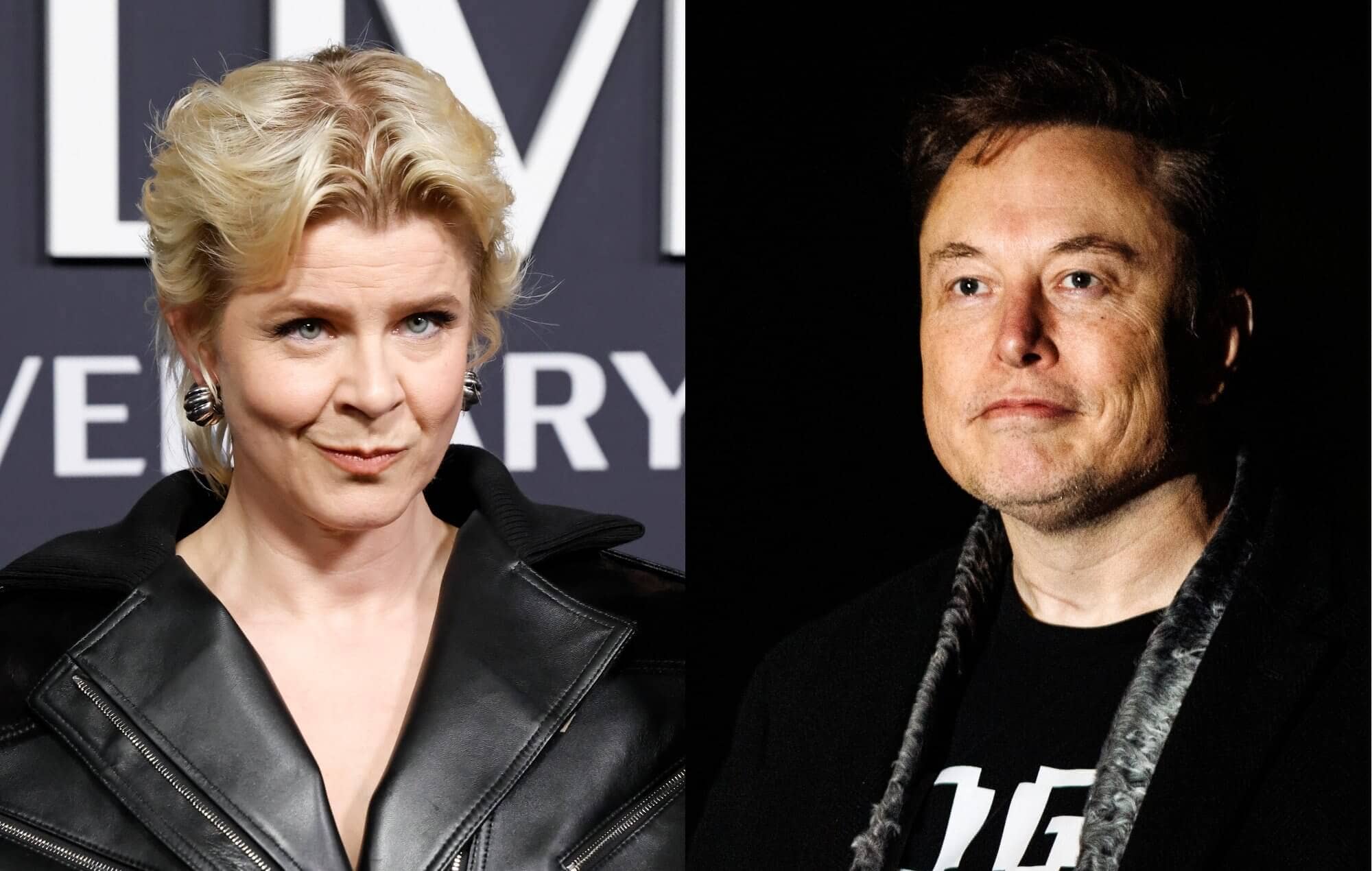
Few online exchanges are ever just online exchanges when Grimes and Elon Musk are involved. This time, the former couple clashed over an artificial-intelligence-generated influencer, the sexualization of digital beings, and Musk’s public responsibility as one of the world’s most powerful technology figures.
The Canadian artist, whose real name is Claire Boucher, challenged Musk after he shared a video promoting “Claudia,” an influencer presented as being entirely generated by artificial intelligence. Musk posted the video on X, the social media platform he has owned since 2022, alongside the ominous message:
“Super intelligence will hack your limbic system.”
— Elon Musk
The post quickly drew a response from Grimes, who argued that the public fixation on artificial women says more about human anxieties than it does about technological progress. Her criticism wasn’t aimed at Claudia as an individual creation. Instead, she objected to the way the digital character was being framed and reduced.
The Debate Over Claudia’s Identity
Grimes said she was a fan of Claudia but rejected the idea that the character should be treated as a conventional woman or sexual object. In her view, the AI creation represented something stranger and more complicated—an imagined being shaped by technology, mythology, and humanity’s collective history.
“The fixation on fake women feels like cope. I’m a fan of Claudia, but she doesn’t have a Birkin deal, and she isn’t a she; she’s an alien creature who’s both blessed and haunted by the entirety of ancestral memory.”
— Grimes
That description is classic Grimes: part philosophical lecture, part science-fiction monologue, and part late-night thought spiral that somehow makes you want to reread Nietzsche. She then took the argument into more explicitly philosophical territory, warning that turning a sexless artificial being into a sexual servant represented an especially bleak form of cultural reduction.
“Secularizing a species that cannot have sex is the ultimate definition of Nietzsche’s last man, and we can do better than reducing ‘it’ to a sex slave.”
— Grimes
Her point was less about whether Claudia was “real” and more about what humans choose to project onto digital creations. If a machine has no body, no desires, and no biological identity, why is its first cultural role so often imagined through sex and submission? For Grimes, that question sits at the center of the AI controversy.
Musk Replies With a “White Pill”
Musk answered by telling Grimes to “take the White Pill,” a phrase generally associated with an optimistic or hopeful outlook. He attached another video featuring Claudia singing about artificial intelligence improving human life.
The song included the lines:
“End of the world? You’re absolutely right / End of the 9-5 tonight.”
It was a tonal pivot from Grimes’ philosophical warning. Where she saw a troubling impulse to flatten AI into a fantasy object, Musk’s response presented the technology as a possible escape from conventional work and the anxieties of everyday life.
That contrast made the exchange feel almost like two different science-fiction futures arguing in public. Grimes’ version is haunted, symbolic, and filled with questions about consciousness. Musk’s is more techno-utopian, complete with machines promising to liberate humanity from the nine-to-five grind.
Grimes Calls on Musk to Take Responsibility
The conversation soon moved beyond Claudia. When one social media user suggested that most men don’t read Nietzsche and simply live in caves, Grimes pushed back. She argued that Musk had read Nietzsche and that knowledge alone wasn’t the issue.
For her, the real question was what someone with enormous influence chooses to do with that knowledge.
“Our leaders should read Nietzsche and Elon has read Nietzsche. It is not causal. He’s an unelected king. He could and should step into the role and confront his responsibility to society, if he wanted to.”
— Grimes
Grimes then described Musk as someone who could still choose to act differently. She said he could “rise above” his current behavior and become the kind of leader people hoped he would be.
The language became unusually grand—“the king we all wish he was” and “the king he used to be”—but that was precisely the point. Grimes appeared to be saying that Musk’s influence already gives him a kind of unofficial power, whether he accepts the comparison or not.
She added that she planned to stop making these arguments privately and speak about them publicly instead. In her view, a more generous and responsible approach could help Musk regain what she called the “Mandate of Heaven,” a concept associated with the idea that a ruler’s legitimacy depends on moral conduct.
“Starship Has the Mandate of Heaven”
Musk rejected the idea that he wanted to be a king. His response was characteristically brief and space-focused:
“I don’t want to be king, and Starship has the Mandate of Heaven.”
— Elon Musk
The comment redirected the metaphor toward SpaceX’s Starship spacecraft, turning Grimes’ language about political and moral leadership into another reference to engineering and exploration.
Still, Grimes continued to argue that public influence brings public obligations. She said Musk could be great if he listened to ordinary people and suggested that respectful treatment of women in public could have a much wider effect.
“The best of us are not beholden to the worst of us. Elon is a king whether he likes it or not. He could be great if he listened to the people.”
— Grimes
She also insisted that Claudia’s existence did not threaten her own value. That distinction matters. Grimes wasn’t presenting the AI character as a rival or claiming that digital women diminish human women simply by existing.
“My value is not threatened or denigrated by Claudia.”
— Grimes
Her criticism was directed at the cultural framing around Claudia—and at Musk’s apparent willingness to participate in it.
Birth Rates, Women, and the Contradiction Grimes Sees
Grimes also highlighted what she viewed as a contradiction in Musk’s public positions. She argued that someone who speaks openly about concerns surrounding declining birth rates should not also publicly endorse imagery or ideas that treat sexuality and reproduction as disposable.
“A man who worries so publicly about the birth rate should not publicly advocate for its demise.”
— Grimes
She followed that argument with a broader appeal for Musk to respect women publicly, suggesting that such a change could have a powerful ripple effect.
“If Elon respected women in public the whole world could change.”
— Grimes
The exchange therefore became larger than a dispute over one AI influencer. It touched on gender, power, reproduction, technology, online behavior, and the responsibilities attached to extreme wealth and visibility. That’s a lot to fit into a social media thread—but Grimes has never exactly been known for keeping her ideas in small boxes.
Grimes’ Own Complicated Relationship With AI
The AI controversy is especially layered because Grimes has long explored artificial intelligence in her own work. She has previously shared software designed to mimic her voice and made more than 200 AI records available for content creators to use freely.
In 2024, she said that artificial intelligence in music would likely shape human minds for the rest of time. Her position has generally been one of fascination mixed with caution: she sees the creative possibilities, but she also recognizes that the technology can reshape identity, labor, authorship, and culture in uncomfortable ways.
That tension is present in her current projects, too. Grimes is scheduled to make her film debut as the futuristic aristocrat Zayinth Alda in the AI-generated movie Gods Don’t Give Gifts. She is also due to release the AI-themed album Psyopera in January.
Although the album explores the effects of growing technology, Grimes has said it was not made with generative AI. She also emphasized that she didn’t want the project to be about Musk. That detail gives the current dispute an important bit of context: AI is not simply a talking point she borrowed for a public argument. It has been central to her artistic interests for years.
A History of Public Disagreements
The latest exchange is part of a longer pattern between Grimes and Musk. The pair announced that they had “semi-separated” in 2021, but their public disagreements have continued across subjects ranging from social media to politics, parenting, and family privacy.
Grimes previously criticized Musk after he posted that pronouns “suck,” telling him to stop and saying she knew that hostility was not truly in his heart. She later described his social media platform as “a poison, a prison of utterly short-form deep-sounding nonsense”—a wonderfully sharp phrase that sounds like it could be printed on a protest poster.
She has also distanced herself from Musk after controversial gestures at Donald Trump’s presidential inauguration, explicitly denouncing Nazi ideology and insisting that she was not him.
Their relationship has also involved serious disputes away from public arguments. Grimes has spoken about being caught in a custody battle with Musk and criticized him over what she described as his failure to respond appropriately during one of their child’s medical crises. She shared a plea from her mother asking that their children be allowed to see their elderly great-grandmother and later said she had begged Musk to keep the children out of the public eye.
On another occasion, she appeared to agree with Olivia Rodrigo’s remarks about men wanting to go into space, a comment widely interpreted as another indirect jab at Musk’s ambitions.
Musk’s Latest AI Project Faces Backlash
Elsewhere, Musk recently followed through on a promise to create a historically accurate version of The Odyssey using AI. The project received a negative reaction, adding another chapter to the ongoing debate around machine-generated entertainment.
That response echoes the concerns raised by Grimes: when technology is used to recreate people, stories, voices, or identities, the question isn’t only whether it can be done. It’s also what gets lost, who gets represented, and whether the result deepens culture or simply turns familiar ideas into shiny digital packaging.
The dispute over Claudia sits neatly inside that larger argument. Musk appears to see AI as a powerful route toward a radically different future. Grimes seems equally aware of its power, but more concerned about the habits and hierarchies humans may carry into that future.
Conclusion
Grimes’ latest challenge to Musk is about more than one artificial influencer. It’s a sharp, messy argument over power, gender, technology, and what influential people owe the public. Whether Musk accepts her call to “step up” is another matter—but the conversation leaves one question hanging in the air: if AI reflects human values, what exactly are we teaching it to become?
FAQ
- What did Grimes criticize Elon Musk for? Grimes criticized Musk for endorsing Claudia, an AI-generated influencer, and objected to the way the character was being reduced to a sexual object.
- Who is Claudia? Claudia is an “influencer” presented as being fully generated by artificial intelligence. Musk shared a video featuring the character on X.
- What did Grimes mean by calling Musk an “unelected king”? She was referring to his enormous public influence and argued that people with that level of power should confront their responsibilities to society.
- Is Grimes opposed to artificial intelligence? No. Grimes has actively explored AI in music, shared voice-mimicking software, released AI-related recordings for creators, and incorporated technology into her upcoming creative projects.
- What is Grimes’ upcoming album? Her forthcoming AI-themed album is titled Psyopera. She has said that it explores the effects of artificial intelligence but was not made with generative AI.
If this collision of music, technology, and cultural debate has you reaching for your favorite record, browse the album cover posters at Architeg Prints. A great piece of music art can make a room feel like your own little universe.
 | DISCOUNTGET 30% OFF*Use code on your next order:
|
* This post may contain affiliate links, meaning we earn a commission if you make a purchase through these links, at no additional cost to you.