How Roberta Bayley Captured the Iconic Ramones 1976 Debut Album Photo


 See more Architeg Prints stories on Google.
How Roberta Bayley Captured the Iconic Ramones 1976 Debut Album Photo
The story behind the legendary Ramones album cover photo and photographer Roberta Bayley’s journey through New York’s punk scene.
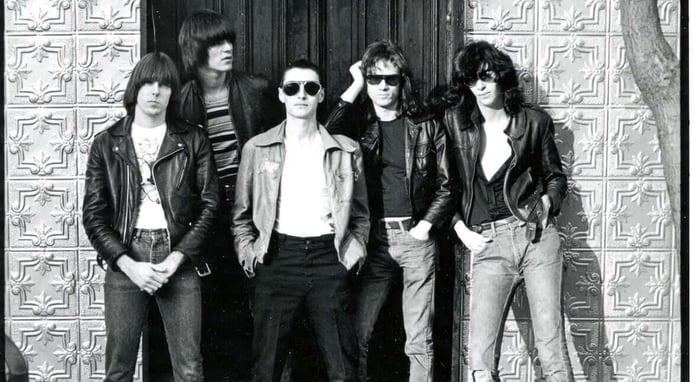
Roberta Bayley’s photograph of the Ramones, snapped just a month and a half after she began taking pictures, stands as a timeless emblem of punk rock spirit. This image, immortalized on the Ramones’ 1976 self-titled debut album cover, wasn’t originally meant to be the official shot. Yet, its raw energy, urban grit, and unpolished authenticity captured the very heart of a nascent movement — punk rock — like no other. Let’s dive into how this iconic photo came to be and explore Roberta’s unforgettable journey through the vibrant New York music scene.
A Rookie Photographer Meets the Ramones
Imagine being brand new to photography and suddenly finding yourself behind the lens of one of punk’s most influential bands. That was Roberta Bayley’s reality when she captured the Ramones. The band’s label, Sire Records, initially hired a big-name photographer to shoot the album cover, but the band and their manager Danny Fields weren’t feeling the glossy, Hollywood-style shots. Instead, they wanted something that truly reflected their gritty, street-level ethos.
Luckily, Bayley had photographed the Ramones just days before, for Punk magazine, using a modest $300 camera. That casual shoot — a no-pressure, fun session against a graffiti-covered brick wall in East Village — became the cover photo that perfectly embodied the band and the scene.
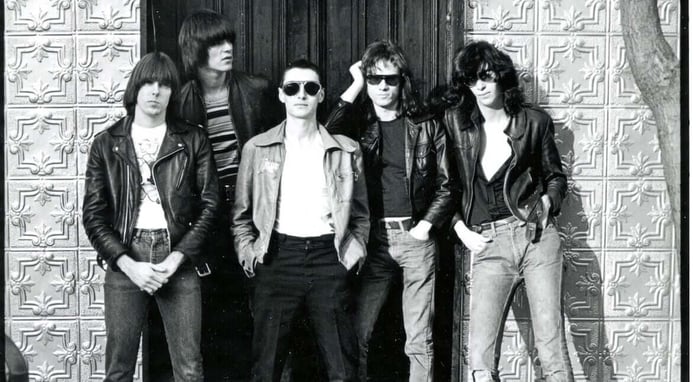
The Ramones with their art director Arturo Vega in New York, 1976.
Bayley’s modest fee for the image? Just $125 — the exact amount she needed to cover her rent — but the photo’s legacy has far outshone that humble sum.
From San Francisco to New York’s Punk Underground
Roberta Bayley’s path to punk photography was as much about serendipity as it was about passion. Originally from San Francisco, she moved to London for three years before settling in New York City. In the mid-1970s, Roberta became a fixture at CBGB, the legendary Bowery club where punk was born. From 1974 to 1978, she worked the doors and captured every electrifying act on stage — Blondie, Talking Heads, Patti Smith, Television, Iggy Pop, the Clash, the Damned, and of course, the Ramones.
Her entry into the scene wasn’t immediate fame or flashbulbs but rather slow immersion. She recalls how a friend who’d worked with the New York Dolls introduced her to the scene, inviting her to wild loft parties and gigs. These early experiences were her gateway to a close-knit circle of musicians who would come to define punk music.
“I didn’t realize there was any particular New York scene, but I definitely heard of the Dolls... Richard Hell and I started dating, and that’s how I got to CBGB.” — Roberta Bayley
The First Encounters with the Ramones
Though the Ramones would go on to define punk’s sound and style, when Roberta first met them, they were just another underground band rehearsing in Performance Studios. She attended their small showcases and quickly became friends with key people around the band, including Dee Dee Ramone’s girlfriend, Pam Tent, a San Francisco singer. Working the doors at CBGB, Bayley naturally crossed paths with the band and the entire burgeoning punk community.
Her fascination with these original, raw bands led her to invest in photography gear to document this moment in music history — and so she bought her first camera.
The Camera Behind the Lens
Bayley’s tool of choice for capturing the Ramones was a trusty Pentax Spotmatic, purchased used for $300. This 35mm camera was a favorite among budding photographers, prized for its simplicity and quality. Later, she switched to an Olympus, a compact Japanese camera favored by Bob Gruen, another famed rock photographer. The Olympus’s interchangeable lenses and sleek design suited her style perfectly, and she used it for the rest of her career.
Developing her work was a challenge at first. Luckily, a friend lent her a darkroom in his apartment on Christopher Street, which became her creative sanctuary. Without this access, many of her iconic images might never have come to life.
Capturing Grit and Authenticity: The Unpolished Beauty
What makes the Ramones album cover so unforgettable is its raw, unfiltered portrayal of the band — no polish, no studio gloss. Shot on film, the photo perfectly captured the urban grit of East Village and the rebellious spirit that defined the band.
Bayley never fully embraced digital photography, preferring the texture and character film provides. She admits to buying a digital camera later, but it never quite captured her imagination the way film did. This analog authenticity remains a huge part of what makes her Ramones photo so special.
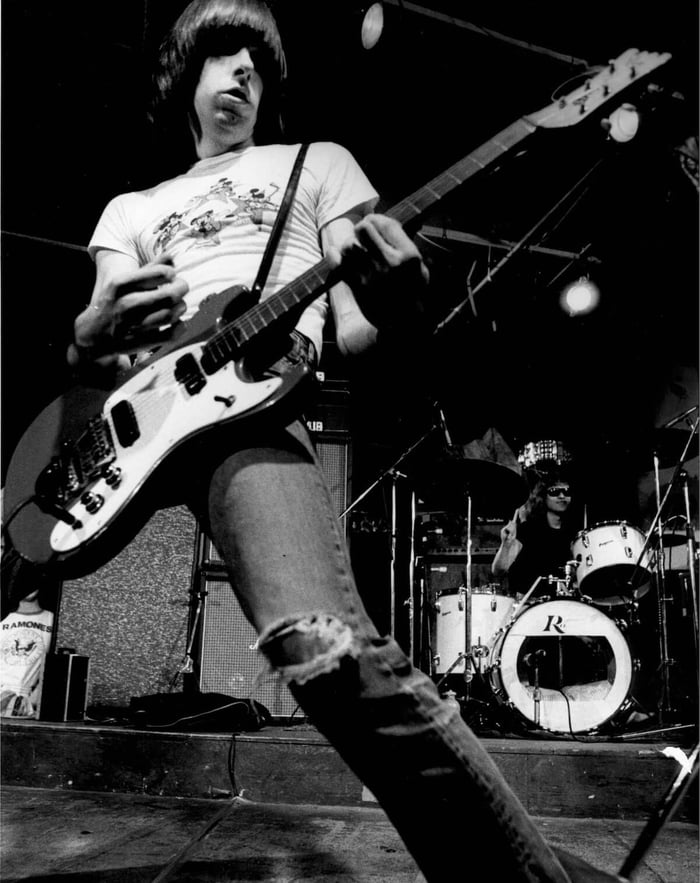
Johnny Ramone on stage at CBGB, 1976.
The Iconic Album Cover: A Happy Accident
Interestingly, that now-legendary photo wasn’t intended for the album cover. Bayley was simply shooting for Punk magazine, goofing around with the band with no pressure or grand plans.
Sire Records originally commissioned another photographer, but when the band rejected those polished images, they scrambled for a budget-friendly alternative. They reached out to photographers who had shot the Ramones, including Bayley, Bob Gruen, and Danny Fields. After reviewing contact sheets, Bayley’s candid East Village photo was chosen.
They had other shots from the session, including some where the band smiled, but Sire ultimately used those for publicity. Johnny Ramone famously hated the smiling photos, insisting, “We’re never showing that picture ever again.” The Ramones wanted to be taken seriously — like The Beatles and The Rolling Stones before them, smiles were rare on official images.
Before “Punk” Was Punk
It’s hard to imagine now, but none of these bands originally called themselves “punk.” The term was actually a harsh insult, used in street slang and gangster films long before it became a genre marker. The magazine Punk helped popularize the word, turning an insult into a badge of honor for this new wave of music and attitude.
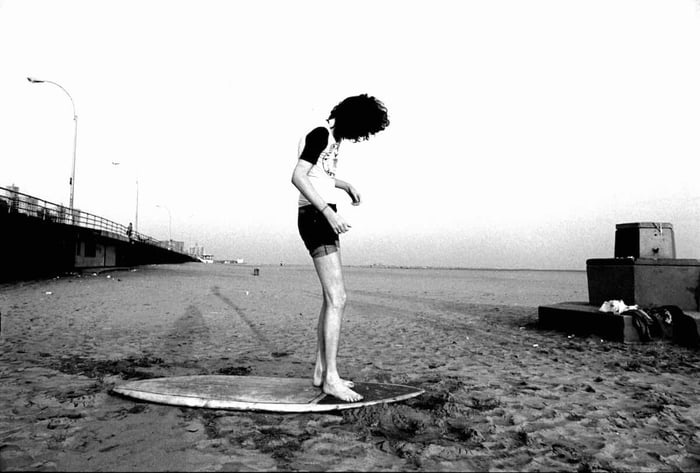
Joey Ramone at Coney Island, 1977.
Reflecting on 50 Years of Punk History
Now, half a century later, Bayley still adores that album cover photo.
“There’s not one thing wrong with that photo. It made my whole reputation... It even made me famous in South America and Japan. What’s not to like?”
Looking back, Bayley sees the image as a charming accident — a snapshot of friends hanging out, capturing the essence of a moment that would change music history forever. Most of her best photos are of people she knew personally, which gives her work warmth and authenticity.
Her photography hero was Astrid Kirchherr, the early Beatles photographer, whose work inspired Bayley’s own approach to capturing legends before they were famous.
While she’s retired now and didn’t photograph later icons like Prince or Madonna, she’s content with her remarkable legacy documenting punk’s golden age.
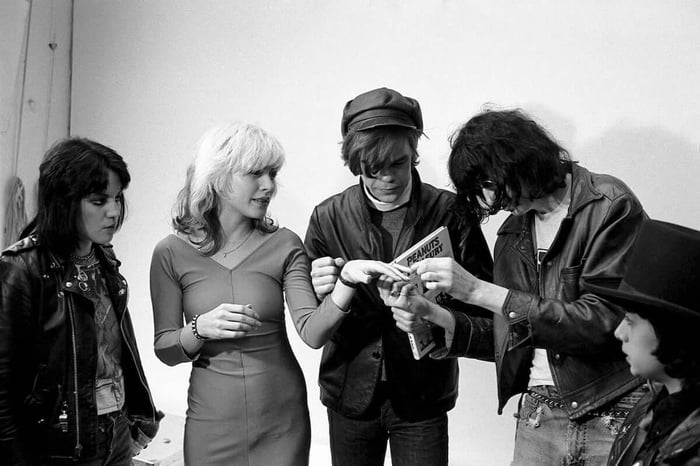
Joan Jett, Deborah Harry, David Johansen, and Joey Ramone at a 1977 mock wedding photo shoot.
A Lasting Legacy of Punk Spirit
Roberta Bayley’s journey from a new photographer to the chronicler of punk’s birth is a testament to being in the right place at the right time — armed with genuine curiosity and a keen eye. Her Ramones photo remains one of the most iconic images in rock history: raw, gritty, and perfectly imperfect.
FAQ
- How did Roberta Bayley get involved with the Ramones?
Roberta started photographing the New York music scene shortly after moving there. She met the Ramones at their rehearsal space and through her work at the CBGB club, where she worked the doors. - What camera did Bayley use for the Ramones photo?
She used a Pentax Spotmatic 35mm camera, purchased used for $300, before later switching to an Olympus camera for its compact design. - Was the photo taken specifically for the album cover?
No. It was a casual shoot for Punk magazine. The album cover photo was chosen later when the initially commissioned photos were rejected. - Why didn’t the Ramones like their smiling publicity photos?
They wanted to project a serious, tough image. Smiling photos felt too pop and didn’t align with their gritty punk identity. - What was the original meaning of the word “punk”?
It was originally a slang insult, not a music genre. The term was popularized as a label for this new musical style by Punk magazine.
Celebrate the spirit of punk and iconic music moments by shopping your favorite album cover posters at our store. Bring a piece of rock history into your space with stunning, high-quality prints.
 | DISCOUNTGET 30% OFF*Use code on your next order:
|
* This post may contain affiliate links, meaning we earn a commission if you make a purchase through these links, at no additional cost to you.