JBL Cove Speakers Bring Whole-Home Audio Into Sonos Territory



JBL Cove Speakers Bring Whole-Home Audio Into Sonos Territory
JBL Cove speakers enter the whole-home audio race with Wi-Fi, Dolby Atmos, stereo pairing, and flexible listening across three new models.
A New Challenger in Whole-Home Audio
Whole-home audio sounds wonderfully futuristic until setup becomes a maze of apps, rooms, and matching speakers. JBL is hoping to simplify that experience with its new Cove range, a three-speaker family designed to bring synchronized music, flexible placement, and room-filling sound into more homes.
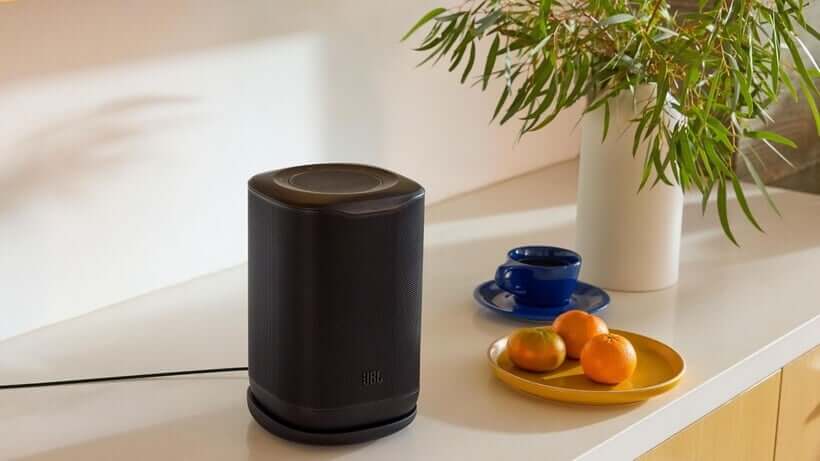
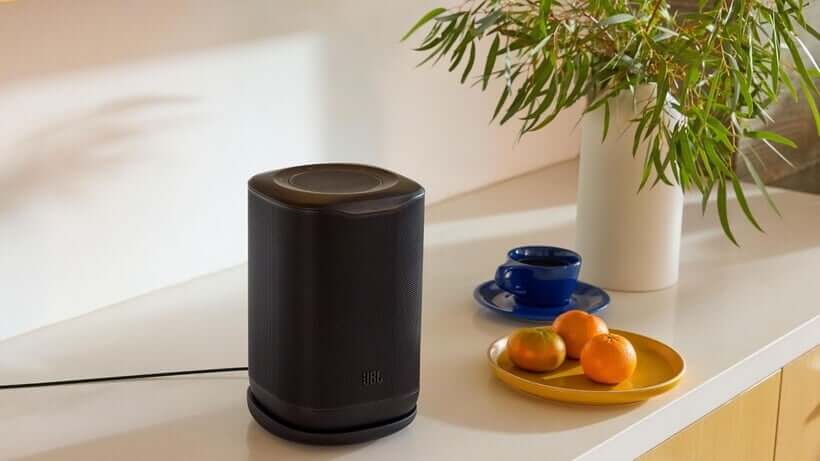
The JBL Cove M1, JBL Cove P1, and JBL Cove X1 are positioned as direct rivals to established multi-room audio systems, including Sonos. Rather than offering one speaker for every listener, JBL has created three distinct models, each aimed at a different kind of setup. There’s the compact Cove M1, the portable Cove P1, and the larger, more powerful Cove X1.
All three speakers are designed to work independently or as part of a wider system. Users can place them in separate rooms, group them together, or create stereo pairs for a more spacious left-and-right presentation. The JBL One app brings these functions together, handling setup, grouping, and sound customization without making the system feel tied entirely to a phone.
The range is scheduled to launch in the UK and Europe in October 2026. Pricing starts at £199.99 for the Cove M1, while the Cove P1 will cost £399.99 and the flagship Cove X1 will be priced at £429.99.
Three Speakers, Three Listening Styles
The appeal of the Cove range lies in its variety. JBL isn’t treating every room like a concert hall, and that’s a sensible move. A small bedroom, a kitchen, and a large living room all ask different things from a speaker.
The Cove M1 is the smallest model in the family. Its compact enclosure houses three tweeters and a woofer, giving it a design intended to deliver a fuller sound than its footprint might suggest. It’s the most affordable route into the system and could suit listeners who want a neat, uncomplicated speaker for a smaller space.
That compact approach also makes the M1 a natural starting point for a multi-room setup. One speaker can handle everyday listening on its own, while additional Cove units can be added later. For anyone who remembers the days when a whole-home audio system meant running cables through walls, that kind of flexibility feels like a welcome bit of modern convenience.
The Portable Cove P1 Adds Atmos and Battery Power
The Cove P1 takes the same whole-home idea outside the traditional living room. It includes a built-in battery rated for up to 14 hours, allowing listeners to move it around the home or take it farther afield without keeping it plugged in at all times.
Portability is only part of the story. The P1 also carries an IP56 rating, giving it added resistance against dust and water exposure. That makes it better suited to less precious environments than a typical stationary Wi-Fi speaker, although the rating should still be understood as protection rather than an invitation to treat it like a waterproof pool accessory.
Its sound system includes four tweeters, with one driver firing upward. That up-firing design supports Dolby Atmos, giving the P1 a more spacious approach to compatible content. In practical terms, JBL is aiming for sound that feels less boxed in, with a greater sense of height and width than a conventional forward-facing speaker.
The result is a model that sits between a home speaker and a portable audio companion. It can participate in a grouped listening session at home, then travel to another room when the moment calls for it. Music follows the listener instead of remaining glued to one shelf—a small convenience, perhaps, but one that quickly becomes hard to give up.
Cove X1 Is Built for Bigger Rooms
At the top of the range, the Cove X1 is designed to produce larger, more room-filling sound. It combines four tweeters, including an upward-firing unit, with two woofers. Like the Cove P1, it also supports Dolby Atmos.
That configuration gives the X1 a clear role within the lineup. It’s the model intended for listeners who want a stronger presence in a larger living room or a more substantial centerpiece for their main listening space. The two woofers should also help it handle the lower end with greater authority than the compact M1.
JBL’s approach is easy to understand: the Cove M1 offers an accessible entry point, the P1 adds movement and battery life, and the X1 focuses on scale. Instead of forcing customers to compromise around a single universal design, the range lets them choose according to room size and lifestyle.
Sound That Adjusts to the Room
A speaker can have impressive hardware and still sound underwhelming if it’s placed in an awkward corner. JBL is addressing that problem with several processing features intended to adapt playback to the listening environment.
The company’s proprietary Constant Sound Field technology is designed to create a consistent soundstage across the room. That matters when listeners move around rather than sitting in one carefully chosen chair. Whether you’re cooking, sorting records, or simply wandering in for another cup of coffee, the goal is to keep the presentation balanced.
Automatic self-tuning is also included across the range. JBL says this allows the speakers to adjust their output to suit the room and listening conditions. The Cove system also features AI Sound Boost, a technology intended to help optimize the sound as playback changes.
These features are particularly relevant to a whole-home system because every room behaves differently. Hard surfaces, furniture, wall placement, and speaker position can all influence how music is heard. JBL is attempting to take some of that guesswork away so users can spend less time fiddling with settings and more time listening.
A Broad Choice of Streaming Options
The Cove speakers support both Wi-Fi and Bluetooth, giving listeners a choice between networked playback and a more direct connection. That flexibility should make the system comfortable for both casual listeners and people with more carefully curated music habits.
JBL lists support for AirPlay 2, Google Cast, Spotify Connect, Tidal Connect, Qobuz Connect, and Roon Ready. In other words, the speakers are designed to work across several major streaming ecosystems rather than locking users into a single service.
Stereo pairing is supported as well. Two compatible Cove speakers can be arranged as a stereo pair, separating the left and right channels for a more expansive presentation. It’s a familiar feature in the wireless speaker world, but still one of the most satisfying upgrades when a single speaker starts to feel a little too centered.
The range also includes JBL’s Music Follows Me feature. By holding the Moment button, users can move playback to another Cove speaker. It’s the sort of feature that sounds like a novelty until you use it while walking from the kitchen to the living room. Then, suddenly, chasing the same song through multiple apps feels positively prehistoric.
Cove Speakers Can Join a JBL Home Cinema Setup
JBL is also presenting Cove as part of a broader home cinema ecosystem rather than a standalone music range. The speakers can connect with compatible JBL Bar Series MK2 soundbars, allowing them to play a role beyond ordinary stereo or multi-room listening.
The Cove M1 and Cove P1 can be used as rear speakers in a compatible setup. That gives owners a possible path from everyday music playback to a more immersive television and movie arrangement.
The idea is appealing because it lets one speaker serve multiple purposes. During the day, it can be part of a whole-home music group. In the evening, it can move into a home cinema configuration as a rear channel. That kind of crossover is exactly what makes wireless audio systems feel more practical: fewer single-purpose boxes, more ways to use the equipment already in the room.
The JBL One App Keeps Setup in One Place
The JBL One app is responsible for setting up the Cove speakers, organizing groups, and customizing the audio experience. It provides the control center for users who want to fine-tune the system or coordinate playback across several rooms.
At the same time, JBL says the speakers are designed to be app-optional for everyday listening. That distinction is important. Apps are useful during installation and when adjusting a system, but constantly reaching for a phone just to play music can make a simple experience feel unnecessarily complicated.
Voice control is also planned through built-in Alexa+. JBL says the feature is expected later in 2026, though it will initially be available only in the United States. That means voice functionality won’t be part of the full launch experience for every market, but the planned addition could make hands-free control more convenient once supported.
Availability, Colors, and Pricing
The JBL Cove M1, Cove P1, and Cove X1 will be available in black and white. All three models are scheduled to go on sale through JBL’s website from October 2026.
The pricing places the Cove M1 as the most approachable entry into the range at £199.99. The portable Cove P1 sits at £399.99, while the more powerful Cove X1 reaches £429.99.
With Wi-Fi, Bluetooth, stereo pairing, room adjustment, several streaming platforms, and home cinema compatibility, JBL is clearly aiming for more than a collection of ordinary wireless speakers. The larger question is whether the Cove system can make multi-room audio feel as effortless as JBL promises. On paper, at least, the ingredients are all here: flexible hardware, a broad feature set, and enough variation to fit different rooms without making every customer buy the same box.
The JBL Cove range brings a familiar audio brand into a fiercely competitive corner of the wireless speaker market. Its mix of portable listening, Dolby Atmos support, whole-home grouping, and home cinema integration gives the system a broader personality than a basic smart speaker setup. Will JBL’s approach be enough to win over listeners already settled into another ecosystem?
FAQ
- What is the JBL Cove range?
JBL Cove is a new family of three Wi-Fi speakers designed for individual listening, stereo pairing, and whole-home audio. The lineup includes the compact Cove M1, portable Cove P1, and larger Cove X1. - When will JBL Cove speakers be available?
JBL says the Cove M1, Cove P1, and Cove X1 will launch in the UK and Europe in October 2026 through JBL’s website. - How much do the JBL Cove speakers cost?
The Cove M1 costs £199.99, the portable Cove P1 costs £399.99, and the flagship Cove X1 costs £429.99. - Do JBL Cove speakers support Dolby Atmos?
Dolby Atmos is supported by the Cove P1 and Cove X1. Both models use an upward-firing driver as part of their speaker configuration. - Can JBL Cove speakers work with a home theater system?
Yes. The Cove speakers can connect with compatible JBL Bar Series MK2 soundbars. The Cove M1 and Cove P1 can also serve as rear speakers in a compatible setup.
Bring the warm, tactile feel of a favorite listening era into your space with an album cover poster from Architeg Prints. It’s a tasteful way to give your music corner a little more personality—whether your speakers are compact, portable, or built to shake the room.
 | DISCOUNTGET 30% OFF*Use code on your next order:
|
* This post may contain affiliate links, meaning we earn a commission if you make a purchase through these links, at no additional cost to you.