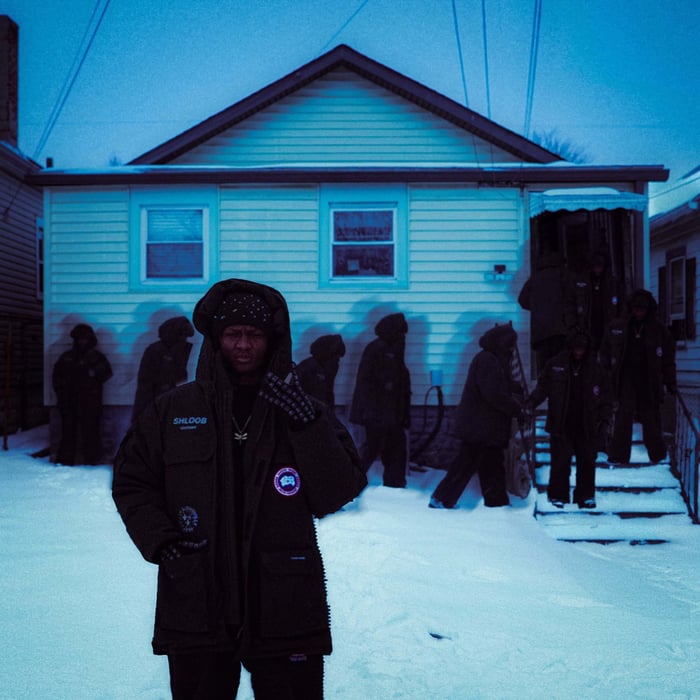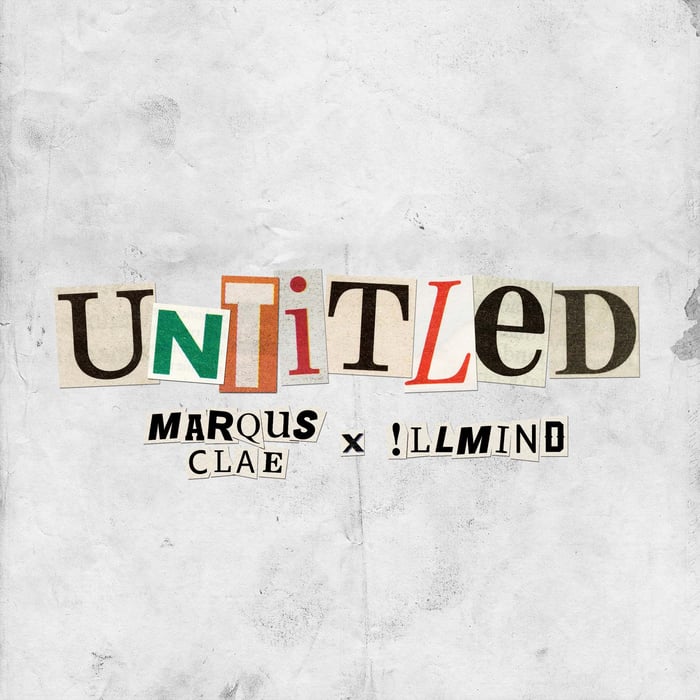
Marqus Clae & !llmind’s Untitled Album Review: Serious Rap, Zero Patience


 See more Architeg Prints stories on Google.
Marqus Clae & !llmind’s Untitled Album Review: Serious Rap, Zero Patience
Untitled album turns career whiplash into fuel—Marqus Clae raps like he’s owed receipts, and !llmind gives him space to prove it.
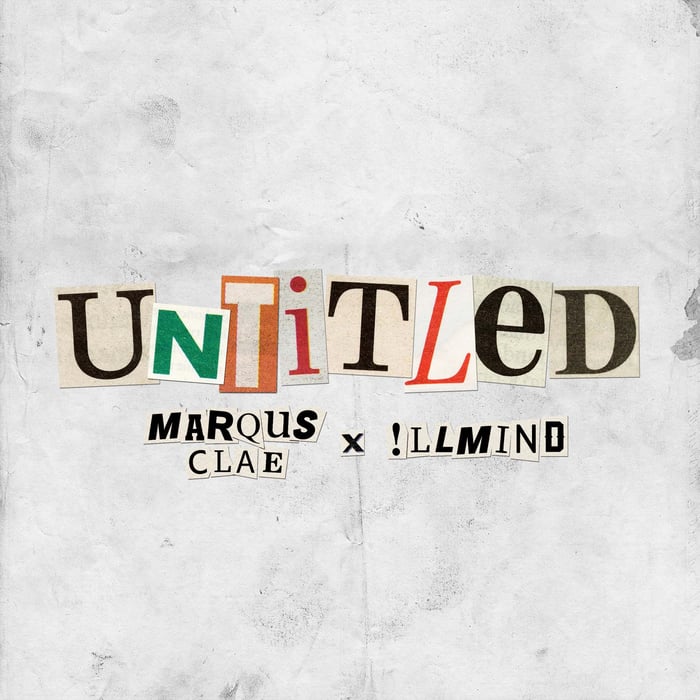
A record that starts like a question and ends like a dare
Some albums feel like an artist trying to impress you. This one feels like an artist trying to stay upright while the floor keeps moving.
The Untitled album lands with that particular tension you only get when someone’s already been “next up” more than once. The label gloss is gone, the big-room co-sign energy isn’t the point anymore, and what’s left is the most uncomfortable part: does the music stand on its own when nobody’s obligated to care?
Marqus Clae’s backstory isn’t trivia—it's the pressure in his voice
Here’s what I hear in Marqus Clae before I even get to the lyrics: someone who’s been trained early, pushed early, and judged early. He’s not rapping like a newcomer. He’s rapping like a guy who’s sick of being introduced.
The timeline matters because it leaks into the delivery. He made his first song at seven in Houston, taught by a mother who rapped too—so writing isn’t a phase here, it’s the household language. By ten he had a mixtape. By eleven he’s opening for Lupe Fiasco across a 48-city run, which is the kind of childhood that turns “normal” into a rumor. At sixteen, an airport meeting with Master P gets him signed to No Limit Forever and he releases The Ghetto Poet. Later: Def Jam, then The Mecca in 2022… and the silence around it is loud enough you can hear it in how this album moves. In 2025 he does You Don’t Know You Love Me Yet, a seven-track reset that feels like he’s cutting the fat and keeping the nerve.
And Untitled is the sequel to that reset—announced at the end of the first volume like he already knew he wasn’t done talking.
That’s the context you feel: not “origin story,” but accumulated frustration.
!llmind produces like he’s clearing the room, not decorating it
The other half of this Untitled album is Ramon Ibanga Jr.—!llmind—who produces the entire thing. I don’t need the résumé to hear what he’s doing, but it’s there in the precision: he’s the Filipino-American producer from Bloomfield, New Jersey who famously out-produced Ye at a beat showcase in Philadelphia back in 2003, then spent the next couple decades stacking credits with names like Drake, J. Cole, Beyoncé, and Joell Ortiz.
What matters here is the choice: he keeps the drums seated and the loops breathing. No clutter. No “look what I can do” beat-switch carnival. It’s like he’s purposely leaving empty space so Clae has nowhere to hide.
That’s an arguable decision—some listeners will call it understated, others will call it too restrained—but I think it’s tactical. This isn’t producer-as-main-character music. It’s producer-as-spotlight.
The opening identity flex is real… until the grief interrupts it
Clae opens by asking “Who am I?” and then answers it three different ways inside the same verse. It’s bravado, mythology, and biography all stacked:
- “last of the Mohicans” type talk
- a fire-breathing dragon version of himself
- a Houston kid who can translate between school scholars and people in the field
At first, I thought it was just the standard rapper self-introduction—sharp but familiar. On second listen, the point isn’t the flex. The point is how quickly the flex collapses.
Because then he’s suddenly in front of his grieving mother, trying to comfort her because she misses her own mother, and he can’t do it. He stutters emotionally. The words don’t reach.
That’s the center of the record: the moment where language fails him. Everything before it starts to feel like costume jewelry. Not fake—just secondary.
And I’ll admit, I’m not totally sure he meant for that to be the album’s fulcrum… but it lands that way anyway.
“What’s This” turns envy into a bruise you keep touching
The fracture shows up again on “What’s This,” which plays like a private panic attack disguised as a rap record. Clae’s “ten pills short of a pile,” clocking the “tear of a clown,” watching friends get recognized while he’s still grinding. He calls himself a “pending innovator,” tells the devil at the door to wait, then flips into a David Ruffin-style refusal: “You can’t fire me.”
That line hits because it isn’t about confidence—it’s about someone who feels like the industry already made a decision without him in the room.
And then the outro drops the performance entirely. He stops rapping and just talks, basically demanding reality: be for real—am I not one of the latest greatest? That’s not a cool monologue. It’s a person staring at the gap between self-image and public receipt.
Some people hate when artists do that “talking outro” thing. Here, it works because it sounds like he couldn’t keep pretending the song was enough.
“The Contradiction” is him admitting he’s two guys and both are loud
“The Contradiction” pushes the split further. The first verse is pure heat—hyper-detailed, almost forensically violent, like he’s describing a body being found in Papua New Guinea just to prove his pen can go anywhere. Then the second verse swerves: he’s on his Black power stance, gets laughed at, spends $1,200 on britches, sips $1,000 liquids from Styrofoam.
It’s ridiculous on purpose. That’s the contradiction: revolutionary language in one hand, luxury nonsense in the other, and he refuses to tidy it up for you.
I’ll toss a mild complaint here: the whiplash can feel a little too self-aware, like he’s winking at his own hypocrisy instead of really interrogating it. But maybe that’s the point—he’s not confessing, he’s documenting.
“Gods Work” resets the stakes by naming the dead
When Clae says “Betty Lucille” and “Kenneth Eugene” on “Gods Work,” the album’s temperature changes. Names do that. Suddenly this isn’t legacy-as-branding. This is someone talking to dead people.
He says his grandmother stole his heart; when he lost her, he lost everything. He had to rebuild, and he rebuilt with his mother. They feel intertwined here—not in a cute way, in a don’t play with this way. The line “You play with her, you get killed” lands like family policy, not a punchline.
There’s a pair of bars in the second verse that’s almost dangerously pretty—like it risks drifting into “inspirational caption” territory. But the rest of the verse drags it back to earth by talking logistics, legacy, and the uncomfortable truth that even blood doesn’t guarantee understanding.
That tension is why the song works: it’s grief with teeth.
“Divide Conquer” brings in E.R. and refuses to sand down the difference
“Divide Conquer” widens the album’s palette without turning into a feature-fest. E.R. (credited in the intro) comes in with a verse that’s all responsibility and guilt: oldest child energy, raising sisters, carrying pain, dealing with a stepfather fresh out of a bid who made life worse. The writing is specific enough you can feel the room.
The hook holds both voices together without pretending they’re the same person. That’s a smart choice: unity without flattening.
The song’s argument is basically this: you can be baptized “swimming in blood” and still want diamond rings. Anyone claiming otherwise is selling something.
“No Gain” is the sharpest cut: Houston pride meets market reality
The grittiest boom-bap moment is “No Gain,” and it’s the album’s sharpest knife. Clae references Ghostface telling him backstage to keep his foot on their neck until they break. He pours an eight for DJ Screw. He rides by NRG on a Sunday night and mentions hearing shots on South Main.
It’s Houston credential, hard-earned and specific.
But the real punch is the dilemma in the second verse: people telling him he raps for Rakim fans—and telling him to switch it up if he wants to expand.
That’s the whole album in one problem. The rap game and the crack game running parallel: the re-rock sells more than the original.
Does he change his sound to prove range? Or keep it intentional and wait for listeners to catch up?
The gutsy part is he doesn’t choose. On an album where he sounds certain about almost everything else, that refusal to pick a side is the most vulnerable thing he does across these eleven tracks. Some listeners will call it indecision. I hear it as honesty.
The “in-between” songs aren’t filler—they’re defense mechanisms
After the heavy stuff, the album intentionally hangs out in the spaces between grief and bravado.
“Work Me Slowly” is sex and courtship with obnoxious detail: finger-fucking in the park, Paris at the Louvre, villas in Majorca, watching orcas while they smoke. She calls him arrogant; he says he’s passionate. He claims he gave her a quiz to her soul—and passed.
It’s indulgent, yes, and I can see someone rolling their eyes. But I think that’s the point: he’s showing how quickly he can build a fantasy when real life feels too expensive.
“I Ain’t Trippin” plays emotional flatness as armor. A woman blocks his texts while he and his brother are with the same woman, and neither cares. Money is the motivator, and he says it plainly. The song reads like numbness pretending to be freedom—which is a pretty bleak flex when you sit with it.
“Loud Money” is the most aggressive track, but it lands differently because the grief came first. If this song showed up earlier, it might’ve sounded like generic hardness. Here it sounds like overcompensation—and that’s more interesting.
“It’s Alright” and “Time” are where the album stops performing toughness
“It’s Alright” has one of the best single lines on the record: “The meek inherit the Earth, but I need a piece for myself.” That’s not cartoon villainy; it’s a person hearing moral sayings and asking where that leaves rent, family, hunger, ambition.
He mentions his brother converting to Sunni Islam with pride and no weird qualifier—just a clean, respectful nod. Then he invokes Pac imagery after the quad shooting, feeling like people want his downfall, and his response isn’t rage. It’s scale. He’s thinking blueprint, thinking legacy, thinking what comes after C-L-A-E.
And “Time” is the most patient thing here. He bumps Slum Village, pays respects to Dilla, calls himself more than a rapper—a scripture. The second verse is basically patience as a daily practice:
- waiting on the perfect moment
- healing through trauma
- waking up without anger toward his father
- watching fake love reveal itself
When he says everything’s designed and nothing accidental—“everything takes time”—it doesn’t feel like a motivational poster. It sounds like someone who’s been waiting so long he had to learn how not to collapse in the middle of it.
“Motif” closes by admitting delusion is part of survival
The closer, “Motif,” circles back to his mother again—the person who put him in music and put her own dreams on pause for her seed. He calls himself “highly delusional” and insists you have to be. He wants to buy her the house she’s been dying for. He notices she’s been crying more. He says, “I got that promised shelf.”
It’s a strong ending because it refuses the usual victory lap. It ends on obligation—family, self, and the weight of promising things you still have to go earn.
And honestly, my first impression was that this whole project might be too heavy on “proving himself.” By the end, it felt more like he’s documenting the cost of continuing at all.
Conclusion
Untitled album isn’t trying to reintroduce Marqus Clae. It’s him refusing to disappear politely—setting grief next to bravado, luxury next to guilt, and letting !llmind’s uncluttered production expose every crack in the voice.
Our verdict: People who like lyrics that bleed a little—and don’t need a sugary hook to stay engaged—will actually love this. If you need rap to be shiny, trendy, or instantly “playlist-friendly,” you’re going to get impatient and call it “too serious” while the album stares at you like you missed the point.
FAQ
- Who is the producer on the Untitled album?
!llmind (Ramon Ibanga Jr.) produces the project entirely, keeping the beats spacious so the vocals stay front and center. - Is Untitled connected to You Don’t Know You Love Me Yet?
Yes—this feels like a second volume to that earlier seven-track reset, even announced as a continuation rather than a new era. - What’s the most emotionally direct moment on the album?
The opening stretch where Clae drops the tough talk and gets stuck trying to comfort his grieving mother—his words can’t fix it, and he doesn’t fake that they can. - What song best explains the album’s main dilemma?
“No Gain,” because it puts the question right on the table: keep rapping for the purists, or switch it up to expand. - Are there any lighter tracks, or is it all heavy?
There are “in-between” songs like “Work Me Slowly” and “I Ain’t Trippin,” but even the lighter moments feel like coping mechanisms, not detours.
If you’re the kind of person who treats album art like part of the music’s personality, you can always pick up a favorite album cover poster at our store: https://www.architeg-prints.com.
 | DISCOUNTGET 30% OFF*Use code on your next order:
|
* This post may contain affiliate links, meaning we earn a commission if you make a purchase through these links, at no additional cost to you.