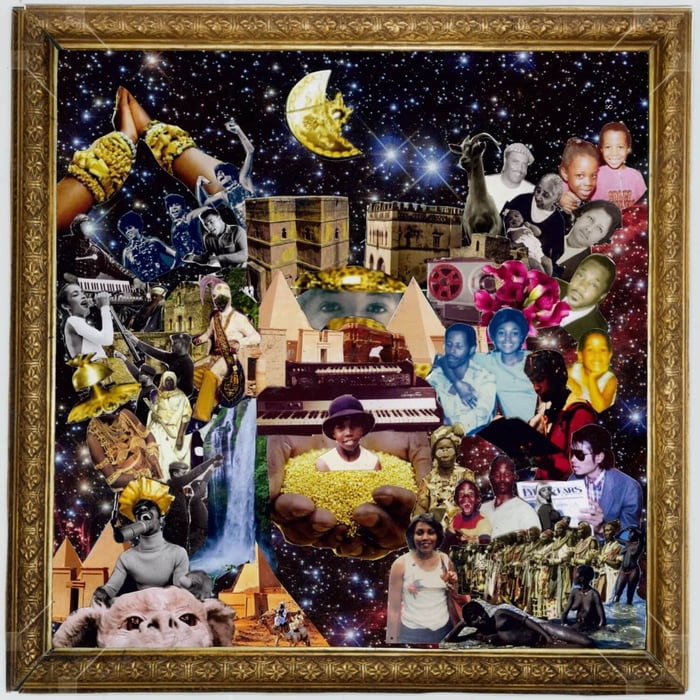
There’d Be Gold: Rashad’s Album Bets on Faith, Not the Payoff


 See more Architeg Prints stories on Google.
There’d Be Gold: Rashad’s Album Bets on Faith, Not the Payoff
There’d Be Gold isn’t a victory lap—Rashad turns the long wait into private theology, stubborn love songs, and self-made beats that refuse to beg.
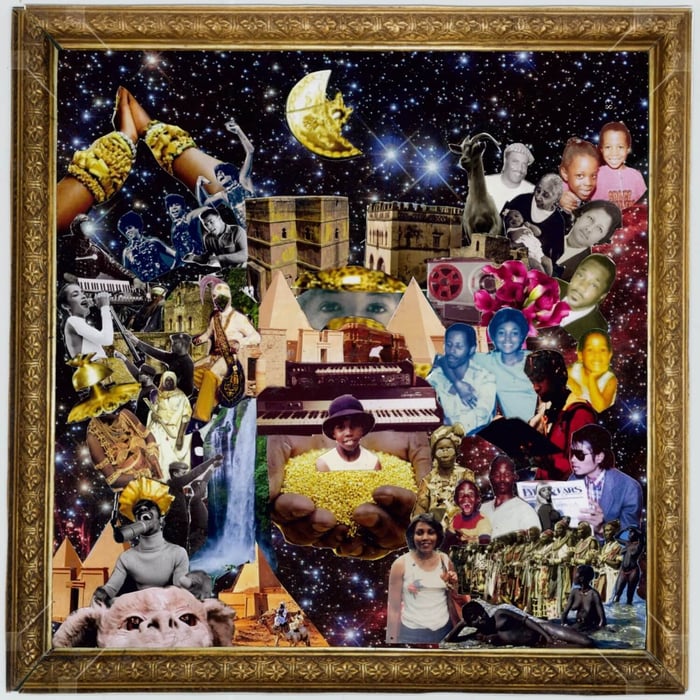
The Wait Isn’t the Story—The Refusal to Perform Is
Eleven years between solo albums usually makes an artist do one of two embarrassing things: over-explain themselves, or finally stop trying to sound impressive. I Was Told There’d Be Gold picks the second route, and that choice is basically the whole point.
This album doesn’t behave like it’s “back.” It behaves like Rashad never left—like the gap was everyone else’s problem, not his. The sound has that self-contained feeling: one person in a room, building a world he can actually control. And whether you find that noble or stubborn probably depends on how allergic you are to albums that don’t ask permission.
Rashad’s Real Flex: He Doesn’t Bring Backup
Here’s what hit me fast: this thing is all him. Written, produced, performed, and mixed by Rashad—twelve tracks where you can feel the single set of hands on every knob. No features popping in to spice up the middle. No “industry friends” showing up like garnish.
He’s done the major-label carousel—RCA, Columbia, Universal—the kind of history that usually leaves an artist either bitter or brand-managed into boredom. He signed young (thirteen), got dropped or shelved repeatedly, and still ended up here making the same kind of self-built record he was making on Museum (2012) and The Quiet Loud (2015). That continuity is the loudest statement on the album, even when the music is warm and understated.
And yeah, he didn’t disappear during the gap. He kept working—produced “Gang Gang Gang” and “It Can’t Be” on Jack Harlow’s Jackman, kept building with The 3rd Power and Elev8tor Music. But none of that is used as a brag here. If anything, it reads like evidence in a case he’s no longer arguing.
The Album’s Secret Argument: God Keeps Getting Put on Trial
The spiritual thread isn’t subtle. Four of the twelve tracks directly pick a fight with God—and what’s wild is how the album never “wins” that fight. It just keeps showing up to court.
“We Expect You” starts with the kind of self-talk people use when they’re trying to stay decent in public: “Always think good thoughts, everything must change/We’ll get past this part, we’ll get past this pain.” It’s soothing… until it isn’t. Then the song swerves into the uncomfortable question he can’t smooth over:
“But if God ain’t coming back / I don’t know how we can justify these actions.”
— Rashad, “We Expect You”
That moment lands because it’s not written like a mic-drop. It’s written like a man staring at the ceiling at 3 a.m., realizing optimism doesn’t count as evidence. He wants belief to be easy. He mostly believes. But he keeps colliding with the gap between promise and proof.
“The Craft” Doesn’t Preach—It Complicates
“The Craft” pushes the theology further, and it does it in a way that’s almost rude in its clarity. He rap-sings lines that don’t feel like they’re meant to inspire you—they feel meant to stop you from lying to yourself. The line about divinity being hard to understand, and “your mother gave you life, maybe pray to her instead,” doesn’t sound like edgy atheism. It sounds like pragmatic reverence.
Then he flips it again: he believes in God, but “God can mean gods, depending where you are.” That plural isn’t a gimmick. It’s Rashad admitting the rules change depending on who’s doing the surviving.
He cites Tupac twice in one verse—once about building a nation and needing to be free, and again about building a nation and needing money. That contradiction is the song. The spiritual goal and the material requirement sit next to each other like they live in the same apartment and barely speak. No winner gets declared, because real life doesn’t declare winners that cleanly.
“Larry’s Lament” Is the Title Track’s Bruise
Somewhere in the middle of all this, “Larry’s Lament” shows up like a ledger—spoken word that feels like plain accounting of what happens when you keep getting shoved back toward the only thing you know how to do.
The title phrase I Was Told There’d Be Gold comes out of “Larry’s Lament,” and it’s not presented like a clever hook. It’s presented like an old expectation finally being said out loud.
There’s also that Earth, Wind & Fire interpolation—honestly kind of crazy, like he’s borrowing the sparkle of a classic band to underline how un-sparkly real life can get. Rashad raps: “I won’t fold, I was told there’d be yellow gold, brick roads/Back when pops was hanging with Mike and Dickie/I was making music, you wasn’t with me.” It’s specific in a way that feels personal enough to be none of our business, which is exactly why it works.
What surprised me is the lack of bitterness. The title could’ve been weaponized into an “I deserved more” album. Instead, it lands like: I kept walking anyway.
“Courage” Turns a Plane Ride Into a Thesis Statement
“Courage” has the album’s clearest moral, and it doesn’t even come from a chorus—it comes from the spoken outro.
The story is about a poet on a plane next to a physicist who discovered the seventh quark. The kicker: “Don’t nobody know his name, don’t nobody give a damn.” That line is funny in the bleakest possible way, because it’s true. People love outcomes, not process. People love winners, not workers.
Then the lesson lands, blunt and useful: you love what you do, and the rest doesn’t matter. For someone who got signed at thirteen and then watched execs vault project after project chasing a different sound, that’s not motivational-poster talk. That’s survival technique.
If there’s a mission statement on There’d Be Gold, it’s that: stop begging the room to clap. Build the thing because you build the thing.
The Love Songs Aren’t Flirting—They’re Post-Storm
Half the album is love songs, but they aren’t shiny. None of them sound like the beginning of anything. They sound like two people after something already happened and they decided to stay anyway.
“Feathers” opens with “Give me back my love/Things you say to me sometimes/I’m just tryna get some understanding after all these years.” That “after all these years” matters. This isn’t new-love fantasy. This is the part where you’re still in it, but you’re not pretending it’s easy. Then he drops the line that basically explains the album’s emotional posture: “My papa told the ones that’s close are guaranteed to hurt you most/Life ain’t fair, neither is love/But we’re still here.”
That’s not romance. That’s commitment with receipts.
“Ribbons” Is So Straightforward It Almost Feels Suspicious
“Ribbons,” built on a Stevie Wonder “Ribbon in the Sky” sample, doesn’t decorate itself. It strips down to the plainest declaration: “I wanna share my life with you.”
And the verse goes even plainer: loyal when he wasn’t winning; day one; forgiveness when he was wrong. This is where Rashad’s whole “no pretense” approach either clicks for you or doesn’t. A more performative artist would’ve tried to write a bigger moment around that sample. Rashad uses it like a frame, not a spotlight.
I’ll admit, on first listen I thought the simplicity was going to read as too safe—like the song was coasting on the sample’s glow. But on second listen, the plainness started to feel like the point: he’s not trying to impress anyone with his devotion. He’s describing it like a fact.
“Boom” Connects Private Love to Collective Survival
“Boom” starts like a love letter and then pivots into a spoken passage about women being “traditionally, historically, tremendously important to any oppressed people,” because they make survival possible.
That pivot is Rashad telling you he doesn’t separate romantic love from collective love. Some listeners will call that overreach—like, can’t a love song just be a love song? But I think the merging is intentional: to him, devotion isn’t a vibe, it’s a practice. You don’t get to claim love and ignore what love does in the real world.
“Like We Young” Is the Album’s One Real Exhale
“Like We Young” is the loosest track here, built around a sampled hook. It’s basically two people alone after everyone else has gone home. The hook is simple:
“All of my friends, they’re gone / And we’re all alone / Yeah, yeah, let’s crush like we young.”
It could’ve been throwaway. And honestly, I wasn’t sure at first if it belonged on an album this heavy with doubt and belief. But it ends up working as a breather—because the album needs one moment that’s just bodies in a room, not brains in a courtroom. Even here, though, the devotion feels weighty, like the fun is happening under the shadow of everything else.
“Make Believe” Doesn’t Resolve Anything—It Chooses a Direction
The closer “Make Believe” is where Rashad stops arguing and just admits what he’s doing.
“Life has no guarantees/So I close my eyes and make believe/It all works out for me.”
That’s the album’s final posture: the gold might not be real. The payoff might not be coming. The happy ending might be a story people sell kids so they’ll stay obedient. And still—he chooses belief anyway, because the alternative is quitting.
The title phrase circles back too: “I was told there, I was told there, I was told there we go.” It lands like someone catching themselves mid-sentence, like hope keeps slipping but he keeps grabbing it.
If that sounds bleak, it isn’t. It’s oddly calm. The calm of someone who has already survived the disappointment and is now too busy working to dramatize it.
The Sound: Patient, Self-Contained, and (Sometimes) Too Comfortable
Because Rashad handles everything—writing, production, programming, mixing—the album has a unified texture. Chopped soul, warm low end, drums sitting just behind the vocal instead of trying to fight it for attention. The beats draw from the same well over and over, and the repetition starts to feel like patience instead of monotony.
That said, here’s my mild gripe: that same consistency occasionally makes the middle stretch feel a little too cozy in its own room. I kept waiting for one track to truly yank the floor sideways—some sharper mix choice, some uglier drum, something that risks messing up the beauty. Rashad mostly refuses that kind of disruption. Depending on your taste, that’s discipline… or it’s him protecting the vibe a bit too carefully.
Still, when “Courage” hits with “Lord knows it ain’t easy loving someone/It’s hard enough to love ourselves,” and that physicist story follows, the whole aesthetic snaps into focus. This isn’t a record trying to win an argument. It’s a record documenting a life that kept going.
Where I Landed (And What I’m Keeping)
I came in expecting a “comeback album” with a bunch of loud proof attached—features, glossy moments, a sense of “See? I still got it.” That’s not what I Was Told There’d Be Gold is doing. It’s more stubborn than that. It’s Rashad making the kind of album you make when you’ve accepted that recognition is random, but the craft isn’t.
If I had to boil down what it feels like: it’s a man refusing to turn disappointment into a personality.
Favorite Track(s)
- “Larry’s Lament”
- “The Craft”
- “Courage”
Rashad doesn’t hand you gold. He hands you the part where you realize the gold was never guaranteed, and you decide whether you’re still the kind of person who keeps walking.
Our verdict: People who like soul-warm production, grown-up love songs, and faith that argues back will actually love There’d Be Gold. If you need big hooks, feature fireworks, or a “main character” rollout, you’ll get bored and start checking your phone—probably right when the album gets interesting.
FAQ
- Is There’d Be Gold mostly rap or mostly singing?
It moves through rap-singing and straight singing without making a big scene about the switch. The point is the message, not the category. - Does the album feel bitter about the long delay between solo projects?
Weirdly, no. The title implies a complaint, but the music carries more calm endurance than resentment. - What’s the spiritual angle—religious album or just references?
It’s not church music. It’s faith as an argument you keep having because you can’t stop needing it. - Are the love songs “romantic,” or more reflective?
Reflective. These are relationships that sound like they’ve already been tested and kept going anyway. - What should I listen to first if I only try one track?
“Courage” if you want the thesis, “The Craft” if you want the knotty ideas, “Larry’s Lament” if you want the title’s bruise.
If the album’s mood stuck with you, a good album-cover poster kind of fits the whole “I’m still here” attitude—quiet proof on the wall. You can browse options at our store: https://www.architeg-prints.com
 | DISCOUNTGET 30% OFF*Use code on your next order:
|
* This post may contain affiliate links, meaning we earn a commission if you make a purchase through these links, at no additional cost to you.