Trippin West Review: Shloob Makes “Relatable” Sound Dangerous


 See more Architeg Prints stories on Google.
Trippin West Review: Shloob Makes “Relatable” Sound Dangerous
Trippin West isn’t a victory lap—it’s Shloob airing out the math of survival, sobriety, and Louisville pressure in plain words that sting.
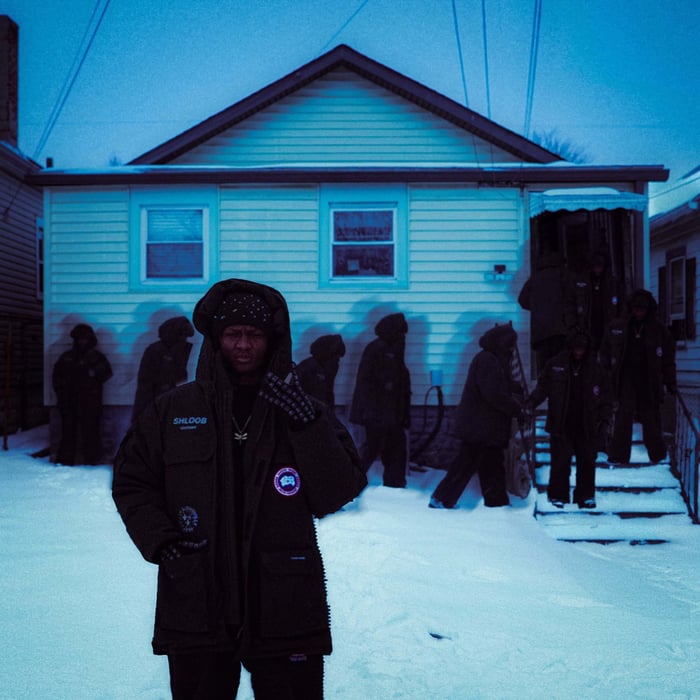
First, look at the cover—then listen for the flinch. You can hear this album before you even hit play: it’s got that “I’m still clocking in” posture, the kind of stance that doesn’t beg for sympathy but also doesn’t pretend life is cute.
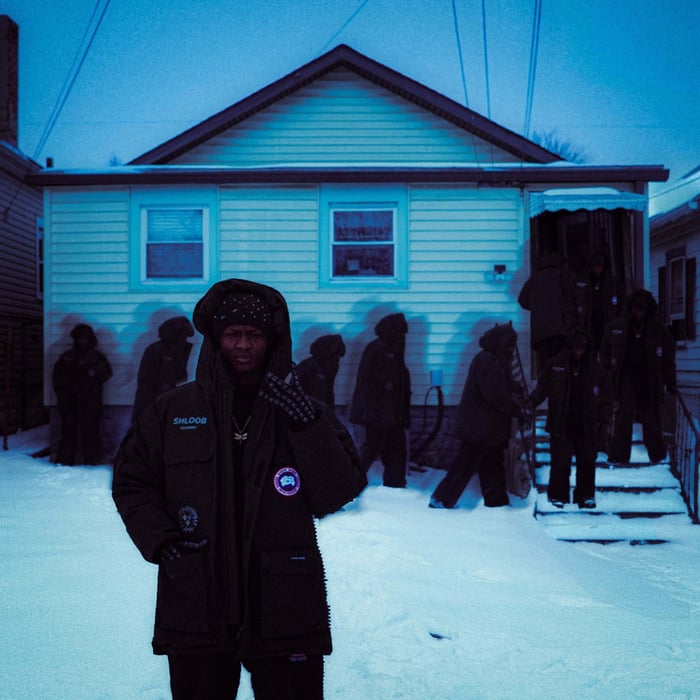
And yeah, Trippin West (I’m calling it that because the record basically dares you to shorten it) is clearly built from a specific place—Louisville’s West End—without bothering to translate itself for outsiders. That’s the point. The album isn’t trying to “represent” a neighborhood like a tourism brochure. It’s using the West End as a pressure gauge, and the needle keeps twitching.
He’s thirty, still working a full-time job, and he raps like he’s allergic to pretending otherwise. I don’t even mean that as praise at first—I thought the “relatable” angle was going to flatten everything into humble-brag oatmeal. On second listen, I realized the plainness is the weapon.
The album’s real flex: admitting the promo game is a scam
Here’s what Shloob does that most rappers dodge: he says the quiet part out loud and leaves it there. In “joe frazier,” he talks about a label conversation where they pitch the modern artist treadmill—run ads, build Spotify “fans,” pay for the little growth hacks. And his response is basically: I’m already bleeding money and time.
That’s not a motivational anecdote. It’s a scene from the real economy. And it reframes everything else you hear afterward: the confidence isn’t some fantasy persona, it’s a coping method.
On “listen, decent!” he loops the hook—“decent, still working, still grinding”—until it stops sounding like a gym poster and starts sounding like the end of a long shift. That repetition is doing the storytelling. The record keeps taking phrases that usually mean “I’m up next” and forcing them to mean “I’m not okay, but I’m still moving.”
Arguable claim: the most “honest” thing on the album isn’t a confession—it’s the refusal to dress up the grind as destiny. A lot of rappers can describe pressure; fewer can make it sound boring, exhausting, and unavoidable, which is what pressure actually is.
Confidence and recession in the same breath (and he doesn’t blink)
There’s a stretch where Shloob keeps yoking swagger to straight accounting. “Really That” is a good example: he’ll toss out a physical image—mosh pit energy, throwing jabs—then casually admit he’s living through a recession like it’s just another ad-lib. The trick is that he doesn’t switch tones for the “serious” line. He keeps the same cadence.
That’s a creative decision, and it’s a smart one: he’s refusing to let hardship become a “topic.” It’s just the air in the room.
On “back to the stu,” he’s sick, coughing, illegally parked, still pushing himself to record, still not paying for promo clicks, still admitting he’s not where he wants to be. The intro is basically self-parenting: get back in the booth, no matter what. If that sounds bleak, it is—but it’s also the closest thing this album has to romance. Not love romance. Work romance. The kind that ruins your weekends.
I’m not totally sure if Shloob intends the album to sound this resigned, or if I’m projecting because the details are too familiar. Either way, it lands.
Arguable claim: the “get back to the studio” mentality isn’t inspirational here—it’s compulsion, and the album knows it.
West End isn’t a setting—it’s the album’s argument
The West End becomes the record’s heaviest subject because it’s the least negotiable one. In “Trip Out,” Shloob opens with global politics—“Free Palestine…” then “fuck ICE…”—and snaps straight back to Louisville like there’s no boundary between the headlines and the street you have to walk home on. No transition. No “zoom out.” Just one nervous system.
A few lines later he’s praying to make it home safe, asking God not to replace him, and dropping a Kentucky line that hits like a warning sign: it’s “Scary Movie” energy, and you’re forced to ask whether the threat is hatred or racism—or if that’s even a meaningful distinction when you’re the one stuck inside it.
Then there’s “Boot Up,” the album’s closest thing to a party record. And it’s almost funny how quickly it refuses to behave like one. He’s doing normal-night stuff—music on, hair down, calls an Uber because he’s not reckless. Then the second verse turns the room: sirens, bullets, the night curdles. The hook’s “don’t worry I got it” suddenly sounds like somebody trying to talk himself down while everything escalates anyway.
Arguable claim: “Boot Up” isn’t a party song with a twist—it’s a panic attack wearing a club outfit. And that switch is the point.
“duckin” strips things even further: all black, avoiding everybody, wanting “sweet love,” getting demons instead. He says the city is full of demons and full of evil—back to back, same cadence—like he’s tired of arguing with himself about which word is more accurate.
Sobriety doesn’t save him—it removes his last curtain
The album’s most uncomfortable thread is how quitting smoking doesn’t “improve” Shloob’s life. It makes it sharper. On “miss the ganja,” someone literally tells him to loosen up and hit it once. The rest of the track is his response: sobriety took away the buffer and left him with his own thoughts at full volume.
He watches other rappers flame out and take alternate routes—religion, money management, a clean rebrand—and he treats those pivots like costumes. Not because those things are fake in general, but because in this world they can become performance. Louisville gets labeled “scary hours,” and he explains why in snapshots: parents raising kids while scared, young demons circling with devil eyes. It’s vivid without trying to be poetic about it.
There’s also this oddly specific domestic detail that makes the whole thing feel more real: he’s sober at Central Station waiting on carryout, eating well, thinking he should cut dairy. That’s such a human thought—health optimization happening in the same brain that’s scanning for danger.
Then the outro hits you with the cruel joke: somebody tells him he needs to smoke again. Not as a gag. As a solution. That’s the trap.
Arguable claim: this album treats sobriety less like growth and more like losing your only mute button. It’s not anti-sobriety; it’s anti-fantasy.
Turning 30 on wax: parents aging, twin grinding, and no clean “lesson”
Shloob keeps slipping in age like it’s a background hum. Thirty years old and his parents are moving slower. His twin brother—DaWoyne “2forwOyNE” Lawson—keeps grinding at the same pace and produces/engineers most of what the crew does. Those facts show up without ceremony, which makes them heavier. No violins, no “appreciate your loved ones” speeches. Just reality.
“Android 18” is the long, conversational centerpiece where he lets himself ramble the way people do when they’re trying not to admit what’s eating them. He says he’s not having a baby. He admits he’s naturally lazy. He mentions breaking up right before Valentine’s Day, then acting out two weeks later. It’s messy, unflattering, and that’s why it works.
He also name-drops Louisville spots—Dead Rose, Wendy’s, Indy’s, Central—things that won’t mean anything to outsiders and aren’t supposed to. He’s not worldbuilding for you. He’s marking coordinates for himself.
And then he lays out the generational rap dilemma in plain terms: young rappers talking about killing are going to make their families sad; older rappers trying to preach often make bad music. He’s stuck between those poles, still trying to share his feelings without turning into either camp.
The money math is brutally straightforward: touch a million, disappear with fifty, pay bills, support his brother, keep mom good, check on dad. It’s not “rich” talk. It’s responsibility talk.
I’ll admit: I kept waiting for the album to hand me a tidy revelation—some turning point where he “figures it out.” It never arrives. That’s either honest art or a frustrating refusal to land the plane, depending on your tolerance.
Arguable claim: the album’s biggest risk is that it refuses catharsis—because catharsis would be a lie.
Features and production: the beats know when to shut up (mostly)
The production approach is consistent: don’t fight the words. Kill handles six of the twelve beats, keeping the middle stretch steady without screaming for attention. shy!!!’s work on the bookends and on “Android 18” leaves open space for Shloob to talk his way into clarity. 2forwOyNE’s beats on “Grape” and “Trip End” come in warmer, with a grain that fits the featured moments.
That “don’t fight the words” rule is the album’s best structural decision. The record lives or dies on what Shloob is saying in real time, not on beat switch fireworks.
But here’s the mild knock: a couple cuts slither more than they earn. “listen, decent!” runs through familiar “rapper still grinding” imagery early on before it finally opens up later with that Black Modelo + extra lime sketch that actually feels like a scene. “Boot Up” nails the concept, but the first verse leans a little too hard on vibes and proper nouns before the violence twist makes the idea unavoidable. The album isn’t fake—sometimes it’s just not edited enough.
“Grape” is a perfect example of Shloob sabotaging the expected mood on purpose. Lady Laveaux sings seduction over 2forwOyNE’s production, and Shloob steps in to undercut it: he’s tried to stay positive, but everything feels like it’s about to fall down. He’s traveled, nobody remembers him, he’s watching his parents age, doing the numbers in his head. He even points at the grim pattern—artists dying before they get respect—then flattens the whole room with the real punch: everybody acts like they’re winning, most aren’t, and nobody wants to admit it.
And on “Trip End,” Horace Gaither shows up with the kind of line that quietly summarizes the album’s whole posture:
“I often wonder if this finish line can cover the loss.” — Horace Gaither
Arguable claim: the features work because they don’t “guest star”—they mirror Shloob’s same exhausted honesty.
Favorite moments that actually stick
This album doesn’t beg you to “remember” it with big hooks. It makes you remember it by leaving uncomfortable lines in your pocket.
A few moments I couldn’t shake:
- “miss the ganja” turning sobriety into a problem, not a trophy.
- “joe frazier” making the industry pitch sound small next to real bills and real hours.
- “Grape” refusing to let a sensual setup stay escapist for even one verse.
Arguable claim: the album’s best songs aren’t the most polished—they’re the ones where Shloob stops trying to sound like a rapper and starts sounding like himself.
Shloob doesn’t use Trippin West to prove he’s special. He uses it to prove he’s still here—still working, still grinding, still wary, still capable of looking straight at his situation without turning it into content bait. If that sounds like a low bar, good. The album knows the bar is low. That’s why it keeps stepping over it anyway.
Our verdict: People who like rap that sounds like a real week—not a highlight reel—will latch onto this. If you want glossy escapism, huge choruses, or “I made it” energy, you’re going to get impatient and start checking your phone by track three.
FAQ
- What is the core theme of Trippin West?
It’s survival math—money, time, family, and nerves—spoken plainly, without pretending the grind automatically leads somewhere. - Is Trippin West a party-friendly album?
Not really. Even the most party-shaped song (“Boot Up”) turns into a reminder of how fast fun can collapse. - Does Shloob sound optimistic on this record?
Sometimes, but it’s the kind of optimism that shows up for work with a headache. The hope is there; it just isn’t loud. - Which tracks hit the hardest emotionally?
“miss the ganja,” “Grape,” and “joe frazier” keep pulling the mask off—especially when Shloob talks about coping and cost. - How important is Louisville to understanding the album?
It’s essential, but not in a “do homework” way. The local references aren’t trivia—they’re proof he’s not performing a generic rap life.
If you’re the kind of listener who bonds with an album’s world, not just its sound, a poster of your favorite album cover is a nice way to keep that mood around. You can browse prints at our store here: https://www.architeg-prints.com
 | DISCOUNTGET 30% OFF*Use code on your next order:
|
* This post may contain affiliate links, meaning we earn a commission if you make a purchase through these links, at no additional cost to you.