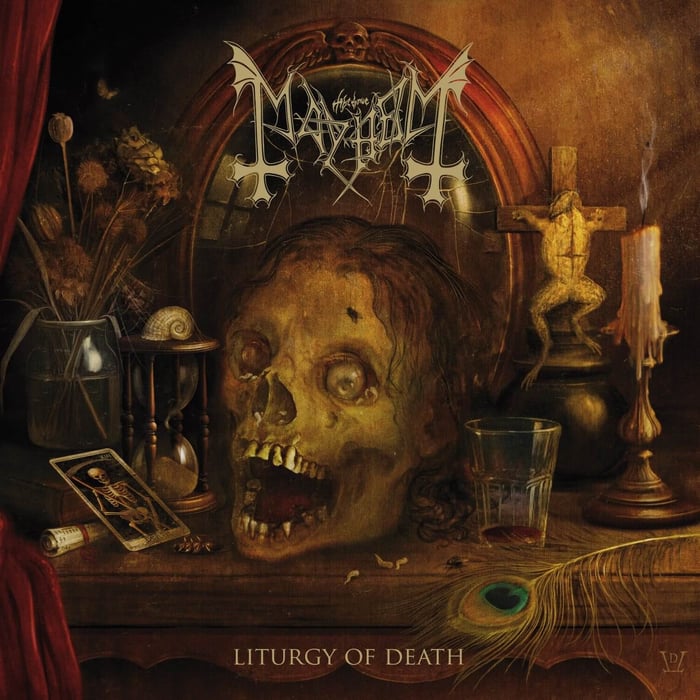
Mayhem Liturgy of Death: A Close Listen to the Band’s Seventh Album


 See more Architeg Prints stories on Google.
Mayhem Liturgy of Death: A Close Listen to the Band’s Seventh Album
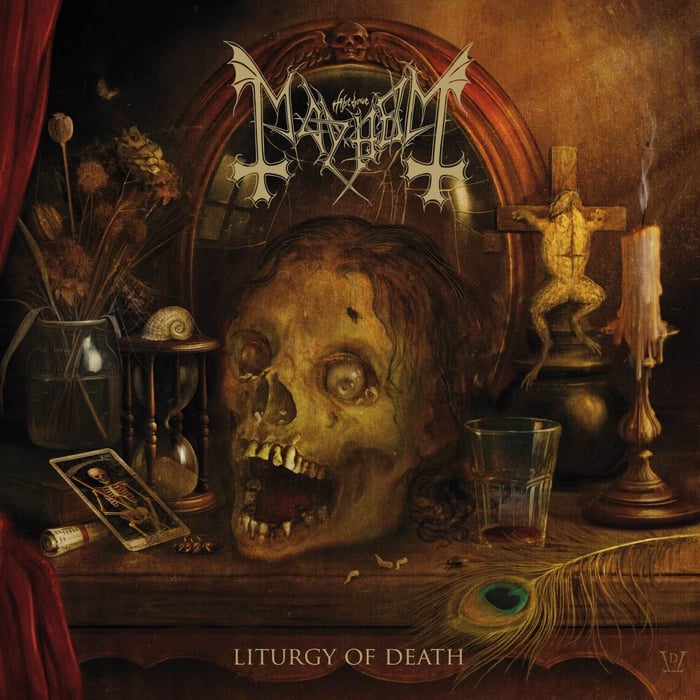
Mayhem’s Liturgy of Death moves through mortality themes with disciplined violence, sharp pacing shifts, and crisp production across a 49-minute runtime.
Album context and where it lands
Mayhem’s Liturgy of Death arrives as the band’s seventh studio album, released seven years after Daemon (2019). Four decades into operating as a functional institution of black metal, the group continues to behave like a band that expects its catalog to be taken seriously, whether anyone feels like reliving the lore or not.
The listening experience makes it clear that Liturgy of Death is designed to stand on its own, while still acknowledging a long history that tends to follow the band into every room.
The long gaps are part of the method
Mayhem do not rush studio albums, and the spacing reads less like inactivity and more like an established production cycle. The pattern has precedent:
- Six years between De Mysteriis Dom Sathanas (1994) and Grand Declaration of War (2000)
- Seven years between Ordo ad Chao (2007) and Esoteric Warfare (2014)
- Seven years between Daemon (2019) and Liturgy of Death
Here, that seven-year span manifests as a central fixation on mortality. Not as a poetic side theme, but as a blunt organizing principle. The album repeatedly returns to death as an endpoint, a process, a fixation, and a practical problem—handled with the kind of starkness that does not ask permission.
Sound and production: clear enough to be uncomfortable
The production arrives crisp and present. It does not sand down the aggression, but it keeps the instruments separated enough that the album’s density reads as deliberate work rather than accidental clutter. Across roughly 49 minutes, the mix stays consistent: sharp edges, audible low-end when it needs to be felt, and enough clarity for the record’s pacing changes to register immediately.
This matters because Liturgy of Death leans on motion—fast-to-slow transitions, sudden intensifications, and passages that hover without resolving. The clarity keeps those decisions from dissolving into pure smear.
“Ephemeral Eternity” sets the terms early
The opener, Ephemeral Eternity, enters like a formal announcement that the album will not be conversational. Rolling double-kick drumming and hostile riffing establish a frostbitten tone that holds for nearly seven minutes without wandering off-task. The track’s length doesn’t sprawl; it simply keeps applying pressure until the listener accepts that this is the operating temperature.
The piece functions as a threshold: once it finishes, the album has already informed you how it intends to behave.
“Despair” and the album’s controlled hostility
Further in, Despair operates with a kind of sinister efficiency. The riffs twist rather than simply charge, and the track’s violence feels organized—less like a brawl, more like a system performing at speed.
Attila’s vocals remain a central feature because they do not behave like a standard frontman performance. His delivery shifts shape constantly: barked, stretched, theatrical in a way that still reads as threatening rather than decorative. The voice doesn’t sit “on top” of the music; it moves through it, turning certain moments into cues for escalation or sudden restraint.
“Weep For Nothing” and the album’s most obvious centerpiece
Weep For Nothing plays like the record’s clearest statement of intent. The band moves between ferocious bombardment and slower, menacing passages that circle rather than advance. When the song opens up into those swirling sections, the atmosphere doesn’t relax—it simply changes its method.
The track’s ebb-and-flow structure highlights what Mayhem do well here: intensity that doesn’t rely on being constant. It surges, backs off, and returns with purpose. Attila’s vocal presence slices through the mix with an almost managerial authority, as if the chaos requires coordination and he is prepared to provide it.
Not a one-dimensional throwback
Liturgy of Death does not behave like a single-note exercise in recreating an earlier era. The album is dynamic and layered, and it uses pace and tone as practical tools rather than aesthetic decoration. The musicianship feels collectively tight, in the sense that transitions land cleanly and the band rarely sounds like it’s negotiating internally.
That tightness becomes important because the record’s moods are not subtle. Without control, the material would collapse into pure force. Instead, it stays structured—even when it’s behaving badly.
Drums, riffs, and bass: three different kinds of damage
Several tracks stand out because they spotlight a specific element without turning into a solo showcase.
“Aeon’s End” and Hellhammer’s physical approach
On Aeon’s End, Hellhammer’s drumming arrives as a concentrated display of stamina and impact. The playing doesn’t merely keep time; it drives the track like a mechanical force, pushing forward with enough weight that the rhythm section starts to feel architectural. It’s the kind of performance that makes the rest of the band sound more dangerous simply by staying locked in.
“Funeral Of Existence” and riff detail that actually reads
Funeral Of Existence leans into intricate riffing that remains legible because the production refuses to blur it into a single texture. The guitars shift shape, with figures that feel carefully placed rather than randomly stacked. The detail gives the song a colder intelligence—less “wall of sound,” more “wall with schematics.”
“Realm Of Endless Misery” and the bass as foundation
Realm Of Endless Misery allows Necrobutcher’s bass to sit as bedrock. It thumps with purpose, holding the track steady while the upper layers churn and scrape above it. The effect is simple and effective: the low end keeps the song grounded while the rest of the arrangement behaves like weather.
Across these moments, the album keeps returning to a reliable formula: pressure, clarity, and enough variation to keep the listener attentive without pretending this is meant to be comfortable.
A record built for repetition, whether you asked for that or not
With Liturgy of Death, Mayhem present a record that feels deliberately constructed for repeated listens, not because it hides “secrets,” but because it keeps shifting how it applies force. On a first pass, the album registers as intensity with strong production. Over time, the structure becomes more apparent: how the pacing changes are staged, where the vocals become an instrument of disruption, how the rhythm section anchors the mess.
The album also carries itself like a band with nothing practical left to prove. It proceeds anyway, with a level of creative energy that suggests Mayhem still treat the studio as a place to produce new problems, not just maintain a brand.
Release information and where it sits
Liturgy of Death is out now via Century Media Records.
The album presents mortality as a central theme and then supports that theme with music that stays grim, active, and unusually well-organized for something that frequently sounds like it wants to erase the room.
Conclusion
Liturgy of Death functions as a disciplined black metal album that treats death as a subject worth sustained attention and treats intensity as a resource to be managed, not simply spent. It balances violence with structure, keeping the performances tight and the production clear enough that the record’s pacing decisions remain visible.
Our verdict: focused, forceful, and methodical about its unpleasantness—an album that stays busy and rarely wastes motion.
FAQ
- What is the core theme of Liturgy of Death?
Mortality sits at the center of the album, presented in a stark and uncompromising way across the tracklist. - How long is Mayhem’s Liturgy of Death?
The album runs for roughly 49 minutes. - How does the production sound on Liturgy of Death?
It’s crisp and clear, keeping instruments separated so the album’s density feels intentional rather than muddy. - Which track opens the album, and what does it sound like?
Ephemeral Eternity opens the record with rolling double-kicks and vicious riffing across a near seven-minute runtime. - Who are the highlighted performers on the album?
Attila’s vocal approach remains a defining feature, Hellhammer’s drumming stands out for its force, and Necrobutcher’s bass becomes especially prominent on Realm Of Endless Misery.
If you want a physical reminder of this kind of orderly extremity, you can shop an album-cover poster that fits your wall’s tolerance for seriousness at our store: https://www.architeg-prints.com.
 | DISCOUNTGET 30% OFF*Use code on your next order:
|
* This post may contain affiliate links, meaning we earn a commission if you make a purchase through these links, at no additional cost to you.