Of Earth & Wires Review: Dua Saleh’s Quiet Album That Hits Like Weather


 See more Architeg Prints stories on Google.
Of Earth & Wires Review: Dua Saleh’s Quiet Album That Hits Like Weather
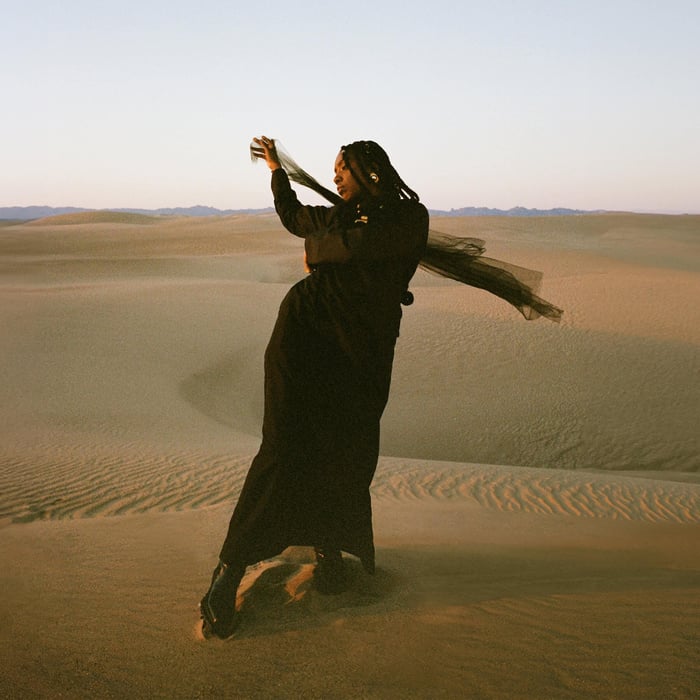
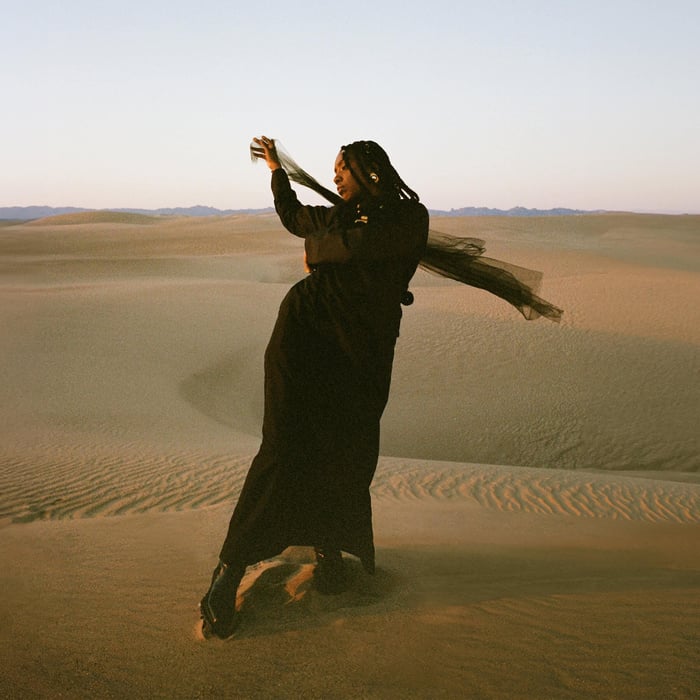
Of Earth & Wires turns grief into pressure—fast-made songs that still feel oddly deliberate, with Dua Saleh and Billy Lemos trapping you inside the mix.
Courtesy of Ghostly International.
A record that sounds like it was made in a hurry—because it was
This album doesn’t stroll in and introduce itself. It grabs your sleeve like, “Hey—listen right now, and don’t ask for a neat storyline.”
A lot of Of Earth & Wires was cut in a rented house in rural Wales, in the weird dead time between takes for a British TV show. Six songs in three hours. On some of them, it was four minutes from the first guitar loop to the final vocal take. That’s not romantic “we were inspired” trivia—that speed leaks into the music’s posture. It’s focused, cornered, and a little breathless, like the songs were assembled while someone was waiting for a knock at the door.
Billy Lemos shows up to the session like a practical problem-solver—laptop, bass, done. Meanwhile, Dua Saleh is singing from the other side of the mic while mourning a grandmother back in Sudan, trying to stay connected to a country collapsing in real time through phone calls that hit at odd hours. “Flood” only needed one take, and honestly, that tracks: the song doesn’t sound polished so much as decided. This whole record feels assembled out of stolen afternoon hours between someone else’s scenes, and instead of weakening it, that constraint becomes the concept.
I thought that kind of timeline would make the album feel disposable. On second listen, it’s the opposite: the rush is the container.
Dua Saleh’s backstory isn’t decoration—it’s the engine
Here’s the part people love to turn into a tidy biography, but the album refuses to let it sit quietly in the “background.”
Saleh was raised across five states after fleeing Kassala as an infant. Eventually they landed in Saint Paul’s Rondo neighborhood—a Black community literally cut in half by a highway in the 1960s, still rebuilding when Saleh arrived. You can hear that kind of history in the way this album values survival over spectacle. It doesn’t waste time begging for permission to exist.
The trajectory matters because the pace is part of the identity. The first EP, Nur, landed in 2019 on Against Giants with Psymun producing. Then came a co-writing credit on Travis Scott’s “MY EYES,” and the debut album I Should Call Them on Ghostly International. Now Of Earth & Wires arrives as the second album in eight months.
And this is where Saleh’s whole “velocity” thing stops being a fun fact and starts looking like method. They usually finish songs in thirty minutes, but they’ve called this their most careful work. That contradiction—fast worker, careful record—actually describes the sound pretty well: the songs move quickly, but they don’t feel thrown away. They feel like somebody made decisions and refused to second-guess them.
I’m not totally sure whether that’s confidence or just necessity. Maybe it doesn’t matter. The result is the result.
“Flood” isn’t a hook song—it’s a grief mechanism
This section doesn’t glide from track to track; it tightens.
On “Flood,” Justin Vernon stacks vocals into dense choral layers behind Saleh’s talking delivery. And no, it’s not the Vernon where the layering is just atmospheric “weather” doing its own thing. Here, those vocals earn their weight. They feel like pressure building behind the words—like the room is filling up slowly and nobody’s yelling about it.
The arrangement is almost weirdly dry for a grief song: dry horns, acoustic guitar, not much indulgent reverb to soften the edges. Still, it holds. The moisture comes from one human voice multiplied past recognition, not from production tricks.
Saleh raps about grief growling at the Earth, about koi fish splitting into yin and yang. Vernon’s refrain—“unless you saw the water”—doesn’t turn into a hook and doesn’t get repeated enough to become one. That’s deliberate. It’s like the song refuses to give you the comfort of a chorus you can cling to. It just keeps walking.
A lot of albums use grief as a theme. “Flood” uses grief like a structure.
“Cállate” proves the album’s rigidity is the whole point
After that heaviness, the record doesn’t “lighten up.” It just changes the type of force it applies.
“Cállate” runs on an Afro-diasporic drum sequence pulled from industrial reggaeton: metallic hits punching through distorted synth stabs while Saleh’s rapid-fire delivery bounces between Spanish and English. It’s the album at its most physically aggressive, and it’s not subtle about wanting your body involved.
The bigger move, though, is what Lemos doesn’t do. He constructs each track as a single architecture—no genre-switching breakdowns, no “now we’re in a different song” pivot halfway through. Normally that kind of rigidity can feel like a limitation, like the producer is scared of messing the vibe up. Here, it earns its keep. The songs become sealed environments. You don’t escape them; you ride them until they end.
If there’s a “strongest single” energy on the record, it’s “Cállate,” and it’s because it commits. It doesn’t flirt with intensity—it moves in.
The mid-album stretch dares you to pretend you’re not bored
From here, the album starts making a risky bet: that restraint will read as purpose, not as flatness.
“Firestorm” rides synth plucks and a driving bassline, but the vocal stays at one temperature the entire time. Saleh asks someone to undress, come closer, look in their eyes—three different requests that should change the air in the room—and they’re delivered with almost the same emotional setting. At first I read that as cold. Later I started hearing it as control. Still, I won’t lie: I kept waiting for the song to tilt a little more than it does.
“Speed Up” borrows Jersey club velocity and basically coasts on it. The chorus doesn’t stick to anything after the song ends, like it evaporates on contact. And “I Do, I Do” stacks pitch-corrected harmonies into a kind of cold detachment that leaves me with nothing to return to on replay. That’s the stretch where the album feels like it’s testing how much numbness you’ll accept as a vibe.
To me, that run plays like honest dead weight—maybe intentionally so, maybe not. Either way, it’s the part that lost me a bit.
Then “B r e a t h e” shows up over an electric piano groove that genuinely doesn’t need anything else. Saleh sings about a party-hopper in mourning, and the contrast is sharp enough to cut through the earlier fog. The groove feels like the outside world continuing while your insides refuse to cooperate.
“Glow” is the moment the album stops whispering and starts glitching
The next turn doesn’t arrive with a warning, which is exactly why it works.
“Glow” opens bright and upbeat, then unravels into glitch-pop. The final section replaces melody with broken digital noise and distorted vocal screams. It’s the most ambitious production move on the whole record—like the song gets tired of being pretty and starts tearing its own skin off.
Psymun returns here alongside Lemos, and you can hear the difference: the chaos feels designed, not accidental. This is the rare kind of experimental turn that doesn’t feel like an “artistic statement.” It feels like the song’s only honest option.
I’m comfortable calling “Glow” one of the strongest R&B productions I’ve heard this year. And yeah, that’s a loaded claim. But the way it collapses without losing your attention? That’s not common.
The features aren’t “features”—they’re submerged ghosts
After “Glow,” the album starts treating voices like objects you can bury in the mix.
“Anemic” pairs Gaidaa’s smooth delivery against Saleh’s rasp over sad acoustic guitar and slow-pulsing sub-bass. It’s not a duet in the showy sense. It’s more like two emotional textures rubbing against each other: silk and sandpaper, both equally necessary.
“Keep Away” runs a hypnotic drum-machine loop while Saleh raps about wanting solitude they can’t maintain. That contradiction—craving isolation, failing at it—lands because the beat itself won’t let you breathe. It’s claustrophobic by design… though I’m not convinced the song fully cashes that in. The loop sets the trap, but the writing doesn’t always spring it.
Justin Vernon returns across all three (“Glow,” “Anemic,” “Keep Away”), but his voice is pitched and submerged beneath Lemos’ production, never foregrounded. That feels intentional, like the album refuses to turn a recognizable guest into a centerpiece. No “look who showed up.” Just another layer inside the architecture.
The real story is the register shift—and what the album refuses to say
By the end, the album’s biggest move is what it withholds.
Between I Should Call Them and Of Earth & Wires sits eight months and an entire register shift. Saleh moved from Saint Paul to LA. They lost family members to the Sudanese war. They lost closeness to siblings and a mother whose voice they worried they were forgetting. And instead of dramatizing all that into a big narrative arc, the record goes quiet and blunt about what it leaves out.
Psymun producing that first 2017 session in a home studio in Minneapolis and returning now on “Glow”—with eight years between that start and this Ghostly International release—feels like a loop closing. Not in a triumphant way. More like a reality check: time passes, people move, people disappear, and the music doesn’t pretend that’s poetic. It just documents the pressure.
The debut album needed a narrative arc to justify its ambition. This one doesn’t. Of Earth & Wires runs on physical pressure alone—how the bass sits, how the drums hit, how the vocals get multiplied or flattened or swallowed. It’s a quiet record that behaves like a weight.
Favorite tracks
- “Flood”
- “Cállate”
- “Glow”
Conclusion
Of Earth & Wires isn’t trying to be your “journey.” It’s trying to be a sealed room where grief, desire, and dislocation share the same oxygen—and sometimes there isn’t much oxygen left.
Our verdict: People who like their R&B and rap built like tight architecture—with buried features, hard choices, and a little discomfort—will latch onto this. If you need big choruses, obvious emotional peaks, or songs that “open up,” you’ll probably get annoyed and call it flat. This album doesn’t open doors; it closes them and turns the lock.
FAQ
- Is Of Earth & Wires a fast-made album or a careful one?
Both. You can hear the speed in how decisive the songs feel, but the production choices—especially on “Glow”—sound deliberately engineered. - Which track best explains the album’s sound in one go?
“Cállate.” It shows the album’s physical aggression and that single-architecture approach that avoids genre-switching detours. - How does Justin Vernon fit into the album?
He’s not a spotlight feature. On “Flood” he’s a choral mass behind Saleh; later he’s pitched and submerged, more texture than personality. - What’s the album’s weakest stretch?
The run with “Firestorm,” “Speed Up,” and “I Do, I Do” risks emotional flatness; the ideas are clear, but the replay pull thins out. - What’s the most surprising moment?
The way “Glow” breaks itself apart into glitch and distorted vocal screams without feeling like it’s doing it for attention.
If the album’s imagery stuck with you, a poster of your favorite cover is honestly the kind of everyday reminder that doesn’t need explaining. You can grab one at our store: https://www.architeg-prints.com/
 | DISCOUNTGET 30% OFF*Use code on your next order:
|
* This post may contain affiliate links, meaning we earn a commission if you make a purchase through these links, at no additional cost to you.