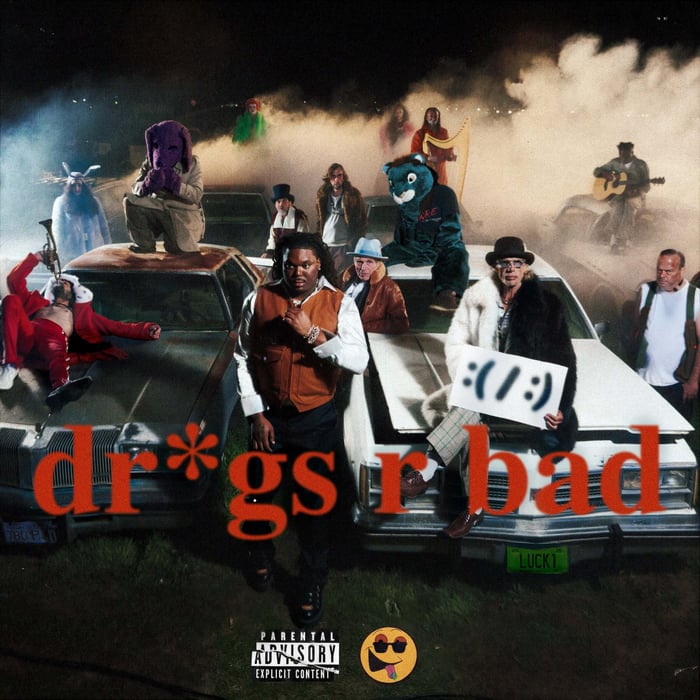
Pink Guitars Review: JuJu Rogers’ Spaceships, Voodoo, and a Bit of Whiplash


 See more Architeg Prints stories on Google.
Pink Guitars Review: JuJu Rogers’ Spaceships, Voodoo, and a Bit of Whiplash
Pink Guitars hits like a manifesto that forgot to be boring—until it briefly remembers. JuJu Rogers turns identity into circuitry, not a slogan.
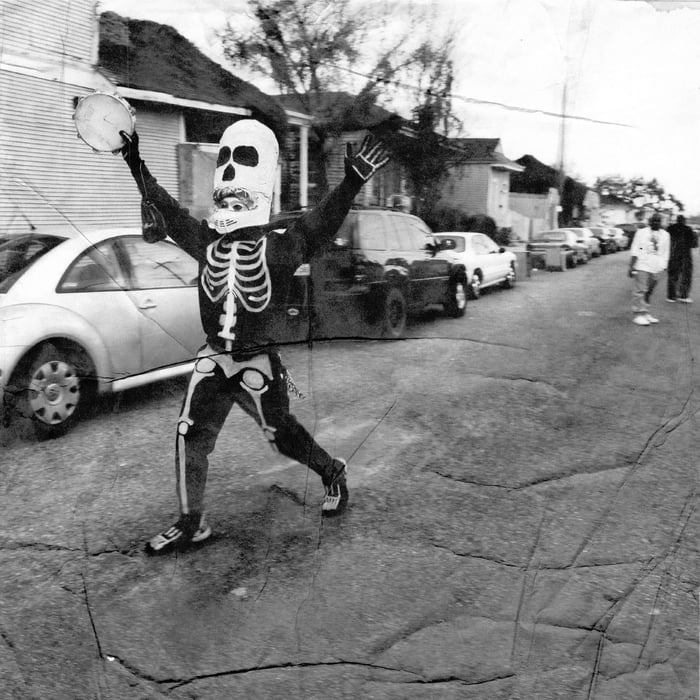
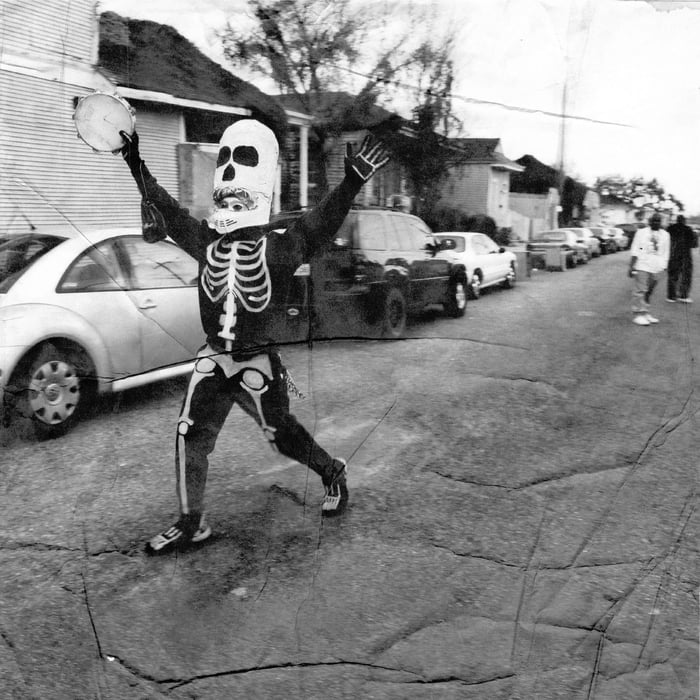
A record that doesn’t “introduce itself”—it shows up
Some albums ease you in. Pink Guitars, Spaceships N Voodoo Dolls basically kicks the door, glances around, and starts rearranging the furniture like it owns the lease. And the annoying part? It kind of does.
JuJu Rogers comes off like an artist who’s done being “an interesting case” and wants to be an actual problem—conceptually, politically, spiritually, musically. The album’s vibe isn’t “here’s my story.” It’s “here’s the system that tried to file me down, and here’s what I sound like when it fails.”
That said, I wasn’t instantly sold. On first pass, I kept bracing for the weight of the ideas to crush the music. On second listen, I realized the point is that the music refuses to behave like a tidy thesis statement. It’s a living feed—contradictory, overloaded, and weirdly human.
Schweinfurt as a pressure cooker (and not the cute kind)
Here’s what this album makes obvious: JuJu Rogers didn’t grow up in some neutral cultural hallway. He grew up in Schweinfurt, a small conservative city in northern Bavaria where the long presence of American troops didn’t just bring burgers and slang—it left behind complicated families and a lot of unspoken context.
Rogers is bilingual from birth, with a father who was a G.I. from New Orleans and a mother who’s German with Austrian roots. You can hear that split—not as a sob story, but as an engine. His musical upbringing isn’t one neat lineage either: his dad’s records (B.B. King, the Chi-Lites, Kanye West), plus a decade of trumpet through formal music schooling. That’s discipline and tradition… right next to music that thrives on bending rules.
And then there’s the pivot that matters: the local punk and hardcore scene getting its hooks into him as a teenager, and hip-hop pulling him the rest of the way. That combination—formal training, Black American record DNA, German environment, punk aggression—sets up the exact kind of artist who won’t sound “proper” anywhere. I’d even argue that’s the whole point: the album seems allergic to being legible on demand.
The quiet years weren’t absence—they were setup
The career arc baked into Pink Guitars feels intentional, like he’s been walking toward this exact mess for a while.
He dropped a solo debut on Jakarta Records in 2015, toured Europe opening for Oddisee, then released 40 Acres N Sum Mula in 2019—an album title that openly nods at the broken promise of Special Field Orders No. 15. That’s not a casual reference; that’s someone choosing history as a lens, not trivia.
That 2019 record also pulled in serious creative company: Farhot and Like handling production duties, and Sampa the Great appearing as a guest. Then came five years of relative quiet—at least on the surface.
But the album makes it clear those years weren’t just “time off.” He started his own Berlin label, Counterkultur. He dropped a six-track tape called Buffalo Soldier with features including Mick Jenkins and Jesse Royal. And he picked up a Musicboard Berlin scholarship while developing a concept he’d been calling “Afrophunk.”
If you’re expecting the scholarship-and-concept part to produce something polite and grant-friendly, don’t worry. This album isn’t polite.
“Afrophunk” isn’t a genre tag here—it’s a weapon
The word “Afrophunk” does real work across this record, but it also creates one of the album’s few self-inflicted problems: sometimes Rogers is so committed to defining the idea that he risks shrinking the music into a brochure.
There’s a track literally called “Afrophunk Interlude,” and it occasionally plays more like a spoken mission briefing than a song. I get why it’s there—he’s trying to name the thing he’s building—but it’s one of the only moments where I felt the album tighten up in the wrong way. The best parts of Pink Guitars don’t define; they demonstrate.
And when the album demonstrates, it goes places a manifesto can’t. Because a manifesto is clean. This record is not clean. It’s full of lived contradictions that don’t resolve, and that’s why it feels real.
Arguable claim: the album is strongest when it stops explaining “Afrophunk” and just acts it out in real time.
“West” is the track where the scroll becomes a nightmare
If you want the album’s sharpest blade, it’s “West.” The track opens in modern brain-rot: dopamine addiction, scrolling, watching the old world decay in high definition. Rogers even mentions posting a Rick Rubin quote—an oddly perfect detail, because nothing screams “end times” like aesthetic wisdom content sliding past actual disaster.
Then he paraphrases Gramsci: “The old world we know is dying / The new struggles to be born.” And from there the song becomes a feed you can’t close.
You get war imagery, then a paradise selfie one swipe later. Militarized police. “Negusat with attitude.” Five shots for Mouhamad and the cop still outside. A lynching witnessed via livestream. And then a line that lands like a disgusted shrug at the whole spectacle: the burning house’s last party, pass the molly.
He crams Kanye’s “you ain’t got the answers, Sway” into the same verse-space as Remarque’s All Quiet on the Western Front, and somehow it doesn’t feel like random-reference Olympics. It feels like the world itself speaking in broken tabs.
And then he hammers the ending like he’s trying to bruise the listener into paying attention:
“It’s all quiet on the Western Front
Got buku crying on the Western Front
Still ain’t no riots on the Western Front
Nothing new from the West.”
That “buku” matters. It’s Louisiana Creole French, coming from beaucoup, and in his mouth it ties New Orleans to European dead zones. It’s a tiny linguistic wire connecting family history to geopolitics. Arguably, that’s what this entire album is—wires.
“Voodoo Chile” and the art of being many things at once
On “Voodoo Chile,” Rogers runs the line between swagger and study like it’s nothing. He thanks Allah he isn’t average, identifies with Huey from The Boondocks, reads Lenin on a rooftop, smokes moon rocks, shouts “fuck the state” with golds in his mouth, and namechecks Kuwasi Balagoon of the Black Liberation Army—also known as an anarchist.
And then he drops four bars that do more real identity work than most artists manage in an entire era:
“Phunk’s not dead / Cowboy boots and a turban with dreads / Bad brain but a good heart / Hood nigga but I’m book smart.”
The important thing is he doesn’t present these as “confessions.” He presents them as inventory. Like: yes, all of this is in here. Deal with it.
Arguable claim: the album’s confidence comes less from bravado and more from refusing to edit himself into a single digestible character.
“Black Rose” builds a home outside the system—and won’t footnote it
On “Black Rose,” Rogers calls himself a “Black misfit building my quilombo” and a “German Panther Lord, what a fucking combo.” If you don’t know what a quilombo is, the album doesn’t stop to hold your hand—and I respect that. Quilombos were settlements formed by escaped and self-emancipated people in colonial Brazil, built outside the systems available to them. Same logic with the Maroons across the Caribbean—another spiritual touchpoint Rogers has clearly been thinking with.
He doesn’t pause for academic framing. You either catch it or you go look it up. That choice is kind of the whole ethos: DIY as survival, not as a cute aesthetic.
I’ll admit, I’m not 100% sure every listener will experience that as empowering rather than alienating. Sometimes the density feels like a closed door. But maybe that’s Rogers’ quiet demand: stop expecting Black thought to arrive pre-translated.
Arguable claim: the album intentionally withholds context to filter out lazy listening.
“Sadclown” and “Fallin’” are the emotional core (and they need each other)
Then the album does something smarter than politics: it tells the truth about mental survival without turning it into content.
On “Sadclown,” someone finally just admits he’s not OK. Rogers describes fighting himself out of hell while nobody showed up, giving other people strength while feeling hollowed out. The phrase that sticks is “a good relationship with despair.” That’s not a metaphor. That’s a roommate situation.
He puts it brutally plain:
“Peak performance, no rehearsing
But real life—dawg, I’m hurting.”
There’s also a Kurt Cobain line, but he doesn’t linger in romantic tragedy. He moves past it with “Only Jah knows,” like he’s refusing to let the reference turn into an identity.
Then “Fallin’” arrives as the necessary companion piece: deciding to love himself again, wanting to “build that shit all from scratch,” crying and meaning it. These two tracks work as a pair—the wound and the first morning you stop picking at it.
Arguable claim: these quieter tracks hit harder than the album’s most ideological moments because they don’t try to win an argument.
Features that actually change the temperature
The guests here aren’t just name placements—they shift the album’s pressure.
- Pink Siifu on “Build N Destroy” is the best collaborative moment. They trade on Five Percenter theology and detachment-as-freedom, but neither one turns it into a lecture. They let the song breathe, which is rare when artists talk about belief systems in rap—they usually sprint toward proving they’re right.
- Jamila Woods on “Elohim” brings warmth that keeps the theology from becoming a classroom. Her presence softens the edges in a way that feels deliberate: not dilution, more like making the message survivable.
- MONEYNICCA (Pierce Jordan of Soul Glo) shows up with the punk-hardcore energy Rogers grew up on, and it spikes the record with real friction.
And here’s my mild complaint: I wanted more of that friction across the solo cuts. When Rogers is alone with his thoughts, he sometimes leans into declaration. It’s not that the declarations are wrong—it’s that they’d land harder if someone was in the room pushing back.
Arguable claim: the album’s best moments happen when another voice forces Rogers to move instead of planting a flag.
The “core” is a man building a category because none existed
Late in the listen, the album’s real center becomes obvious: this is a Black man in Europe building something from a position no one designed a category for.
He’s not “American enough” for the way American rap likes to sort authenticity. He’s not German in any way the German music world easily knows how to package. And he’s rapping about quilombos, Maroons, Five Percenter math, and decolonized self-understanding from a place most people couldn’t point to on a map without help.
On “No Sun,” he says people want to put him in a box but don’t know where to put it. So he made his own box—then smashed the sides out. His label name, Counterkultur, isn’t subtle, and releasing this album on it feels like a decision: if you can’t find the shelf, build a new room.
Arguable claim: Pink Guitars isn’t trying to cross over—it’s trying to make “crossing over” irrelevant.
Favorite tracks (because some songs just hit)
Not everything needs a dissertation. A few tracks simply do the most work, the cleanest:
- “No Sun” — the boxing-in theme gets teeth.
- “Sadclown” — the most precise emotional writing on the record.
- “West” — the sharpest, bleakest feed-scroll prophecy.
And if we’re talking overall impact: this album plays like a great record—messy in places, but brave on purpose.
JuJu Rogers made an album that treats identity like a circuit board: connections, shorts, sparks, and the occasional burn mark. Pink Guitars doesn’t ask to be understood; it dares you to keep up long enough to understand yourself a little better.
FAQ
- What is the core keyword for this review? Pink Guitars.
- Is Pink Guitars, Spaceships N Voodoo Dolls more concept than music? No—when it works, the concept is welded to specific moments (“West,” “Sadclown”). The weak spots are when it starts explaining itself too directly.
- Which track should I start with if I’m new to JuJu Rogers? “West.” It’s the clearest example of how he turns modern life into structure, not just lyrics.
- Are the features essential or just extra flavor? Essential. Pink Siifu, Jamila Woods, and MONEYNICCA each change the album’s temperature instead of just filling space.
- Will I like this if I don’t care about politics in rap? Maybe—if you care about honesty. But if politics annoy you on principle, this record will feel like it’s staring at you on purpose.
If this album’s imagery stuck in your head, that’s basically what a good poster does too. You can shop a favorite album-cover-style poster at our store here: https://www.architeg-prints.com
 | DISCOUNTGET 30% OFF*Use code on your next order:
|
* This post may contain affiliate links, meaning we earn a commission if you make a purchase through these links, at no additional cost to you.