Deuterium Album Review: BLINDEAD 23’s “Comeback” Isn’t a Comeback


 See more Architeg Prints stories on Google.
Deuterium Album Review: BLINDEAD 23’s “Comeback” Isn’t a Comeback
BLINDEAD 23 weaponize the Deuterium album like a second debut—big choruses, prog mood-swings, and just enough mess to feel alive.
A band name that refuses to die (on purpose)
“Don’t call it a comeback” is exactly the kind of line a band like this dares you to say out loud. BLINDEAD spent two decades being a problem in sludge and post-metal, then shut it down in 2019 after six albums across fifteen years. And now—because of course—guitarist Mateusz Śmierzchalski comes back with BLINDEAD 23, a successor project that keeps one hand on the old catalog and uses the other to shove new material into your chest.
I hear the intent right away on the Deuterium album: this isn’t nostalgia cosplay. It’s closer to a controlled burn. The fact that they tested it live in 2023 and built anticipation before the record finally landed makes the whole thing feel like it’s been pressure-cooked for a while—like they needed the audience’s hunger to justify pushing “play” on a new era.
And yeah, I’ll admit it: my first instinct was to roll my eyes at the “new lineup, old name” move. On second listen, though, it stopped reading as brand protection and started sounding like a deliberate challenge—same DNA, different muscle.
“Immersion I” opens with violence, then sells you a chorus
The album’s first move is basically a dare. “Immersion I” swings between gnarly heaviness—toms that thud like doors slamming and harsh vocals that scrape the mix—and then flips into a pummeling riff topped with a harmonized lead line that’s practically engineered for the “fist in the air” reflex.
Here’s the thing: the chorus isn’t a relief valve. It’s the hooky part that still hits like a weapon. And the Deuterium album keeps doing that—choruses that should be predictable but keep taking odd chord turns, little prog switch-ups, and timing choices that make you lean in instead of zoning out.
The double-tracked clean vocals are sung like they actually mean something (a surprisingly rare trait in heavy music), and the combination of melody + heft nudges into that “proggy-but-still-brawny” space. I kept thinking: this is what happens when a band wants grandeur but refuses to sand off the teeth.
The guitars are mixed like the guitars are the point
Transitioning from that opener, the record makes its priorities obvious: the guitar work is front-and-center, mixed high enough that riffs feel like architecture.
Śmierzchalski teams up with Roger Öjersson here, and you can hear two different kinds of confidence meeting in the middle. On “Worst Laid Plans” and “Deuterium,” the riffs aren’t just “big”—they’re staged. Like the band is arranging them the way a director blocks a scene: step here, spotlight there, now everybody freeze for the chorus.
The real flex, though, is “Immersion II.” The verses twist around with this almost theatrical heaviness—histrionic in a good way—before the track opens up into a longer solo section that actually breathes. Not shred-for-shred’s-sake. More like the band finally letting the melody say the thing the riffs were circling.
If I had to pin a comparison, the pacing changes in “Immersion II” remind me of chaotic prog energy—the kind where a song keeps turning corners and somehow doesn’t crash. That’s hard to pull off without sounding like a playlist of unrelated ideas. Here, it mostly holds.
Mostly.
Drums that sprint for ten minutes and don’t trip
Then you’ve got Paweł Jaroszewicz on drums, and the guy plays like he’s trying to outrun the song. “Worst Laid Plans” starts with a furious double-kick assault that could’ve easily fallen into the usual “look how fast I am” rut. It doesn’t. What’s impressive isn’t just speed—it’s the refusal to repeat himself in lazy ways over a ten-minute runtime.
The track’s outro is where it clicks: a post-metal finish that doesn’t dissolve into fog. The drums gallop at a ridiculous pace under a clever repetitive riff and melody—repetitive, yes, but the smart kind, the kind that hypnotizes instead of bores.
Hot take: a lot of modern post-metal bands confuse patience for structure. BLINDEAD 23 don’t. Even when they stretch out, they’re still steering.
The Deuterium album cheats “post-metal” by smuggling in other genres
Here’s where the record gets sly. Deuterium isn’t just “post-metal done well.” It’s post-metal that keeps getting interrupted—sometimes rudely—by other instincts.
The title track “Deuterium” is the cleanest genre statement: a bouncing, maximalist guitar riff, menacing distorted bass in the verse, and (surprise) another huge chorus. If someone asked what this band sounds like now, this is the track you’d hand them because it sells the thesis without giving away the weirdness.
But the weirdness is all over the edges:
- Progressive rock and metal show up not as decoration, but as actual songwriting logic
- Death metal creeps into the opening minutes of “Worst Laid Plans” and into the unclean vocal character across the album
- The “big chorus” approach keeps getting filtered through prog chord choices, so it lands slightly sideways instead of straight-on
I’m not entirely sure the band even wants the album to feel unified in a traditional way. It plays more like a lineup proving they can share the same room without simplifying themselves.
“Towards The Dark” goes full prog—almost to prove they can
The most extreme prog moment is “Towards The Dark.” It flips between phaser-infused clean guitar and a time-signature-twisting riff that’s basically classic prog DNA—cleaner and trickier than the album’s sludge backbone.
And this is where some listeners will either grin or bail. I’m in the grin camp, mostly because it doesn’t feel like “hey, look, we can do math.” It feels more like the band letting the song turn into what it wants to be, even if it stops sounding like the track before it.
Arguable claim: this track is the album’s real mission statement, not the title track. It’s the moment where BLINDEAD 23 stop honoring anything and just act like themselves.
“Wither” is pretty, vulnerable… and a little stranded
Then there’s “Wither,” which slips into a soft-prog direction. The vocal turns more vulnerable, and the instrumentation plays this stop-start mirrored guitar and bass line that feels intentionally restrained.
It’s a good song. But it also feels like it wandered in from a different version of the album.
The short runtime and uniformity make it feel transitional—like an interlude that accidentally became a “real track.” I kept waiting for it to either explode or mutate, and it mostly just… stays elegant. Depending on your taste, that’s either a palate cleanser or a momentum leak.
For me, it’s the first moment where the Deuterium album shows a seam.
When the album stumbles, it’s usually in the glue
The album takes a couple swings that don’t fully connect, and interestingly, it’s not because the ideas are weak. It’s because the connections sometimes feel forced.
The opening “Immersion” diptych has great components—no question—but some transitions feel “assembled.” Like the band is stitching sections together rather than letting them naturally evolve. It’s not a dealbreaker, but it’s noticeable when the rest of the album works so hard to sound inevitable.
And the closer “You Are The Universe” aims for the big cinematic finish: drums marching forward, vocals straining toward an epic build. Conceptually, it’s strong. Execution-wise, something about the balance between production polish and rawness feels just slightly off—especially in the cracking vocal moments, where the ambition doesn’t quite land as cleanly as the arrangement demands.
I’m torn there. Part of me likes the imperfect edge because it sounds human. Part of me thinks the song wants a different mix—or a different take—to fully stick the ending.
Still, when the piano coda arrives, it’s an excellent closer. And it points to the album’s quiet secret weapon: piano textures. They bookend the Immersion tracks and deepen the proggier sections without turning the whole thing into “metal band discovers keys.” It’s used like shading, not spotlight.
A delayed release that still sounds impatient (in a good way)
This debut has clearly been sitting in the chamber a while—it was recorded back in 2023, waiting for the right moment to release. And with a major lineup shift plus a name that openly ties back to the prior band, the potential landmines were obvious: either it would sound like a tribute act, or it would sound like a different band wearing someone else’s jacket.
Instead, it lands as a fresh start that still carries the old DNA. The Deuterium album feels relevant because it doesn’t behave like a “return.” It behaves like a band trying to outrun its own history—while still stealing a few of its best tricks (those choruses, especially).
If I had to reduce my reaction to a number—against my better judgment—I land around an 8/10 in terms of how effectively it does what it’s trying to do. Not flawless, but absolutely not timid.
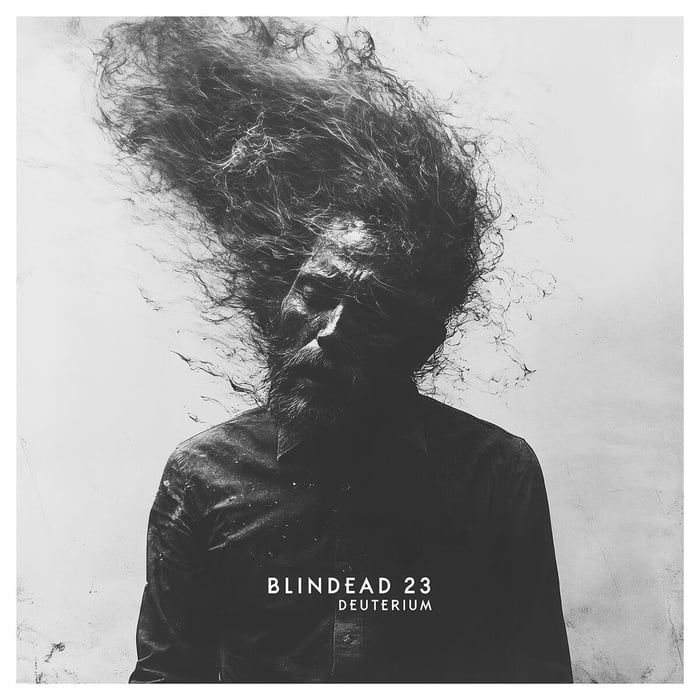
Deuterium is set for release on May 22nd via Peaceville Records.
Like BLINDEAD 23 on Facebook.
FAQ
- Is the Deuterium album more post-metal or prog?
It leans post-metal in weight and atmosphere, but it keeps swerving into prog structures—sometimes so boldly it feels like the point. - What’s the best entry track if I’m new to BLINDEAD 23?
“Deuterium” is the cleanest snapshot: big riff, ominous verse, huge chorus, no unnecessary detours. - Does “Worst Laid Plans” justify its long runtime?
Yes—mainly because the drumming stays inventive and the outro earns the stretch instead of just extending it. - What’s the weakest fit on the record?
“Wither” sounds good but feels slightly stranded—more like a transitional piece than a fully integrated chapter. - Are the clean vocals actually good, or just “for metal”?
They’re genuinely effective: double-tracked, sung with intent, and written to hit hard without becoming cheesy.
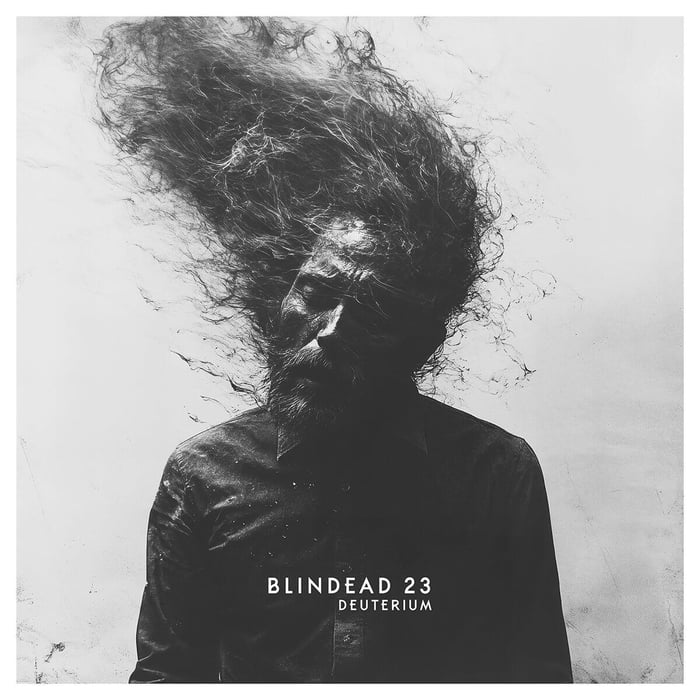
If the Deuterium album cover stuck in your head the way the choruses do, you can always grab a favorite album-cover poster for your wall over at https://www.architeg-prints.com—no big pitch, just a nice way to live with the music a little longer.
 | DISCOUNTGET 30% OFF*Use code on your next order:
|
* This post may contain affiliate links, meaning we earn a commission if you make a purchase through these links, at no additional cost to you.