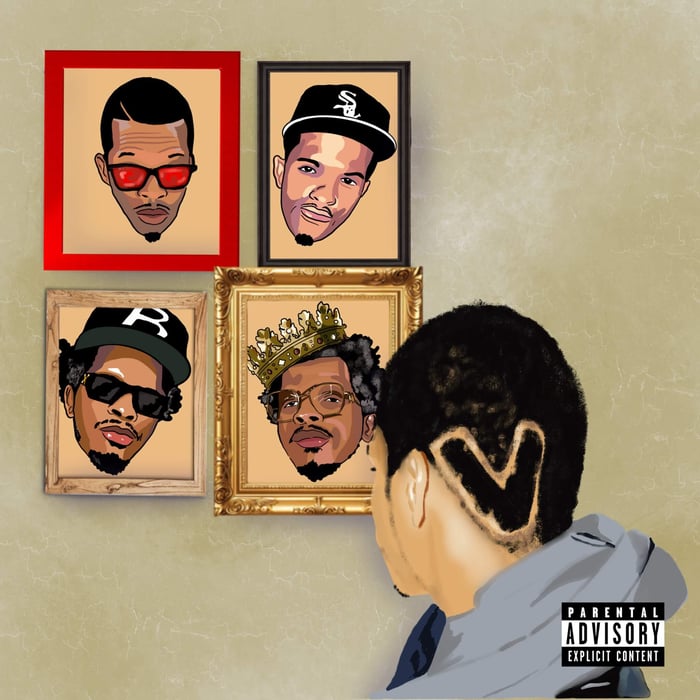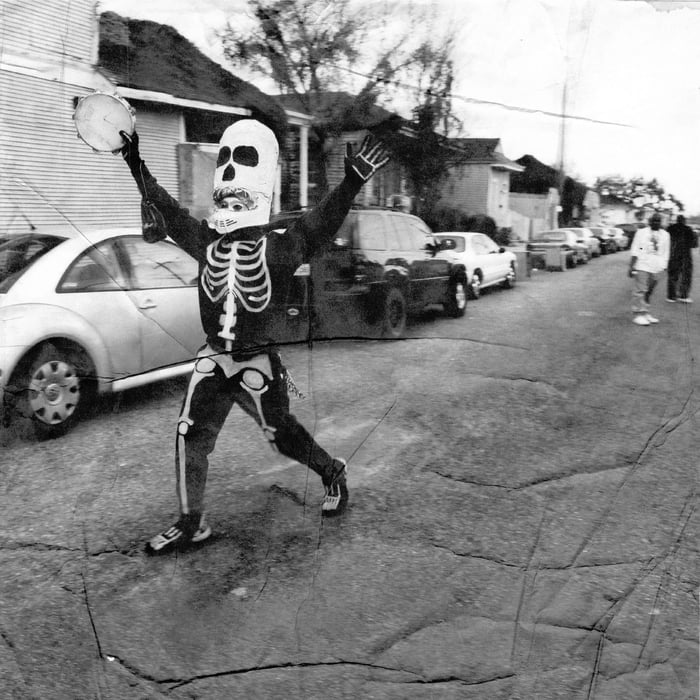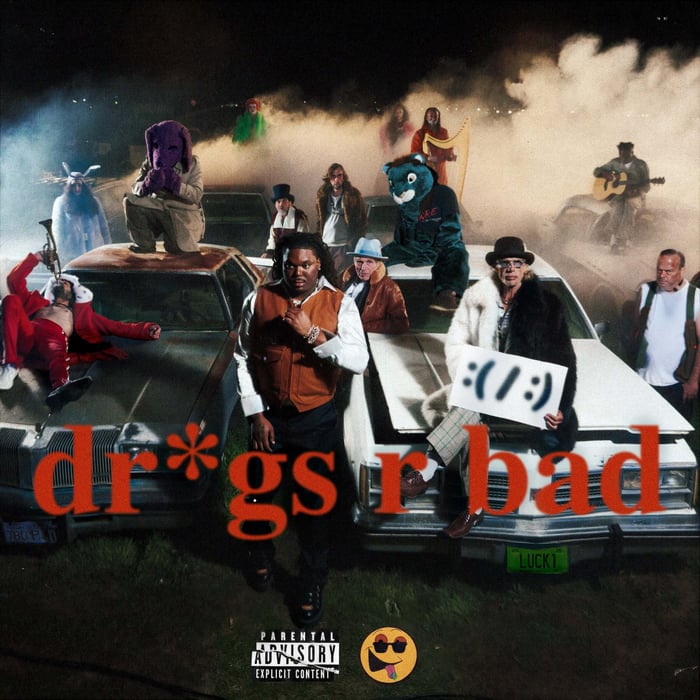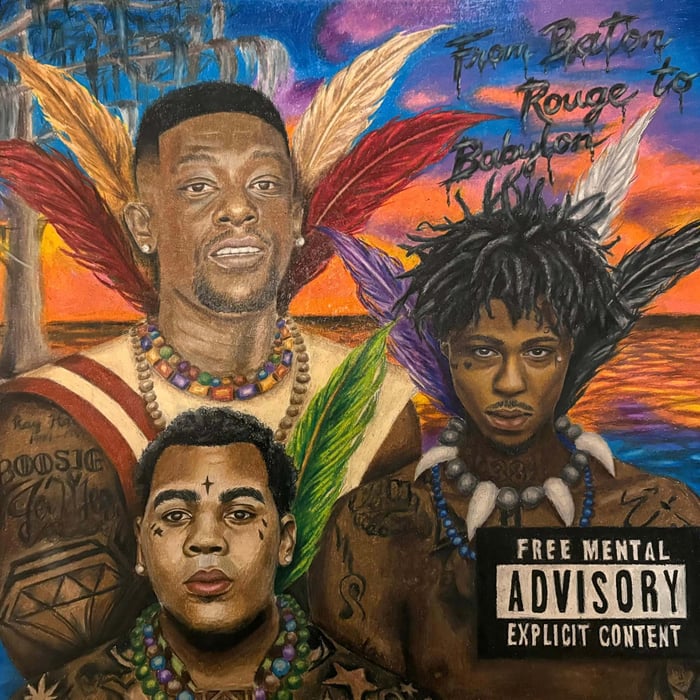
From Baton Rouge Album: Ronday & Wino Willy’s Babylon Costume Party


 See more Architeg Prints stories on Google.
From Baton Rouge Album: Ronday & Wino Willy’s Babylon Costume Party
Ronday and Wino Willy use From Baton Rouge as a smuggled meeting between street geography and underground-loop religion—sometimes slick, sometimes clumsy.
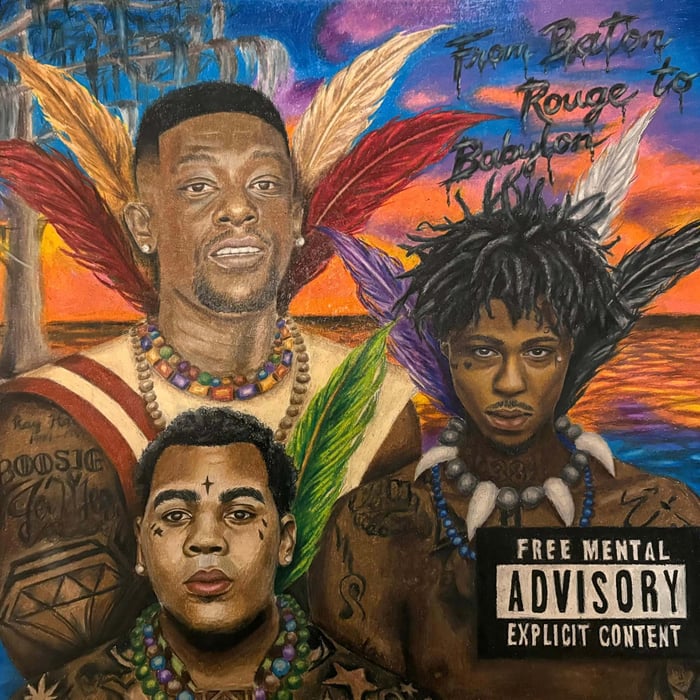
Courtesy of Rondayofficial Pub.
First contact: the “costume” that stops looking borrowed
Some albums walk in wearing a fit that looks rented. This one does—at first. From a distance, I thought the whole thing might be one of those “rapper over artsy loops” cosplay situations: a regional voice squeezed into a cooler-kid template. But by the time the early tracks settle in, From Baton Rouge stops feeling like dress-up and starts feeling like a deliberate collision.
The main trick is how Ronday’s Baton Rouge DNA doesn’t get ironed out for tastefulness. He keeps the corner-store bluntness, the local proper nouns, the lived-in threats and blessings—then Wino Willy sets it all inside production that keeps returning like a familiar argument. The loops are sampled, groovy, and stubborn about it. They come back again and again like the album’s trying to hypnotize you into taking its theology seriously.
And yeah, I’ll say it: by track three, I stopped worrying whether the producer actually understands the Southern canon. The record makes that question feel irrelevant—because it isn’t trying to “honor” anything. It’s trying to use it.
“Back from the West”: the moment the album admits it likes to trudge
Here’s the pivot: “Back from the West” drags its boots on purpose. It’s not energy music. It’s late-night, cigarette-burn jazz mood—less “turn up,” more “stare at the ceiling and decide what you deserve.” The beat moves like it’s carrying something heavy without announcing it.
Ronday’s writing snaps into that pocket with a particular kind of confidence: not loud confidence, more like the calm of someone who already decided what the truth is. One line lands with the casual paranoia of a man who thinks in exits:
“I’m strapped from the toe to chest with more respect for the vision.” — Ronday
What’s wild is how the instrumental feels like a direct lift from that sketchy, minimal, loop-first school—like the beat existed years ago and he’s been waiting for it. The verse gives that away. He doesn’t sound like he’s adapting. He sounds like he finally got the right lighting.
Arguable take: the “trudge” is the album’s real tempo; the brighter moments are just decoration.
“SHIVA” and Ottoman Park: when the album starts talking to itself
By the time “SHIVA” rolls around, the record starts doing that thing where rap stops being performance and turns into private narration. There’s a bit at the end—spoken, half-aimed at nobody—where he says he walked to Ottoman Park from somewhere uptown. Pause. Then: “This grass is moving.”
That line doesn’t play like a joke. It plays like a man noticing the world is alive in a way he can’t fully explain. And I’m not totally sure what I’m supposed to take literally there—drugs, fatigue, spirituality, all of it at once—but the uncertainty works. It’s one of the few times the album lets confusion into its bloodstream instead of only certainty.
Wino Willy keeps a jazz-tinged haze hovering under it, layered but not busy. Ronday gets shrewd and animated, switching pockets fast to keep up with the track’s shifting energy. It’s not showy “look at my flow.” It’s more like someone pacing while thinking out loud.
Arguable take: this is where the album becomes less “rap project” and more like overhearing a person build a belief system in real time.
The private theology: Huey Newton, plagues, and corner economics in one breath
The real flex of From Baton Rouge isn’t punchlines. It’s range—specifically the kind of range that shouldn’t logically fit in a single verse, yet somehow does. You’ll hear him reach from Huey P. Newton to Pharaoh’s plague, then pivot into silicon and hustle talk and name-check local life like he’s mapping a neighborhood and a heaven at the same time.
Over eleven tracks, Ronday builds a “private theology” where Black Panther canon, gospel-altar imagery, and Louisiana street talk keep bumping shoulders. He’ll drop something like “Propane… my crew gon’ light the fuse to breach the walls of Babylon” between an allusion to Newton and a fragment that sounds like it wandered out of Ephesians.
And he delivers it low—conversational, not sermon-voice. That’s important. If he performed these lines like capital-P Poetry, it’d turn corny fast. Instead, he talks like this is just how his brain files reality: scripture next to street economics next to history next to immediate danger.
Arguable take: the album isn’t “deep”—it’s crowded, and that’s why it feels spiritual.
“COLLEGE DRIVE”: the cleanest Wino Willy gets, and Ronday cashes it
“COLLEGE DRIVE” is Wino Willy at his cleanest: bright Rhodes notes pushed forward, a steady bass groove, and a head-nodding pocket that doesn’t try to be grimy just to earn credibility. There’s also a floated-in vocal melody layer (Matt Paige) that gives the track a polished lift without turning it pop.
Inside that brightness, Ronday delivers what felt like his strongest verse on the whole project. The writing gets specific in a way that feels half-flex, half-confession:
“I blush at my reflection as you stretch ‘cross the flesh of the Escalade”
hits like he’s embarrassed by what he’s become—and then “I’m from Baton Rouge…” comes right after as a warning disguised as a location tag.
This is where I had to revise my first impression again. Earlier, I clocked him as a guy who’d be best when the beats are murky. But on this track, the clarity actually sharpens him. The cleaner the frame, the more he fills it with proper nouns—Club Eure, Gardere, the kind of “we ruined an apartment on a Sunday” detail that isn’t there to impress you. It’s there to prove he was there.
Arguable take: this song proves he doesn’t need “grime” to sound real—he needs space.
The skit problem: “Jackals in the Swamp” breaks the spell
Here’s the part where the album trips over itself. “Jackals in the Swamp” is a skit—homecoming-weekend storytelling about pulling up at Canes, eating mushrooms, watching the swamp move on the river road. One voice half-laughs: “Bitch, I could’ve sworn I seen jackals in the swamp…”
As oral storytelling, it has texture. You can picture the headlights, the fried-food smell, the paranoia blooming into mythology. I get why it’s here: the album likes altered perception, likes the border between real and symbolic.
But sequencing is a real thing, and right after “AFTERLIFE AWAITS” (the most propulsive moment on the project), this skit kills the pacing dead. Not “slows it down in a cinematic way.” Dead. The momentum doesn’t drift—it drops.
Then “WELL WISHES” has to start cold and try to earn back the oxygen. That’s a big ask, and you can feel the record reaching for its own vibe again.
Arguable take: the skit would’ve worked better as an outro or a hidden track; where it sits now, it feels like the album blinking mid-stare.
“WELL WISHES”: vulnerability wins, but not from who you think
Ronday tends to write best inside Wino Willy’s tighter pocket arrangements—when the groove is locked and the loop has edges to press against. When the loop strips out, he can lose ground. “WELL WISHES” narrows down to melancholic guitar plucks and a slow drum roll, and suddenly the record is exposed.
That’s where Ole Man Stogie walks in and lands the most vulnerable lines on the album:
“Crack my limbs, lost myself, then lost my Mrs / Should I lose another thing, I ain’t gon’ make it to Christmas.”
That’s not just “sad bar” writing. That’s exhaustion with a calendar attached to it. Real-life dread. Stogie takes that round.
Ronday’s verse on the same track—trade-with-the-devil math, solid-gold dimes—feels less affecting next to that older voice’s worn-out honesty. Not bad. Just… lower on the human scale. Like he’s still shaping his pain into symbols while Stogie is just dropping it on the table.
Arguable take: the album’s most emotional moment belongs to a guest because Ronday sometimes prefers mythology over plain speech.
“SOUTHERN SOLDIER”: when a smoother delivery gets outmuscled
Joe Scott pulls a similar move on “SOUTHERN SOLDIER.” His faster, jagged flow cuts through the crashing rhythm section like he’s trying to win an argument at the exact volume the beat demands. Ronday, smoother and more even, doesn’t slice the same way.
That contrast reveals something: Ronday’s strength isn’t aggression. It’s control. When the instrumental gets too physical—too much crash and churn—his calm delivery can read as less urgent, even if the writing is there. It’s like watching someone refuse to raise their voice during a bar fight. Respectable, sure. But sometimes you want the track to feel like it might actually swing.
Arguable take: Ronday sounds best when the beat is a loom, not a demolition site.
The bigger trick: two rap lineages that usually don’t share air
What makes From Baton Rouge stick is that it forces two lineages to share space:
- Wino Willy’s loop-denuded, drum-light underground framing—the post-Marcberg universe where beats feel skeletal and intentional.
- Ronday’s regional Southern detail and big-room spiritual writing—the air where Curren$y and Kevin Gates types can breathe, where place names and faith talk coexist without apology.
Those worlds don’t usually meet. You don’t normally hear Huey P. Newton quoted over this kind of beat. And you don’t usually hear this kind of beat bothered with Baton Rouge street specificity instead of abstract cool-guy noir.
The album’s quiet accomplishment is making that collision feel less like a gimmick and more like an overdue link-up.
Arguable take: the album isn’t “bridging scenes”—it’s pointing out they were always compatible if someone stopped acting precious about it.
“SINCE PLYMOUTH” to the closer: the record eases out like it planned the landing
“SINCE PLYMOUTH” brings Ayoola Davis into the frame, and the track feels like the album widening its lens—less internal monologue, more communal presence. It doesn’t need to shout to feel significant; it just shifts the air.
Then the closer brings boom-bap heft under Wakai’s verse. His voice sits a half-octave under Ronday’s, grounding the ending. The line “We had no peace on the land since Plymouth / I got no plans to play with you” hits with blunt inevitability—like the album’s final argument is that history isn’t past, it’s furniture.
Wino Willy lets the loop swell and hold a measure longer than expected, then eases the album out by an extra eight bars. It’s a small sequencing choice, but it matters: it gives the ending the feeling of a door closing slowly instead of being slammed.
Arguable take: the record’s best “hook” is that extra time at the end—it’s the only moment it lets you breathe without interrupting you.
Conclusion
From Baton Rouge is what happens when a rapper treats theology like street reportage and a producer treats loops like architecture. It’s not perfectly paced, and it’s not always Ronday who lands the hardest emotional punch—but when it works, it feels like a new dialect forming mid-song: Baton Rouge specifics spoken through a minimalist, underground lens that usually doesn’t bother with this much lived-in detail.
Our verdict: This will hit for listeners who like their rap dense with place names, scripture ghosts, and loop-driven hypnosis—and who don’t panic when the album gets quiet and weird. If you need constant momentum, or you think skits are always “vibes,” you’re going to get annoyed right where the record asks you to stay locked in. It’s a strong album for patient ears and suspicious minds, and kind of a nightmare for anyone who only listens for hooks.
FAQ
- What is “From Baton Rouge” trying to prove?
That regional Southern writing can live inside spare, underground loop production without sanding off its grit or its faith. - Does the album have a pacing issue?
Yes—“Jackals in the Swamp” lands like a speed bump placed on a downhill road. - What’s the best moment to start with?
“COLLEGE DRIVE” if you want clarity and precision, or “Back from the West” if you want the late-night trudge and mood first. - Who steals the show on features?
Ole Man Stogie lands the most vulnerable lines, and Joe Scott’s jagged energy cuts through “SOUTHERN SOLDIER” hard. - Is it more street rap or more “art rap”?
It’s street rap that’s willing to wear an “art rap” frame—and it mostly makes that frame look practical.
If you want something physical to match the mood—something that sits on your wall like a quiet flex—shop a favorite album cover poster at our store: https://www.architeg-prints.com.
 | DISCOUNTGET 30% OFF*Use code on your next order:
|
* This post may contain affiliate links, meaning we earn a commission if you make a purchase through these links, at no additional cost to you.