Di Hotel Malibu Review: Retro-Soul So Specific It Refuses English


 See more Architeg Prints stories on Google.
Di Hotel Malibu Review: Retro-Soul So Specific It Refuses English
Di Hotel Malibu isn’t chasing a global playlist—it's building a tiny, analog world in Surabaya and daring you to keep up.
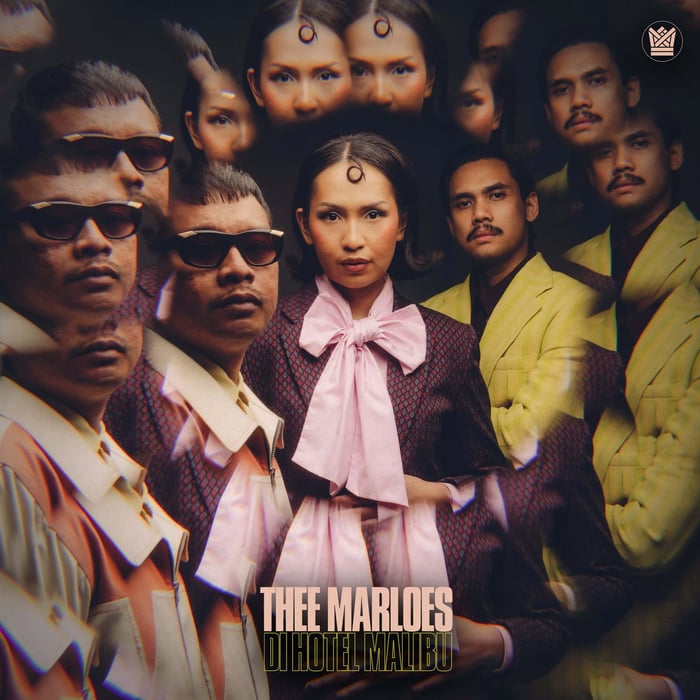
A record that starts by shrinking your expectations
This album doesn’t “open up” to meet you. It closes the door, pulls the curtains, and makes you listen to what’s already in the room. Di Hotel Malibu feels like a band choosing locality on purpose—language, groove, even the air around the instruments—like they’re politely refusing to translate themselves for anyone.
And yeah, I’ll admit it: my first assumption was that this would be another retro-soul cosplay project with nice clothes and borrowed moves. On second listen, it clicked that the whole point is the opposite. Thee Marloes aren’t borrowing a past; they’re using old tools to document a very specific place and set of pressures.
Surabaya energy: the “only retro-soul operation in town” vibe
Here’s what you can hear immediately: this music was built in a home studio, by someone who had to clock out of a day job before they could clock in as an artist. That sense of after-hours devotion is all over the pacing—patient arrangements, careful choices, nothing wasted.
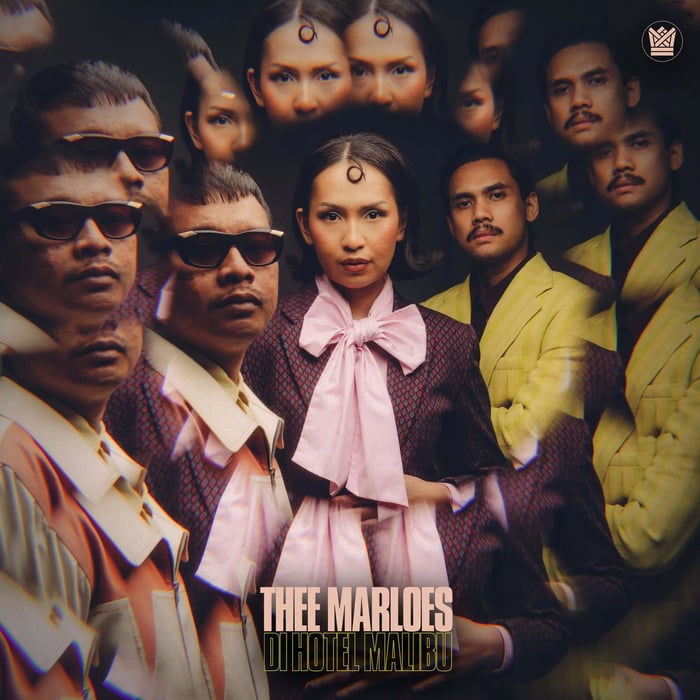
Sinatrya “Raka” Dharaka comes off like the kind of songwriter who’ll sit with a chord until it confesses. The band’s origin story is basically audible in the lineup: Raka writing for years, drummer Tommy Satwick entering the picture, and then the final puzzle piece—Natassya Sianturi—arriving after being spotted singing locally in 2019. The group feels assembled, not manufactured.
A reasonable person could argue this is just standard band formation stuff. I don’t buy that. You can hear the difference between “we formed a band” and “we built a vessel for one voice.”
Natassya Sianturi’s voice isn’t imported—it's locally haunted
Big Crown Records has a reputation for a certain kind of soul vocalist—strong personalities, clear lineage. Sianturi doesn’t fit neatly into that roster, and that’s the advantage. Where other singers might sound like they grew up on Southern Gospel or North Carolina R&B, Sianturi’s phrasing suggests something more personal and more local: church choir records sourced close to home, lived-in melodies, devotional memory baked into pop form.
That difference is loudest on “Di Dalam.” The horns arrive in a minor key and circle her voice like they’re protecting it. Sianturi sings relaxed—not lazy, just unpanicked—and she lands somewhere between the psychedelic-spiritual blur of Rotary Connection and the blunt sincerity of a song you remember from being 14 and stuck in a pew. There’s no obvious local template for this move, which is why it lands: it isn’t “revival,” it’s translation.
If you need a nearby reference point, Surabaya doesn’t exactly have a long public paper trail of this sound. The closest ghost in the room is Dara Puspita—the all-female garage band from the ’60s—less in sound than in the audacity of doing something with no local precedent.
“6 Years” is the sound of quitting a safe job and not apologizing
The emotional thesis gets plain on “6 Years.” Over sharp horn stabs and an aggressive hi-hat that keeps poking the tempo like it’s impatient, Sianturi sings:
“Tell me when I’m gonna stop / Tell me how I’m gonna stop.”
It doesn’t sound rhetorical. It sounds like someone bargaining with themselves in real time.
The backstory bleeds through: she left a stable, probably high-paying job at 29. The kind of job that doesn’t just support you—it supports a family. Her mother thinking she was crazy isn’t some dramatic anecdote; it’s the entire conflict in the song’s structure. The track pushes forward like it’s daring her to hesitate.
Then the final minute flips the script. The questions stop. The voice chooses a simple manifesto: be true to myself, put my makeup on, and sing my song. That’s not “empowerment” as a genre trope—it’s a decision with consequences, and the arrangement respects that by tightening up instead of exploding.
Someone could say the song is too on-the-nose. I’d argue that’s exactly why it works. Soul music dies when it starts hiding behind cleverness.
“Rahasia”: when the guitar refuses to move, the feeling gets heavier
If “6 Years” is forward motion, “Rahasia” is restraint as a weapon. Sianturi delivers a line that translates to:
“Let the feeling be stored tightly / Become a prayer in the chest.”
It’s romantic, sure, but it’s also cramped—like devotion with nowhere to go.
And Raka makes the funniest, most stubborn choice possible: the guitar barely moves. He lets stillness do the talking. In a genre where players love showing you their taste, this is someone choosing less and trusting the listener to feel the pressure build.
I’m not totally sure everyone will read it that way. Part of me wonders if a few listeners will mistake the minimal movement for a lack of ideas. I don’t think that’s true—but I get why somebody might.
Analog gear, one room, and a deliberately limited set of tricks
The album is built from what’s physically around: analog devices in the room, clean and overdriven electric guitar, piano, brass, organ, tambourine, and other small-color instruments that feel like they were grabbed on instinct. You can hear fingers and air more than you hear “production.” That’s a choice, not a budget apology.
And here’s the thing: Di Hotel Malibu doesn’t show off a hundred studio tricks across fourteen tracks. It’s more like one strong idea—commit to a sonic world—and then live inside it without flinching. That kind of constraint is brave… and also risky.
Mild complaint: there are moments where I wanted a left turn that never came. The record can be so disciplined that it almost dares you to call it samey. The saving grace is that when it does break its own rules, it makes sure you notice.
“Selatan” uses class symbols like instruments (because they are)
“Selatan” is where the album gets explicit about class—not with speeches, but with symbols. The song uses “class instruments” in a way that feels intentional, like Raka is staging wealth and aspiration as timbre.
Sianturi sings in Indonesian about the class struggle of ultra-modern South Jakarta, and she drops a question that lands like a lit match:
“Apakah kau rasakan terasing dan piun?”
—do you feel alienated and alone? The bass rattles the floor like the building’s foundations are arguing with the skyline, and the organ holds sustained notes above it like a fluorescent ceiling that never turns off.
A lot of albums talk about class like it’s an abstract concept. This one makes it physical: low-end as gravity, organ as architecture, voice as the person caught between.
“I’d Be Lost” and the record’s cheeky relationship with dance floors
The same brass section reappears on “I’d Be Lost,” but the intent changes completely: it’s a dance track, a floor-filler, nodding toward that Twisted Wheel 1968 type of Northern Soul urgency. It’s tight, it’s built to move bodies, and it’s smart enough not to overcomplicate itself.
A reasonable listener might argue this is the most “accessible” moment on the album. I’d push back. It’s not pandering—it’s the band reminding you that groove is a language, and you don’t need English to understand it.
“Boru” is the album’s cleanest refusal to behave
Then “Boru” kicks in and basically tells the album’s own template to get lost. The tone shifts: striking bass, harsher drum sound, fewer familiar cushions. Next to the smoother sonics elsewhere, it feels almost blunt—like a different band walked into the room and nobody stopped them.
What’s interesting is how it ends up sounding more like Northern Soul than “garage” revival stuff. And honestly, who else is even attempting that kind of cross-current here—keeping the retro palette but letting the track hit with that kind of severity?
If you came here for nonstop softness, this is where you might bounce. I like that it risks being unpretty.
The title track: a hotel lobby scene that never resolves
“Di Hotel Malibu” (the song) is three minutes of specific memory: a serendipitous meeting pinned to a particular hotel, with the question “Mengapa harus bertemu?” (“Why did we have to meet?”) hanging in the air like smoke that won’t leave your jacket.
Raka’s guitar part is a sly little torment. He plays a clean figure that keeps dodging the root note, so the song feels like it’s always approaching resolution and then choosing not to arrive. That musical decision matches the lyric’s emotional problem: you met, it mattered, and you’re stuck with that fact.
This is also where the record quietly does something huge: Batak language shows up on a Big Crown release for the first time. Batak—spoken by roughly 8 million people, rooted in North Sumatra—suddenly gets centered in a space that usually demands easy global readability. Sianturi singing in Batak here isn’t a novelty; it’s the boldest thing she does across either LP, because it refuses the “just make it English” escape hatch.
English tracks that prove competence… and one that feels oddly unplaced
Now, Di Hotel Malibu isn’t allergic to English. “Crazy Eyes” and “I’m Just a Girl” sit in that mid-tempo funk pocket where the band basically says: we know how to do this, we don’t need to announce it. They’re competent in a way that almost undersells the skill involved—clean grooves, tidy modulation choices, nothing messy.
But “What’s on Your Mind” is where I hesitated. It’s a sweet-soul ballad, built (like so much of this album) on cleanly picked arpeggios. Raka’s guitar tone is warm in the way a lamp is warm—soft light, stable presence—and everything else lands right where you’d expect.
The premise is patience in a new romance, and that’s fine. The issue is placement: unlike other songs that feel anchored in a location or cultural specificity (Surabaya, a Batak prayer, a hotel lobby), this one feels like it could happen anywhere. Maybe that’s the point—love as a floating room with no address—but it briefly loosens the album’s grip.
Why this album ignores gatekeepers on purpose
The band’s 2023 debut Perak had eight of its twelve songs released as singles before the album even dropped. You could hear how that would make an album feel like it was assembled after the fact—good pieces, but not necessarily one continuous argument.
And still, almost nobody clocked it until outside validation arrived: Chicano lowrider communities picked it up, and a nod from BBC Radio 6 Music’s Huey Morgan helped it travel. That kind of late recognition tells you something uncomfortable: gatekeepers still decide what “counts,” even for music that was never asking permission.
Di Hotel Malibu sounds like a direct reaction to that reality. It keeps ignoring the gate. The sequencing alone makes the point: two back-to-back songs in Batak and Indonesian, six minutes of straight soul with no English anchor, like the band is testing whether you actually care about the music or just want linguistic handrails.
And compared to other modern soul acts that sand off grit as they go (you can hear the genre-wide temptation toward cleanliness), Raka seems to do the opposite: edit tighter, commit harder, release fewer obvious single-baits, stretch cuts longer, and let one track live in Batak without compromise. This is the kind of album Perak couldn’t have been—not with that pre-release single strategy running the show.
My favorite moments (because the album basically asked for picks)
If you want the tracks where the intent is sharpest, I keep coming back to these:
- “6 Years” — the personal leap turned into rhythm and brass pressure
- “Boru” — the deliberate disruption, harsher drum and bass like a snapped rope
- “Di Hotel Malibu” — the root-note dodge and the hotel-lobby ache, plus Batak language centered unapologetically
I think this is a great record—not “perfect,” not even trying to be universal, but effective at what it’s actually attempting: building a small, coherent world and refusing to translate the corners smooth.
Conclusion: this isn’t nostalgia, it’s a boundary
Di Hotel Malibu doesn’t want to be your new favorite “throwback.” It wants to be proof that soul can be hyper-local, language-forward, and still physically hit—bass in the floor, horns in your ribs, guitar lines that withhold resolution like a grudge. I came in expecting comfort music; I left realizing it’s more like a locked diary with a dance beat.
Our verdict: People who like soul as place—not just vibe—will love this album’s analog intimacy and its refusal to default to English. People who need big pop crescendos, constant novelty, or lyrics they can instantly sing along to will get impatient and start checking their phone by track four. Consider that a useful filter, not a flaw.
FAQ
- Is Di Hotel Malibu a “retro-soul” album or something else?
It’s retro in tools and tone, but the intent feels current: it uses old sounds to talk about present-day identity, class pressure, and locality. - What language is the album sung in?
You’ll hear Indonesian and Batak, plus some English tracks—sequenced in a way that makes English feel optional, not central. - What’s the most emotional track to start with?
“6 Years” if you want the personal stakes upfront—quitting safety, choosing art, and living with the fallout. - Does the album have danceable moments or is it mostly slow?
It has both. “I’d Be Lost” leans into dance-floor energy, while tracks like “Rahasia” win through restraint. - What’s the boldest artistic choice on the record?
The title track’s Batak-language spotlight and the sequencing that doesn’t provide an English “anchor” for comfort.
If this album’s mood got under your skin, you’ll probably want to live with its visuals too. You can shop a favorite album cover poster at our store here: https://www.architeg-prints.com/
 | DISCOUNTGET 30% OFF*Use code on your next order:
|
* This post may contain affiliate links, meaning we earn a commission if you make a purchase through these links, at no additional cost to you.