Genesis Owusu’s Worldwide Scourge Review: Punk-Prayer in a Church, Obviously


 See more Architeg Prints stories on Google.
Genesis Owusu’s Worldwide Scourge Review: Punk-Prayer in a Church, Obviously
Genesis Owusu turns Worldwide Scourge into a danceable panic attack—built in a church, aimed at systems, and messy enough to feel honest.
A hook before the sermon starts
Some albums want to change your mind. Worldwide Scourge (yeah, I’m calling it that, because that’s the real punchline) wants to change what your body does—tighten your jaw, bounce your knee, then suddenly sit still like you got caught thinking.
Where this album comes from: success, then the ugly part
You can hear that Genesis Owusu isn’t making this record from the “hungry newcomer” position anymore. Struggler already turned a bug-in-a-room nightmare into a survival handbook, and those back-to-back ARIA Album of the Year wins didn’t just crown him—they shoved him into a rarified category where hip-hop acts don’t usually get to live twice. Then there’s the whole “opening for Paramore in front of arena crowds” thing, which is the kind of exposure that can either sand an artist down into something polite or make them swing harder.
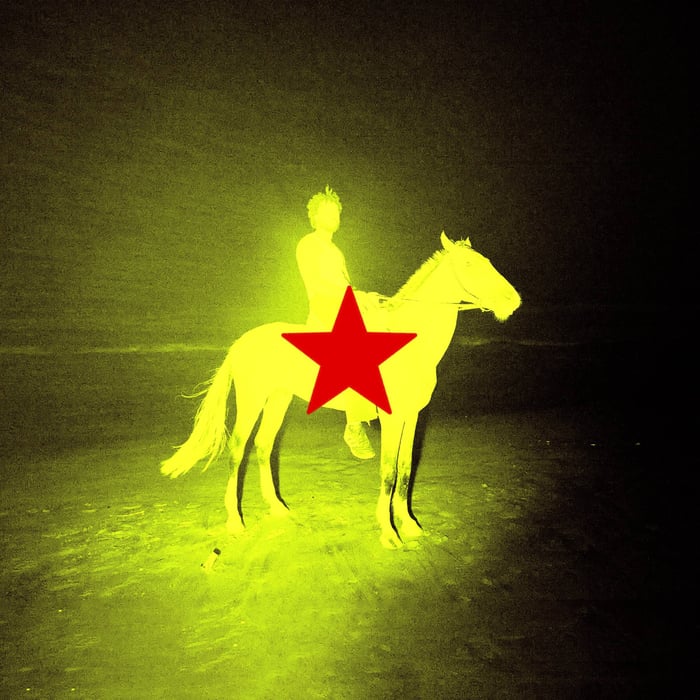
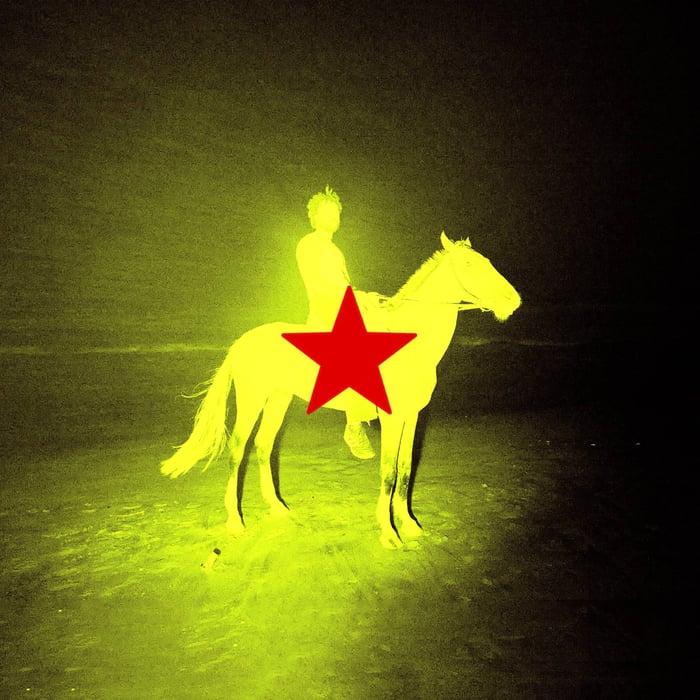
He swings harder. But not in the clean, poster-ready way people expect from “political music.” This Worldwide Scourge era—him stepping into the Redstar Wu alias, framed as “me seeing the world as it is”—sounds like he’s refusing to let success soften the diagnosis. If anything, the album treats success like proof the machine works.
And I’ll admit it: my first impression was that the Redstar Wu thing might be a costume change. On second listen, it feels less like cosplay and more like permission for him to get uglier, louder, and more blunt without having to be “relatable Genesis” every second.
The church isn’t aesthetic—it's an audio weapon
Here’s the detail that matters: this album was built in a converted church in South Wales with producer Dann Hume, jamming ten hours a day for weeks, sleeping in the pews, tracking vocals in the nave, and letting the building’s reverb decide how loud anything could get.
That last part is the giveaway. This isn’t “we recorded in a church because it looks cool on a behind-the-scenes clip.” It’s “the room is now an instrument, and we’re not fighting it.” You can feel the space asserting itself—like the air is pushing back on the drums.
I’m not totally sure if every choice lands, though. Sometimes that big-room bloom makes things feel enormous when the lyric is already doing the heavy lifting. But the ambition is real: the album wants to sound like an argument held inside a sanctuary, where even your anger echoes back at you.
“Pirate Radio” starts swinging immediately—and names names
Before “Pirate Radio” even finishes its first chorus, Elon Musk gets called a weirdo by name. That’s not subtle, and it’s not supposed to be. The move is basically: no warm-up, no throat-clearing, no “let’s set the tone.” Just: here’s the tone, and it’s abrasive on purpose.
That choice matters because it frames the whole record’s intent. Worldwide Scourge isn’t trying to be timeless protest poetry. It’s trying to be current—like it’s annoyed you’re even asking for context. Punk screaming, house-dancing, gospel-praying—sometimes inside the same track—makes more sense when you realize the album is intentionally refusing to pick a single “respectable” mode.
And that’s an arguable call: some listeners will hear that genre-hopping as restless. I hear it as strategic. The chaos is part of the accusation.
The title track puts guilt on the table—then doesn’t let you leave
On “The Worldwide Scourge,” the lyrics don’t just point outward. The song stages a whole chain reaction of modern hypocrisy: a white woman crossing the street out of fear, rappers degrading women in the next bar, BLM shirts stitched in sweatshops, the CIA namechecked beside the halls of the Bastille.
Then he drops the part that actually stings: he asks whether you blame the fearful individual, or the centuries behind her reflex.
“Should I blame her for seeing me and picturing a threat / Or the centuries of whipping that’s keeping women in debt?” — Genesis Owusu
And then—this is the gutsy part—he admits his own solidarity merch was made by exploited labor. Mid-verse confession. No PR spin. That’s not him “being vulnerable.” That’s him pulling the listener into the mess and saying: you don’t get to stay clean just because your politics look good on fabric.
Over Hume’s industrial kick and liturgical organ, it hits like the song is trapping you between a factory line and a cathedral aisle. If this track does anything, it proves the album’s moral engine: rage is easy; self-implication is harder.
“Blessed Are the Meek” is the album’s real moral instruction
If “The Worldwide Scourge” is the diagnosis, “Blessed Are the Meek” is the prescription, and it’s delivered in an unexpectedly stripped setting—bass, rimshot, and gospel harmony. It doesn’t need maximal production because the idea is already sharp: he addresses a shooter and redirects the target.
Not toward “people,” but toward systems: the billionaire toxic food corporation, the magistrate, the candidate blaming foreigners. The argument is almost painfully clear—rage aimed at systems stays alive; rage aimed at the nearest body is wasted.
That’s a position some people will argue with because it’s not emotionally convenient. But the song’s calmness is what makes it persuasive: it isn’t trying to “win” the moment; it’s trying to stop the bleeding.
Dann Hume’s production glues fourteen tracks without making them bland
Having one producer across fourteen tracks can flatten an album into one long mid-tempo shrug. I kept waiting for that problem, honestly—especially because it’s an easy trap.
But Worldwide Scourge dodges monotony with texture and low-end continuity. A church organ opens the title track, then an industrial stomp buries it like a boot coming down. Breakbeats snap under “Stampede.” A neo-soul bass walks through “Hellstar.” “Life Keeps Going” leans into four-on-the-floor, but the kick carries the same low-end weight as the breakbeats, the neo-soul walk, the industrial stomp.
There’s a bass thread stitching the whole thing into one body even as the drum language keeps shape-shifting—programmed to live to programmed again between songs. Compared to Hume’s earlier work with Owusu on Struggler, the church acoustics here feel like they give the bass a long tail—like every note drags a six-second shadow behind it. That’s not “clean.” It’s haunted, and it’s deliberate.
When the album repeats itself, it risks sagging—and that’s the point
“Falling Both Ways” rides a repetitive dance-punk idea, and you can feel the energy start to drop as it goes. I don’t think that’s accidental, but I also won’t pretend it’s thrilling the entire time. This is the mild complaint I can’t shake: the track flirts with the line between hypnotic and stuck.
And when it’s stuck, the lyrical images don’t hit as hard as the sharper swings elsewhere. Compared to the sheer force packed into just one verse of “Pirate Radio,” references like “Slum Socrates” or the Palisades fire don’t land with the same punch. They’re not weak ideas; they just don’t have the same combustion.
Still, even that sag starts to make sense inside the album’s bigger behavior: it’s exhausting on purpose. It doesn’t want to entertain you smoothly while it talks about ugly structures. It wants you to feel the drag.
“Situations” works because it stops pretending calm is the goal
Because of the outbursts across the record, “Situations” becomes strangely tolerable—like your ears have been recalibrated to accept volatility as normal. In the context of the album, its eruptions feel earned rather than random.
That’s a provocative claim, sure. Someone else might say the record is chaotic. I think it’s more specific than that: it’s reactive. It behaves like a mind that can’t ignore what it’s seeing, so the songs keep snapping out of whatever groove they were trying to settle into.
“4Life” counts years like scars, not achievements
“4Life” does this countdown through years—2014, 2018, 2022—like he’s walking past old versions of himself and checking what survived. The vibe isn’t nostalgic. It’s clinical.
Compared to Struggler—which felt “just angry” in a forward-facing way—this album’s exile feels more private. The pace shifts into something watchful: quietly observing friendships decay because success failed in the way success can fail (not by not arriving, but by arriving and changing the room). That’s the kind of detail you don’t write if you’re trying to look heroic.
The political writing isn’t one style—it’s three, and it keeps slipping masks
Most political albums pick a lane: satire, preaching, or reporting. Owusu weaves in and out of all three, and the unsettling part is how seamlessly he changes faces.
“Most Normal American Voter” is him writing in character, and it’s not a flattering character. Multiple vocal tracks argue with each other—Sean Hannity references, fluoride rants—the whole mess of modern talking-point theater. It’s staged like a brain splitting into tabs, each one convinced it’s the main window.
“Death Cult Zombie” takes down a self-described master-race follower with a GED, and then—almost offensively—it detours into a quick Home Alone 2 reference and an “orange man” comment. That tonal pivot is ridiculous, but it also feels accurate to how extremism gets memed into normality.
Then the song yanks the wheel back into seriousness with:
“Still free Palestine, my brother, ‘bout that you won’t catch me stutter.”
It’s a line that refuses to be cute, and it lands because the track already proved it can be unserious. The seriousness arrives like a decision.
The ending finally exhales: “One4All” is relief without pretending it’s solved
“One4All” shows up with Akon in the mix, references Waiting for Godot, and a gospel choir. It even pulls in that “we gon’ be alright” phrase—an echo that feels less like a slogan and more like an exhausted vow.
After the rage of the first twelve tracks, this ending is needed. Not because it wraps things up neatly—it doesn’t—but because it finally gives your nervous system a place to sit down. If the earlier songs are alarms, “One4All” is the moment you realize you’ve been holding your breath for half an hour.
Where I land on it (and what I’d replay first)
I put this album in the “great” bracket, not because it’s flawless, but because it’s doing something riskier than polish: it’s trying to sound like the world it’s criticizing.
My favorite tracks:
- “The Worldwide Scourge”
- “Death Cult Zombie”
- “4Life”
Conclusion
Worldwide Scourge doesn’t want to be your smart friend explaining politics over coffee. It wants to be the room you walk into and immediately realize the air is wrong—too loud, too sacred, too wired. The church reverb turns every kick drum into a footprint, and Owusu keeps stepping forward anyway, even when it means confessing he’s tangled in the same supply chains he’s condemning.
Our verdict: People who like their protest music sweaty, genre-scrambled, and uncomfortably self-incriminating will actually love this album. People who want “messages” delivered cleanly, with tidy choruses and zero tonal whiplash, will tap out fast—and probably complain that it’s “too much,” which is sort of the point.
FAQ
- What is the core idea behind the Redstar Wu alias?
It feels like Owusu using Redstar Wu as permission to stare at the world without softening the edges—less charm, more blunt force. - Does Worldwide Scourge lean more punk, rap, house, or gospel?
It refuses to pick one. The whole provocation is that these styles collide, sometimes inside a single track. - Why does recording in a church matter here?
The reverb and space shape the album’s volume and weight—like the room itself is enforcing a kind of sonic gravity. - Is this album as angry as Struggler?
The anger is still there, but it comes off more private and watchful—less pure eruption, more tallying consequences. - Where should I start if I’m new to this album?
Start with “Pirate Radio” for the immediate punch, then “The Worldwide Scourge” for the thesis, then “One4All” for the exhale.
If you’re the kind of listener who treats album art like part of the argument, you can always shop your favorite album cover poster at our store: https://www.architeg-prints.com.
 | DISCOUNTGET 30% OFF*Use code on your next order:
|
* This post may contain affiliate links, meaning we earn a commission if you make a purchase through these links, at no additional cost to you.