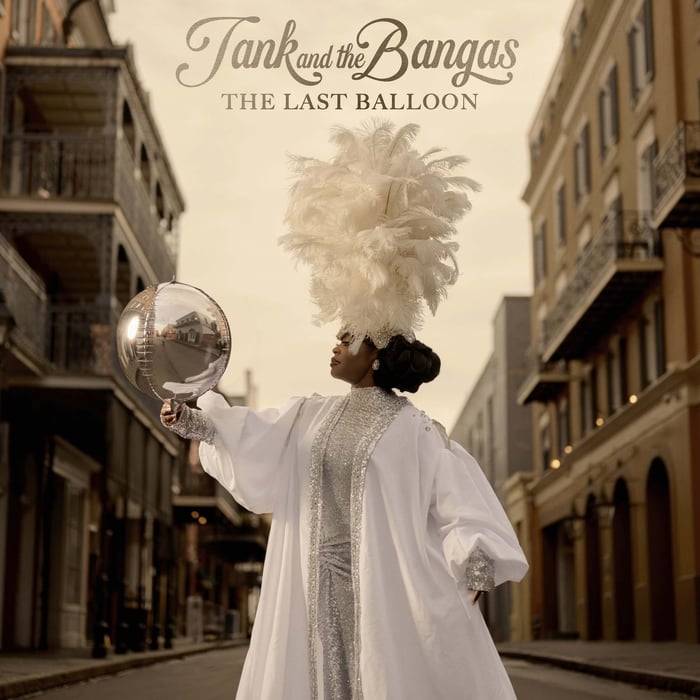
The Last Balloon Review: Tank and the Bangas Start in Church, Fight in Funk


 See more Architeg Prints stories on Google.
Album Review: The Last Balloon by Tank and the Bangas
An in-depth look at how Tank and the Bangas’s The Last Balloon blends liturgy and funk, proving strength through control and quiet power.
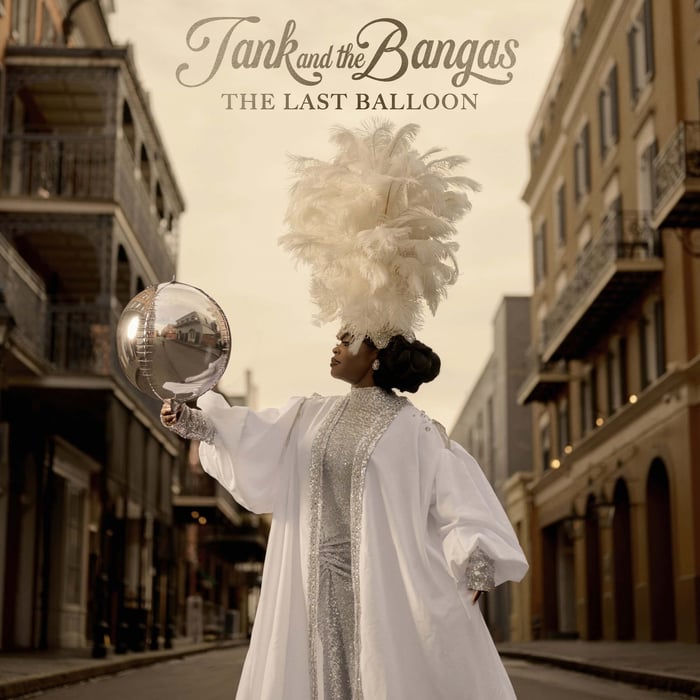
First, it walks in like Sunday service (and that’s the point)
The first thing The Last Balloon does is drag you into a room that smells like old wood and patience. “Rest” opens with a choir stacked in hymnlike harmony—a choir, not a trendy vocal pad pretending to be one. They sing:
“I will give you rest, take my yoke upon you and learn of me,”and it doesn’t feel like an “intro.” It feels like a door shutting behind you.
At first, I thought, okay… we’re doing the big spiritual opener thing, got it, and I braced for the album to lean on vibes as a substitute for songwriting. But then Tarriona “Tank” Ball answers the choir across an electric piano figure—one Norman Spence had apparently been turning over for months—and her entrance isn’t ornamental. It’s a claim. Not a plea, not a performance, not a “watch me sing.” It’s her taking what she was told she deserves, like she’s done asking politely.
And here’s the part that matters: she’s choosing liturgy as the front door. That order—church first, then funk—has been her pattern since the self-released ThinkTank debut back in 2013, and it showed up again on her spoken-word LP The Heart, The Mind, The Soul (the one the Recording Academy honored in a category nobody bothered inventing until she forced their hand). This isn’t accidental tradition. This is her way of saying: I’m not starting where pop culture wants me to start.
A reasonable listener could argue it’s theatrical. I’d argue it’s discipline.
Then it quietly admits the last era was a little too thirsty
The album’s confidence makes more sense when you remember the detour. Green Balloon (2019, through Verve Forecast) had Ball working too hard. You can hear it in the way she used to hover above choruses, louder than the arrangement, like she didn’t trust the song to hold her weight. And yeah, that push translated into visibility—she landed a Best New Artist nomination—but the vibe was weirdly punishing, like the industry handed her a trophy shaped like a chore.
Red Balloon (2022) lowered the temperature. The Last Balloon takes that cooler air and finally breathes like someone who doesn’t need to win the room anymore.
“Don’t Count Yourself Out” is a clean example of that. Ball hands the title chorus to Dawn Richard and mostly stays in the margins, answering between Richard’s lines. It’s the move of a host stepping offstage so the guest can find the light—generous, but also strategic. The kick thumps at mid-tempo, the trade sits right, and Ball doesn’t overpaint it. She lets the song’s confidence come from restraint.
That choice alone is an arguable statement: some people will miss the “big” Tank. I think the smaller, calmer Tank is the one who actually hits.
“Whole World” is where the generosity becomes a flex
There’s a specific kind of strength in letting other singers land before you do. “Whole World” gives Ledisi her own verse first, set over organ and full horns, like the track is building a stage the size of a parade route. Then Ball comes back swinging with the line that tells you what this album thinks it’s doing:
“Okay, bad day, that’s just one in a million, I’ve had twenty billion, I’m done people pleasin’.”
That’s not just a lyric—it’s a thesis statement with teeth. It’s also the moment I stopped thinking of The Last Balloon as a “feature-friendly” record and started hearing it as a control move. Ball isn’t disappearing. She’s proving she can wait.
And waiting, here, reads as power.
If you want to disagree: you could say the horns and organ make it easy, like classic soul always sounds good. But Ball’s timing is what makes it land. Plenty of people can sing over horns. Not everyone can return after Ledisi and still sound like the owner of the room.
“Is It Over?” strips the room down until only the question survives
If “Rest” opens the doors, “Is It Over?” locks them. The mix is basically a piano motif and a kick that lands once per bar—nothing else competing with her voice. It’s credited as an Austin Brown production, and the discipline is almost rude. No glitter, no filler, no “but wait, here comes the hook.” Just space.
The song asks the same question her 2021 poetry collection Vulnerable AF asked in print: whether the next storm will take her. And she sings like she’s already watched the weather change.
Her phrasing slips from whisper into chest-voice high notes across a single verse—an ugly amount of dynamic range by modern pop standards, the kind most mixers would clamp down in five minutes just to keep playlists happy. But here the range stays intact. Even the piano holds two chords longer than commercial taste should allow, like the song refuses to hurry up and “be content.”
The line that prompts everything else is delivered deadpan, steady, decided:
“Now the wall is caving, but I do not need your saving.”
That’s a dangerous sentence to sing without melodrama. And she does it anyway.
I’m not totally sure if this track is meant to sound like solitude or like isolation pretending to be freedom. On first listen, I heard it as empowerment. On second listen, I caught the chill underneath it. Either way, it’s the best vocal she’s ever put on record—because it doesn’t ask for applause.
An arguable claim: this is the album’s real centerpiece, not the loudest moments. Quiet wins here because it’s not begging.
“Move” proves the album can flirt… without losing its backbone
After “Is It Over?” refuses comfort, “Move” swings back with classic-soul confidence. It’s the kind of track that knows exactly what it is—walking bassline, bright horns, and a groove that moves like it’s wearing polished shoes. Lucky Daye shows up and drops a line that’s ridiculous in the best way:
“I’ma water your power flower, give me a chance for thunder showers.”
It’s playful, but it’s not weightless. Ball plays the requester—“Tired of flying, wings don’t take me high enough”—and the whole thing feels like the album briefly allowing itself to want someone. Not need. Want.
Here’s the distinction The Last Balloon keeps drawing:
- the quiet songs want nothing from anyone
- the funk songs want a partner, a witness, a body in the room
Both approaches work. Only one feels risky.
A listener could argue “Move” is the more replayable track. I get it. But replayable isn’t the same as revealing.
“Go Your Own Way” gets cute… and that might be the problem
“Go Your Own Way,” produced by HaSizzle, hits a similar hesitation with bounce production, handclaps, and a calliope shuffle behind the brass. It keeps asking, “What is it that’s holding you back?” like the song is trying to coach you through your own anxiety with a grin.
And it does work—technically. The rhythm moves, the claps push, the brass keeps it bright. But if I’m being honest, this is where the album’s charm starts to feel like a strategy rather than a natural outcome. The track is well-built, but it doesn’t feel like the thing people will remember when they talk about The Last Balloon later.
That’s not a disaster. It’s just the first spot where I felt the album blinking—like it briefly remembered it’s supposed to be “fun,” even though its real strength is bluntness.
You could disagree and call this the necessary release valve. I just think the album’s best moments don’t wink.
“No Invite” is the sound of refusing to be polite
Then the record snaps back into full posture with “No Invite,” co-produced by Josh Green and Austin Brown. The bass stutters in a way that elbows the downbeat off the one, stacked snare hits keep shoving forward, and saxophone bleats refuse to quiet down. The kit pushes the horns. The horns push back. It’s a crowded room where nobody is stepping aside.
Brass arrives at the second break already at Ball’s volume—already up there—and she half-shouts:
“I might start a riot, get that motherfucker started,”while the section surges from below.
That line only lands because she’s been holding back elsewhere. She had to refuse this energy on earlier vocals to make it hit like a match struck at the right time. If she’d been screaming across the whole album, “No Invite” would be just another loud track. Instead it reads like escalation.
Arguable statement: this is the album’s most satisfying act of control—because it’s chaos that’s clearly been scheduled.
“Jealous” feels like a peace offering that still has swagger
“Jealous” does something that could’ve easily turned corny: it hands the lead to Anjelika “Jelly” Joseph. She’s the founding Banga who left in 2022 to front Galactic, and here she’s back—not as a returning member, but as a guest.
She comes in with:
“Welcome to my planet, think I move like Janet,”riding a syncopated funk pocket Norman Spence built with Austin Brown and Tommy Parker. And it plays like a peace offering—warm, a little flashy, and very intentional.
I can’t claim to know the behind-the-scenes emotions, and I won’t pretend I can hear “the truth” in contracts. But I can hear what the track is doing: it’s presenting Jelly as undeniable, not awkwardly reintroduced. The song doesn’t act like she needs to be forgiven. It acts like she never stopped being part of the universe.
You can disagree and call it fan service. I think it’s smarter: it’s the album refusing a narrative of loss.
“Nighttime” drives off alone, and that’s the album’s real ending
“Nighttime” slows the pulse. It’s a Brown and Brian London piece handed to David Shaw, and the whole track feels like wet streets and headlights. Ball’s delivery turns cinematic without trying to prove it—she’s just gone, leather jacket energy, driving off without announcing it.
The lyric that sticks is strange and specific:
“Most of me stirred up like some Kool-Aid, but I’m drinking Alize.”It sits over a Kindred the Family Soul sample, and the atmosphere does what New Orleans humidity does—everything feels closer, louder, stickier.
The Quarter is wet. She’s alone.
And that’s the point I keep coming back to: a decade past ThinkTank, she sounds like she has nothing left to prove and no hurry to stop. Not because she’s coasting—because she’s finally stopped negotiating with the listener.
Arguable statement: “Nighttime” is the album’s boldest emotional move because it doesn’t resolve anything. It just keeps driving.
So what’s actually happening on The Last Balloon?
If you want the clean interpretation: The Last Balloon is Ball choosing control over charisma. Not abandoning charisma—just putting it on a leash.
The sequence matters:
- It opens in church to establish authority, not nostalgia.
- It shares choruses and verses to prove she’s not chasing the room.
- It strips back to almost nothing on “Is It Over?” to show she can stand without arrangement.
- It unleashes “No Invite” only after earning the right to sound that loud.
- It brings Jelly back without melodrama, like maturity is the real flex.
- It ends in “Nighttime” with motion instead of closure.
I kept waiting for a big, obvious “statement track” where everything explodes and the album declares itself. It never really does that. It does something sharper: it makes the listener chase her.
And if that sounds arrogant… yeah. It kind of is. But it’s earned more often than not.
Conclusion
The Last Balloon starts with liturgy, flirts with funk, and keeps slipping into moments where the room drops out and Ball refuses to be rescued. It’s not a record that begs for your attention—it sets a pace and dares you to keep up, even when the loud tracks are clearly not the main event.
Our verdict: People who like R&B and funk that feels chosen, not performed for approval, will actually love The Last Balloon—especially if you can sit still for “Is It Over?” without checking your phone. If you need every song to wink, explode, or spoon-feed you a hook, this album will feel like a confident stranger who doesn’t laugh at your jokes.
FAQ
- What is the core mood of The Last Balloon?
It swings between Sunday-afternoon reverence (“Rest”) and streetlit independence (“Nighttime”), with controlled funk in the middle. - Which track best represents the album’s intent?
“Is It Over?”—because it strips the production down and forces you to listen to the decision in her voice. - Do the features help or distract?
They help, because Ball uses them as proof she doesn’t need to dominate every moment—Dawn Richard and Ledisi get real space. - What’s the most aggressive moment on the album?
“No Invite,” where the stuttering bass, stacked snares, and loud brass let her half-shout a riot into existence. - Is this album more about relationships or selfhood?
Selfhood, mostly. Even when it wants a partner (“Move”), it never sounds dependent.
If this album’s imagery stuck with you—church light, brass glare, wet-night driving—getting an album cover poster is a pretty fitting way to keep that mood on the wall. You can browse prints at our store: https://www.architeg-prints.com/
 | DISCOUNTGET 30% OFF*Use code on your next order:
|
* This post may contain affiliate links, meaning we earn a commission if you make a purchase through these links, at no additional cost to you.