Little Simz Sugar Girl EP Review: Four Tracks, One Big Flex (Mostly)


 See more Architeg Prints stories on Google.
Little Simz Sugar Girl EP Review: Four Tracks, One Big Flex (Mostly)
Little Simz’ Sugar Girl EP keeps switching masks—hard bars, queer softness, Yoruba command. The Sugar Girl EP works best when she stops “proving” it.
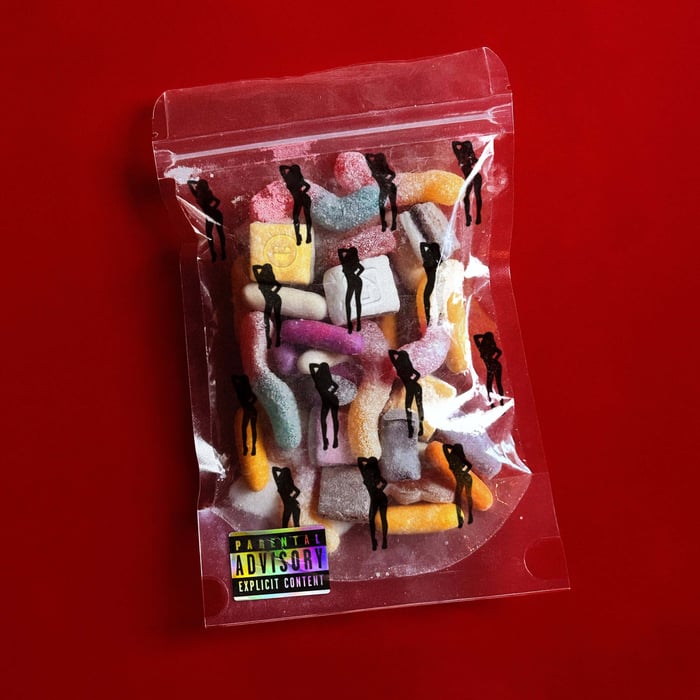
A four-track EP that keeps changing its face
Four songs isn’t much room to build a world—so Sugar Girl doesn’t even try. It behaves more like a personality test Simz is handing you while she watches your eyes. Do you flinch when it gets sharp? Do you lean in when it gets intimate? The whole Sugar Girl EP feels designed to see what you assume she is.
And yeah, it’s her second full pairing with producer Jakwob, and you can hear the comfort in how quickly the tracks lock into their lanes. But comfort is also the risk: sometimes this EP sounds like it knows you already like Little Simz, so it doesn’t always bother to surprise you.
“That’s a No No” Part II: the sharpest moment—and the most familiar one
The real hinge on this EP happens about two-thirds of the way through “That’s a No No,” when the song splits in two and Part II arrives like someone finally decided to stop being polite. The cadence turns into something march-like. The chorus shrinks down to a plain, relentless “Day in, day out.” The verses start talking like orders: lining up troops, sending a “barber boy” running. It’s efficient. It’s mean. It’s the most concentrated dose of the Simz mode where she sounds like she’s pacing a room with the lights off.
It’s also… not exactly new.
Part II runs the EP’s most familiar plays like they’re comfort food:
- designer name-drops (Yohji Yamamoto)
- snake metaphors
- that brain-versus-brain framing (a left brain asking a right brain who the killer is)
- threats that land cleanly but don’t change her vocabulary
The threats hit, sure. Her pen is still her pen. But I kept waiting for the moment where the second half would swerve instead of simply intensify. On first listen, I took the split as a statement—like, here’s the real me. On second listen, it felt more like a technique she already knows works, pulled out again because it’s reliable.
That’s the thing with Simz: she can sound deadly without sounding endangered. Sometimes that’s power. Sometimes it’s posture.
“Game On”: Simz coasts, then JT steals the song with actual writing
“Game On” is lower contrast, but it has the same issue: Simz is playing a familiar character and not really letting the scene push back. The chorus repeats, then slides into a YSL-and-Silhouette name-check—quick flash of luxury vocabulary—before her second verse pops in almost shorter than the hook itself:
Can a bitch get an Ayy? /
New crib, new car, new bae /
Can’t give you my time or space.
It’s punchy, but it’s also thin—like she’s sketching an attitude rather than saying anything that costs her. This is where I’ll admit I’m not totally sure what Simz wants the listener to do with that moment. Is it supposed to be satire? Is it just flexing? Is it a quick palette cleanser before the features start doing heavier lifting? I can’t fully tell, and the track doesn’t clarify.
Then JT shows up and changes the temperature.
She opens with “Sexy black girl and I’m it,” struts for a few bars, and then drops the only sustained chunk of writing in the whole song—the part where the track stops being a vibe and starts being about something:
Catwalk this pain, high fashion /
Life hard but my ass still assin’ / …
Do Black lives still matter to these brands?
Eight lines that hold queerness, brand politics, and even a recruitment metaphor at the same time. It’s not just clever; it’s compact. It’s the kind of verse that makes you rewind—not because it’s dense for density’s sake, but because it’s balancing multiple pressures without sounding like homework.
Hot take that a reasonable Simz fan might hate: JT doesn’t just feature here—she exposes the difference between posing and writing. Simz sets the runway. JT actually walks it like the floor might collapse.
“Telephone”: a queer love song that’s more honest than it is catchy
“Telephone” is the queer love song, and it’s direct in a way Simz doesn’t always allow herself to be when she’s in commander mode. Her verse is written like someone who’s already decided the answer but still needs to say it out loud:
It was me you were made for /
You got it, everything paid for.
There’s a firmness to that. Not pleading. Not coy. More like a contract signed in eyeliner.
The chorus, though, comes off lighter—almost like a sketch of a hook rather than a hook that punches you in the chest:
You wanna talk dirty, you wanna kiki? /
Get what you wish for, I’ll be the genie.
It’s cute. It’s functional. It’s also the part where the song briefly loses me, because the flirtiness flattens the emotional stakes her verse just set up. If you’re going to write a love song that sounds like a decision, don’t follow it with a chorus that sounds like a caption.
What saves “Telephone” is the post-chorus—because it sneaks the workaholic apology into the seduction:
I was workin’ till late, shorty.
That line does more than the “genie” bit because it admits an actual flaw. It makes the romance feel lived-in, not staged. It’s not “I’m perfect, come here.” It’s “I know I disappear, and I’m trying to stay.”
And then 070 Shake takes the bridge. Instead of fighting Simz for space, she drops into a different mode underneath her—half-spoken, airy, like she’s narrating from a moving car. It’s the bit about heaven, highways, rainfall—imagery that widens the song for a stretch. The track suddenly has depth without needing to announce it.
What surprised me is how unguarded that section feels. Simz has had moments of openness across her albums, but “Telephone” lets someone else open the window and change the air. And it works because Simz doesn’t rush to reclaim the center.
“Open Arms”: DEELA drags the EP into its real emotional key
If there’s a track that actually moves the Sugar Girl EP—like, shifts it from “good songs” into “something with weight”—it’s “Open Arms.”
DEELA opens with a refrain mixing English and Yoruba:
You don’t ask, you don’t get /
Ẹ má worry, no stress /
Don’t cry, don’t beg /
I might forgive, but I no forget.
That last line lands like a principle, not a lyric. No theatrics. Just a boundary.
Then DEELA’s interlude hits: one Yoruba command repeated five times—“Ó yá, dìde, dìde, dìde”—a get-up-and-rise. Repetition can be lazy in the wrong hands. Here, it feels like insistence. Like someone clapping in your face because you’re stalling.
When DEELA switches fully into Yoruba sentences, the chorus does real work line by line:
- “Orí ẹ ti lọ” (your head has gone, you’ve lost your mind)
- “àbí you dey craze?” (are you crazy?)
- “Pay me my respect.”
That’s not decoration. That’s authority. The song isn’t using language as flavor; it’s using language as a power source.
Simz’s role here is different. She contributes mostly through pitch-shifted melodic vocals and a pre-chorus that reaches for the same conversational mode, without quite landing as naturally:
Please just remember that I’m just a baby girl /
Stay sharper than a thorn, don’t play with anyone /
Me self, I’m coming, so just dey your dey.
It’s not that Simz is bad on the track. It’s that DEELA’s presence changes what “good” even means inside this song. Simz—who’s spoken about Yoruba heritage across her career but hasn’t put it this far up in the mix—sounds more engaged inside DEELA’s lead than alone in her own spotlight. When she pitches her voice up, it’s like she’s choosing to meet the song in the language it’s actually speaking, not forcing it to translate itself for her.
And that choice matters. Another arguable take: “Open Arms” is the only moment on this EP where Simz sounds like she’s being pulled forward rather than pushing outward. It’s the difference between commanding the room and letting the room change you.
So what is Sugar Girl actually doing?
This is where the EP gets slightly sneaky. The four tracks feel like four ways of testing intimacy:
- Intimidation intimacy (“That’s a No No” Part II): closeness through threat, posture, control.
- Status intimacy (“Game On”): closeness through image—until JT forces a real question.
- Romantic intimacy (“Telephone”): closeness through confession, softened by humor and friction.
- Cultural intimacy (“Open Arms”): closeness through language, command, and earned respect.
I thought the EP was just going to be a clean little feature-driven flex. But by the end, “Open Arms” makes the earlier tracks feel like they’re circling something they can’t quite say. Like Simz knows exactly how to sound hard, but she’s more interesting when she lets the hardness crack and something specific spills out.
Does it all land? Not completely. The EP’s most aggressive writing is also its most familiar. The catchiest chorus isn’t always the most meaningful. And sometimes Simz seems content to signal depth rather than risk it.
But when it hits—when the language, the features, and the emotional intent align—it stops sounding like an EP and starts sounding like a pressure point.
Favorite Track(s)
- “Game On”
- “Open Arms”
- “Telephone”
Conclusion
Sugar Girl works best when Simz stops trying to be the sharpest object in the room and lets other voices—and other languages—set the rules. The EP’s center of gravity isn’t the hardest bars; it’s the moments where control slips and something human shows through.
Our verdict: People who like Little Simz most when she’s experimenting with vulnerability (and letting collaborators actually change the track) will replay this EP. If you only want the “don’t test me” version of Simz—and you want it to sound brand-new every time—you’ll probably shrug and go back to the older, hungrier cuts.
FAQ
- Is the Sugar Girl EP more about rapping or singing?
It tilts toward rapping and attitude-driven delivery, but “Telephone” and “Open Arms” lean into melodic choices and vocal texture. - Which track feels most emotionally real?
“Open Arms,” because DEELA’s Yoruba-led structure forces the song into something earned, not just performed. - Does “Game On” feel like a showcase for the feature?
Yes—JT’s verse is the part with the most layered writing, and it reframes the whole track. - Is “Telephone” a straightforward love song?
It’s direct, but it undercuts itself with a lighter chorus; the post-chorus and 070 Shake’s bridge give it the real depth. - What’s the most “classic Simz” moment here?
The second half of “That’s a No No,” where she goes militant and clipped—effective, even if it’s also the most familiar.
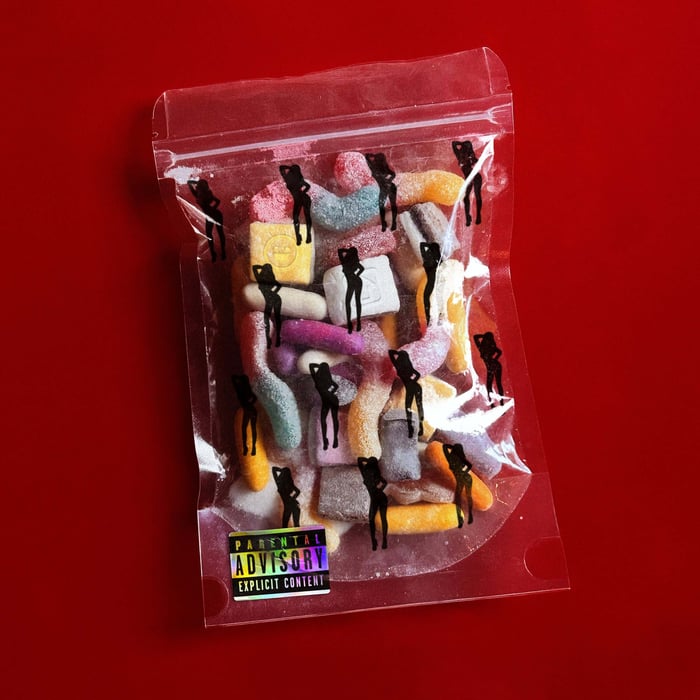
If you’re the type who treats cover art like part of the music’s personality, you can shop a favorite album cover poster at our store—quietly, tastefully—over at https://www.architeg-prints.com.
 | DISCOUNTGET 30% OFF*Use code on your next order:
|
* This post may contain affiliate links, meaning we earn a commission if you make a purchase through these links, at no additional cost to you.