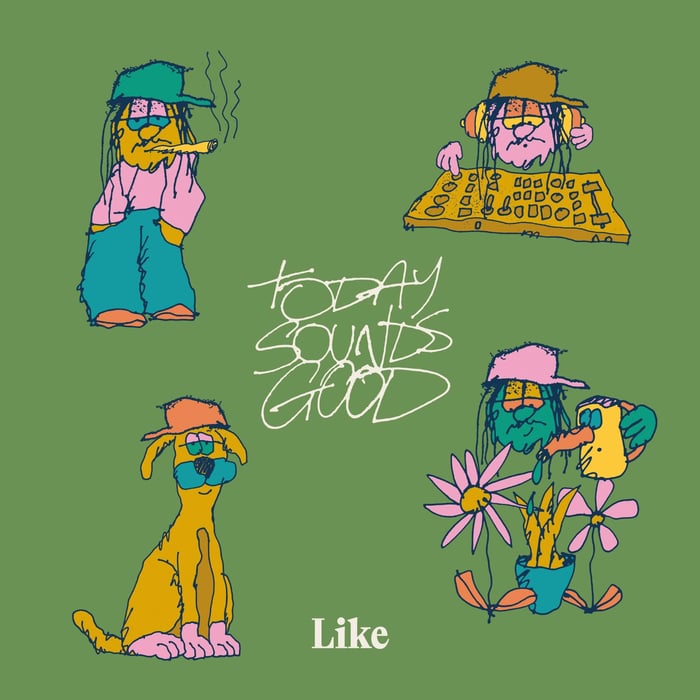
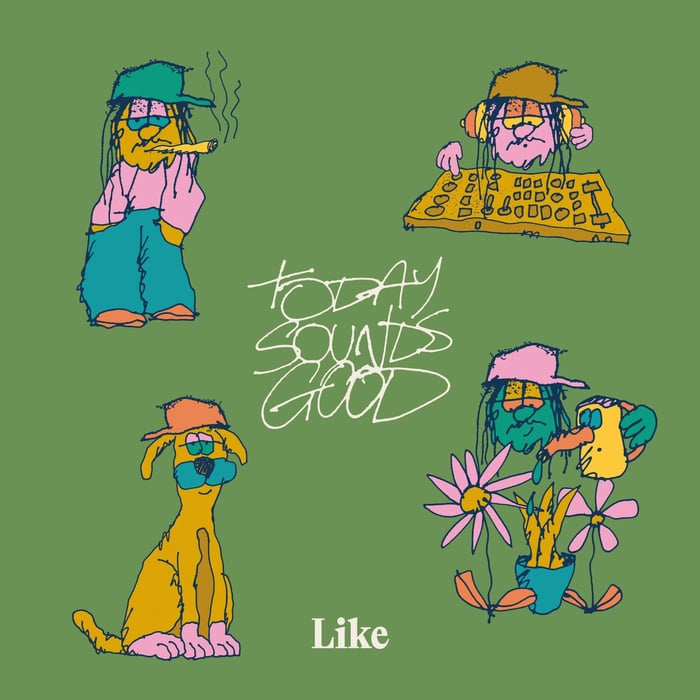
Today Sounds Good Review: Like’s “Today Sounds” Hosts the Party—Awkwardly


 See more Architeg Prints stories on Google.
Today Sounds Good Review: Like’s “Today Sounds” Hosts the Party—Awkwardly
Like’s Today Sounds plays like a rapper dodging the spotlight on purpose—until the guests start outshining him and the whole point gets uncomfortably clear.
A record that greets you politely… then refuses to make eye contact
The first thing Today Sounds makes obvious is that Like doesn’t want to stand dead-center and pose. He wants to host. And yeah, that sounds like a compliment—until you realize hosting can also be a way to avoid getting judged.
This album lands as a twelve-song set on Squatch Records, mostly self-produced—ten tracks carried by Like’s own beats—with three outside producers stepping in to patch the rest. The guest list isn’t subtle either: Phonte shows up twice, and “wut happened” turns into a small reunion moment with Blu and Exile back in the same room, plus Huey Briss riding along.
And here’s the real move: Like chooses “curator energy” over “main character energy.” That choice is the album’s central decision. It’s also, weirdly, the part that wobbles the most. Sometimes it fits him like a tailored jacket. Sometimes it feels like he left his own name tag at home.
He’s selling contentment, but the writing keeps showing the receipt
This record acts content. But it doesn’t actually sound carefree. It sounds like someone performing peace while quietly checking their pulse.
On “Washed Gang,” the concept is basically middle-aged domestic comedy—except it’s doing more than cracking dad jokes. Phonte is in there playing Reasonable Doubt “at a reasonable volume,” while Like stacks everyday flexes: Birkenstocks-with-socks, pasta made out of squash, shoulder pain—little lived-in details meant to signal, “I’m not trying to be young in the club anymore.”
The funny part works. I laughed.
But I also kept waiting for the writing to sharpen the knife. The premise boxes itself in: as if the only options are young-at-the-club or old-at-home. That’s a small, cramped argument for a rapper who clearly knows how to draw bigger lines. And honestly, without Phonte there, the whole thing would risk turning into a checklist with punchlines instead of a real stance. Phonte isn’t seasoning—he’s structural support.
That’s where the album starts revealing its habit: Like sets the table, then lets someone else bring the real meal.
“Build Me Up” aims for “specific,” lands on “brand”
The album’s softest writing shows up on “Build Me Up,” and not in a charming way. It’s the kind of song that tries to sound grounded and mindful, but ends up reading like the back of a wellness store receipt.
The details are sharp—oregano oil drops in spring water, glass bottles over plastic, “food over pharma,” avoiding “low-vibrational frequencies.” There’s nothing blurry about the imagery. The problem is that it doesn’t become a person. It becomes a lifestyle ad.
I don’t even think the issue is that it’s “healthy” or “grown”—those are fine subjects. The issue is that the woman in the lyric never escapes product placement. She doesn’t feel like someone you know; she feels like someone who’s about to offer you a discount code.
Meanwhile, Jansport J lays down a soul-heavy sample that reaches for something warmer and more human than what the lyric gives it. The beat sounds like it wants a story. The writing brings a mood board.
If this album is about choosing distance and boundaries, “Build Me Up” is the one place where the boundary feels like a wall—and not an interesting one.
“Dog Park” is the album’s real thesis, and it knows it
After that, “Dog Park” comes in wearing expensive fabric just to prove it can take it off.
The scene opens like some Met Gala side-room: cashmere cardigan energy, with Mims and B Young nearby. But then the verse pivots—palo santo smoke, chakras getting balanced, craving Red Lobster like it’s forbidden fruit, watching mobster movies at home. There’s even a “charge-it-to-the-game” posture that, on any other track here, might read as bragging. On “Dog Park,” it lands as simple fact: this is the kind of room he could be in.
Then the second verse yanks you out of the gala entirely—flea market, studio, weed in the air, laughing at corny jokers, and a line that snaps the whole social performance in half: how do you preach Garvey and move like Steve Harvey?
And right when you expect the track to climax into some grand “I’m above it all” mic drop, his phone buzzes before stage. The offer sounds sketchy. He stays where he is.
That’s the whole point. The dog park—public, ordinary, unglamorous—gets chosen over the party. The song isn’t pretending that choice is painless, either. It shows what distance buys him and what it costs him. He chooses distance anyway.
This is where I’ll risk a claim people might hate: “Dog Park” is more honest than the album’s title. It’s not “today sounds good.” It’s “today sounds tolerable if I control the room.”
Awkward, alive, complete.
When the beat hits hardest, Like fades—and the album tells on itself
“wut happened” has Like’s heaviest low-end on the record, the kind of beat that should force the rapper into a sharper silhouette. Instead, the first verse (Stevenson) comes off oddly anonymous—like he’s present, but not fully inhabiting the track.
It’s the dullest of the three verses here, which is wild considering the hook-question is so big: “We the last MCs really rappin’, what happened?” That line is basically begging for either anger or clarity.
Blu finally answers it about three minutes in, and he doesn’t even overcomplicate it. He just drops the real tension: being cold, knowing it, and trying to be righteous anyway. That’s a human contradiction with actual heat.
Huey Briss takes the third minute and, to me, wins it—his presence feels like the track suddenly wakes up and realizes it’s being recorded.
The imbalance matters. This is where the “host not headliner” approach stops feeling like a cute concept and starts feeling like self-erasure. Like built the room, then disappeared inside it. Maybe that’s intentional. Maybe that’s the thesis. I’m not fully sure. But I do know it leaves the center of the song weirdly vacant.
“Intention” is where the album stops posturing and starts thinking
“Intention” flips the tone: serious mode, sharper writing, no hiding behind vibes.
Over Jacob Rochester’s beat, Stevenson opens with a line that actually sounds written, not just said—an “ode to the ones with soul beneath the rubble road.” The sentences here have shape. He’s trying to land ideas, not just scenes.
Then BeYoung shows up and out-thinks him. I remembered early Pac Div stuff where BeYoung felt underused, like the clever kid politely waiting his turn. Here, he doesn’t wait. He takes the record’s central thought and says it clean:
“I’d rather chop it up with myself, a free therapy session, bet I come up with help.” — BeYoung
That’s the line that makes the album’s “distance” theme feel less like avoidance and more like survival.
And then he tightens the screws with a question that actually has stakes—what is money worth if you’re spiraling anyway? The phrasing gets graphic, uncomfortable, and suddenly the album isn’t a lifestyle anymore. It’s a reckoning.
If you want the strongest case Today Sounds can make for itself, it’s these two verses. They don’t just sound good; they sound like someone risking a real thought in public.
The “Namsayin’” interlude: the moment he finally talks like the boss
The most effective move on the whole record might be the simplest: a monologue.
Between Like’s verse and Sir Michael Rocks’ part on the “Namsayin’” interlude, Like basically steps off the stage. The instrumental thins out behind him, and he walks you through what he actually believes about showing up—about being present, about refusing rooms he can afford to enter but doesn’t want to.
It’s the plainest stance on the album, in his own voice, without the safety net of a guest stealing the scene. And because of that, it feels like the album finally stops “curating” and starts confessing.
Over the sharp rhythmic pocket of Like’s beat, the decision to stay home becomes the flex. Not the depressing kind. The deliberate kind.
I’ll admit something: at first, I thought this “host energy” would just make the album feel scattered, like a playlist with good taste but no spine. On second listen, that scattering starts to feel like the point—he’s staging a series of rooms, then explaining why he doesn’t want to live in most of them. Still, I can’t pretend it always lands cleanly. Sometimes the hosting looks a little too much like hiding.
Conclusion: Like’s “Today Sounds” is a distance album pretending to be cozy
Today Sounds keeps setting up comfort—grown humor, wellness talk, stylish scenes—then quietly undercutting it with skepticism and retreat. The best tracks don’t romanticize that retreat; they show it as a trade: fewer people, fewer risks, fewer lies, but also fewer sparks.
The album works most when Like’s choices feel deliberate rather than defensive—when “distance” reads like clarity, not absence.
Our verdict: People who like rap records that sound like social exhaustion with good bass will actually like this album—especially if you’ve ever left a party early and felt proud about it. If you want a headliner who demands the spotlight and dominates every track, this will frustrate you. Like keeps handing the mic to the guests, then acting surprised when they start running the room.
FAQ
- Is Today Sounds more about lyrics or production?
It’s built like a producer-rapper project first: ten self-produced tracks and a clear hosting instinct. But the best moments come when the writing turns inward (“Intention,” “Dog Park”). - Does the guest list help or hurt the album?
Both. Phonte elevates the comedy and framing, and the “wut happened” lineup creates a real event—but the guests sometimes expose how often Like chooses not to dominate his own record. - What’s the clearest “theme” while listening?
Distance. Not mysterious distance—practical, chosen distance. The songs keep circling who he avoids, what he refuses, and what that costs. - Which track makes the album click fastest?
“Dog Park.” It lays out the social argument in plain scenes and doesn’t try to smooth over the awkward parts. - What’s the biggest weakness without nitpicking?
When the writing slips into “identity as shopping list,” like on “Build Me Up,” where specificity turns into branding instead of character.
If you want something physical to match this album’s “stay-home-but-still-have-taste” energy, a clean album-cover poster on your wall makes more sense than another candle. You can shop favorites at our store: https://www.architeg-prints.com/
 | DISCOUNTGET 30% OFF*Use code on your next order:
|
* This post may contain affiliate links, meaning we earn a commission if you make a purchase through these links, at no additional cost to you.