Planet Frog Review: Action Bronson’s Weirdest Flex Is Also Its Problem


 See more Architeg Prints stories on Google.
Planet Frog Review: Action Bronson’s Weirdest Flex Is Also Its Problem
Planet Frog turns Action Bronson into a drumless magician—until the tricks start repeating and you notice what he’s dodging.
First, the album yanks the drums out from under you
The first thing Planet Frog does is dare you to keep nodding your head without giving you a proper drum track to lean on. Most of this album has no drums—or they’re so faint they feel like a rumor: a snare that drifts in every few bars, a closed hi-hat ticking way off in the periphery like it’s trying not to bother anyone. That choice isn’t an accident; it’s the whole power play. It turns the beats into rooms instead of roads.
What surprised me is how consistent the sound stays even when the producers change. Between Daringer’s loops and Harry Fraud’s sax-and-piano setups, everything keeps arriving at the same destination from different directions: a handful of sounds and one voice planted right in the center. Bronson co-produced nearly every track, and you can hear him nudging the entire album into one narrow register. Daringer shows up with that blank, economical thing he does—five tracks of it—and Fraud, who usually builds bigger, gets pulled down into the same tight frame. Even the noisier cuts from Kenny Beats and Human Growth Hormone don’t pile on clutter. Nothing feels overdubbed just because there was space to fill.
That’s an arguable choice, sure, but I’m saying it plainly: the restraint is the point, and it mostly works. It’s like Bronson wanted the production to stop “performing” and start hovering.
Then Bronson starts speed-running his own vocabulary
Bronson has always stuffed his raps with proper nouns, and I used to treat that like the fun part—the way you’d catch a Queens intersection here, a named restaurant there, and feel like you’d been dropped into an actual place. On Planet Frog, the nouns don’t land; they ricochet.
You’ll get wrestler names, vintage car models, NBA players, and cities across four continents stacked into a single line—then erased by the next line before your brain can even pin an image to the wall. One second he’s in a Lancia, then he’s alone in an M3, then suddenly he’s trailing John Rambo through Myanmar, and an M16 turns somebody into a Cinnabon. It’s dense—maybe the densest anyone’s running right now—but here the density stops being texture and starts being a smokescreen.
At first I thought that speed was the upgrade, like he’d turned his brain into a slot machine and the payout was pure motion. But an hour later, I honestly couldn’t tell you a bar that survived intact in my memory. That’s not because nothing is said—it’s because everything is replaced too fast to matter. Maybe it’s not “too many images” so much as “too little time.” The speed is the selling point and the problem at the same time, which is a very Bronson way to sabotage himself.
And I’m not totally sure if that’s intentional or just habit calcifying. Either way, it changes how the album hits: you stop listening for lines and start listening for velocity.
The recurring motif is… hiding bodies in food (and it’s weirdly the best idea)
Here’s the part where Planet Frog accidentally reveals its only real through-line: Bronson keeps hiding a body inside something you eat. On “Olympic Vince Carter,” it’s a calzone. On “Condor,” it’s pizza. Then “Mutations” does it again—this time inside a bacon, egg, and cheese while he’s on the road.
Barely a word changes. The structure repeats like it’s muscle memory, and it even shows up across tracks handled by different producers, which tells me Bronson wanted it to feel like a signature stamp, not a one-off gag. And honestly? It’s the only recurring idea on the album that feels worth anything.
Not because it’s shocking—Bronson’s always had threats—but because the construction is clean. Food absorbs the body. The kitchen becomes the crime scene without him pausing to explain any connection. He delivers it level, like he’s been saying it for years, which makes it feel creepier and funnier at the same time. It’s a better metaphor than most of the globe-trotting noun confetti because it sticks. You can picture it. You can taste it. Unfortunately, it also exposes how little else sticks.
Arguable take: if Planet Frog has a concept, it’s not the amphibian sci-fi dressing—it’s Bronson using comfort (food) as the container for violence, then acting like that’s normal.
Guest features: the album finally makes contact with reality (once)
This record gets more interesting whenever another rapper refuses to play by Bronson’s exact rules.
On “Peppers,” Roc Marciano shows up over a drumless Daringer loop and doesn’t adjust one inch. He and Bronson stack brand names and threats on a single beat, but Marciano runs colder. He calls himself “New York Christopher Walken,” then flicks through references—British Walkers, Walkmans—before anyone else can breathe. Bronson has a great moment too, talking about his ancestors in a 911, shifting manually, left-handed or right-handed. But Marciano steals the song because his nouns feel heavier. They don’t just flash; they carry history, like each reference has fingerprints on it.
Then “Triceratops” flips the vibe again. Paul Wall rides through psilocybin and Gandalf pipes with that Texas ease—casual, unhurried, like he’s leaning on a car door telling you a story. Lil Yachty opens with Rent-A-Center furniture inside mansions, then—without even giving you a warning—he gets to his cousin’s death mid-verse. Barely a pause. The ace gets poured and the verse keeps moving.
That’s one of the only moments on Planet Frog where the music touches something outside the game. In an album full of images that evaporate on contact, grief doesn’t evaporate. You can disagree with me, but I think that single shift makes the rest of the album look a little more like performance—like Bronson is actively choosing not to let anything real sit in the room.
And then there’s “Mandem” with Meyhem Lauren. He mirrors Bronson almost too faithfully; instead of pushing Bronson somewhere new, it sounds like two guys finishing each other’s sentences. Still, the comfort between them feels honest, like they’ve been trading verses since the early mixtape days and never had to explain the tone to each other.
“Simone” is the best track here—and it kind of hurts the album
The only song on Planet Frog that couldn’t exist on any other Bronson album is also the one that does the most damage to this one. That’s not me being dramatic; it’s structural. “Simone” opens with Clovis Ochin speaking in French: climbing a mountain bare-handed, killing demons at the summit, pressing grapes, watching gray hairs turn into grace. It’s ritualistic. It’s calm. It sounds like the album is finally about something other than showing off.
Then Bronson enters, and the references fall away like he got tired of carrying them. Pain messes with his sleep. Gray hairs mark his face. He talks about breaking a cycle with the woman he loves. It’s direct enough that it makes the rest of the record feel like avoidance.
Because once “Simone” happens, you can’t un-hear what the proper-noun cascade was doing earlier: it was keeping emotion at arm’s length by swapping the scenery every half-second. Whatever he’s protecting himself from—whatever he’s trying to, anyway—“Simone” names it without naming it. It’s vulnerable in a way the rest of the album refuses to be.
And that’s the problem: it makes everything around it worse by comparison. A reasonable listener could argue “Simone” adds depth, and that’s good. I’m saying it exposes how thin the other tracks are by choice. It’s like Bronson finally opened a door, and you realize the hallway you’ve been walking through is mostly wallpaper.
For a short album, it drags—and the concept doesn’t cash out
An album this short shouldn’t drag like this, but it does. “Condor” and “Olympic Vince Carter” run at matching tempos over similar production, and Bronson’s reference-cycling hits the same speed in both. That’s where the drumless minimalism stops feeling like discipline and starts feeling like the same room, rearranged.
“My Blue Heaven” is 90 seconds long with a pleasant bassline. He mentions lahmacun once, and then it ends. That’s basically the whole song: a nice little glide, a food name, lights out. It’s not offensive, it’s just… there. And on a record that’s already running lean, “there” is not enough.
Also: the Planet Frog concept itself—the interdimensional amphibious creatures, the spoken-word intros—doesn’t go anywhere the music follows. It’s like set dressing that never turns into a scene. I kept waiting for the album to do something with that framing besides introduce it, wink, and move on. Even at around half an hour, you can feel the filler show up, which is kind of impressive in the worst way. Minimalism only feels sharp when each piece is necessary. Here, a few tracks feel optional.
That’s my mild criticism, and I don’t think it’s nitpicking: repetition is fine, but unearned repetition turns the whole record into background music for its own idea.
“Mutations” is what the album needed more of
What the album needed was “Mutations,” because it actually feels like Bronson’s imagination is doing something besides sprinting. He’s got drugs stored in his spinal cord. Bodies covered with limes and salts. A quarter million on St. Johns. Deacon Jones highlight reels playing while he’s alone blowing trees. A thousand horses running through the village until he’s home.
Those images still move fast, but they land harder. They don’t cancel each other; they stack. “Mutations” sounds like the version of Planet Frog where the surrealism isn’t just a trick of speed—it’s a mood you can sit inside.
And to be fair, I didn’t clock “Mutations” as the centerpiece on the first pass. I thought it was just another barrage. On second listen, it’s obvious: this is the track where the album’s minimalism and Bronson’s excess actually agree with each other instead of wrestling.
The tracks that stuck (and why they stuck)
I’m not going to pretend every moment slides off me. A few cuts actually hold their shape after the listen, and it’s not random.
- “VHS” sticks because the album’s stripped-down approach feels purposeful, like the beat is letting Bronson’s voice do the framing.
- “Peppers” sticks because Roc Marciano walks in and changes the temperature of the whole room.
- “Mutations” sticks because it’s the one time the imagery feels like a world, not a feed.
Arguable take: if your favorite Planet Frog tracks aren’t the ones where Bronson is challenged or slightly slowed down, you’re probably listening to him like a playlist character—not like a writer.
Conclusion
Planet Frog wins on sound design discipline—drums pulled back, no wasted overdubs, one consistent palette—and then loses points by using that discipline to hide how often the writing swaps meaning for motion. “Simone” proves Bronson can still cut through the fog; “Mutations” proves the surrealism can actually stick. The rest is a stylish blur that occasionally feels like it’s trying not to feel too much.
Our verdict: This album will actually hit if you love drumless rap atmospheres, brand-name karate, and Bronson treating vulnerability like it’s contraband until one track slips. You’ll hate it if you need songs to develop instead of looping, or if you want the “Planet Frog” concept to do anything beyond wearing a cool costume.
FAQ
- Is Planet Frog a drumless rap album?
Mostly, yes—either no drums or drums so faint they feel like background flicker. - Does Action Bronson change his writing style here?
He pushes his proper-noun speed even further, to the point where images erase each other fast. - Which song feels the most personal?
“Simone,” where the references fall away and he gets unusually direct about pain, aging, and love. - Do the guest features matter?
Yep—Roc Marciano, Paul Wall, and Lil Yachty each pull the album into sharper focus in different ways. - What are the standout tracks?
“VHS,” “Peppers,” and “Mutations,” because they either sharpen the mood or finally make the imagery stick.
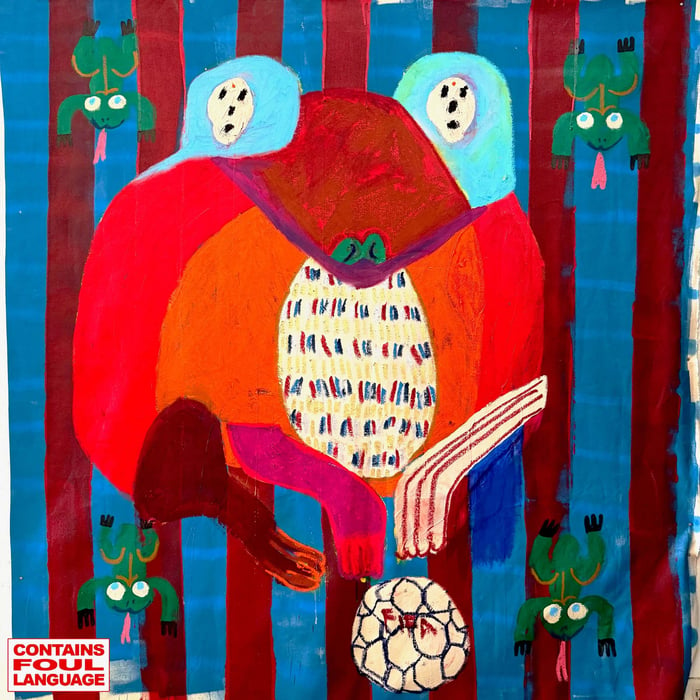
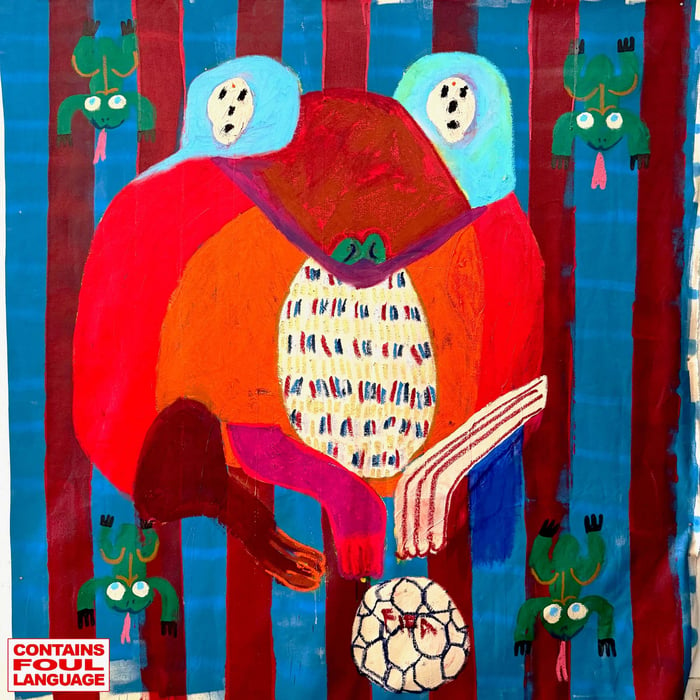
If you want to keep the vibe on your wall—especially with an album cover this bold—you can shop poster prints at our store: https://www.architeg-prints.com.
 | DISCOUNTGET 30% OFF*Use code on your next order:
|
* This post may contain affiliate links, meaning we earn a commission if you make a purchase through these links, at no additional cost to you.