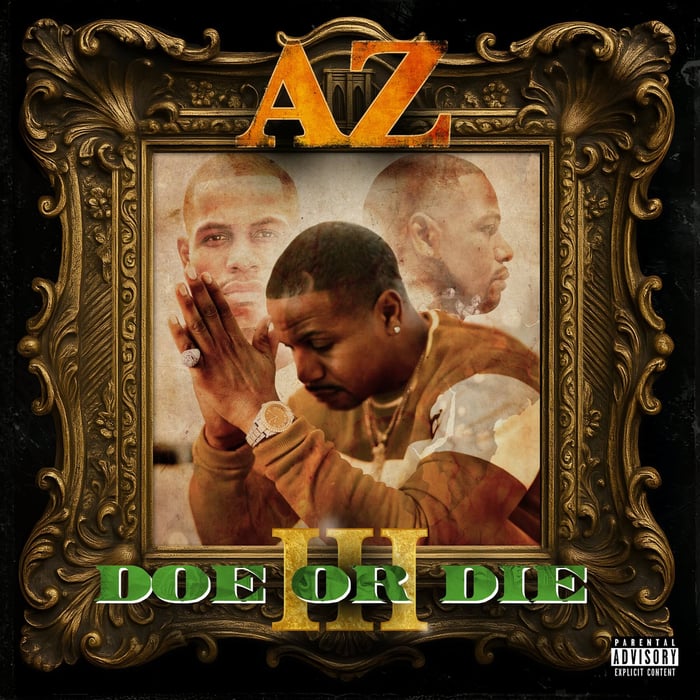
Doe or Die III Review: AZ Still Raps Like Time Owes Him Rent


 See more Architeg Prints stories on Google.
Doe or Die III Review: AZ Still Raps Like Time Owes Him Rent
Doe or Die III is AZ’s luxury-rap ledger where designer details get four bars and death gets half—on purpose, and it’s unsettling in the best way.
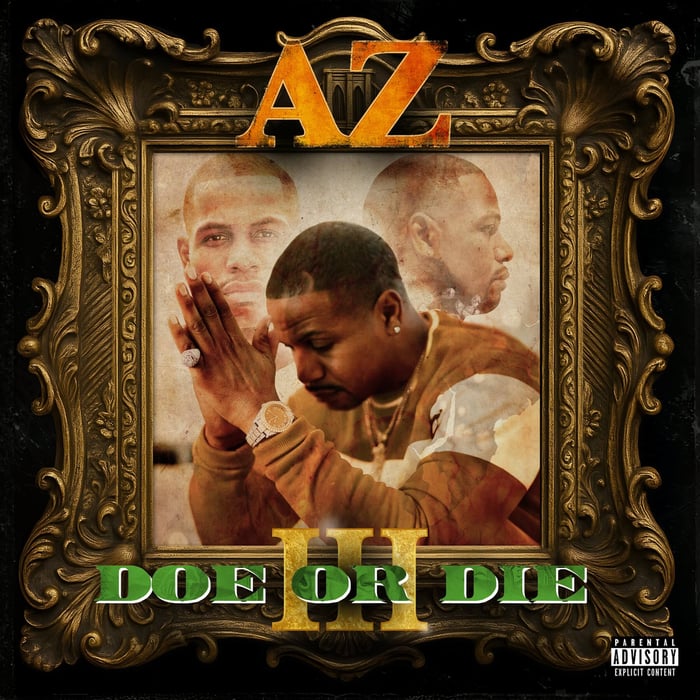
A quick warning: this album doesn’t “process” anything
AZ opens this record like he’s tallying a life, not telling a story—and he’s way more interested in the texture of a Polo knit than the moral weight of a murder. If that sounds cold, good. That’s the point.
The ratio is the message: luxury in HD, death in shorthand
There’s a moment that basically explains Doe or Die III’s whole posture. AZ talks about a man coming home from a bid, and what he wants is painfully specific: Fear God sneakers, a Polo knit, a Yankees fitted, Bvlgari cologne. That outfit gets four bars on “Uniqueness.” Then, two bars later, the murder shows up like a footnote—barely half a bar’s worth of space.
That’s the ratio this album runs on: the luxury is in full resolution, the dead arrive compressed.
And AZ doesn’t sound conflicted about it. He sounds practiced. Like he’s been doing this so long the shock has worn off, but the details haven’t. His delivery stays in that same nasal Brooklyn monotone whether he’s talking Pyrex, project buildings, dead friends, or McLarens. Same pitch, same weight—like he’s refusing to tell you which parts you’re allowed to treat as “bigger.”
A reasonable listener could argue this is emotional avoidance. I’d argue it’s emotional accuracy: most people don’t deliver tragedy with a violin swell in real life. They mention it, then keep walking.
This is an eleventh album flex, not a comeback speech
Doe or Die III is AZ’s eleventh album across thirty years, and the thing that hits hardest is how little he cares whether you’ve been paying attention. He’s been releasing records through label changes, through indifference, through entire eras where nobody really checked for him. By 2026, he’s still here, still naming the same objects and consequences—only now the words are older and the list of dead is longer.
What surprised me is that the album doesn’t come off nostalgic. It’s not trying to recreate 1995 like a museum display. It’s more like: this is what the same life looks like when you’ve been alive long enough to see the pattern repeat. Over and over.
And the production makes that feel deliberate—nearly every track is handled by Ron Browz or Bink!, and the beats keep the luxury sparkling even when the lyrics keep stepping over bodies like cracks in the sidewalk.
You could say AZ is coasting. I don’t hear coasting. I hear someone choosing not to perform urgency because urgency is for people who still believe they can change the ending.
Chain-sentence rap: every bar drags the next bar into trouble
The album’s real engine is causality—AZ links one thing to the next like he’s proving a theorem.
On Ron Browz’s “No Need for Lactose,” he lays it out in a straight chain:
“From havin’ spots this lead to havin’ blocks that lead
To McLaren drops that lead to havin’ opps indeed.”
—AZ
That’s four bars that move from crack spots to blocks to a McLaren to enemies, each clause yanking the next one into place. It’s clean, almost mechanical. And AZ rides it in one tone, not raising his voice for the money talk or the death talk. He just keeps going, like the point is that the chain doesn’t care how you feel about it.
Bink!’s “So High” pulls the same trick: hedge funds and nest eggs show up, and then—three bars later—a hundred million dollars gets buried in a coffin. Not mourned. Not explained. Just placed there, like money and death are part of the same inventory list.
If you’re looking for a “lesson,” you won’t get one. The lesson is that there isn’t one.
“Surprise” makes the contradiction sound normal (and that’s scary)
“Surprise” is one of those songs that dares you to react. AZ is at a resort in Cabo one line before he’s running a drug shipment across the border. And Nas shows up on the chorus, matching AZ’s deadpan bar for bar.
That pairing matters because it makes the song feel less like a guest feature and more like a mutual shrug. Two veterans standing side by side, flattening the drama on purpose. It’s almost funny in the driest way: the song acts like Cabo and trafficking are just neighboring rooms in the same suite.
Someone could reasonably say this tight knot of topics—vacation luxury next to crime logistics—confuses vibe for depth. I don’t think so. I think it’s showing you the mental compartmentalization required to live that life without collapsing.
The songs tangle their subjects so tightly that if you pull one thread, the whole fabric rips. And after three decades of writing like this, AZ has stopped pretending anybody should bother untangling it.
“Winners Win” isn’t a flex—it's an inheritance
“Winners Win” brings in AZ’s son, Amar Noir, born a few months before the first Doe or Die dropped in 1995. He raps about his father’s blood in his DNA, keeping it P, turning poverty into sovereignty.
My first impression was that it was just a legacy cameo—neat idea, predictable execution. But on second listen, the closeness is the point. Amar’s phrasing sits so near AZ’s delivery that the Buckwild beat barely has to adjust. It’s imitation more than arrival, and the verse seems to know it.
And that’s exactly what makes it work: it turns the trilogy title into something literal. Not just a brand. An inheritance.
Then AZ talks to him in the outro—father to son—telling him to stay prayed up and stay dangerous. It doesn’t sound rehearsed or polished for sentiment. It sounds like a real warning from a man who’s watched too many endings.
You could argue putting his son on the record is AZ trying to soften the album. I hear the opposite: it sharpens it. Because now the list of names AZ carries includes the living, too—and that makes the dead feel heavier.
Jadakiss shows up and casually steals a room
On “Gimme the World,” Jadakiss rips through Large Professor’s boom-bap like he’s collecting debts. He’s demanding everything back, and he sounds sharper by a wide margin—one of those features that makes you sit up straighter without knowing you slouched.
That doesn’t mean AZ gets washed. It means AZ is committed to his chosen temperature. Kiss comes in heated; AZ stays cool. And that contrast basically reveals the album’s quiet thesis: AZ isn’t competing for the loudest moment. He’s documenting what stays after the shouting stops.
A listener could disagree and say a colder performance reads like less effort. I think AZ is doing something harder—refusing to act like he’s surprised by the consequences of the life he’s describing.
When the album drags, it’s because it likes its own mirror too much
The skit “Ho Happy” is where the record starts sniffing its own cologne a little too proudly. Somebody introduces four women by name and adds up what they extracted from men: a Bentley GT, a beauty salon, a down payment in Alpine, two million in hush money from a judge.
“Still Jackie” follows one of them to a bar. AZ recognizes her and spends two verses on the routine: different Jeeps every day, dinners at Chop House or Philippe’s, jewels stacked on top of trips to Greece. It’s that same deadpan precision—he’s weirdly good at making a hustle sound like a spreadsheet—but back to back, those tracks feel like dead weight.
Not because the writing is sloppy. Because the idea is thin. It’s all lifestyle, all extraction, and it doesn’t cut as deep as the rest of the album’s tighter cause-and-effect chains.
I’m not totally sure if AZ meant those tracks as satire or just scenery. Either way, they’re the rare moments where Doe or Die III stops feeling like a ledger and starts feeling like it’s killing time.
The opener is blunt, and the bluntness matters
Right out of the gate, AZ compresses four men from his block into a single rhyme scheme, each with a different ending: one died, one lied, one fried, one survived. It’s almost too neat—like fate arranged itself to fit the pattern—but the bluntness is the whole point. No extra poetry. No memorial speech. Just the outcomes.
That blunt streak shows up again on “I Was Once There Too,” where AZ names Rakim, Kane, Kool G Rap, and Pretty Tone as the people who built his style. It’s an MC at fifty-four still pointing backward, which some people will take as a lack of evolution.
I don’t hear it that way. I hear a man making it plain: this is the lineage, this is the frame, and I’m not redecorating for anyone.
“We Made It” is the closest thing to a victory lap—and it’s haunted
“We Made It” is the song where AZ spins through the blocks where he and Half-A-Mil used to chill. He names Phil, names fist brawls, and says he made it.
But the sentence doesn’t land clean because the names don’t cooperate. Half-A-Mil got killed. So did Phil. AZ is still here.
That’s the ache of this album: survival isn’t portrayed as triumph. It’s portrayed as continuation. Thirty-four minutes of words, the chain still hanging—maybe a little thinner at the collarbone than it used to be, but still there.
You can argue this is stubbornness. I’d call it a kind of discipline: AZ refuses to let grief become a genre moment. He keeps it moving because that’s how it actually moves.
Conclusion: AZ isn’t romanticizing the game—he’s itemizing it
Doe or Die III plays like AZ sitting at a table, laying out objects and outcomes with the same calm hand. He doesn’t rank them for you. He doesn’t tell you what to feel. The luxury gets detail. The death gets shorthand. And the fact that both share the same monotone is the most honest thing about the album.
Our verdict: People who like rap that treats cause-and-effect like physics will love Doe or Die III—especially if you prefer cold realism over emotional speeches. If you need big hooks, dramatic confessionals, or obvious “growth,” you’ll probably call this monotonous and go back to something that begs for your attention. This album doesn’t beg. It invoices.
FAQ
- Is Doe or Die III a nostalgic sequel or its own thing?
It’s a sequel in worldview, not cosplay. It doesn’t sound like it’s trying to time-travel—it sounds like it kept living. - What’s the core idea behind Doe or Die III?
The album obsesses over how luxury and danger sit in the same sentence, sometimes literally bar-to-bar. - Does the album have standout moments even if you don’t know AZ’s catalog?
Yes—“No Need for Lactose” is a clean thesis statement, and “Winners Win” shifts the meaning of the trilogy title even for first-timers. - Any parts that don’t work as well?
The “Ho Happy” / “Still Jackie” stretch drags; it leans too hard into lifestyle bookkeeping without the album’s usual bite. - Who gives the most memorable guest presence?
Jadakiss on “Gimme the World” comes in sharper than everyone, which is both a compliment and a mild problem for AZ’s intentionally flat delivery.
If this record put you back in the mindset of classic album covers—clean typography, heavy aura, no extra talking—you can always grab a poster of your favorite sleeve over at https://www.architeg-prints.com. It fits this album’s energy: elegant, blunt, and hard to ignore once it’s on the wall.
 | DISCOUNTGET 30% OFF*Use code on your next order:
|
* This post may contain affiliate links, meaning we earn a commission if you make a purchase through these links, at no additional cost to you.