Blue Lab Beats Show Review: a jazz-rap “variety show” that bites back


 See more Architeg Prints stories on Google.
Blue Lab Beats Show Review: a jazz-rap “variety show” that bites back
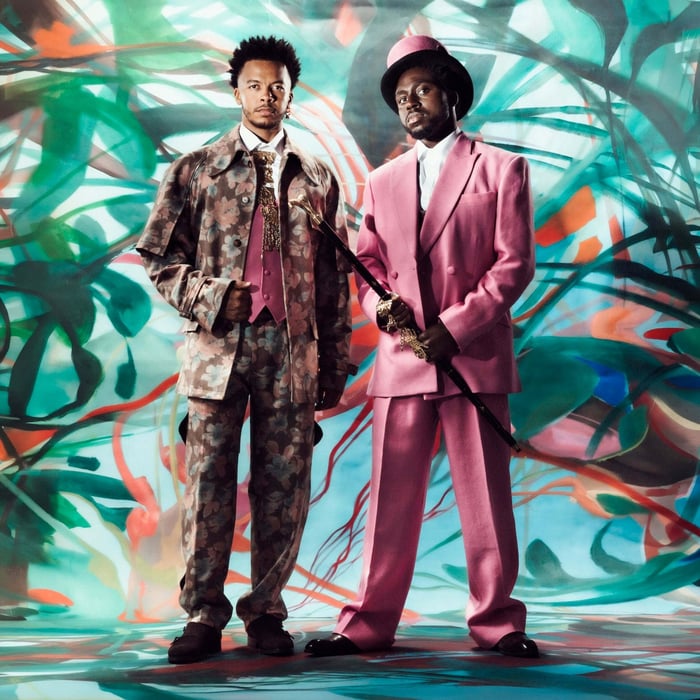
Blue Lab Beats turn The Blue Lab Beats Show into a messy, deliberate flex—community talk, polyrhythms, and rap confessionals that refuse to sit still.
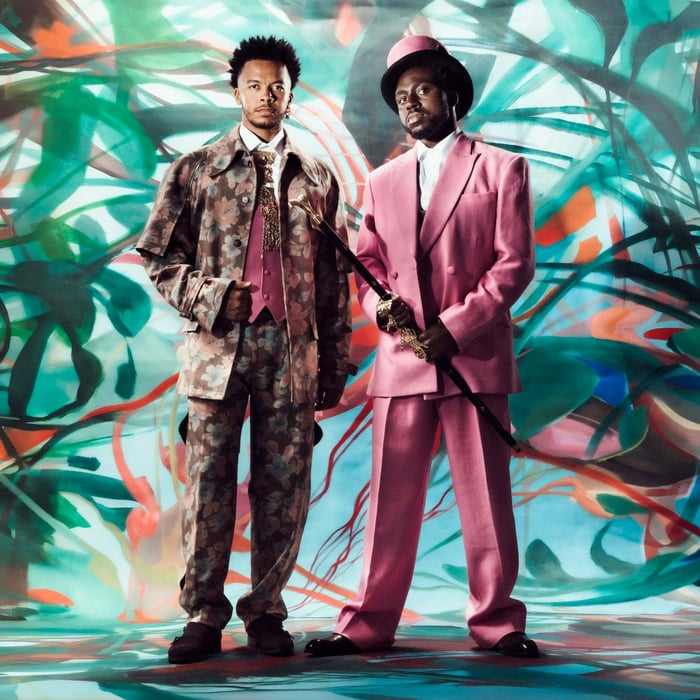
Courtesy of Blue Adventure Records.
A show, not an album—and yeah, that’s the point
This record opens like it’s already mid-conversation, and it never really stops to explain itself. If you came here for “cohesion,” Blue Lab Beats basically shrugs and keeps moving—because the whole trick is that the movement is the message.
You’ll hear a Zulu vocal chant asking, plain as day, “Who can live with someone that hates them?” and it lands like a dare. Not a vibe-setter. A test. Elsewhere, staccato piano hits with that Brazilian jazz-funk snap (it instantly made me think of Banda Black Rio and Tania Maria), and then—without permission—it melts into a hip-hop beat. Strings show up climbing over both halves like they’re trying to mediate an argument. It’s not subtle, and it’s not meant to be.
And that’s the first clue: this “show” format isn’t cute branding. It’s them insisting you watch how all these scenes sit next to each other.
Sixteen tracks, and they’re not pretending every moment is sacred
Here’s what they actually do: they pack sixteen tracks into The Blue Lab Beats Show, and six of them are instrumentals. The instrumentals swing from packed, polyrhythmic tangles (the kind that make your head tilt while you search for the one) to mid-tempo drift that’s more about glue than spotlight.
I’ll be honest, I thought the instrumentals would be the clean “core” of the album—the part that proves musicianship while the features add spice. On second listen, I had to admit the opposite: the vocal tracks are the spine, and a couple of the instrumentals are more like scene transitions that don’t mind being forgotten.
And yes, I’m saying the quiet part: a couple of those instrumentals feel swappable. If “Watermelon” and “Blue Lotus” traded places, I’m not sure anybody would even blink. They sound nice in the moment, then evaporate when the next track starts talking louder.
That said, the album needs that evaporation. This record is built like a room where people keep walking in.
“Champions League” is the album admitting it’s complicated
The track that spells out the album’s emotional messiest truth is “Champions League.” FourNine comes in like he’s carrying three different lives at once. He says he never thought he’d make it out the ghetto, pivots to wanting an empire “like Genghis Khan,” and then swerves into the paranoia of being openly pro-Black in a workplace climate where even a staff member can get rattled—“Too many hidden agendas.”
The impressive part isn’t that he says those things. It’s that he raps them like they’re all happening at the same time. No neat chapters. No “here’s my political verse, here’s my personal verse.” It stacks, grievance on grievance, until you’re not sure if the point is ambition or exhaustion.
Under him, the piano loop stays locked on one warm phrase, like the track refuses to dramatize his chaos. That’s an arguable choice—some listeners will want the beat to escalate with him—but I think the restraint is the whole critique. The world doesn’t swell for you when you’re spiraling; it just keeps repeating the same day.
He drops details like close friendships ending because “some hoes started,” and it doesn’t sound like gossip. It sounds like the kind of petty fracture that ruins bigger dreams. He even lands on this idea of a “puzzle” being complete but still needing extra parts, which is a ridiculous sentence if you take it literally—and completely accurate if you’ve ever watched your own “progress” not fix your life.
“Slow Heart” is the moment the album stops flexing and starts cutting
Then Jamila Woods shows up on “Slow Heart” and the album gets sharper, like someone cleaned the lens. She sings in questions, and the questions aren’t romantic—they’re forensic.
“Did he bring you flowers/Did you talk for hours/Did you keep your power/Did you argue often/Words like hand grenades.”
Then she flips the chair around:
“Did you bring him flowers/Did you feel the wind blow when he said your name/Did you lose your power/Did you think you shrank.”
Same checklist, opposite perspective. That flip is the best writing on the album, and it isn’t close. Not because it’s “deep,” but because it weaponizes symmetry. It makes you feel how easy it is to interrogate someone else’s relationship while excusing your own.
If you want my blunt interpretation: Blue Lab Beats built a whole “show” around collaboration and community, and then they drop this song in the middle to remind you community doesn’t mean comfort. It means accountability. Sometimes it means you realize you’re the one shrinking.
The “Motivation” interlude sounds like it’s meant for one room
There’s an interlude called “Motivation” that floats over soft piano and says, simply: “We can help build one another is the key to shifting the world.”
I don’t hear that as some slogan meant to travel. It sounds like something said into a mic at the end of a night when the chairs are half stacked and the last few people are still listening. That specificity matters. It’s corny if you imagine it printed on merch; it hits if you imagine it spoken to a circle of tired artists.
I’m not 100% sure if it’s meant to be inspirational or corrective—like, “stop acting like you’re alone”—but either way it frames the second half of the album as more than just a run of tracks. It sets up the idea that the features aren’t decoration. They’re the point.
“Fire Up” drags history into the club, on purpose
“Fire Up” is where the album decides it’s not just going to hint at politics; it’s going to chant them until they’re unavoidable. Blackout JA rides dancehall drums and calls out the Windrush generation and Benjamin Zephaniah by name:
“From the Windrush wi never hesitate to rebel/Break that chain colonial spell/Want equal rights the freedom as well/Bout 400 years now time will tell.”
Then Sanity comes in with: “Unity is lethal/So when we stand together/See the power in the people.”
You can argue about effectiveness here. Some people will hear lines like that and roll their eyes, because music isn’t policy. But I think the track knows exactly what it’s doing: it’s using dancehall bounce as a delivery system for memory. It’s trying to make history feel like something you carry in your legs, not just in your books.
And it’s not accidental that this track sits in the same “show” as a rapper comparing himself to Genghis Khan. That contradiction is the album. Big ego next to collective struggle, no editing to make it pretty.
The outro actually says goodbye—and that’s rarer than it should be
A lot of albums “close” by fading out or stacking one last reprise. This one closes like a person leaving the room.
The outro names Jazz Refreshed, Women in Jazz, Tomorrow’s Warriors, and The Silhouette Project. It connects the dots from weekend arts college energy to a Grammy win in basically two sentences, then ends on one word: “Peace.”
That “Peace” hits because it’s the only moment that feels like a real goodbye instead of a playlist stopping. It’s also an admission: this whole album is community-coded. It’s a roll call, not a monument.
Independence shows up in the guest list, not in louder drums
Here’s the behind-the-scenes reality you can hear without anyone explaining it: Blue Lab Beats sound freer on this record, and it’s not because they suddenly got experimental. It’s because the invitations feel less filtered.
They previously put out two releases under a major jazz label—We Will Rise (EP, 2021) and Motherland Journey (2022). Then in 2024, NK-OK started their own label, Blue Adventure Records, on what he described as “barely any cash.”
You can hear that “barely any cash” mindset as a kind of creative pragmatism: spend the budget where it matters. The instrumentals stay tasteful; the vocal tracks carry the risk. The big swing isn’t a more expensive sound. It’s letting the album be messy in public—letting “Motivation” sound like it was recorded for a specific room, letting “Fire Up” be blunt, letting “Champions League” contradict itself in real time.
If you want a clean “brand,” this album won’t help you. If you want a snapshot of what they actually care about, the features do more than the grooves.
The musicianship is real—and sometimes it’s almost too polite
The playing is not up for debate. NK-OK’s drum programming on “Piece of Life Puzzle” locks polyrhythmic patterns against a horn section whose lines crowd each other until the groove feels alive and slightly irritating—in a good way. The rhythm is busy enough that finding the downbeat takes a full rotation. It makes you pay attention, which is a choice in an era where a lot of beats beg to be ignored.
Mr DM handles every keyboard and bass part, and that’s where the album’s internal consistency sneaks in. Even when the genre flips—jazz to hip-hop to dancehall—the low end holds steady like a hand on the steering wheel.
“North London Pace” is the clearest example: the bass sits at the same low frequency no matter what outfit the track changes into. It’s like the album’s telling you, “Yeah, the scenes change, but the city doesn’t.”
Still, here’s my mild complaint: sometimes the instrumental polish borders on too well-behaved. “Watermelon” and “Blue Lotus” sound pleasant, but pleasant isn’t always memorable. I kept waiting for one of them to misbehave—one wrong note, one ugly synth, one moment of risk—and it mostly never happens.
Then again, maybe that’s the point: the chaos is reserved for the voices, because the voices are where the consequences live.
So what is The Blue Lab Beats Show actually doing?
It’s staging a contradiction on purpose. It puts activist chants next to ego bars. It places intimate relationship self-audits next to communal pep talk. It uses strings that can sound uplifting while a rapper lists the ways life still doesn’t add up.
And it refuses to pick one lane because picking one lane would be lying.
My first impression was that it might be a slightly overstuffed “all-star” project—cool guests, sleek interludes, a bit of musical tourism. But the longer it ran, the more it felt like the opposite: a record designed to show how these worlds already overlap, even when they don’t agree with each other.
Favorite tracks (the ones that actually stick)
- “Champions League” (because the contradictions don’t get cleaned up)
- “Slow Heart” (because the writing flips the knife)
- “Fire Up” (because it turns history into rhythm instead of a lecture)
Overall assessment
I’d still call this album great—just not because every track is a classic. It’s great because the intent is clear: Blue Lab Beats want their “show” to feel like a living scene, not a museum exhibit.
Conclusion
The Blue Lab Beats Show doesn’t try to be a perfect narrative arc. It tries to be a real room: people talking over each other, different tempos, different needs, one shared floor.
Our verdict: People who like their jazz-rap with actual opinions—and aren’t scared of a tracklist that argues with itself—will love this. If you want every instrumental to be instantly hummable or you flinch when lyrics get openly political, you’ll bail halfway through and call it “inconsistent” like that’s a diagnosis instead of a personality.
FAQ
- What’s the core vibe of The Blue Lab Beats Show?
A genre-hopping set where jazz musicianship stays steady while the vocals drag in real-life tension—personal, political, and social. - How important are the featured vocal tracks compared to the instrumentals?
More important than I expected. The instrumentals set tone, but the vocal tracks explain what the album is trying to say. - Which song has the strongest songwriting moment?
“Slow Heart.” The perspective flip in Jamila Woods’ lines is the album’s cleanest, hardest punch. - Is this album more about technique or message?
Both, but the message wins. The technique is the delivery vehicle, not the final destination. - Will fans of straight-ahead instrumental jazz enjoy it?
Some will, especially the polyrhythmic cuts—but if you want pure instrumental focus, you might find parts of it too feature-driven.
If you’re the kind of person who wants your favorite album artwork living on your wall (instead of buried in a streaming app), you can shop poster-style prints at our store: https://www.architeg-prints.com.
 | DISCOUNTGET 30% OFF*Use code on your next order:
|
* This post may contain affiliate links, meaning we earn a commission if you make a purchase through these links, at no additional cost to you.