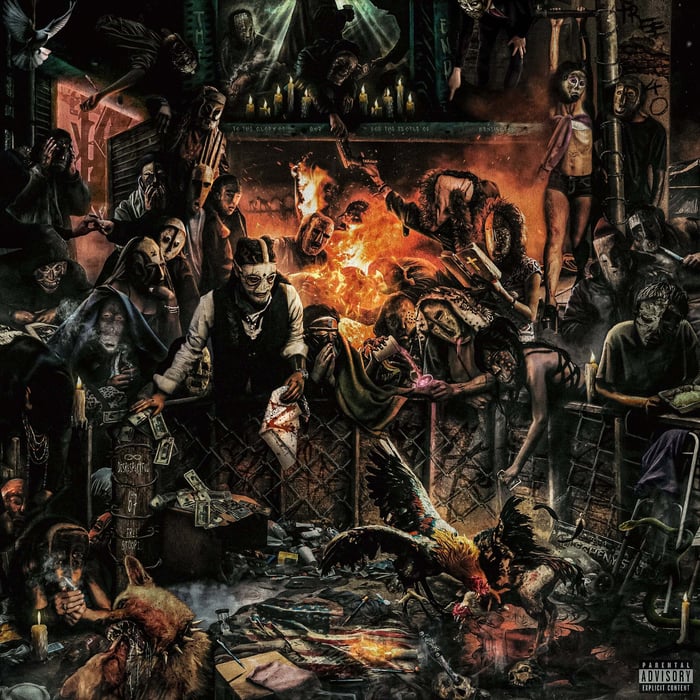
Skrilla Z Album Review: Lean Sommelier Rap, and It’s Not Even Subtle


 See more Architeg Prints stories on Google.
Album Review: Skrilla Z
Exploring Skrilla Z, a raw and unfiltered rap album that dives deep into street life, addiction, and spirituality, framed by the harsh realities of Kensington, Philadelphia.
Everybody knows what Wockhardt is now, and not because the average person suddenly became a pharmacist. Rap did the marketing. But Skrilla Z takes it a step further: Skrilla raps about lean like he’s critiquing a wine list. Not in a cute way—more like a guy who’s genuinely irritated you brought the wrong bottle to his table.
He didn’t invent drug rap, obviously. What’s different is how brand-specific and picky it gets. Wock’. Tris. Promethazine. Codeine. Ten milligrams from a bean. He says these names the way other rappers say “summer” or “pain.” The words aren’t metaphors; they’re inventory.
And that’s the first uncomfortable truth this album makes you sit with: it’s not “about” substances. It’s spoken through them.
The backstory isn’t a glow-up; it’s a receipt
Skrilla (Jemille Edwards) was born in 1999. Mexican mother from Texas, African-American father from Philadelphia—met in college. The details matter here because the album moves like someone who grew up between worlds and decided the only reliable one was the street.
He started dealing around twelve. By high school he’d stacked enough arrests to land two and a half years on house arrest. He played AAU basketball and ran cross country—then quit both to focus on selling. That decision sits under the whole album like a low bass note: the sound of someone choosing the thing that will ruin them because it pays today.
There are details you don’t forget once you hear them:
- the bone tattoo next to his eye stands for “dog food”
- his first recording was titled after the street name for heroin
- his childhood friend RecoHavoc nudged him toward rapping (and shows up on the album)
- he practices Santería (Afro-Cuban religion rooted in Yoruba tradition) and talks openly about animal sacrifice
- he keeps a pet alligator named Tranq (after xylazine—Kensington’s street drug of choice)
- he’s been filmed administering Narcan to people collapsed outside his place
If that reads like a movie pitch, that’s kind of the point: Skrilla Z doesn’t romanticize the environment, but it also doesn’t step outside it to explain anything. It just keeps walking.
And yes—by Skrilla’s own admission, the album was recorded while he was high on most of what he names. You can hear that in the looping thoughts, the repeated bars, the way the delivery sways and then snaps back like he remembered the mic is still on.
The “Black Jesus” intro is a power move, not a skit
The album opens with a man who calls himself Black Jesus. Skrilla went looking for someone from Kensington the day he hit the studio, like he wanted the first voice on his major-label debut to sound like the street itself—unfiltered, uninsurable, unmarketable. That’s not randomness. That’s intent.
Black Jesus addresses Zombie Nation—Skrilla’s name for his crew and his block—and drops a prosperity-gospel-for-the-corner mantra:
“If you hate three times, we gon’ grind six times harder—it’s called fuck you, pay me.” —Black Jesus
Then “Black Jesus (Intro)” kicks in and Skrilla immediately starts stacking images: Glocks without safeties, cops pulling shooters off the field, watching 12 Years a Slave and thinking about his Orishas. It’s a wild combination, but the album treats it like a normal Tuesday.
An arguable take: this intro isn’t there to “set the scene.” It’s there to dare you to look away.
Death shows up like weather—because here, it kind of is
“Roger Dat” opens with YBC Dul—already dead by the time you’re hearing him—talking about someone dying right now, this second. Not philosophically. Literally. And he makes this grim point: if the cops don’t get to you in the street, they’ll still get you in jail.
Skrilla follows with a line that lands like a thrown brick: “We caught a nigga on the porch, the Draco rocked him out the chair.” No cinematic build-up. No “moment.” Just a report.
“Blood Bath” does the same thing but crueler: a fentanyl overdose and a bullet hitting an artery share the chorus. Same verb. Same refusal to stop.
- Brother bleeding, bullet hits an artery, it won’t stop.
- Friend fiending, fentanyl and tranq, he OD’d, it won’t stop.
On “DOA,” Skrilla asks, “How your dog get whacked, you ain’t get back?” It sounds rhetorical until you realize he might actually be asking for the rules because the rules are all he has. Moskino’s feature talks about starting from his brother’s couch and walking through rain—like it’s just another stage of the same grinding loop.
Arguable take: the scariest part of Skrilla Z is how little it wants your sympathy. It doesn’t beg. It doesn’t plead. It shrugs.
His rapping stutters on purpose… I think
Skrilla restarts bars mid-flight. Not once—constantly. On “Religion,” he fumbles into the line, then redoes it cleaner: “Pull up Usain—pull up Usain Bolt, two-twenty on the dash, I’m drivin’ wild.” The first attempt trails off. The second “catches,” like his brain grabbed the thought before it fell.
On “Mr. Clean,” he rattles through weapon attachments—“Baldhead, stuff magazine, attach the switch, rat-tatted-tatted”—and the Draco turns into percussion. He literally punctuates himself with gun sounds (“brrt,” “frr,” “pfft”) where other rappers would toss in a lazy “yeah.”
The “sevennnnn” hook that went viral pops up with “Free 40,” and he interrupts himself with sound effects like the track is happening in real time, not rehearsed.
On “Bazin,” the chorus (“Bitch, I’m bleedin’, brother”) returns with a different slur each pass—same shape, different bite.
And on “Checkmate,” he drops “six, seven” into a verse about a friend with six or seven bodies, calling the count “angel numbers.” The phrase loses all its playground energy here. It’s not a meme anymore; it’s a body count that doesn’t fit neatly into language.
I’ll admit it: I’m not 100% sure how much of this is deliberate technique and how much is intoxication bleeding into structure. But either way, the effect is the same—he raps like his thoughts arrive two seconds late, then sprint to catch up.
The religion switches aren’t “fusion”—they’re survival
On “Die 4 Me,” Skrilla goes: “Astaghfirullah, Allahu Akbar, can you help me make it far?” Two bars later he’s talking to Elegua: “Havin’ talks with Elegua, he told me he not never far, bitch, he right here.”
That’s Islam and an Orisha of the crossroads sitting two lines apart with no explanation, no apology, no “I’m exploring spirituality.” It’s not presented as contradiction. It’s presented as function.
“Mr. Clean” shouts out Ogun (Orisha of iron and war) and then throws out a line that practically dares fate: “Put him to the test, a nigga die, wasn’t from homicide… Shouts out my Orishas, nice to meet you in the afterlife.”
On “Soul Snatchin,” Elegua lives through Skrilla and Ogun lives through his weapon—like belief is less about doctrine and more about what helps you make it through the night.
“Blood Bath” ends with “Aṣẹ,” a Yoruba affirmation roughly meaning “so be it.” And on “Bazin,” he asks a Babalawo for a reading.
The album is named after Zombieland. It’s bookended by a man calling himself Black Jesus. Skrilla Z doesn’t tie these threads into a neat bow because neat bows are for people with time.
Arguable take: this isn’t religious confusion—it’s religious pragmatism. He’s trying every door in the hallway because something has to open.
The guest spots don’t bring variety; they get absorbed
Leviano shows up on “The Box” rapping his whole verse in Portuguese—flexing Louis Vuitton like it’s home, stacks so high he needs a ladder, a daughter bragging nobody’s as rich as her dad. He even admits if he goes broke, he’ll call old contacts and go back to stealing. His rifle is so oiled it looks like pastry. It’s vivid, specific, and weirdly domestic in its own way.
The point isn’t that Leviano “adds international flavor.” The point is Skrilla hears São Paulo and Kensington as the same shape—just different scale. That’s why the collaboration makes sense: the poverty-to-luxury whiplash speaks a shared language.
Ola Runt shows up on “glockboyz,” talking about a priest telling him to be proud of his sins, riding MARTA, and threatening to shoot someone in the face. YoungBoy hits “Free 40” talking about a .308 and draws a line between “zombies” and “slimes.”
And none of them change the temperature. That’s the striking part. They step into Skrilla’s atmosphere and behave like it’s normal weather.
Arguable statement: the features don’t expand Skrilla’s world; they prove it’s already big enough to swallow other rappers whole.
The repetition starts as a quirk, then becomes the problem
At first, I liked the déjà vu. It felt like a signature—like you’re hearing the same nightmare from different angles. Then, halfway through, it started feeling less like craft and more like the downside of recording while high.
Bars repeat across tracks:
- “I’m from the bottom, Bikini Bottom, who knew Patrick be a star?/Five-star restaurants, a bad bitch eatin’ caviar” appears on both “Rich Sinners” and “Free 40.”
- “I done pulled up presidential, all-black truck like Donald” shows up at least three times.
That’s not just a reused line here or there. Whole stretches blur into one long designer-and-dracos loop: brands, modified Glocks, bounce-outs, more brands, more Glocks. The album loses momentum by its midpoint, and I don’t think it fully finds its footing again until “Die 4 Me” way down at track nineteen.
Mild criticism, since it needs saying: this is one of those albums where trimming 10–15 minutes would’ve made the strongest moments hit harder instead of making you work to reach them.
Arguable take: the repetition is honest, but honesty isn’t the same thing as pacing.
The production sounds like it’s collapsing… and refuses to
“Roger Dat” and “Blood Bath” sound like they were tracked inside a condemned building: organ tones, minor-key strings, bass that thuds once and disappears. On “Blood Bath,” the hi-hats patter quick and thin while the bass holds a single low note like someone holding their breath through bad news.
“Free 40” threads a string sample through the track, and Skrilla rides it with this urgency that feels accidental and inevitable at the same time—like he knows he stumbled onto his best song and still can’t stop himself from slurring around the edges.
Across Skrilla Z, the production rarely climbs toward some big “moment.” It loops. It frays. It keeps going. Skrilla’s delivery does the same thing. Both feel like they’re about to fall apart—and then they don’t.
Arguable statement: the beats aren’t trying to impress you; they’re trying to keep the room from going silent.
The weirdest tension: he’s promising to get clean while selling the chaos
Near the end, Skrilla says he’s finished—or at least he says he’s going to be. On “Free 40,” in the middle of YoungBoy rapping about built-in full-auto triggers and stuffing molly into Louis Vuitton, Skrilla drops this promise: he’s getting clean once the album drops.
He also admits the craving right next to it: he hates running out of codeine and promethazine. It’s a vow placed inside the temptation, not outside it. That contradiction is basically the thesis of the record.
On second listen, my first impression shifted. I originally took the constant drug naming as bragging. Then the album kept circling the same substances, the same violence, the same rituals, and it started sounding less like flexing and more like someone documenting what owns him.
And the Black Jesus bookend suddenly makes more sense: in Kensington, you don’t know if you’ll ever see somebody again. So you put them on tape now, while they’re still upright.
Conclusion: Skrilla Z isn’t a debut album—it’s a neighborhood taped to your shirt
This album doesn’t guide you through Kensington; it drags you along by the sleeve. The best songs (“Bazin,” “Blood Bath,” “Die 4 Me”) don’t feel polished—they feel caught. The worst stretches aren’t bad ideas so much as an overdose of the same idea, repeated until it numbs out. And that numbness might be the most truthful thing here.
Our verdict: People who like rap when it sounds like a real place—with real habits, real rituals, and real consequences—will lock into Skrilla Z fast. If you need tidy storytelling, clean hooks, or choruses that act civilized, this record will annoy you and then keep going anyway. Consider that a warning or a feature.
FAQ
- What is the core vibe of Skrilla Z?
It feels like watching someone narrate their day while their brain is half a step behind their mouth—still sharp, just staggered. - Does the album rely heavily on drug references?
Yes, but it’s not casual name-dropping. The drug brands are treated like daily essentials and status markers, which is exactly why it hits weird. - Which tracks stand out the most?
“Bazin,” “Blood Bath,” and “Die 4 Me” are where the album’s loops and contradictions actually sharpen into something memorable. - Do the features change the sound much?
Not really. Leviano, Ola Runt, and YoungBoy all slide into Skrilla’s world without shifting the mood—if anything, they confirm how strong the setting is. - Is Skrilla Z too long?
For me, yes. The middle stretch blurs, and the repetition stops feeling hypnotic and starts feeling like the session never ended.
If you want something physical to match the album’s “stuck in your head” energy, you can shop a favorite album cover poster at our store: https://www.architeg-prints.com. A loud cover on a quiet wall is a decent compromise.
 | DISCOUNTGET 30% OFF*Use code on your next order:
|
* This post may contain affiliate links, meaning we earn a commission if you make a purchase through these links, at no additional cost to you.