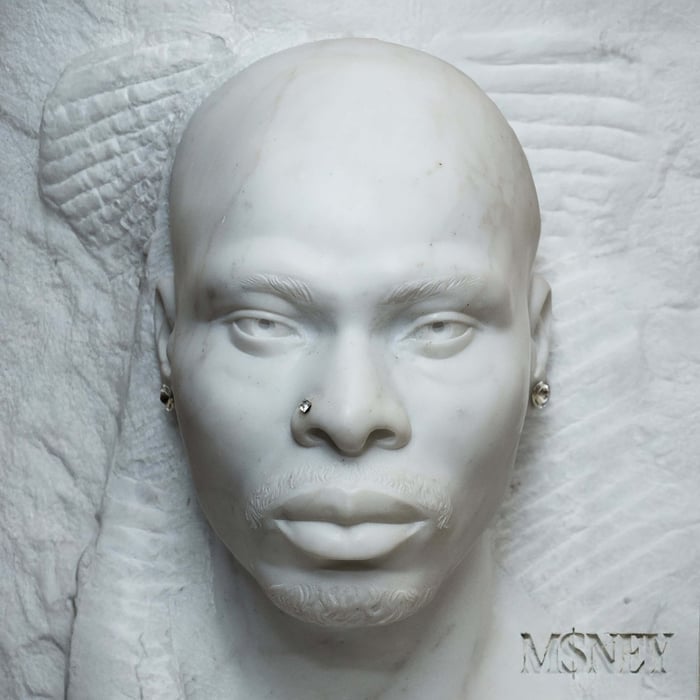
M$NEY Album Review: Asake Turns Prayer Into a Credit Alert (Seriously)


 See more Architeg Prints stories on Google.
Album Review: M$NEY by Asake
Asake's M$NEY album blends prayer and wealth into a unique soundscape, treating divine blessings and bank notifications as intertwined realities.
Most people only talk to God about money when nobody’s watching. Asake does it out loud, on purpose, and he doesn’t even pretend it’s not transactional.
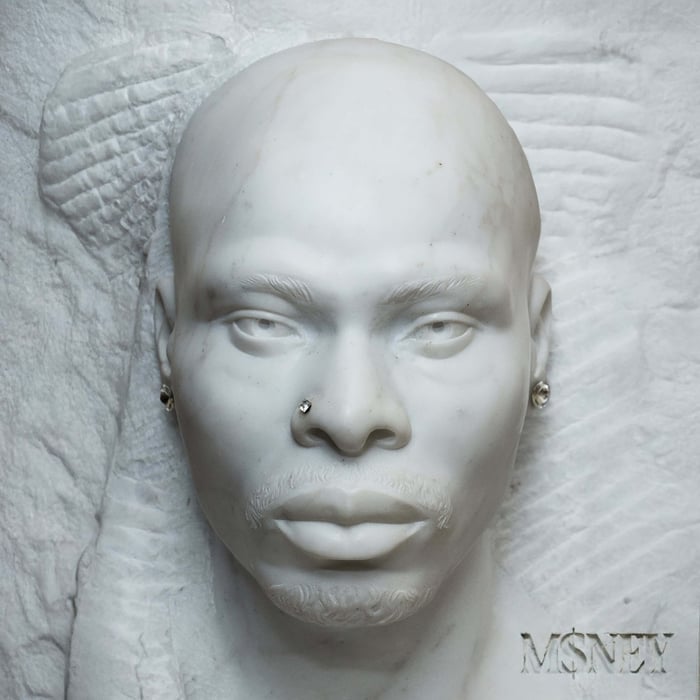
Courtesy of Giran Republic / EMPIRE.
The opening move: he “gets free” and immediately starts praying
Here’s what grabbed me first: this album begins with Asake basically not showing up.
A choir opens the record in isiZulu—no drums, no producer tag yelling for attention, no quick flex to reassure you it’s “a real album.” It sits closer to a congregational call than anything else he’s done, and that’s not an accident. It feels like he’s scrubbing the room clean before he brings money into it.
And yeah, I know the public timeline: dancer-turned-singer energy, viral freestyles passed around by influencers, the YBNL Nation era, the big jumps—Billboard 200 entry, sold-out venues, Grammy nominations—and then that split in early 2025 to launch Giran Republic. But the point isn’t the résumé. The point is the sequencing: his first album as an independent artist starts like a prayer meeting. If that doesn’t tell you what freedom means to him, nothing will.
I thought this intro was going to be artsy throat-clearing at first—pretty, but disposable. On second listen, it felt more like a boundary line: this is sacred space first, marketplace second.
Then “Amen” hits: the bass arrives like a bill collector
Right when you start settling into the choir, “Amen” snaps the lights on.
Magicsticks’ tag lands and the log drums drop heavy—the kind of low end you feel in your sternum before you can explain it. The Asake/Magicsticks partnership has been building toward this for years: fújì rhythm tucked under Amapiano bounce, kicks doing the heavy lifting, melody riding on top like it’s late to work but still confident.
And the background vocals matter here. They’re not synthetic gloss; they sound chosen, human, and slightly stubborn. That decision changes the whole meaning of the music. A choir behind you doesn’t just decorate the hook—it turns the hook into a public request.
What makes “Amen” work is that the chorus isn’t written like a chorus. It’s written like somebody who actually believes in asking for specific things:
- alignment with his thoughts
- wisdom
- trust in Allah
- a changed world
- prosperity and happiness
That’s not vibes. That’s a list.
A reasonable listener could argue that putting this kind of direct prayer over club-ready drums cheapens it. I hear the opposite: he’s refusing to separate devotion from daily survival. If you can dance while you’re asking for help, maybe that’s the most honest thing on the record.
“Worship” goes big, and it’s the first time the album blinks
“Worship” (with DJ Snake on production) expands the sound outward—slicker, wider, more “festival” in its build. Asake chanting “Alhamdulillah” inside an EDM-adjacent structure should feel like a gimmick, but he sells it with sheer insistence.
The line that sticks is blunt: praise God regardless of your condition; stay close to God; it’s work, not luck. It’s motivational, sure—but it’s also slightly controlling, like he’s coaching himself not to spiral.
Still, I’m not going to pretend it’s perfect. This is where the album gets a little anonymous. The drop structure feels like it could’ve been built for a dozen different acts. It travels well, but it doesn’t smell like Asake’s room anymore—and on M$NEY album logic, the room is where the truth is.
“Gratitude” is where the album’s real joke turns into a real belief
The best stretch of this record keeps snapping back to one idea: money and holiness share a wall.
“Gratitude” is the clearest example. The chorus chants behind him like a congregation that accidentally wandered into a party and decided to stay. And then he asks for sevenfold blessings—not metaphorical blessings, not poetic blessings, actual multiplication.
Then he says “credit alert.” That tiny phrase does disgusting amounts of work.
If you’ve ever had your phone buzz and your mood instantly changes because money arrived, you know what he’s doing. He’s making the bank notification sound like divine confirmation. And the wild part is: it doesn’t land like satire. It lands like testimony.
A lot of artists talk about “manifesting” like it’s a scented candle. Asake makes it feel like a daily transaction log.
“Rora” slows down and accidentally becomes the album’s most human moment
After all the heavy drums and declarations, “Rora” pulls the tempo back and lets trumpet and saxophone breathe. Asake drops his voice lower, and suddenly he sounds less like he’s leading a movement and more like he’s trying to keep a promise.
The patience theme actually feels lived-in here. The Yoruba proverb (“kárín kápọ̀ ló yẹ ẹni”) folds into a melody that doesn’t show off—it just arrives. It even sounds like it found itself by accident, like he stopped trying to impress anyone for three minutes and got rewarded.
If someone told me “Rora” is stronger than the louder cuts, I wouldn’t fight them. It’s not “bigger,” but it’s sturdier.
This album keeps praying—and it’s not doing it for aesthetics
The album keeps returning to God, and not in the vague “spiritual” way artists use when they want depth without details.
These are direct addresses. Specific requests. Supplications that don’t care if they fit neatly into pop songwriting. “MCBH” even tucks a Yoruba phrase into the pre-chorus—“àdúrà ló ń gbà” (prayer is what saves)—and places it right next to lines about huge money and soft living.
That contrast is basically the whole album’s scent: incense and cash.
A listener could call that contradiction. I think it’s the thesis. He’s not choosing between devotion and wealth; he’s insisting they’re linked. Whether that’s admirable or alarming depends on your tolerance for spiritual capitalism.
I’ll admit: I’m not fully sure if Asake is critiquing the transaction or celebrating it. The album sounds like it believes both at once.
“Forgiveness” is the moment he stops performing and starts confessing
“Forgiveness” cuts deeper than the rest because it’s not dressed up.
He runs through his sins like a man talking too fast because silence would be worse: too many girls he messed up, too many friends he cut off, too much smoke, too much “top boy” momentum. The Yoruba lines—“Mo ti gìrán jù, èmi stubborn”—hit harder because that’s the language he thinks in when he’s not onstage.
And crucially, he confides in God, not people. He practically says it: he’s not telling humans; God is his friend. The ending—“Nobody perfect, padi mi”—doesn’t even choose an audience. It could be God. It could be us. That blur is the point: confession is still confession even when it’s public.
If you only want Asake for swagger, this track might feel like an interruption. I hear it as the only time the album fully earns its praying.
The “Amen” backlash makes sense—yet the lyric isn’t doing politics
There’s a moment on “Amen” that some listeners took as a political nod: he references President Tinubu’s famous campaign declaration—“Èmi ló kàn” (“It’s my turn”)—and ties it to “Power in the tongue.”
Given the economic pressure people are living under, I get why that line irritated folks and sparked boycott talk online. It’s a sore subject.
But when I hear it inside the verse, it plays less like endorsement and more like evidence. The point he’s making is manifestation: you speak, things happen. Tinubu said the line, then won. Asake uses it as a case study in spoken outcomes, not as a campaign poster.
You can still disagree with that choice. But it doesn’t sound like he’s taking a policy position. It sounds like he’s obsessed with language as a tool—prayer, chants, declarations, affirmations—different rooms, same technique.
Boasting mode: “Oba” is him wearing the crown, not asking permission
When Asake flips into pure flex, he does it with zero humility and a weird amount of charm.
“Oba” (“king”) opens aggressively and then parades details like credentials: shoe size, jewelry, even his birth year—“Bad since 1995.” He quotes Nas (“The world is yours…”) and then tosses off a line about listening to fújì and writing jazz, which is funny because it’s also true in the production sense. Magicsticks’ beats do feel like traditional Nigerian rhythm being rerouted through modern bounce patterns.
The arguable part: the boasting is more believable on this album because the praying is right next to it. Without the prayers, the flexing could’ve turned into empty fashion-week noise. With the prayers, it reads like a man trying to justify success to himself in real time.
The “travel well” tracks: Pan-African reach, mixed personal impact
A few songs clearly aim beyond home base.
- “Badman Gangsta” flips the intro vocals from Amerie’s “1 Thing” and brings in Tiakola. Tiakola’s French verse—young, ambitious, Congolese, moving between Makala and Marbella—gives the song a genuine Pan-African feel that the rest of the album doesn’t chase as hard.
- “Asambe” with Kabza De Small leans deeper into isiZulu and Amapiano, tosses in Casamigos namechecks, and even drops a Taribo West reference for the Nigerian football heads. It’s party music that assumes the audience is continental, not just local.
- “Worship” is the most polished of these outward-facing cuts—and, to me, the least personal.
All three “travel,” sure. But I keep coming back to the less export-ready tracks. The tighter the album stays with Asake and Magicsticks, the more it sounds like a private ritual you weren’t supposed to overhear.
When he talks to women, the writing thins—and the album briefly loses its spine
Here’s where the record slips.
When Asake gets into romance, the pen gets generic fast. “Wa” borrows its melodic construction from CKay’s “Love Nwantiti,” and it doesn’t feel like homage—it feels lifted. It’s the kind of choice that makes you wonder if he got bored and reached for something that already worked elsewhere.
And the love lines that follow? They blur together: “My types, perfect size,” “such a bad bitch,” “Body to body… turn off the light and bend.” None of it is unlistenable. His singing stays solid. The problem is the writing suddenly stops being specific, and this album’s power comes from specificity.
The gap between the prayer material and the love material is so wide it feels like two different albums are passing in the hallway, nodding at each other, pretending they’re friends.
Still, I don’t think that ruins the concept. It clarifies it: Asake is at his sharpest when he’s talking upward, not sideways.
So what is M$NEY really doing?
By the end, the idea feels almost obvious: M$NEY album is prayer-pop—àdúrà pop in Yoruba—even if nobody prints that label anywhere.
The recurring move is simple and kind of outrageous: he treats blessing and income like matching notifications. Sometimes that’s inspiring. Sometimes it’s unsettling. And sometimes—especially on “Forgiveness”—it’s just honest.
If you wanted a clean separation between sacred and flex, this album will annoy you. Asake keeps walking from mosque to club like it’s the same building with different lighting. And maybe that’s the only way his success makes sense to him.
Conclusion
M$NEY doesn’t politely “reference faith.” It puts prayers in the hook, confessions in the verse, and log drums under the whole conversation—then dares you to pretend money isn’t spiritual for most people.
Our verdict: People who like their pop music with actual belief (and a little moral whiplash) will love this. If you need love songs with more than placeholder thirst lines—or you hate hearing God and “credit alert” in the same breath—you’re going to bounce off it, probably while muttering “okay, man.”
FAQ
- Is M$NEY album more spiritual than Asake’s earlier projects?
It’s more direct. The prayers aren’t metaphors—they’re requests, and they show up where hooks usually sit. - What’s the strongest stretch of the album for repeat listens?
The run where the choir energy and the log drums work together—especially on “Amen,” “Gratitude,” and “Rora.” - Does “Worship” fit the album’s mood?
Sort of. It’s polished and big, but it’s also the moment the album sounds the least like Asake’s own room. - Why did the Tinubu reference on “Amen” upset some listeners?
Because it touches a raw political/economic moment. In the song, it reads more like a “power of spoken words” example than a political endorsement, but the timing still stings. - What’s the album’s weakest point?
The romance writing. The prayers feel lived-in; some love lines feel like templates.
If this whole prayer-and-money tension is your kind of wall art too, you can grab a favorite album cover poster at our store—tastefully loud, like the record itself.
 | DISCOUNTGET 30% OFF*Use code on your next order:
|
* This post may contain affiliate links, meaning we earn a commission if you make a purchase through these links, at no additional cost to you.