Sound Therapy Review: JWords Turns Her Gear Into Feelings (Oops)


 See more Architeg Prints stories on Google.
Sound Therapy Review: JWords Turns Her Gear Into Feelings (Oops)
JWords’ Sound Therapy stops hiding behind instrumentals: self-talk raps, warm synth haze, and guest verses that politely show her what “locked in” sounds like.
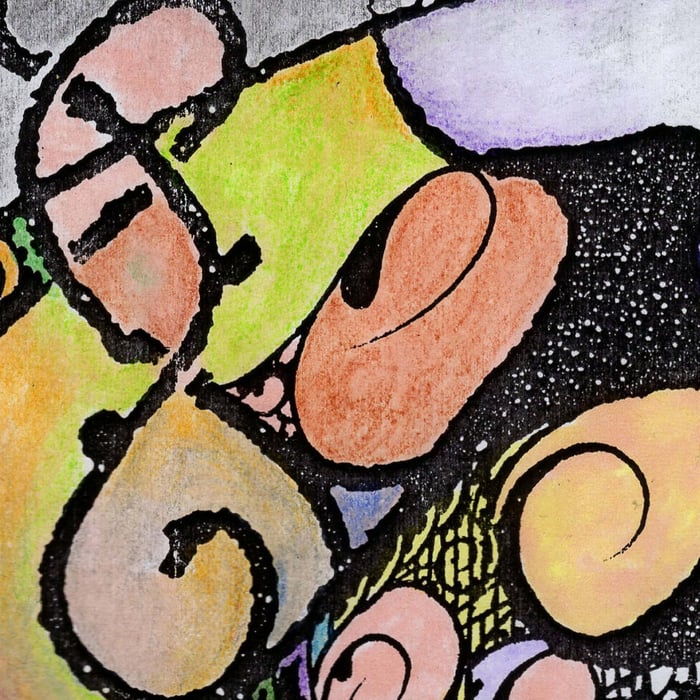
A record that finally stops whispering from behind the boards
I put on Sound Therapy expecting another fast-moving blur of beats—something pretty, functional, and gone in 20 minutes. Instead, it’s the sound of a producer stepping out from behind the curtain and realizing the spotlight is hotter than the studio lamps.
The most interesting thing here isn’t that JWords can rap now. It’s that she decided she had to, like keeping silent was starting to feel dishonest.
The name “JWords” isn’t cute—it's a confession
This whole project makes more sense once you sit with the fact that “JWords” is basically a tell. Jennifer Hernandez picked that name back when she was still an MC, long before production swallowed the identity whole—years of building tracks for other people, years of letting her voice stay off-camera.
And yeah, you can hear that history in the way Sound Therapy moves. The album doesn’t sound like someone “debuting” at all. It sounds like someone who’s made a ton of music and is now dealing with the annoying consequence of competence: you can’t hide behind it forever.
Her run leading up to this has been busy in a way that almost dares you to stop paying attention: collaborations, duo work, and a pile of instrumental tapes and EPs released so quickly they practically smeared into one long scroll. Titles like Sin Señal, dancepack (twice), Year 2300, Sonic Liberation, brainecho, untitled, beauty in everything, and downloads (all landing between 2020 and 2024) don’t read like a neat discography—they read like a person thinking out loud in public.
And when her debut solo LP Self-Connection landed in 2022, it still kept her voice mostly behind the boards. Sound Therapy is where she stops doing that. That’s the real shift.
Arguable claim: all those rapid-fire instrumental drops weren’t “prolific.” They were avoidance dressed up as productivity.
The Teenage Engineering setup makes the intimacy feel non-negotiable
Here’s the practical, slightly absurd backbone: Hernandez made these rhythms on Teenage Engineering hardware—OP-XY, OP-1, KO II, TX-6, TP-7—in a home studio. A backpack-sized rig, basically. It’s charming in a “look what I can do with toys” way, and also a little unhinged, like insisting you can move apartments using only a skateboard.
But it’s not just gear talk. You can hear the decision-making in the texture. The grain doesn’t feel pasted on later. It feels like the machines are leaving fingerprints on the audio and she’s refusing to wipe them off.
Swarvy’s mastering keeps that lo-fi haze consistent across all nine tracks, and that consistency matters more than people like to admit. Without it, this would risk sounding like a playlist of sketches. With it, the album holds together like one continuous room—different corners, same air.
Arguable claim: the lo-fi isn’t an aesthetic choice as much as a boundary—she’s keeping the music physically close so the emotions can’t get “cinematic” and fake.
“L0tus” lights the space like a space heater, not a spotlight
Coming off the setup, the opening move matters, and “L0tus” gets it right. It starts with soul-flecked synth phrases sitting over a hip-hop drum pocket, and the warmth is immediate—less “grand intro,” more “heat finally kicked on.” It’s domestic comfort, not stage drama.
At first, I thought, okay, this is going to be a vibe record—nice textures, gentle head-nod, nothing that risks embarrassment. On second listen, that assumption fell apart. The comfort here isn’t decorative; it’s protective. Like she’s building a soft room to say hard things in.
Arguable claim: “L0tus” isn’t trying to impress you—it’s trying to make sure you don’t leave before the self-interrogation starts.
“Gr8ful” and “FELT” show how she uses rhythm like self-control
The middle stretch is where the programming tells you what kind of mind is behind it.
“Gr8ful” crawls forward on synths that twitch once or twice per measure—little nervous ticks that keep the track from relaxing all the way. It’s gratitude, sure, but it doesn’t sound peaceful. It sounds monitored, like she’s checking her own pulse.
Then “FELT” comes in with a heavy techno kick and slowly loosens into something calmer. That transition is basically the album’s thesis in miniature: start braced, then unclench. Or try to. It doesn’t always work, and that’s sort of the point.
I’ll admit I’m not 100% sure whether “FELT” is meant to feel like relief or resignation. The kick lands like certainty, then the track backs away from it like it’s afraid of what certainty costs.
Arguable claim: “FELT” is the record accidentally admitting that intensity is easier than healing.
When she raps, it’s mostly self-talk—and she doesn’t tidy it up
Once Hernandez picks up the mic, the album stops being “producer presents” and turns into something more personal and less polished: she’s talking to herself, not performing at you.
“void 222” is the clearest example. No percussion—just voice and a droning synth—and the lack of drums feels like she’s removing momentum on purpose. No groove to hide inside. Just an open question she can’t neatly define, circling the idea of trying to fill a void without even being sure what the void is. That’s not a hook; that’s a thought loop.
“LoveCrime” pushes the same inward angle, but with a half-speed groove that keeps bending away from her. The beat doesn’t cradle her delivery; it slips out from under it. The effect is like trying to read a letter while walking downhill—you can do it, but you’re going to stumble a little.
And “Change 101” goes even more direct: praying every step, paying for stability, pulling her shadow self closer rather than pretending it isn’t there.
This is where the album’s “home” quality becomes the difference between corny and convincing. Some of the lines drift into affirmation-poster territory—big, bright declarations that can land a little light. If this were recorded in a gleaming studio with a perfect vocal chain, those moments might feel plastic. Here, the roughness saves them. She leaves the edges on, so even the slightly generic sentiments still sound like real attempts, not branding.
Mild criticism, though: there are times her cadences feel more like she’s thinking near the pocket than in it. That looseness can read as intimacy, but occasionally it just reads as… not fully edited.
Arguable claim: the record’s best “rap” moments aren’t the most lyrical—they’re the ones where she stops trying to sound like A Rapper and just sounds like herself.
The guest verses don’t steal the album—they clarify it
This is the part where Sound Therapy gets a little ruthless, whether it meant to or not.
Nappy Nina’s guest spot on “Clarity” is the tightest rapping on the record by a wide margin. It’s not even close. Over a rhythm caught between footwork and Jersey Club, Nina moves fast—money up, visibility problems, “too many lights to see all the stars”—and the writing has that compressed, sure-footed snap that makes you sit up. It’s a sixteen-bar sprint about worth and being seen, and it lands with the confidence Hernandez sometimes avoids.
The upside: Nina fits the song perfectly, like she was invited into a room that was already her temperature.
The downside (for Hernandez’s ego, maybe): it highlights how Sound Therapy isn’t interested in being a rap showcase. Hernandez isn’t trying to out-rap her guest. She’s trying to confess without flinching. So when Nina shows up fully locked-in, it’s like watching a professional dancer walk through a casual party—suddenly everyone’s aware of posture.
Then Kingsley Ibeneche closes the album on “Break Me,” and it’s a different kind of fit: a plea that dissolves into the synths, wanting someone fully while sensing trouble from a distance. It’s not flashy. It’s a fade-out of desire meeting caution.
Arguable claim: the guests aren’t there for variety—they’re there to demonstrate the emotional range Hernandez won’t let herself fake.
So what is she actually saying? That she’s watching herself leave
If you want the album’s core image, it’s this: Hernandez watching an older version of herself fade while she stays present enough to narrate it.
On “LoveCrime,” she frames emotion like a narcotic and the whole experience like a crime against herself—romance as self-betrayal, not fantasy. That’s the posture Sound Therapy keeps returning to: the self as both subject and suspect.
And the record doesn’t resolve that tension. It doesn’t tie a bow around “growth.” It just documents the moment where you realize you can’t keep living on autopilot and calling it freedom.
I went in expecting the album to be mostly about sound—textures, devices, vibe. I came out thinking the title is almost annoyingly literal: this is therapy, but done with oscillators and drum pockets instead of a couch. And like therapy, it’s not always elegantly phrased. It’s just honest enough to matter.
Arguable claim: Sound Therapy isn’t trying to heal you—it’s trying to prove to herself she can speak without hiding behind beats.
Favorite moments (the ones that actually stuck to my ribs)
To keep it simple, these are the tracks that kept pulling me back:
- “void 222” — the bravest choice here is removing percussion and letting the question hang.
- “Clarity” — Nappy Nina’s verse adds jet fuel, and the rhythm hits that sweet spot between club language and personal stakes.
- “LoveCrime” — the half-speed groove that won’t sit still feels like the point: desire as instability, written in real time.
Arguable claim: if those three tracks don’t grab you, the rest of the album won’t “grow on you”—it’ll just stay politely impressive.
Conclusion
Sound Therapy feels like Jennifer Hernandez finally using the name JWords the way it was always supposed to be used: not as branding, but as permission. The lo-fi grain, the portable-hardware tightness, the sometimes-wobbly cadences—none of that reads like a lack of skill. It reads like a deliberate refusal to sand down the truth for the sake of “professionalism.”
Our verdict: People who like hearing a producer step into the vocal booth with their nerves still showing will actually love Sound Therapy—especially if you enjoy raw, home-studio intimacy and aren’t allergic to self-interrogation. If you need pristine vocals, perfectly locked cadences, or big anthemic hooks to tell you where to feel something, you’re going to get impatient and start checking your phone like it owes you money.
FAQ
- What is Sound Therapy mainly focused on—rapping or production?
It’s production-first, but the point is the voice: the beats feel like a safe floor she built so she could finally say things out loud. - Does the lo-fi sound feel intentional or unfinished?
Intentional. The grain is consistent across the album, and it feels like it comes from the machines and the home setup, not a trendy filter. - Which track best represents the album’s emotional core?
“void 222.” No drums, no distraction—just the discomfort of not knowing what you’re missing. - Do the guest appearances change the album’s direction?
They sharpen it. Nappy Nina brings technical precision; Kingsley Ibeneche brings a closing mood that dissolves instead of concluding. - If I only listen to three songs, which should I pick?
“void 222,” “Clarity,” and “LoveCrime.” They show the album’s key moves: vulnerability, rhythmic snap, and emotional self-policing.
If you’re the type who treats album art like part of the ritual, you can always grab a favorite cover as a poster from our shop—fits the whole “music as a room you live in” idea.
 | DISCOUNTGET 30% OFF*Use code on your next order:
|
* This post may contain affiliate links, meaning we earn a commission if you make a purchase through these links, at no additional cost to you.