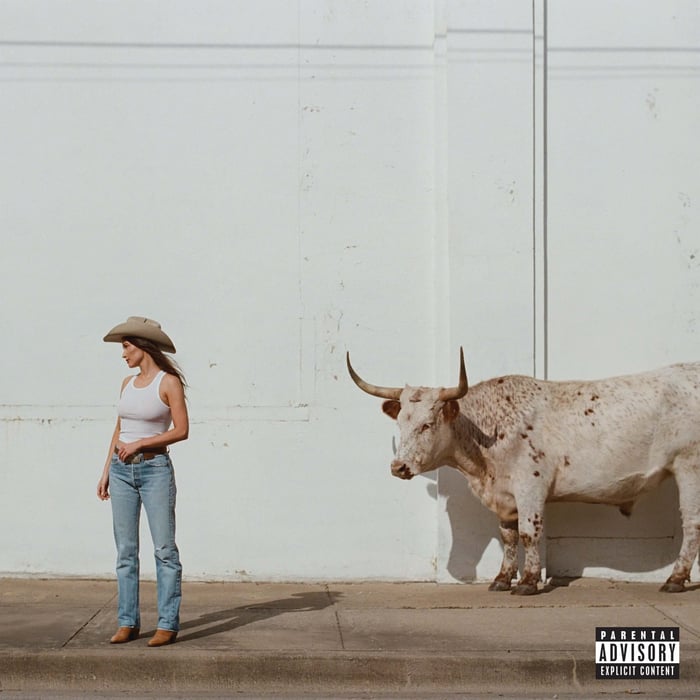
Middle of Nowhere Review: Kacey Musgraves Makes Small Town Feel Huge


 See more Architeg Prints stories on Google.
Middle of Nowhere Review: Kacey Musgraves Makes Small Town Feel Huge
Middle of Nowhere turns East Texas into a map of bruises and punchlines—Kacey Musgraves sounds fearless, until she doesn’t.
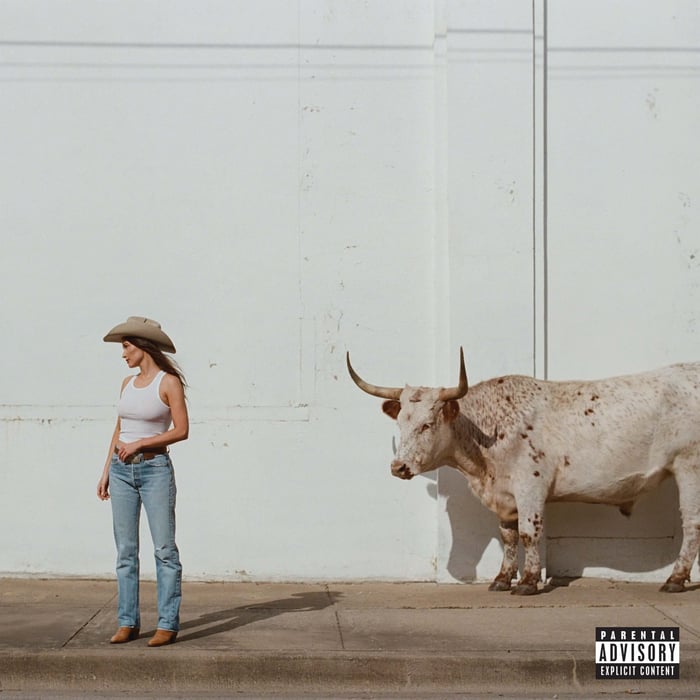
A record that starts by admitting it barely exists
Some albums try to sound “big.” Middle of Nowhere does the opposite: it tells you, right upfront, that it comes from a place that’s practically a rounding error on a map—and then it dares you to treat that as small.
Golden, Texas sits in Wood County with a population under two hundred, the kind of town that has the honesty (or the audacity) to greet you with a roadside sign that says: “Somewhere in the Middle of Nowhere.” That’s not just a cute slogan; it’s a worldview. And Musgraves doesn’t borrow the phrase like a brand. She uses it like a coordinate. The writing keeps dropping place names—Abilene, Uncertain, the Dairy Queen, the county line—because the album’s real flex is specificity. A lot of artists name-drop towns to sound authentic; this one names them because she can still smell them.
And the regional details aren’t window dressing. Norteño accordion pops up. Zydeco rhythms slide in. Not to impress anybody, but because East Texas and the border bleed into the music whether you’re trying or not. When she sings “Past the Dairy Queen, the county line,” it doesn’t feel like “country imagery.” It feels like muscle memory—like turning right without thinking because you’ve done it your whole life. That’s an arguable claim, sure, but I’d bet on it: this album isn’t “set” in East Texas. It’s trapped there on purpose.
“Loneliest Girl” and the brave little lie of self-sufficiency
From there, the album pulls its first trick: it makes loneliness sound like a lifestyle choice instead of a bruise you keep poking.
On “Loneliest Girl,” Musgraves tosses off lines that sound like a manifesto. She can go days without seeing anyone. She won’t deal with anybody’s childhood trauma. She won’t pretend to care about their friends or their mama. It’s the emotional equivalent of locking the door and turning the music up. And when she sings, “Put me on a poster of somebody who’s living the life,” she sounds like she believes it—like she’s already practicing the smile for the camera.
“I’m not sure I can stand my heart getting broken again.”
That’s the crack in the paint. Suddenly the independence doesn’t read as confidence; it reads as a defensive posture that got comfortable. The arrangement helps sell the contradiction: Daniel Tashian and Ian Fitchuk (back again producing with Musgraves) keep it soft and swaying, with pedal steel floating under her voice like a thought you can’t quite shake. Contentment and fear sit in the same room. That’s the point. If you only hear “I like being alone,” you’re missing the darker subtext: she likes being alone because it’s safer than hoping.
I’ll admit, I wasn’t sure at first whether the track was going to lean into the bravado and stay there. On the first listen, it felt almost too neat—too quotable. But that little “I’m not sure…” changes the whole emotional math. The song doesn’t collapse. It quietly exposes itself.
“Dry Spell” proves she can turn desperation into a clean three-minute grin
Next comes the album’s best joke—and, weirdly, its most physically honest moment.
“Dry Spell” hangs everything on a number: three hundred and thirty-five days. That’s how long it’s been. Musgraves doesn’t romanticize it. She turns it into comedy with details that are blunt enough to be human: “Lonely with a capital H, if you know what I mean,” and then she mentions sitting on the washing machine. That’s not poetic longing. That’s boredom, nerve endings, and a sense of humor trying to keep the lights on.
Then she builds the loneliness into a checklist of absences:
- “Ain’t nobody’s tool up in my shed”
- “Ain’t nobody’s boots under my bed”
- “Ain’t nobody’s truck up in my drive”
By the final verse, she lands the punchline that shouldn’t work but does: “Nobody but the chickens are getting laid.” There’s also the knowingly corny line, “I got the bacon and no one to bring it home to,” and what makes it land is that she knows it’s corny. She doesn’t wink at you; she just keeps moving, like the joke is a coping mechanism and not a performance.
Luke Laird co-produces here, and the whole thing gets pushed toward a honky-tonk bounce—pedal steel sliding under each verse, light on its feet. The choice matters. If they’d made it moodier, it would’ve turned into sad-posting with better musicianship. Instead, the groove keeps it comic, even while she’s basically narrating a drought that’s equal parts sexual and existential. It’s an arguable take, but I’ll stand by it: “Dry Spell” is the record’s purest songwriting win because it refuses to pretend pain is deep just because it hurts.
The men are mostly defined by failure—and that’s not an accident
From here, Middle of Nowhere starts stacking portraits of men who can’t show up correctly. And no, it doesn’t feel like coincidence; it feels like the album’s quiet thesis.
In “Back on the Wagon,” the guy was “out of his mind” on the Fourth of July. He blew all their money. He thought it was funny. He got found passed out on the floor at the derby. And then—against what the song makes sound like common sense—she takes him back. She even says there are “no more red flags in him.”
Do I believe her? I don’t, and I think you’re not supposed to. The line lands like self-talk, not certainty. The song dares you to notice the denial. That’s Musgraves at her sharpest: she’ll say something with a straight face that’s obviously a lie someone tells themselves because the alternative is admitting they’re alone again.
“I Believe in Ghosts” goes more literal with the metaphor: he disappeared, and he couldn’t even “have the balls” to say goodbye and look her in the eye. It’s clear, maybe too clear. This is where the album’s weakest habit shows up: a few songs announce their premise and then just… stay there. Exes as apparitions is a clean idea, but the track doesn’t complicate it the way the best writing here does.
“Coyote” at least breaks the pattern by adding a second voice. Gregory Alan Isakov gets a verse, and his part is basically a plea: he just got back in town, he’s over by her house, he can’t defend the way he’s been, and he wants to be let in before the light comes. It’s not exactly redemption; it’s a guy asking for night to cover his mess. And Musgraves letting him speak feels intentional—like she’s showing how convincingly a person can argue for access while still not offering change.
Then “Hell on Me” twists the knife: she tried to change him, and it changed her. That’s the sad little boomerang at the center of a lot of relationships, and the album says it without dressing it up.
“Abilene” is where the album stops posing and starts confessing
Just when the record risks getting too comfortable inside its own themes, “Abilene” snaps the perspective wide open.
The first-person voice drops away. Now it’s a story: a woman goes out for cigarettes and winds up on a bus, headed anywhere far from home. There’s a boyfriend her daddy hated—so much that the insult comes out brutally specific: “you couldn’t clean off the dirt even if you hose him down and put him in a collar shirt.” Pills don’t fix anything. And the town, as towns do, tries to solve the mystery with gossip and guesses: what was in her head when she hit the interstate?
Then the outro shifts, and the person who stayed behind admits something that quietly wrecks the whole song: “I probably thought about it but I won’t ever leave Abilene.” Two people share the same impulse—run—but they make opposite choices. That’s the kind of writing this album needs more of: not just a premise, but a split-screen. It’s arguable, but I think “Abilene” is the moment the record stops being a collection of songs and starts feeling like one mind working through a problem.
On my first pass, I thought the story-song approach might feel like a detour. On second listen, it felt like the album’s backbone.
“Horses and Divorces” is the rare duet where nobody “wins”
After that, the album gives you a conversation instead of a monologue.
Musgraves co-wrote “Mama’s Broken Heart” with Brandy Clark and Shane McAnally—one of those industry facts that matters here because it explains something about her instincts: she writes with people who understand how to make a line cut clean. That song got pitched to Miranda Lambert without Musgraves’ consent, which adds a little history to what happens next.
“Horses and Divorces” is the only track where both singers feel like they’re in the same room, and it’s also the only one where fault gets shared instead of assigned. Lambert admits she was on her high horse, but she tells Musgraves she’d still be higher—and then throws in, “and a few years ago, you’d had set me on fire.” It’s not a diss track. It’s two grown-ups comparing damage.
They find common ground in a way that’s almost absurdly mundane: “horses and divorces and we both like to drink.” They can’t believe they don’t share any exes. Honestly, neither can I—mostly because the song makes their lives sound like two overlapping circles that somehow never touched until now. And then there’s the line that nails the whole thing to the wall: “We both love Willie, but I mean really, what asshole doesn’t like Willie?” The reconciliation happens inside the song, not in the marketing around it, and that’s why it works. Arguably the album’s smartest move is letting two strong personalities meet without turning it into a competition.
“Mexico Honey” and “Rhinestoned” make lust look unglamorous (in a good way)
From bruises and grudges, the record slides into desire—but it doesn’t turn desire into fantasy. It turns it into a scene you can picture too clearly.
“Mexico Honey” is all snapshot detail: gold hoops, cowboy hat, hot pink shorts, bathroom floor. It’s intimate without trying to be tasteful. And the man here gets the cleanest entrance of any guy on the album. He “goes down smooth.” She wants him so bad it stops being funny and becomes almost plainspoken. He tells her he’s always had to be tough—but not in front of her. That’s a sweet line, and it also sounds like exactly what someone says when they want to be forgiven for being emotionally unavailable everywhere else.
She smiles even though she knows she’ll cry when she has to leave. That’s the album’s thing again: joy that already knows how it ends.
“Rhinestoned” is the same hunger with less foundation. There’s a stranger at a bar who’s been crying. There’s the line, “I got something in my pocket, we could step out back,” which is either romantic or kind of bleak depending on how your week’s been going. Two people hold each other in smoky light, and the song doesn’t pretend that’s salvation. It’s just contact. If you came here for grand love songs, this section might lose you; the album seems more interested in chemistry as a temporary shelter than in romance as a solution.
“Uncertain, TX” brings in Willie Nelson to sign off on the whole mess
By the time “Uncertain, TX” arrives, the album is ready for its closing statement—and it recruits Willie Nelson to deliver it like a final stamp.
The song is named after a real town—population ninety-four—on Caddo Lake. Barely on the map, which is kind of the point. Here, cowboys can’t get off the fence. People are straw characters who blow away in the wind. Musgraves asks, “Did you ever love me, baby?” and the silence after it feels intentional. The town doesn’t answer. The relationship doesn’t answer. Maybe the whole region just shrugs.
Willie mostly cosigns the verdict, and then he gets the last line—an insult chain welded into one long, ugly compound adjective:
“nobody ever makes up their dusty ol’ love-bombin’, snake-charmin’, bullshittin’, heart-breakin’, godforsaken dumbass mind.”
It’s cartoonish, and it’s also exactly what the album earns: the moment where all the patience finally runs out. If you think the record is too gentle, this is where it shows teeth. If you think it’s already too pointed, well—here’s a legend showing up to underline the point in permanent marker.
Where it lands: solid, with a few spots that don’t push far enough
After sitting with it, I land close to “solid (★★★½☆)”—not because I’m tallying points, but because that’s what it feels like: a record with a strong sense of place and voice, plus a few songs that settle for their first idea instead of stretching.
The standouts are the ones that risk embarrassment or complexity:
- “Dry Spell” (funny, bodily, unashamed)
- “Abilene” (the best writing, hands down)
- “Mexico Honey” (desire with consequences baked in)
And the mild knock is simple: when the album gets too comfy stating its concept—especially on the more straightforward metaphor tracks—it can feel like Musgraves is capable of sharper turns than she allows herself to make. I kept waiting for one or two songs to swerve harder.
Still, the larger move is clear: Middle of Nowhere turns tiny coordinates into emotional proof. It’s not trying to convince you that small-town life is quaint. It’s showing you how it can be claustrophobic, hilarious, and weirdly sacred—all in the same breath.
Middle of Nowhere doesn’t romanticize where it comes from; it weaponizes the details until the feelings have nowhere to hide. The best songs make loneliness funny, desire physical, and staying put feel like a choice you defend even when you’re not sure you should.
Our verdict: People who like country that actually names the roads—and then admits why you’re still driving them—will eat this up. If you need every track to “go somewhere” musically, you’ll get impatient and start checking the county line for an exit.
FAQ
- Is “Middle of Nowhere” mostly a concept album about East Texas?
It’s more like a diary that refuses to blur the addresses. The “concept” is specificity: towns, habits, and the exact kinds of people you meet there. - What’s the funniest moment on the album?
“Dry Spell,” and it’s not close—especially when the domestic details turn into a running inventory of what’s missing. - Which song feels the most emotionally complex?
“Abilene,” because it lets two people share the same urge to leave while making opposite choices. - Does the album have weak spots?
A few tracks stick to their central metaphor and don’t complicate it much, which can feel like Musgraves choosing clarity over risk. - Where should I start if I only play three tracks?
“Dry Spell,” “Abilene,” and “Mexico Honey”—they show her humor, her storytelling, and her ability to paint a scene without begging you to feel something.
If the visuals are half the reason you love an era, it’s not a bad idea to put your favorite album cover on the wall—tastefully, like evidence. You can shop album cover poster prints at our store here: https://www.architeg-prints.com
 | DISCOUNTGET 30% OFF*Use code on your next order:
|
* This post may contain affiliate links, meaning we earn a commission if you make a purchase through these links, at no additional cost to you.