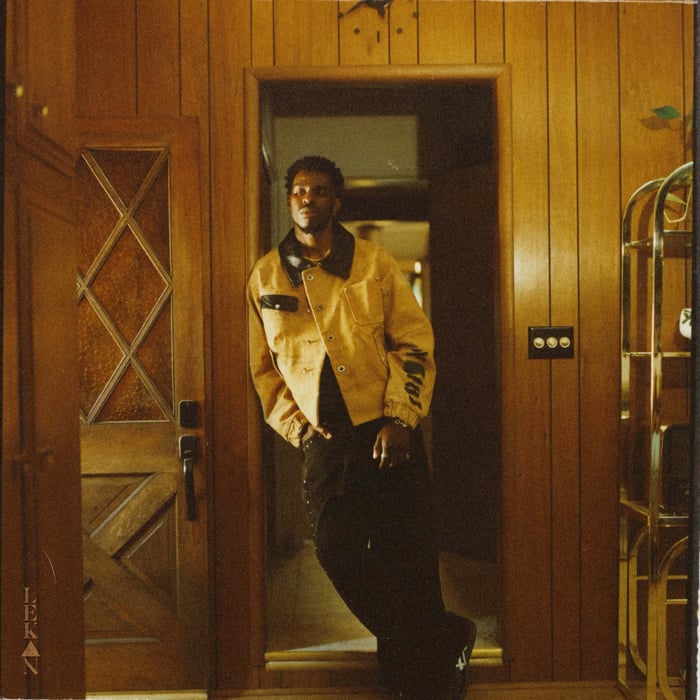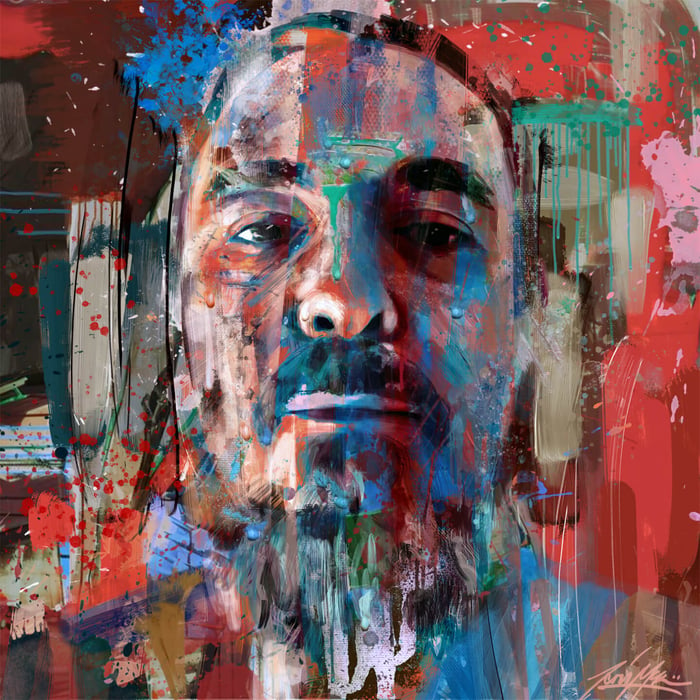
Nearly Nothing Album Review: Farma G & Relense Make Misery Feel Useful


 See more Architeg Prints stories on Google.
Nearly Nothing Album Review: Farma G & Relense Make Misery Feel Useful
Farma G turns “Nearly Nothing” into a lived-in place: dirty mirrors, estate rage, goofy myths, and a steady Relense thump that refuses to glamorize any of it.
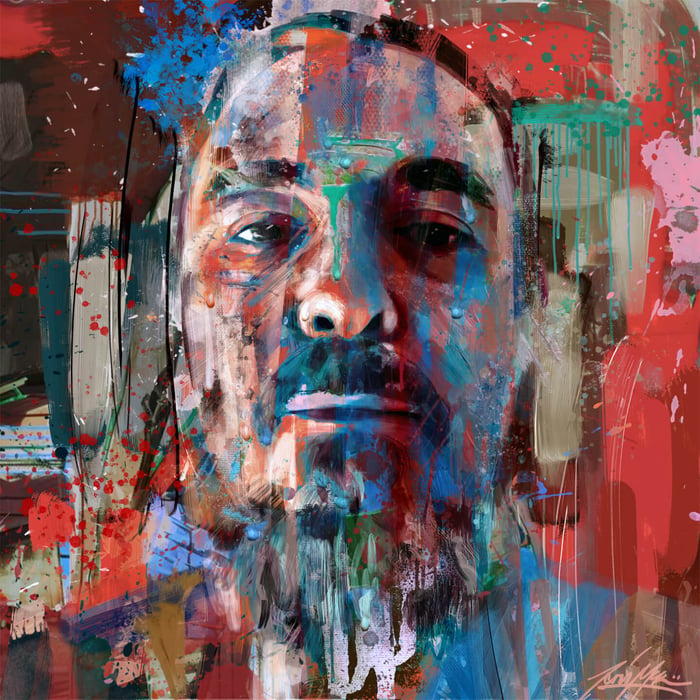
The quickest way to misunderstand this record is to expect “uplift.” It’s not here to save you. It’s here to tell you what it feels like when you don’t get saved—and then to laugh at the parts that are too grim to stare at directly.
A family backstory that explains the stubborn streak
Here’s the strange thing: Farma G’s history doesn’t read like a neat rap origin story—it reads like life refusing to stay in one genre. He’s the son of Peet Coombes, songwriter and guitarist for The Swimmers, whose “Fool (If You Think It’s Over)” crossed the ocean as a hit back in 1978. That alone sets up a kind of inherited musical stubbornness: the idea that a song can leave your house and haunt other people’s lives.
But Farma G didn’t come up chasing that lane. He and his brother Chester P grew up in Northside London and got pulled into hip-hop early—Beatstreet, Breakdance, Roxanne Shanté battles, the whole “rewind the VHS and memorize the swagger” curriculum. By 1993 they’d formed Bury Crew, which eventually became Task Force, and Task Force built the Music from the Corner series—one of the few UK underground rap catalogs people still argue about like it’s personal.
That “argued about with real feeling” part matters. This album isn’t trying to win polite approval; it’s trying to pin a life to the wall long enough to examine it.
What this album is actually doing (and why the title isn’t cute)
The core keyword here—Nearly Nothing—isn’t just branding. It’s a mood the album keeps returning to: the sense that you can do everything “right” and still end up scraping meaning off the bottom of the day like burnt toast.
Nearly Nothing’s Enough is Farma G’s second album on High Focus Records, and it’s produced entirely by Relense, a Brighton-based producer who makes one major decision and sticks to it: keep the record in basically one temperature. That’s not laziness. It’s a constraint. It forces Farma G’s brain—mythology, paranoia, comedy, grief, petty chores, cosmic name-drops—to sit inside the same room like it’s all equally real. And honestly, that’s the only way this guy’s writing makes sense.
He’s been rapping since 1985, became a father at eighteen, then again to twins at thirty-eight. He stepped away, came back, stepped away, came back. He still calls himself “The prince of psychedelia,” and on this album it doesn’t sound like a gimmick—more like a coping mechanism he refuses to retire.
He talks in a language where Dorothy, Tripitaka, and Sun Wukong aren’t “references.” They’re housemates. Kerouac sits on the sofa. Slick Rick wanders through the hallway. The Air Max 1s on the estate are as sacred as any mythic artifact. Nearly every track is thick with that voice.
And yes, someone could argue it’s indulgent. I don’t think it is. I think it’s a man refusing to flatten himself into a marketable personality.
“Mr. Moany” drags mythology into the bathroom mirror
This is where the album snaps shut around your wrist. “Mr. Moany” (with Jazz T) is the moment the distance between Farma G’s grand self-myth and his actual body disappears completely.
He wakes up knackered. The bugs scatter when he gets up. He straps a spliff. He stares into a dirty mirror. His breath smells “like a row of broken gravestones.” The phone rings only when somebody’s chasing a debt. He plays Call of Duty, doesn’t want chores, and the cat food is still on the floor.
Then he goes deeper into the routine—not in a “relatable content” way, but in a “this is what depression looks like when it stops being poetic” way. He hasn’t washed in a week. He reaches for Lynx and “a gargle of bleach.” He eats five Mr Kipling Angel Cakes like he’s punishing himself with sugar. He watches the news, flips it because it’s boring, plays the lottery, writes his name in the grime on the window.
“I’m depressed, I can’t seem to leave the house, and my life is a mess.”
In another rapper’s hands, that line would be a poster. Here it lands because the verses already counted the empty wrappers, the sock holes, the neighbor telling him to empty the bins. It’s not aesthetic sadness. It’s domestic collapse.
Arguable take: most rap music has no interest in this guy—this guy who’s barely functioning, not stylishly spiraling. This track does. And it doesn’t ask permission.
“Peace Pipes” makes the estate feel like a map, not a vibe
Coming off “Mr. Moany,” “Peace Pipes” widens the lens without turning sentimental. Farma G says he comes from “an estate, any old estate,” and that’s the point: he’s not selling you a specific nostalgia postcard. He’s talking about the repeatable machine.
Kids can “whip the coke to the crack but they can’t tie their shoelace on their Air Max 1s.” The field they used for run-outs is now a new block of flats. The place they loved is now basically a squat for cats. The details aren’t decorative—they’re evidence.
Then he’s walking along the Thames at sunset, and his thoughts are “drenched in revenge,” aimed at “posh racketeers” who “make careers out of poor men’s tears.” He calls out Eton bullies as a class. And crucially, the run-outs and Air Max 1s come before the slogans. That’s why the chorus hits like it does:
“Fuck the police from here to suburbia / Fuck the politicians and their new world order.”
If you only heard the chorus, you could roll your eyes. But after he’s already named the disease feeding addicts, the cops who never read your rights, the flats filled with strangers from everywhere, it doesn’t feel like a posture. It feels like a man watching his home get rewritten by people who never had to live there.
Arguable statement: the track’s anger works because it’s specific enough to be petty. Big political rage without petty detail is usually just cosplay.
When the album turns contempt into stand-up: “Makes Me Wanna...” and “The Circus”
The anger doesn’t stay noble. It mutates into something nastier and funnier.
“Makes Me Wanna...” opens with a Grim Reaper sample and basically says: these rappers acting mad make him want to kill them. It’s exaggerated, sure, but it’s also the sound of patience running out. Not “I’m competing,” but “I’m tired of the pantomime.”
Then “The Circus” comes in and calls the scene “a clown’s tea party, Barnum & Bailey’s without the trapeze.” That line tells you the song’s real target: not failure, but fake spectacle. He lands on the ventriloquist doll image—someone with a hand up your back—and it’s one of those razor-edged descriptions that makes major-label aspiration sound like a paid humiliation ritual.
Arguable take: the contempt on these tracks has curdled past rage into comedy on purpose. He’s not trying to “save the culture.” He’s trying to expose how ridiculous the whole performance can look from the outside.
And yeah, you can hear the Task Force lineage in it—thirty years of watching the UK rap industry and finding it funnier and sadder with each season.
Relense’s one-temperature production is both the magic and the risk
Relense produces the entire record, and the beats thump at one pitch throughout. That consistency is the album’s spine. It suits the grounded tracks and holds steady under Farma G’s wilder mental detours.
But I’ll admit it: on first listen, I thought the production might be too even, like it was refusing to let certain songs fully shapeshift. I kept waiting for one beat to really open up and change the air pressure in the room.
On second listen, though, I got why it’s built like this. Farma G is the variable. If the production were constantly reinventing itself, his writing would turn into a grab bag. Here, the steady room forces you to notice how far his mind travels without any scenic help. It’s like watching someone tell a long, complicated story in the same kitchen they’ve always been stuck in.
Arguable statement: the album’s “same-room” production makes the conspiracy stuff easier to tolerate because it never gets to sound cinematic.
“X-Files” flirts with paranoia, then winks at you
“X-Files” is Farma G doing conspiracy theory as a kind of mental pacing. The intro basically signals “tongue in cheek, baby,” but the verses still run through flat-earth, hollow-earth, Nephilim, chemtrails, the Anunnaki, and even “free Palestine” tossed into the spiral before friends remind him he’s paranoid.
I’m not totally sure where the line is between character voice and genuine fixation here. That uncertainty is part of the listening experience: you’re not meant to feel safely “above” it. You’re meant to feel what it’s like when a mind won’t stop connecting dots.
Arguable take: the track works because it doesn’t try to convince you—it just shows you the speed of his thinking, and that’s scarier (and funnier) than a sermon.
“Ya Dead Now” is Kerouac on the sofa, not a brand of cool
Then there’s “Ya Dead Now,” which drops you into a different kind of spiral: tea in hand, reading The Dharma Bums on the sofa, “emotions fully interlaced,” “tears upon my pillowcase,” opening Pandora’s box like it’s just another Tuesday.
This is where Farma G’s “psychedelia” claim finally clicks for me. It’s not lava lamps and spacey synth. It’s reality feeling slightly too symbolic. Ordinary objects start acting like omens. A book becomes a trap door.
Arguable statement: this track does more to sell Farma G as “psychedelic” than any cosmic punchline, because it makes the domestic scene feel hallucinatory without changing the lighting.
“Sun Wukong” is the album’s devotional core
If the record has a devotional center, it’s “Sun Wukong.” The Monkey King trapped under a mountain is the only mythology you really need here, and Farma G writes into it with serious concentration:
“I lived with the weight of a mountain range on my shoulders, it helped me build the strength of mind to have composure.”
He’s sitting in lotus position with Nag Champa incense. He asks the gods for his name and they reply with one word. He scatters the ashes of dead friends “in an ocean of remorse.” Grief and myth fuse until you can’t separate the legend from the man carrying it.
Arguable take: this is the moment the album stops sounding like “bars” and starts sounding like ritual.
And here’s the twist: despite all the mythic framing, the song doesn’t float away. Relense keeps it in that same solid room. “Sun Wukong” wants vastness and still gets the same walls—but the walls are sturdy enough that the myth can breathe inside them.
“Matters of the Heart” explains the title without trying to be profound
“Matters of the Heart” gives the album its title line:
“When you’re born into a world without compassion and love, you live your life like somehow nearly nothing’s enough.”
That line could’ve been corny. It isn’t, because this is the same voice that writes his name in grime on the window, plays the lottery, and curses the kids having fun outside. It’s not a motivational quote. It’s a diagnosis from inside the mess.
Arguable statement: the line hits because the album already proved he’s not using “compassion” as a concept—he’s using it as something that was missing in a specific place, around specific people.
“Never Be the Same” finally lets sweetness show its teeth
Jazz T shows up again on “Never Be the Same,” and Farma G starts doing that thing he does where knowledge and daydreaming and dad-joke cleverness all come from the same mouth.
He finds the coffee, references Cloudy and the dancing goats—the Ethiopian origin myth of coffee. He plays ghost like the Flying Dutchman. He holds the sword “like McCloud in the Square Gardens.” He declares the meaning of life is forty-two “if the Hitchhiker’s Guide was right.” He names himself “Farmer Stargazer Interstellar Space.”
Then the line that softens the whole record without turning it sentimental: “I drew the galaxy and joined the dots and smiled at the sun.” It’s sweet, but not fragile. More like: after everything, the brain still insists on wonder.
Arguable take: this is the album’s most quietly radical move—letting a grown man’s imagination sound gentle without apologizing for it.
The long timeline behind the voice (and why “Till I’m Gone” stings)
Farma G was born in 1974. He started writing lyrics at eleven. By 1990 he was producing beats on an AKAI MPC 60. He became a father at eighteen. In the years he stepped away, he produced for Mach-Hommy, Conway the Machine, Rome Streetz, and Tha God Fahim. Then he came back and made two High Focus albums in two years, with his blood still MUD and his hooks still naming Purly Kings, Bury Crew, Northside—like a man tattooing his own history so nobody else can rewrite it.
On “Till I’m Gone,” he asks: “Imagine Jaws without the soundtrack.” Which is silence. And that’s what most people heard when Task Force was making Music From the Corner: nothing. Empty air. The absence of mainstream attention. The quiet that swallows whole eras of UK rap unless someone refuses to let it.
Arguable statement: this album isn’t trying to “return.” It’s trying to prove he never left—people just weren’t listening.
Where I landed: favorite moments, and the one thing that doesn’t always hit
I’d call this record great in the plainest way: it does what it’s trying to do, and it does it with a personality you can’t fake.
If you want the clearest entry points, my favorite tracks line up with the album’s three faces:
- “Mr. Moany” (the domestic, unglamorous truth)
- “Peace Pipes” (the estate as a living wound)
- “Sun Wukong” (myth as a grief container)
The part that lost me now and then is the risk of that one-temperature production: even when I respect the choice, I occasionally wanted one song to break the room open—just once—so the air could rush in. But maybe that’s my own craving for drama. This album’s drama is in the wording, not the wallpaper.
This is Farma G turning Nearly Nothing’s Enough into a full world: dirty dishes and conspiracy spirals, estate politics and cartoon myth, grief that won’t behave and humor that refuses to be “tasteful.” The point isn’t to impress you. The point is to keep speaking in a voice that still sounds like it belongs to a real person with real days to get through.
Our verdict: If you like rap that names the wrappers on the floor and still dares to talk about Monkey Kings, you’ll actually like this album. If you need your hip-hop polished, inspirational, or safely “content,” you’ll bounce off it fast—and probably call it “too much” while scrolling for something emptier.
FAQ
- Is “Nearly Nothing” more about depression or politics?
It’s both, and that’s the uncomfortable point: the dirty mirror and the estate anger are part of the same day. - Does the album have variety if Relense keeps one production temperature?
The variety comes from Farma G’s writing—myth, jokes, paranoia, grief—not from beat switches. - Which track best represents the album’s core idea?
“Mr. Moany.” It makes “Nearly Nothing” feel physical: chores, debt calls, and shame you can smell. - Is the conspiracy stuff on “X-Files” meant to be taken literally?
I’m not fully sure—and the track benefits from that uncertainty. It plays like a manic thought-stream with a wink, until it doesn’t. - Where should a new listener start?
Start with “Peace Pipes” if you want rage with context, or “Sun Wukong” if you want the myth-and-grief heart of it.
If you’re the type who still judges an album by whether its cover looks like the music feels, you can always grab a favorite album cover poster for your wall at our store: https://www.architeg-prints.com
 | DISCOUNTGET 30% OFF*Use code on your next order:
|
* This post may contain affiliate links, meaning we earn a commission if you make a purchase through these links, at no additional cost to you.