Sometimes Money: Grafh Turns Hustle Trauma Into a Receipt You Can’t Return


 See more Architeg Prints stories on Google.
Sometimes Money: Grafh Turns Hustle Trauma Into a Receipt You Can’t Return
Sometimes Money isn’t a flex on Grafh’s album—it’s the bill for survival, paid in kitchens, corners, and one story that lands like a body bag.
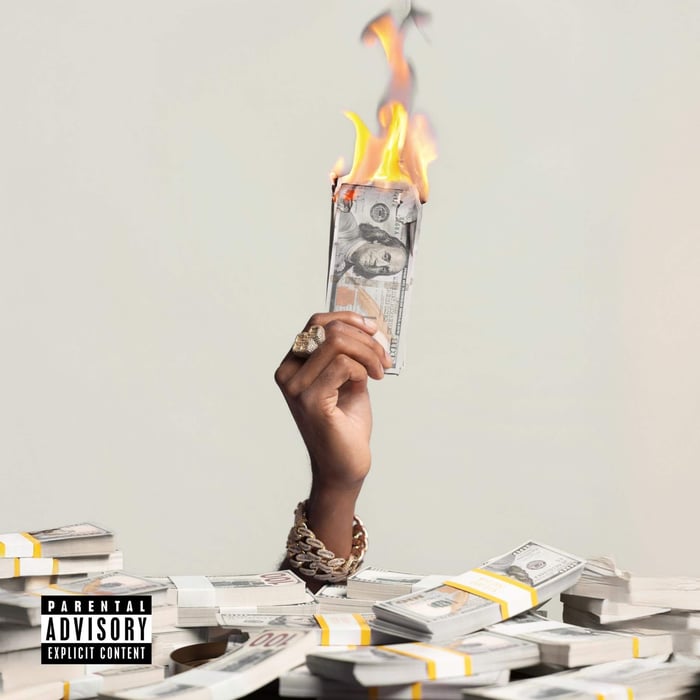
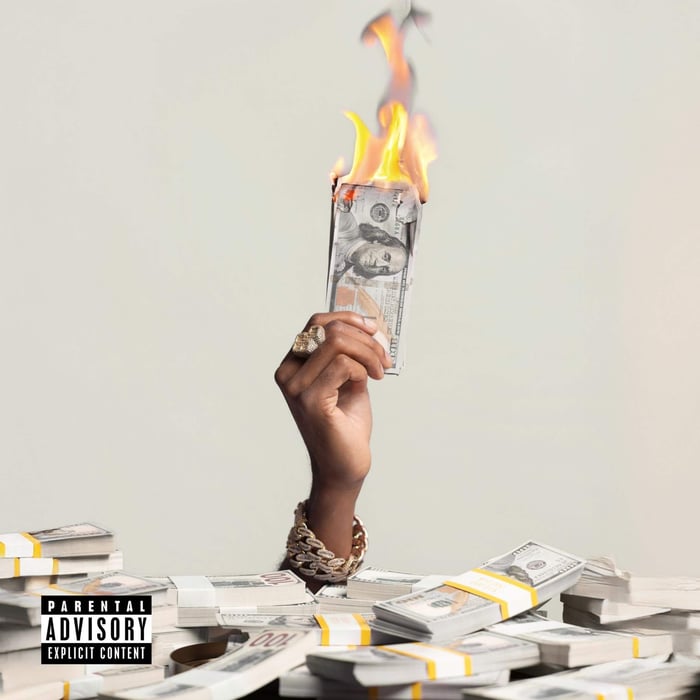
You can hear this album’s main argument before it even finishes clearing its throat: money is the closest thing to “love” a lot of people ever get, and that’s not poetic—it’s a problem. Grafh doesn’t romanticize it. He documents it like he’s submitting exhibits.
The Kind of “Parenting” Nobody Files Paperwork For
Here’s the first uncomfortable truth this record drags into the light: in certain neighborhoods, adults “adopt” kids the way they pick up shifts—because nobody else will. No forms, no court date, no inspirational speeches. Just money from corners and kitchens turning into school supplies, sneakers, and a couple months of stability.
Grafh raps like somebody who learned adulthood as a survival skill, not a personality. I’m not saying he’s emotionless—he’s worse than that. He’s efficient. And that efficiency is the tell. It sounds like a guy who grew up in South Jamaica, Queens during crack-war reality, watching mentors and family get killed, learning how to take care of himself without ever getting the luxury of becoming anything else.
The title Sometimes Money Cost Too Much reads like a question, but the album treats it like a verdict. And the answer isn’t hidden in symbolism; it’s scattered across drug lists, love declarations, posse cuts, and one closing story that basically explains the whole record in plain language.
Arguable claim: this album isn’t trying to “tell you where he’s from”—it’s trying to prove that where he’s from still owns him.
Queens as a State of Mind (And a Paper Trail)
The opener leans hard into New York DNA—looping vocals, a Wu-Tang-flavored paraphrase, and that familiar Queens move where the borough becomes a whole philosophy. The vibe is: cash rules everything, but Queens is the lens you’re forced to look through.
Grafh runs down his résumé like he’s swiping a MetroCard: turnstile jumper, coke smuggler, gold chain, olive drab fatigues. The point isn’t bravado. It feels like he’s been building a case file for twenty years and finally decided to slap it on the desk.
And yeah, I’ll admit it: my first impression was that the roll call sounded tired—almost bureaucratic, like he’s filling out the same form he’s filled out forever. Then the second listen hit different. The “tired” feeling starts to sound intentional, like repetition is the message. When a life is built on the same transactions, the language gets transactional too.
He drops lines like “Give me six and I’ll make a dozen,” turning cooking into business math, while the cops reduce him to “just a thug” in tan Timbs and construction gloves. That contrast is the theme: he’s describing a whole economy, and the system hears a stereotype.
Arguable claim: the album’s New York signaling isn’t nostalgia—it’s a warning label.
“Squeeze First”: The Kitchen Isn’t Cozy, It’s Operational
When Benny the Butcher shows up on “Squeeze First,” he does what he always does well: makes illegal money sound weirdly domestic. A hundred thousand dollars in an Adidas box. A business setup inside a pizza place. Cards on a stained kitchen table. It’s intimate in the ugliest way—like the home got repurposed into a workplace without anyone voting on it.
And that kitchen-table image matters because this record keeps circling back to kitchens. Not as some cute “where we came from” metaphor. More like: this is where family and business collide until you can’t tell which one you’re feeding.
Benny’s detail about betrayal lands cold—your brother doesn’t like you, you go upstate, your mother won’t write you. That’s not a punchline; that’s the price list.
Arguable claim: Benny’s verse makes the “hustle” sound less like ambition and more like unpaid overtime for a life you didn’t choose.
“Outside” Sounds Like a Court Hearing With Better Ad-Libs
The posse cut “Outside” is built like testimony. Styles P, 38 Spesh (who produces it), and Mitchy Slick pull up from different cities—Yonkers, Rochester, San Diego—but it feels like they’re in the same room because the subject is the same: the corner as a permanent address.
Styles P describes a scene where “silence is on the joint,” and people get killed with “the sound off.” It’s a brutal little detail because it treats gunshots like background noise—like weather.
Grafh’s best moment on this track is also the most ordinary. Coke dust on the kitchen table. His baby mother needs allowance. So they “gon’ eat around it.” That line is sick because it’s casual. Nobody panics. Nobody clutches pearls. It’s Tuesday, and the table is both pantry and crime scene.
Arguable claim: “Outside” isn’t about being outside—it’s about never having an inside that stays clean.
“Brick By Brick”: Religion and a Loaded Nine, Like Matching Nightstands
On “Brick By Brick,” Grafh wakes up between a Bible and a loaded 9, with temptation whispering “go for mine.” The staging is almost too neat—like he placed props for a photoshoot—except it doesn’t feel performative. It feels like a guy describing the furniture of his life.
He makes the drug trade sound like shift work with worse benefits, which is honestly the most truthful framing you can give it. Then he confesses dependence—on the drugs—only to correct himself fast: not on them… he sells them. That correction is the point. Even his “weakness” has to be reframed as control.
Arguable claim: Grafh’s real flex isn’t toughness; it’s the way he refuses to admit anything owns him, even when it obviously does.
“Documented”: Self-Mythology With Receipts Attached
“Documented” swings back into naming names—Black Hand Entertainment, Chaz Williams—turning a past life into bar-after-bar evidence. A record deal still has the trap inside it. And then he throws out the kind of image that shouldn’t work but does: “Phil Jackson in the mud field practicing run drills backwards.”
It’s absurd. It’s perfect. Discipline applied to chaos. Coaching yourself in a life with no script.
I’m not totally sure everyone will catch why that line lands—it’s not the reference, it’s the posture. He’s saying he trained for this mess the way someone trains for championships. That’s either tragic or deranged, depending on your mood.
Arguable claim: “Documented” proves Grafh isn’t stuck in the past—he’s using it as branding, because the world didn’t offer him another logo.
“Twin”: A Love Song That Still Thinks Like a Hustler
Then “Twin” slides in with R&B production from Kxvi and suddenly Grafh is writing a love song. He says “baby, you look amazing all the time,” then immediately follows with a line about invoicing her exes for wasting her time.
That’s funny in a dry way, but it also gives him away: even romance gets translated into accounting. The second verse turns more openly earnest—hard times, prayer, mutual heartbreak, still staying. He builds to the cleanest commitment on the whole album: he invested too much time with women he’d never marry… but not her.
Arguable claim: “Twin” works because it doesn’t pretend he’s suddenly soft—it shows he’s loyal in the same language he uses to survive.
“Some Wounds Never Heal”: The Story That Breaks the Title Open
The closing track “Some Wounds Never Heal” is where the album stops arguing and just shows you the outcome. Over three verses, Grafh tells the story of Little Kenny. His mom is addicted to crack. The hook (from Tish Hyman) asks a haunting question: can you hear something hollering without a sound?
“I look in his fridge, all I see is spoiled milk and baking flour,” Grafh says, “so he starving and he dirty, she ain’t make him shower, she be tryna cover up the smell with baby powder.”
Grafh is in twelfth grade—still basically a kid—trying to tell a grown woman how to raise her son.
And then the record gets painfully specific:
- he pays Kenny’s school fees
- he buys him real Nikes (not the fakes Grafh had when he was trying to be “cool”)
- he teaches him to fight, but Kenny flinches because he’s used to abuse
- the mom beats him with a wooden spoon until he can’t move
Grafh takes him shopping after the hospital. Shoots hoops with him. Keeps blocking his shot until Kenny can’t stop laughing. That detail hits because it’s the only time on the whole album that feels like pure joy without a transaction attached.
“I said, ‘I’ll see you tomorrow,’ but tomorrow never came, a black body bag with my whole world in it.”
That’s when Sometimes Money Cost Too Much stops being a phrase and becomes a sentence. Street money paid for shoes and school fees, but none of it could buy Kenny another day. Whatever Grafh provided, the cost exceeded the price.
Arguable claim: this is the real album. Everything else is context and fallout.
Where the Album Loses the Thread (And Why That Might Be the Point)
Not every feature lands, and the clunkier moments stand out more because the best parts are so sharp.
Joyner Lucas shows up on “Big League” and—at least to my ears—stalls the momentum with boilerplate competition bars. Lines like “Too hot, believe it or not” feel like they arrived prepackaged, and the hostile Bible imagery doesn’t seem to connect to anything deeper on this record. It’s not that he can’t rap. It’s that the verse acts like skill is the same as substance, and on this album that’s a mismatch.
“Rollin’” is pleasant ride music, and Dope Gang Porter’s flexing is vivid—Michelin-star-chef talk, cannoli-in-Sicily type brags—but it sits weird next to the heavier material. Like somebody put luxury vinyl flooring in the middle of a memorial.
Then there’s “Suicide” with Tech N9ne: a full chopper-rap exhibition. Technically impressive, sure. Emotionally, it feels imported from a different record. I kept waiting for it to tie back to the album’s actual wound, but it mostly just sprints.
And that’s the contradiction: right after that, “Better With Time” hits with Bun B talking about linking with Pimp C, hitting the road in a white Prelude, doing it for parents and kids, and making “a million out a… quarter.” That’s legacy talk. Family talk. It belongs here more than the technical marathon does.
Arguable claim: the album’s weakest moments aren’t “bad songs”—they’re songs that don’t pay the emotional rent this tracklist demands.
The Independence Tax: When You Keep Everything, You Keep the Bloat
If this record were trimmed, the best cuts could make a devastating eight-song LP. As it is, the extra weight feels like the tax you pay when you’re truly independent: when nobody’s telling you “no,” you don’t cut anything, because cutting feels like losing.
And I don’t mean that as a pure negative. There’s something honest about leaving the seams visible. Still, the uneven pacing makes the emotional centerpiece (“Some Wounds Never Heal”) feel even more like a closing argument after a long day in court.
Arguable claim: the album’s excess isn’t indulgence—it’s fear of erasing any part of the story.
Two Decades on the Margins, Finally Sounding Like a Person
Grafh’s career history hangs over this album like a ghost: years on the margins, signed and shelved, cosigned and then ignored, distribution deals that never turned into the kind of era he should’ve had. Plenty of famous people praised him along the way (yes, even Shia LaBeouf, which is… information), and none of that praise translated into the kind of stable platform his pen kept earning.
That’s why Sometimes Money Cost Too Much feels personal in a way his résumé rap sometimes doesn’t. The question underneath the whole thing isn’t “how do I get rich?” It’s: what happens when a twelfth-grader decides to raise a child who isn’t his, using money the law won’t recognize, in a borough that’s willing to bury both of them?
And the album’s cruelest callback is that simplest sentence: “I’ll see you tomorrow.” Except tomorrow never came.
Arguable claim: this record isn’t Grafh trying to prove he’s great—this is him admitting what greatness didn’t save.
Standout Tracks (The Ones That Actually Carry the Thesis)
Some songs don’t just sound good—they hold the album’s main idea without flinching. For me, the core is:
- “Outside” (because the details feel lived-in, not performed)
- “Brick By Brick” (because it frames morality like furniture)
- “Some Wounds Never Heal” (because it turns the title into reality)
Arguable claim: if you only hear these three, you’ll understand the album better than if you chase every lyrical exercise on the tracklist.
Grafh made a record where money isn’t shiny—it’s a tool, a trap, and sometimes a gesture that arrives too late. Sometimes Money doesn’t ask you to pity anyone. It just forces you to sit with the math: what street money can cover, what it can’t, and what it quietly destroys while pretending to help.
Our verdict: People who like street rap that actually means something—where the kitchen details hit harder than the threats—will sit with this album and replay the closing track like a grim ritual. If you’re here for nonstop victory laps, slick motivation, or lyrical gymnastics detached from consequence, you’ll get bored or uncomfortable fast (and yes, that’s kind of the point).
FAQ
- Is “Sometimes Money” more of a concept album or a collection of stories?
It plays like stories that circle one concept: money as caretaking, money as damage control, money as grief you can’t refund. - What’s the most emotionally heavy moment on the album?
“Some Wounds Never Heal,” especially the final turn from everyday caretaking to the black body bag reality. - Do the features help or distract?
Both. Benny the Butcher and Bun B fit the world. Some technical showcases feel like they wandered in from another playlist. - Is this album replayable, or is it more of a one-time listen?
Replayable, but not as background music. The key scenes stick, and once you know where the closing track goes, earlier lines hit harder. - What should I listen for if I’m new to Grafh?
Listen for the domestic details—fridges, tables, shoes, allowance—because that’s where the album tells the truth without raising its voice.
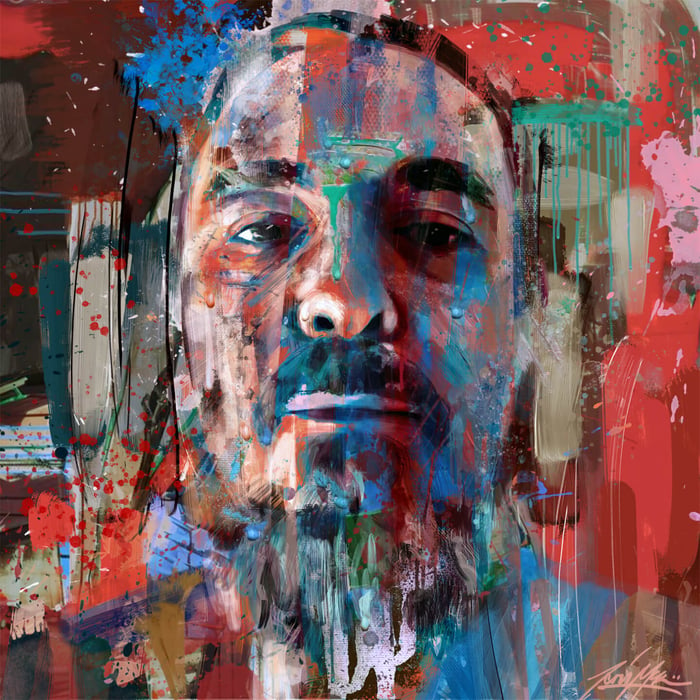
If this album’s cover stuck in your head the way the Little Kenny story does, it might be worth putting that feeling on a wall. You can shop a favorite album cover poster at our store here: https://www.architeg-prints.com
 | DISCOUNTGET 30% OFF*Use code on your next order:
|
* This post may contain affiliate links, meaning we earn a commission if you make a purchase through these links, at no additional cost to you.