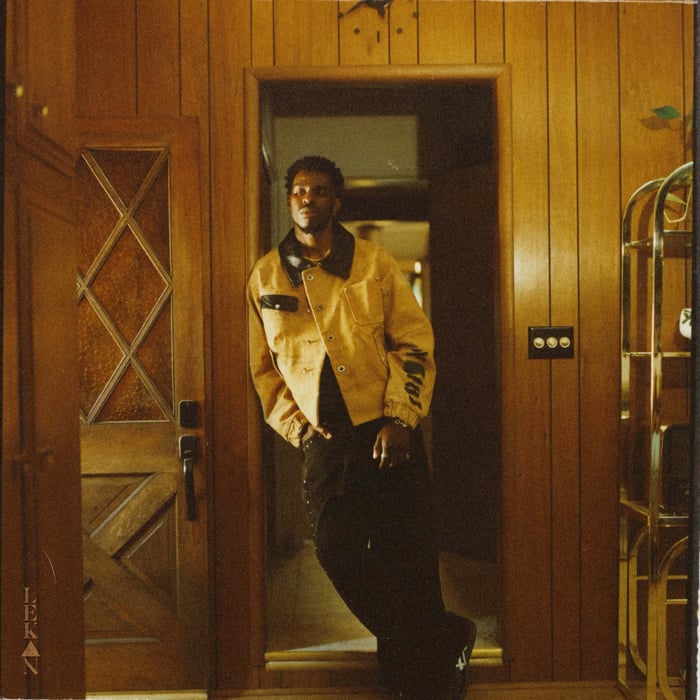
Existential Thottie Review: Duendita Turns Club Tears Into Homework


 See more Architeg Prints stories on Google.
Existential Thottie Review: Duendita Turns Club Tears Into Homework
existential thottie sounds like a horny panic attack with a metronome—private demos turned public therapy, and it somehow still makes you move.

A record that feels like it wasn’t supposed to leave the room
Some albums feel “personal.” This one feels like you walked in while somebody was mid-sentence and they didn’t stop talking. existential thottie has that late-night, alone-first energy—the kind where the beat is running because silence would be worse.
What’s really happening here is simple and kind of ruthless: duendita is using songs the way some people use a pulse oximeter. Not to perform wellness. To check if they’re still here.
And yeah, I can hear that these tracks began as private acts—built up in the dark, demoed before anybody could “give notes,” before a band could sand off the sharp parts. That’s not romantic. It’s practical. You don’t make something this blunt by committee.
The Digitakt vibe: health advice disguised as a workflow
Here’s the underlying engine: she’s writing like someone who has decided songwriting is medical equipment. The whole thing comes off like a literal routine—up late, looping patterns, letting the thing exist as a demo first, because demos don’t interrupt you with opinions.
Then the extra humans arrive later—harpist Samantha Feliciano, drummers Julian Berann and Anton Remy, co-producer Noah Becker—like reinforcements called in after the initial emergency. That order matters. You can feel it in the way the songs keep their “first thought” shape, even when they get dressed up.
Arguable take: bringing in other players doesn’t “polish” the record so much as it frames the mess—like putting museum lighting on a bruise so you can see the color changes.
“Super Sad!” and the album’s main trick: despair with hips
“Super Sad!” drops the thesis in one line:
“I’m in the club, super sad, so I threw it back.”That’s not a quirky contradiction. That’s the whole album’s moral stance: no choosing. Sadness doesn’t cancel libido. A dance beat doesn’t erase a breakdown. The body keeps showing up to the party even when the mind is dragging behind it like a busted suitcase.
At first, I thought that line was mostly a meme-able punchline—one of those internet-ready captions that songs sometimes build entire personalities around. But on second listen, it lands more like a survival technique. She’s not joking instead of pain. She’s joking inside it.
Arguable take: the “club” in this album isn’t a place—it’s a coping mechanism. The beat isn’t for fun; it’s so the thoughts don’t win.
“Toxic and Evil” goes there because she refuses to sanitize herself
“Toxic and Evil” is where duendita makes it clear she’s not interested in being palatable. The first verse lurches straight into explicitness—
“How many dicks can I fit in my mouth?”—and then flips to a completely different kind of gut-punch:
“having your baby was my only dream.”That swing is not accidental whiplash. It’s the point.
Then the chorus strips away the performance and says the real thing out loud:
“No, no, I’m not okay. Need to be with myself today.”No poetic bridge. No clever pivot. Just a hard cut from horny chaos to isolation-as-triage.
Arguable take: this song is “ugly” on purpose, because prettiness would be a lie—and she’d rather risk being crass than risk being fake.
The trained voice is there… but the composure isn’t
Duendita’s background—classical voice through high school, then NYU’s Clive Davis Institute on scholarship—sits underneath the album like good posture under bad decisions. You can hear control in how she places notes, how she sustains, how she keeps the vocal from smearing even when the lyrics are actively setting things on fire.
But none of that training shows up as “tastefulness.” The subject matter is messy, bodily, impatient. The voice says, I know exactly what I’m doing. The writing says, I’m not okay and I’m done pretending otherwise.
Arguable take: the contrast is what makes the album hit harder—because a less capable singer could hide behind chaos, but she can’t. Her voice is too precise, so the wreckage reads as chosen.
“Once or Twice” and the album’s refusal to pick a lane
“Once or Twice” commits fully to wanting someone’s body:
“I lick it every day,” “gotta hit it once or twice.”No metaphors, no tasteful fog machine. It’s desire stated like a grocery list.
And then, a few songs later, she’s asking a totally different question: how many more years of therapy until she can have a kid? That swing could feel scattered on another record. Here it feels like the only honest sequencing choice available. Because that’s the real pivot people live with: one day you’re feral, the next day you’re calculating whether you’re allowed to build a family.
Arguable take: the “lurching” between lust and long-term fear isn’t a lack of focus—it’s the album’s actual form. Stability would be dishonest.
“As I Am” is the moment most albums are too polite to attempt
Most songs don’t go where “As I Am” goes, because most artists don’t want to record the sound of their own reality splitting. This track drags you into a hospital memory: injected, asleep for three days. A father silent and crying. That sick role-reversal feeling—like the parental axis tilts and you’re the one in the bed now.
A nurse asks to hear one of her songs, pulls up a video of her singing with Emily at a restaurant in Colby, and duendita can’t place herself. That’s the detail that sticks to the ribs: not “I was scared,” but
“Who is this person? Why am I watching? She looks real familiar.”And then the line that actually hurts:
“Maybe I know her. I mean, maybe I knew her.”
I’m not totally sure if I’m hearing dissociation, shock, depression, or some nasty cocktail of all three—but the track doesn’t need me to diagnose it. It just needs me to sit there and not look away.
Arguable take: “As I Am” isn’t the emotional centerpiece because it’s the saddest—it’s the centerpiece because it refuses resolution. It leaves the question hanging like an IV drip.
The body stays specific: hormones, sex, money, weight, sedation
One thing duendita does relentlessly—almost aggressively—is keep the body named and detailed. On existential thottie, the body isn’t symbolism. It’s evidence.
- “Nexplanon” gets into what birth control hormones do to her mood—swinging like a wrecking ball—and the terror of making life.
- “Beach” says she’s underpaid and overweight, like she’s reading her own receipt back to herself.
- “Head 2 Toe” and “Once or Twice” put the body in pleasure, direct and unapologetic.
- “As I Am” puts it in a hospital bed, sedated against its will.
Arguable take: the album’s “concept” is that all these states deserve equal lyrical specificity—orgasm and side effects and involuntary hospitalization treated with the same matter-of-fact attention. That’s not shock value. That’s a refusal to rank experiences by what sounds cute in a chorus.
The jokes aren’t relief—they’re the only way it stays livable
There’s a particular kind of humor here that isn’t really comedy. It’s the laugh you do so you can keep talking without choking. Duendita seems to know that if she plays this straight, it becomes uninhabitable—for her and for you.
“Roasting That Ass” ends its second verse with her snapping at herself:
“How about you fucking finish your tracks, bitch?”That moment is hilarious in the bleakest, most practical way. It’s not self-hatred as entertainment. It’s self-management. Like yelling at your own brain to clock in.
And “Beach”—which she’s called her favorite on the album—does this brutal little ritual:
“I give up”four times, then
“I get up”four times, all over a dance beat. The beat doesn’t soften it. If anything, the beat makes it feel more real, because people don’t “give up” in cinematic silence. They give up with notifications still popping off.
Mild criticism, because I have one: there are moments where the punchline timing feels sharper than the musical development, like the lyric lands and the track doesn’t always evolve enough to match the escalation. It doesn’t ruin anything, but it occasionally made me crave a little more motion in the arrangement.
Arguable take: the record’s funniest lines aren’t “comic relief.” They’re structural supports holding the songs upright.
“Real Better Soon” closes the loop without pretending it’s over
By the time “Real Better Soon” shows up, the album has already said the quiet part out loud in a dozen different ways. Still, the closer hits because it speaks plainly:
“So glad I didn’t die when my mind tried to flicker off the lights.”That’s not a metaphor you write for aesthetics. That’s a sentence you write because it happened in your head and you remember how close it got.
The album admits something else, too: it might be for her more than for anyone else. After songs about bleeding before writing, fights and breakups, the state mental health system, really hot sex, and the fear of becoming a mother, that claim doesn’t read like an artist being coy. It reads like a person building a rope bridge while already halfway across the canyon.
Arguable take: the “privacy” is the hook. The songs don’t feel addressed to an audience, so when you overhear yourself in them, it hits harder than something trying to be relatable on purpose.
Favorite tracks (the ones that keep flashing back)
I keep circling back to these because they feel like load-bearing walls:
- “As I Am” — the dissociation detail is the whole dagger.
- “Super Sad!” — the cleanest statement of the album’s two-brain reality.
- “Beach” — “I give up / I get up” is basically the record’s heartbeat.
Arguable take: if “Super Sad!” is the slogan, “As I Am” is the proof, and “Beach” is the daily routine afterward.
Duendita made existential thottie like a private act that accidentally became shareable, and that’s why it sticks. It doesn’t ask you to admire her pain or applaud her growth. It just puts the body on the table—desire, hormones, dread, jokes, sedation—and dares you to pretend those things don’t belong in the same life.
Our verdict: This album will actually land for people who can dance while spiraling, who don’t need their music to “heal” them in a tidy montage. If you want clean inspiration, polite metaphors, or sadness that behaves itself, you’re going to feel like you showed up to the wrong function—and duendita will not apologize.
FAQ
- What is the core mood of existential thottie?
It’s club energy with real depression in the passenger seat—moving forward while everything feels sideways. - Is existential thottie more funny or more heavy?
Both at once, and that’s the trick. The humor doesn’t cancel the heaviness; it keeps it speakable. - Which track hits the hardest emotionally?
“As I Am,” because it’s specific about hospitalization and identity slipping, and it refuses to wrap it up neatly. - Does the album feel polished or intentionally raw?
It feels intentionally private: demos-first, then fleshed out later. You can hear the “don’t overthink it” origin in the way it stays blunt. - Who should skip this album?
Anyone who needs lyrics to be tasteful, indirect, or comfortably inspirational. This record says things plainly and doesn’t check if you’re ready.
If this album’s blunt honesty is your thing, a poster of your favorite album cover is basically the grown-up version of taping a lifeline to your wall. If you want one, you can browse prints at our store: https://www.architeg-prints.com
 | DISCOUNTGET 30% OFF*Use code on your next order:
|
* This post may contain affiliate links, meaning we earn a commission if you make a purchase through these links, at no additional cost to you.