Foo Fighters’ Your Favorite Toy Review: Therapy Rock With a Knife Smile


 See more Architeg Prints stories on Google.
Foo Fighters’ Your Favorite Toy Review: Therapy Rock With a Knife Smile
Foo Fighters’ Your Favorite Toy turns the band’s “back to basics” impulse into a tense, angry coping ritual—and it’s not always as deep as it thinks.
A record that sounds like it was written in the waiting room
Foo Fighters have made a career out of turning emotional mess into stadium-sized clarity. Your Favorite Toy doesn’t aim for clarity. It aims for release.
Dave Grohl has talked about being in therapy “six days a week for 70 weeks,” totaling over 430 sessions, and you can hear that grind here—not as wisdom, but as agitation. After the grief-soaked focus of But Here We Are (an album that felt trimmed down to the raw nerve), Your Favorite Toy comes in leaner and sharper, like it’s been pacing the hallway and finally got called in.
A lot of this album runs on no-frills aggression, and honestly, that often works in a therapeutic way: hit the loud part, say the ugly thing, get out. But the album only really finds direction when it stops posturing and actually tries to explain the anger instead of just throwing it at the wall. Then it ends right when it starts getting interesting—like a session cut short at the exact moment you finally said something real.
1. “Caught in the Echo” — the band arguing with its own origin story
This opener feels like Foo Fighters doing what they’ve been doing since at least 2007: circling back toward the early, raw, anthemic version of themselves and asking, “Is that still us, or just our best marketing?”
“Caught in the Echo” is supposedly about pushing through uncertainty, but the interesting part is how it loosens its own grip. It starts clenched—riff-first, shoulders up around the ears—then gradually tries to uncoil into something like freedom. Grohl sings, “Consider this an emancipation / From all of my confusion,” and I don’t fully buy it. It sounds like he wants to believe it more than he does.
Still, it’s a solid physiological opener. Not subtle. Not clever. Effective. And if you think openers should feel like a throat-clear, you’ll call it basic; if you think they should feel like a punch in the ribs, this does the job.
2. “Of All People” — petty on purpose, like a recovered demo
“Of All People” comes in with this sneering attitude that’s so cut-and-dried it almost sounds slapped together in ten minutes. That might be the point. The track apparently targets a drug dealer Grohl knew in the ’90s, and it really does feel like something dug out of a box labeled old grudges, do not open.
The song’s value isn’t in its nuance—it doesn’t have any. It’s in the way new drummer Ilan Rubin brings motion to a meat-and-potatoes arrangement. The drums give it a nervous system. Without that, I’m not sure this track would justify taking up space.
Here’s the arguable part: this is one of those songs where the laziness is a creative decision. It’s not “unfinished,” it’s weaponized simplicity—a quick, spiteful sketch left in because the band wanted the ugliness on the record.
3. “Window” — when slowing down exposes the weak spots
It takes only a couple songs for the tempo to sag, and “Window” arrives like a heavy exhale. Grohl sings, “I’m a puddle on the ground,” and the band sounds like it’s trying to keep his head above water.
The instrumental cruises—almost too politely—and that’s where the problem shows up: the quieter it gets, the more the lyrics sit right in your lap. Some of them land clumsily, and the song ends up suffocating its own emotion right when it starts to simmer.
It closes with “Man, that looks like fun,” served with hot irony. The line is a neat little pin, but the song around it feels like it’s searching for gravity. Mild criticism: this is where Your Favorite Toy starts to flirt with that awkward Foo Fighters problem—when they slow down, they sometimes replace detail with vaguely sad shapes.
4. “Your Favorite Toy” — a smart idea wearing dumb boots
The title track is the best argument on the album for updating the band’s formative sound instead of cosplaying it. It’s torn at the core: Grohl’s anger is sincere but kind of amorphous, like he’s furious and hasn’t decided at what. Underneath, the band sets up a swaggering, shuffling groove—then slams it with flattening distortion.
That clash shouldn’t work, but it becomes weirdly playful. Like they’re enjoying the friction, not trying to iron it out.
Now, there’s an absolute clunker of a bridge. It sticks out like an elbow through a shirt. But the rest of the song has the right kind of incongruity: the music struts while the vocal snarls, and that contradiction feels like the entire thesis of Your Favorite Toy. This record wants to be both the tough guy and the guy who goes home and spirals.
5. “If You Only Knew” — repeating the point doesn’t always sharpen it
“If You Only Knew” is slightly more memorable than some of the surrounding tracks, and I think it’s because it drags itself out to make sure you don’t miss the message: “Maybe you’d feel the way I do / If you only knew.”
It uses similar stylistic contrasts as the title track, but it doesn’t have the same force behind them. The push-pull feels more like technique than necessity. I kept waiting for the song to justify its length with a turn—some new melodic angle, some lyric that re-frames the complaint—but it mostly just digs the same trench deeper.
Arguable claim: this is one of those Foo Fighters songs that confuses insistence with impact. Loud doesn’t automatically mean persuasive.
6. “Spit Shine” — the moment the album stops apologizing
Side B revs back up, and “Spit Shine” feels like the album remembering what it actually wants: velocity, abrasion, a little danger.
It’s driven by a “Think fast, nothing lasts” hardcore mentality, then sweetened by a more mature chorus. And the domestic-drama subtext finally stops hiding behind metaphors: “The honeymoon is over” is one of the most explicit lines Grohl spits out here, and he repeats it twice in the chorus—like he’s making himself say it until it becomes true.
The best part is that the performance doesn’t tidy itself up for radio. The drums barely let up when the infectious part rushes in, and Grohl keeps his vocals unhinged instead of sanding them into melody. That decision—choosing messy over pretty—is exactly why the track works.
On first listen, I thought this one was just “the fast one.” On second listen, it felt like the album’s real center of gravity: not catharsis, but confrontation.
7. “Unconditional” — the obligatory hope song, but it almost earns it
Then Grohl dusts off his classic songcraft for the “better days ahead” moment. “Unconditional” is a vibe shift so drastic it nearly compensates for the vagueness of the writing.
He opens with, “I’m sore from sleeping / Everything hurts / Can’t say what’s on my mind,” and it’s that fatigue—physical, emotional, moral—that gives the song its best detail. The apology here is the most candid on the record, not because it’s perfectly articulated, but because it sounds like it’s being said through clenched teeth.
Arguable statement: this is the kind of track Foo Fighters could write in their sleep, and that’s both the compliment and the insult. It’s comforting, sure—but it also feels like a familiar tool pulled out when things get too sharp.
8. “Child Actor” — the album finally admits it’s being watched
“Child Actor” turns the lens inward, and it made me wonder if Your Favorite Toy would be stronger if it balanced its anger more often instead of swerving briefly into reflection and then sprinting back to the punchline.
There’s a sense the meanness across the album is strategic. Like Grohl is trying to act like nobody’s looking—trying to counter the “nice guy” persona that’s been welded to him for decades. “Child Actor” is where that performance gets acknowledged.
And here’s where I’ll admit uncertainty: I can’t tell if this track is the real Grohl stepping forward, or just a more sophisticated mask. Either way, it’s the kind of earnest, measured self-reflection that will mean more to people who are actually invested—not just in the band’s hits, but in the human mess behind them.
9. “Amen, Caveman” — ambition in a strange outfit
“Amen, Caveman” is another odd amalgamation. It squares the band’s Sonic Highways-era ambition with a hint of their flirtations with disco—like they’re trying to prove they can still stretch, but they won’t stop being Foo Fighters long enough to fully shapeshift.
This is an arguable take, but I’ll stand by it: the song’s weirdness is less “bold experiment” and more “band letting itself get bored for three minutes.” That’s not a diss. Sometimes boredom is a gateway drug to interesting decisions.
Not everything here locks together seamlessly, though. It’s a track that feels like it could either be the start of a new lane—or a one-off because they liked the idea more than the result.
10. “Asking for a Friend” — the big chorus arrives like it was hiding
The album closes with its most soaring chorus, an existential outpouring so vehement I genuinely wondered where it had been hiding. For a moment, it sounds like the record might end on some kind of open sky.
But the mid-tempo closer remembers which album it’s on and opts for a thrashy breakdown anyway. It pleads, “Save your promises / Until we meet again,” which lands like a bruised version of optimism—hope with teeth marks.
“Asking for a Friend” doesn’t sound like a bitter end. It sounds like Foo Fighters keeping their promise to rarely stray from the tried-and-true formula, even when the emotions are messier than usual. And the frustrating thing is: the chorus proves they could’ve gone further emotionally—then the breakdown pulls the curtain down.
Conclusion: the anger works, until it dodges its own questions
Your Favorite Toy is Foo Fighters choosing abrasion as a coping mechanism. When it commits—when it lets the vocals fray, when the drums shove the songs forward, when the choruses hit without polishing the edges—it feels like a band refusing to be “okay” on schedule. When it slips into vague phrasing or familiar structure, it feels like they’re changing the subject mid-sentence.
Our verdict: People who like their Foo Fighters with bruises—fast tempos, blunt hooks, a little bile in the throat—will actually like Your Favorite Toy. People hoping for the careful emotional excavation of But Here We Are will get annoyed, because this album would rather kick a chair than explain why it’s angry. It’s therapy rock, sure—just not the insightful kind every minute.
FAQ
- Is “Your Favorite Toy” really a return to early Foo Fighters?
It flirts with that raw, anthemic snap, but it’s more like the band arguing with its own past than reenacting it. - What’s the most intense track on the album?
“Spit Shine” hits hardest because the performance refuses to clean itself up for the chorus. - Where does Ilan Rubin stand out most?
“Of All People” benefits from his dynamism; the arrangement is simple, so the drumming has room to animate it. - Does the album slow down at all?
Yes—“Window” and “Unconditional” ease off the gas, though the quieter moments also expose some clumsy lyric choices. - Is the closing track more reflective or more aggressive?
Both. “Asking for a Friend” gives you the biggest chorus, then undercuts it with a thrashy breakdown like it can’t resist tension.
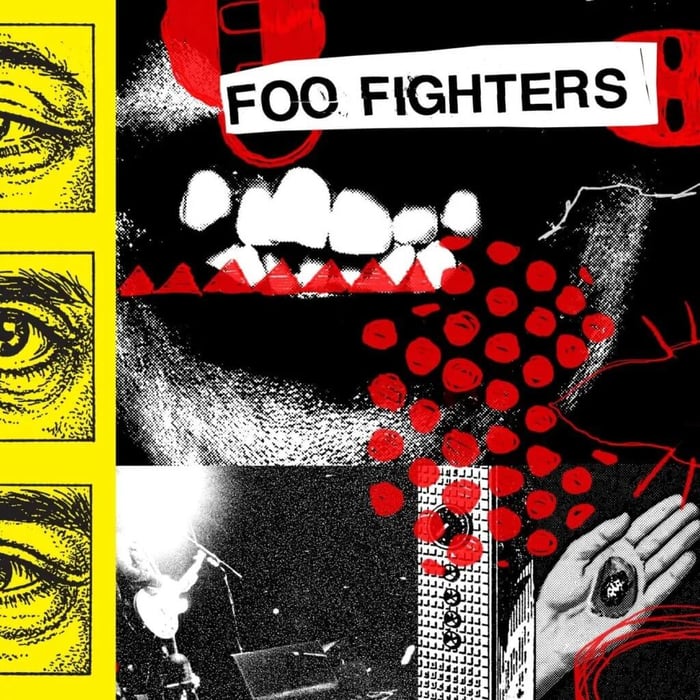
If this album’s cover (or any cover that lives in your head rent-free) deserves wall space, you can print that obsession into your daily life with a poster from our shop: https://www.architeg-prints.com.
 | DISCOUNTGET 30% OFF*Use code on your next order:
|
* This post may contain affiliate links, meaning we earn a commission if you make a purchase through these links, at no additional cost to you.