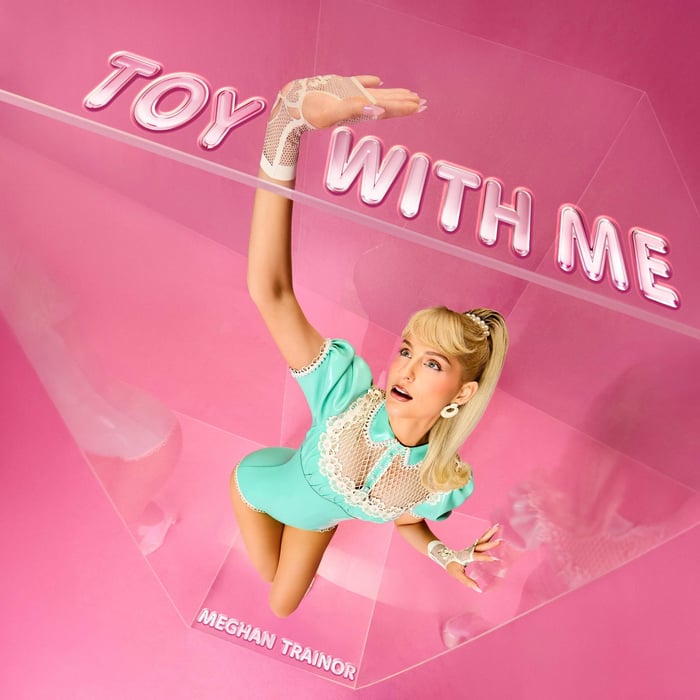
Meghan Trainor’s Toy With Me Review: Unbothered Pop, Weirdly Bothered


 See more Architeg Prints stories on Google.
Meghan Trainor’s Toy With Me Review: Unbothered Pop, Weirdly Bothered
Meghan Trainor’s Toy With Me sells “I don’t care” like a product—until two songs accidentally tell the truth and the whole mask slips.
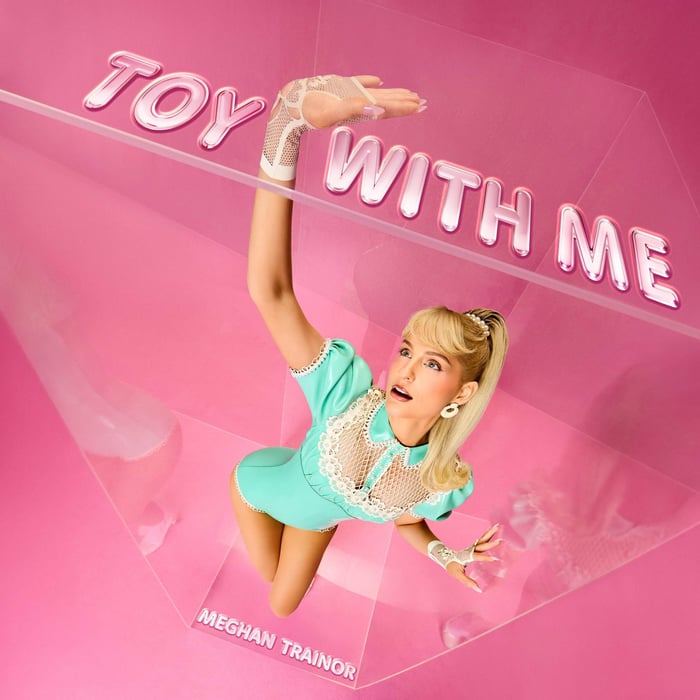
The weird part: the most honest moment isn’t even on the album
Here’s what Toy With Me feels like: a long, glossy insistence that nothing gets to her—delivered with the energy of someone refreshing their own mentions.
Ten years after “All About That Bass” swallowed radio whole, Meghan Trainor is still positioned as a capital-H Hitmaker. She’s collecting industry trophies, announcing a 33-date headline tour with Icona Pop (her first proper run in eight years), and then—three weeks before the album drops—pulling the plug on the entire thing. The reason she gave was simple and human: a new baby, tour prep, and album stuff all at once was “more than I can take on right now.”
I’m not saying that to shame her. I’m saying it because that single admission lands harder than most of the record. It’s the one moment where the brand-new project’s main slogan—I’m unbothered—gets contradicted by reality in a way that actually sounds alive.
And yes, I’m aware that maybe I’m over-reading logistics. But when an album keeps yelling “I don’t care,” you start listening for the places where it accidentally admits it does.
“No more rules,” except the one rule: keep smiling
Trainor frames Toy With Me like a swing-for-the-fences era: risk-taking, fearless, honest, no rules. I went in expecting at least a few left turns—some awkward experiments, some new vocal posture, some songwriting choices that might actually scare her a little.
What I got instead is a very specific kind of “risk”: the album borrows the current pop climate’s cheeky innuendo and petty-revenge tone, then sands it down until it can’t cut anyone. The vibe is “I’m naughty,” but said in the same voice you’d use to read a menu.
That doesn’t mean the premises are dead on arrival. A lot of these setups are genuinely fun in the abstract:
- “Pink Cadillac” goes for the classic double-entendre car song, stacked with beep-beep-beep and vroom-vroom vocal effects.
- “Toy With Me” leans into the doll fantasy—wind me up, turn me on—like she’s trying to turn flirtation into a plastic product demo.
- “Chef’s Kiss” plays as a curse-your-ex checklist that escalates from petty (“a rock in your shoe”) to outright nasty (“poison in your booze”) to existential (“give up on your dreams”).
If you just read those on paper, you’d think: okay, campy, sharp, potentially addictive.
But then the songs happen—and this is where the record gives itself away. Over and over, it blows its best idea in the first chorus and spends the remaining two minutes repeating the same thought in louder fonts. There’s a difference between a hook that hypnotizes and a hook that stalls. These hooks stall.
And I’ll own this: my first impression was “fine, it’s dumb pop, let it be dumb.” On second listen, I realized it isn’t dumb in a fun way—it’s defensive in a lazy way.
The bumper-sticker problem: every chorus is the same outfit
The album’s central move is self-mythology: I’m rich, I’m hot, I’m above you, I’m thriving, I’m untouchable. It’s not that brag-pop is inherently bad. It’s that Toy With Me brags with interchangeable parts.
You could swap choruses across huge chunks of this album and nobody would flinch. The songs keep presenting different costumes for the same mannequin:
- “Rich Man”: she’s a CEO, a passenger princess, eating diamonds for dinner, turning eye bags into Chanel and Dior.
- “Delulu”: she’s a dreamer, a keeper, a goddess who wants to kiss herself.
- “Men’s Tears”: her success runs on spite and “a cup of men’s tears” every morning.
- “Shimmer”: she doesn’t sweat, she shimmers—make them mad, let them get bitter.
- “Hush”: someone needs to stop talking. Now.
The message—I don’t care what you think; I’m that girl—gets repeated so relentlessly across the album’s forty-two minutes that it stops meaning anything. Confidence only hits when it has stakes. Here, it becomes a default screen saver: always on, never personal.
My arguable take: this record doesn’t actually sound confident—it sounds like it’s trying to out-talk insecurity. Loudly. For an entire runtime.
When the mask slips, the album suddenly works
“Princess” is the moment the fantasy admits it’s a cage
“Princess” pulls the rug out from the self-care slogans. Over production from Ellis and Grant Boutin, she describes being shut inside a castle, “training for battle,” and feeling trapped in her own body so she can perform what people want her to be.
The chorus is basically a demand for applause—not for her happiness, but for her ability to hide the damage. She points at the dress like it’s armor. She points at the makeup like it’s a dam holding back tears. The line about being “right here… being a princess” lands because it’s not triumphant; it’s claustrophobic.
I didn’t expect this track to hit me, mostly because the album had trained me not to expect emotional depth. Then “Princess” arrives and suddenly the whole project makes more sense: the “unbothered” thing isn’t a personality. It’s survival cosplay.
Arguable claim: if Toy With Me had committed to this tension—glamour as a prison—Trainor would’ve had a real album instead of a stack of captions.
“Little One” gets corny, but the corny part is the point
“Little One,” produced by Adam and Gabe Yaron, goes somewhere similarly unguarded. It’s aimed at her child: wanting them to see the world, not wanting to watch them get hurt, wondering if she’ll see her own reflection in her kid “before all the pain and the scars.”
A child’s voice closes the track with “I love you, Mama.” Is it corny? Absolutely. I flinched a little. But on a record that keeps itself sealed behind attitude, even a corny crack in the wall reads like an event. It’s proof of a real life happening outside the hook-writing factory.
And I’m not even fully sure the album knows what it’s doing here—whether it’s intentional vulnerability or just a sentimental closer move. Either way, it’s the rare moment that doesn’t feel like it’s trying to win.
The sound-effects obsession: when lyrics turn into spare parts
A big chunk of Toy With Me isn’t really “writing” in the traditional sense. It’s syllables and sound effects acting like structure.
“Ladylike” runs three and a half minutes and barely qualifies as lyrical. It’s mostly bap-bap-bap-bap-bap-barap, repeated endlessly between a few lines about wanting a “smooth operator.” “Pink Cadillac” is basically a vehicle made out of beep-beep-beep, vroom-vroom, boom-boom-boom, tweet-tweet-tweet, bop-bop-bop. The title track stutters t-t-toy with me through the chorus like the song is buffering.
Grant Bouti and Mark Schick handle the bulk of these tracks, and the problem isn’t that they’re playful—it’s that the playfulness replaces development. You could cut a third of the album’s runtime and lose nothing except the vocal sound-effects budget.
Mild criticism, since this needs saying plainly: the record leans on cute noises the way a weak sitcom leans on a laugh track. It’s not charm if it’s covering empty space.
“Still Don’t Care” finally makes “I don’t care” cost something
There’s only one place where the album’s main slogan gets paid for with actual specifics. On “Still Don’t Care,” she names the kinds of comments that don’t just annoy you—they reshape you. People calling her too thick, then too thin. The stretch marks. The “too loud.” The “Can’t believe you’re still here, girl, where have you been?” stuff that sends you to therapy because it follows you into the mirror.
And crucially, the pre-chorus builds in a pause:
“Let me take a moment, think it over, does it touch me at all?”There’s a beat where she actually considers the question before landing on “nope.”
Everywhere else, “I don’t care” is a slogan printed on merch. Here, it sounds like it took effort to earn. It’s not bulletproof confidence. It’s someone choosing not to collapse.
Arguable claim: this is the one track where Trainor’s pop persona stops being a mask and becomes a decision—and it makes the rest of the album look a little flimsier by comparison.
“Cry Baby” reaches for that same truth… and drops it
“Cry Baby” tries to play in the same emotional neighborhood:
“I bet you’d be a crybaby if they talked all that shit about you.”That could’ve been sharp—turning the tables, forcing empathy, letting the hook sting.
But it never goes past the dare. The song brings in a mama pep talk—they’re jealous, they can’t do what you do—and Trainor admits the comments hurt all day. Then the hook swings back in and the moment evaporates. No follow-through, no lingering discomfort, no messy detail. It’s like the track gets scared of its own point and retreats into pep.
I kept waiting for it to get meaner or quieter—anything that would make the emotion feel less rehearsed. It doesn’t.
So what’s Toy With Me actually doing? Selling resilience as a ringtone
If you want the blunt reading: Toy With Me is an album about being looked at, judged, and consumed—except it mostly pretends that doesn’t matter. It sells resilience in bright packaging, repeating “unbothered” until it becomes less of a mindset and more of a screensaver.
And when it finally admits the costs—on “Princess,” on “Little One,” on “Still Don’t Care”—you hear what this album could’ve been if it trusted those cracks instead of covering them with beep-beeps and bap-baps.
For clarity, I’m not walking away thinking it’s worthless. I’m walking away thinking it’s cautious in the exact place it claims to be fearless.
My effectiveness check (since this album begs for one)
- When Trainor names specifics (“Still Don’t Care”), the “confidence” theme finally has weight.
- When she stays in fantasy-brag mode, the songs start blending into one long caption.
- The sound effects are cute for a minute, then they start feeling like filler wearing glitter.
Favorite tracks (the ones that actually break the seal)
- “Still Don’t Care”
- “Princess”
Conclusion
Toy With Me works best when it stops auditioning for the role of “unbothered pop star” and lets the real stress leak into the frame. The irony is that the album’s most convincing flex isn’t “I’m that girl”—it’s the rare moment where she admits being that girl hurts.
Our verdict: People who want shiny, slogan-first pop with cheeky setups (and don’t mind repetition) will have a perfectly pleasant time with Toy With Me. People craving actual jokes, sharper writing, or emotional follow-through will get impatient fast—and they’ll probably start counting beep-beeps like a coping mechanism.
FAQ
- Is Toy With Me actually “fearless,” like it claims?
Not consistently. The bolder moves are the vulnerable ones (“Princess,” “Still Don’t Care”), and there aren’t enough of them. - What’s the album’s main theme in plain English?
“I don’t care what you think,” repeated so often it turns into branding—until a few songs admit that she does, at least sometimes. - Are the innuendo tracks fun or cringe?
Both. The premises are playful, but several songs burn their best idea early and coast on it. - What’s with all the sound effects and nonsense syllables?
They’re used like structure—bap-baps and beep-beeps filling space where verses could’ve developed an idea. - Which songs feel the most personal?
“Princess,” “Little One,” and especially “Still Don’t Care,” because it names specific wounds instead of vague “haters.”
If this album’s glossy aesthetic stuck in your head more than the hooks did, a clean album-cover poster is the one part of the experience that won’t repeat its chorus at you. You can browse options at our store: https://www.architeg-prints.com.
 | DISCOUNTGET 30% OFF*Use code on your next order:
|
* This post may contain affiliate links, meaning we earn a commission if you make a purchase through these links, at no additional cost to you.