Music Saved Me 3 Review: A Queens Diary That Refuses to Blink


 See more Architeg Prints stories on Google.
Music Saved Me 3 Review: A Queens Diary That Refuses to Blink
KNOWITALL and Skip The Kid deliver a stark and unflinching portrait of survival in Queens with their latest album, blending raw street narratives, spiritual conflict, and relentless self-belief.
First, let’s not pretend this is “just another duo tape”
KNOWITALL and Skip The Kid have been moving like the kind of independent rap lifers who don’t wait around for permission. After hearing Music Saved Me 3, I get why they’ve leaned into calling themselves “your favorite emcee producer duo.” It’s not modest, it’s branding by repetition—say it long enough, and it becomes a dare.
Skip The Kid’s output is the type that stacks up quietly: a pile of productions for other people plus his own partnerships. KNOWITALL’s catalog is its own rabbit hole too, spread across different KNOWITALL configurations, pushing forward year after year without acting like he needs a grand “era.” There’s also the real-life weight underneath it: KNOWITALL is living with kidney disease, and you can hear how that changes the temperature of the writing. Even when he’s bragging, the brag feels like it’s being measured against time.
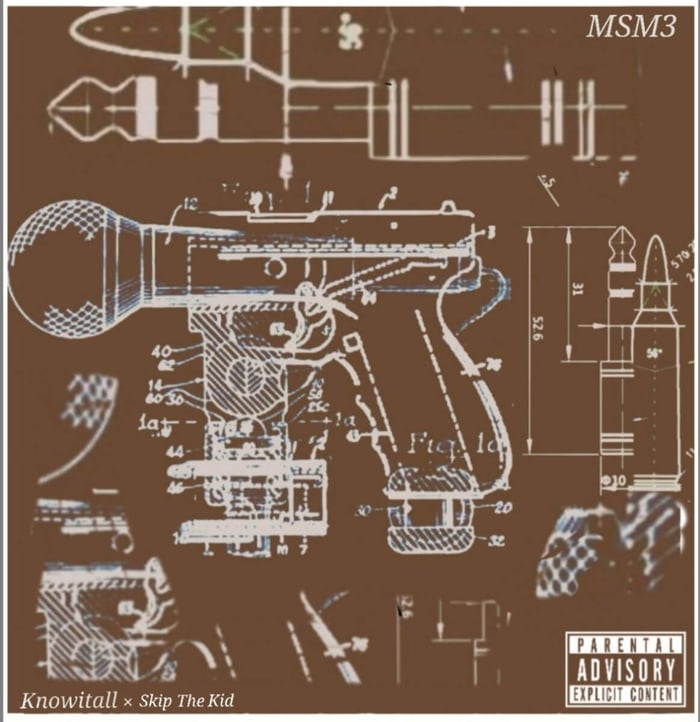
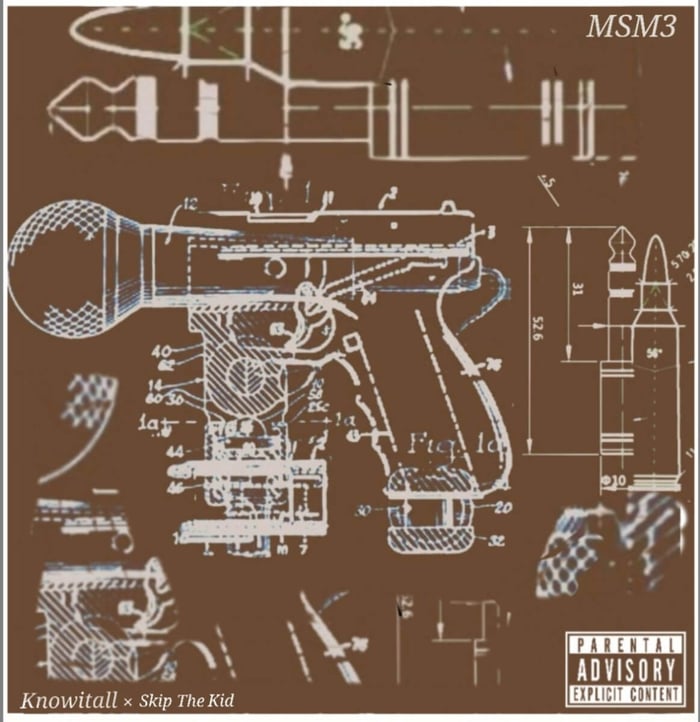
The big structural move is simple: where Music Saved Me 2 opened the door for guests (seven of them), Music Saved Me 3 shuts the room, locks it, and slides the deadbolt. No features. All Skip The Kid production. KNOWITALL raps the entire thing alone. That choice doesn’t just “spotlight” him—it forces the listener to sit with his patterns, his instincts, and his blind spots.
Arguable claim: cutting the guest bench isn’t about confidence—it’s about control. This album wants one narrator so the world stays unchallenged.
The first track doesn’t set a mood—it sets a street address
The album runs back to Queens immediately, and it doesn’t do it with postcard nostalgia. “Let’s Take ’em Back” opens on a Friday-night kitchen scene: his mother frying fish, the memory of biscuits before fast-food convenience, and a father drinking with the bar open at 8 AM like that’s just the schedule. Uncles at the table talk mob business while the kids absorb it like weather.
He drops in names and details like he’s clearing his throat:
- robbing and scamming with someone named Sam
- “SPIC and SPAM” (the kind of line that sounds like an inside joke until you realize it’s a timestamp of how they spoke back then)
- shootouts happening so often they stop being plot points and start being background noise
Then “Vision Clearer” hits the same neighborhood from a different angle: getting sent to school dressed badly, watching kids on the short bus drugged up on behavior meds, seeing people he used to smoke with end up murdered. He says he cried his heart out into a tub of tears—but that was years ago. That “years ago” is doing a lot of work. It’s not healing, exactly. It’s more like scar tissue forming.
Arguable claim: the album’s real flex isn’t toughness—it’s the refusal to sentimentalize what should’ve broken him.
Violence shows up like punctuation, not plot
Here’s what’s unsettling: KNOWITALL mentions murder the way other rappers mention the weather, then pivots to sneaker colors and Persian rugs like he’s flipping channels. On “Ignorant Livin’,” he’s talking quarter water, old heads blowing mad piff, mixing it with “Brad Pitt,” and then—casually—someone shooting up the avenue over a woman. The line that sticks is the question at the center of it: who imagined this would be the future when they were kids drinking quarter water?
Elsewhere, the details are blunt and weirdly specific:
- “Another Lesson” puts Hennessy, tinted windows, and a MAC-10 in the same breath
- “Skip 2 Step” has his uncle hitting the Sherman (PCP) and then delivering a sermon like chemical prophecy
- “Vision Clearer” describes silencers sounding like you popped the top off a pop can
It’s not that the album is trying to shock you. It’s worse: it’s acting like shock is old news.
I wasn’t totally sure at first whether that detachment was a writing habit or an actual artistic decision. On second listen, it feels chosen—like he’s recreating the numbness because the numbness is the point.
Arguable claim: this record doesn’t glamorize violence; it normalizes it, which is more honest and also harder to sit with.
God and the devil keep getting seated at the same table
The spiritual talk on Music Saved Me 3 isn’t a clean testimony. It’s messy, argumentative, and constantly interrupted by the same street-life circuitry. On “Keep It Together,” he admits the only time he prays, he sins. That’s not a punchline—he says it like a report.
“Wish Me Luck” has him hoping he and God get in tune before he’s in his casket and tomb. And then there’s that oddly funny, oddly revealing line: God lives on Eastern Time. It’s a throwaway that isn’t a throwaway. It paints God as local. Regional. On the clock. Business hours faith.
Then “Skip 2 Step” flips it darker: God told him his buffet is buffering, and time will inevitably give you what the Romans gave Christ—“whether it be cancer or a knife.” That’s a brutal pairing, and it lands because it sounds like someone trying to build meaning out of whatever’s available.
The devil shows up too, often in the heat of the moment (“Vision Clearer”). And the reverend shows up in the most violent place (“Another Lesson”). The album keeps staging this awkward spiritual double-booking: God and the devil both get mentioned like they’re in the same room, both being consulted by the same voice.
Arguable claim: the spiritual language here isn’t about salvation—it’s about negotiating fear with whatever vocabulary still works.
The sports-bar metaphors are either confidence… or a nervous tic
KNOWITALL’s sports comparisons pile up with zero self-consciousness. He’s Magic Johnson on “Going Down.” Jordan in the fourth quarter on “Another Lesson.” Joe DiMaggio on “Wish Me Luck.” Jerome Bettis running through people and somehow too competitive for Bob Pettit on “Keep It Together.” Dikembe Mutombo at the start, Zion Williamson on the opener.
And he doesn’t stop there. Carnegie Hall is coming. He calls himself the last of the great prophets, the original man. His pen ink is pungent. His soul is eternal fire burning in the firmament. None of it is delivered with a wink. He says he’s the greatest with the same matter-of-fact tone he uses to describe his father’s drinking.
That’s either admirable or exhausting depending on the moment.
My first impression was that the nonstop self-mythology would get corny fast. But the longer I stayed with the album, the more it felt like the bragging was part of the armor—less “look at me” and more “I need to believe this or I’ll fold.”
Still, whether the bars back up the claims changes track by track. Sometimes the grandeur fits. Sometimes it feels like he’s repeating his own mission statement because silence would be worse.
Arguable claim: the album’s biggest strength—absolute self-belief—is also what makes a few songs blur together.
“METAL HEART” is where the album finally snaps into focus
“METAL HEART” is the one where the writing stops stacking references just because it can, and starts choosing them like tools. He drops an Illmatic nod (“The World Is Yours, track four”) and a Malcolm X callback (“Get your hand out my pocket”) inside a verse that actually moves like it’s got somewhere to go. The aggression matches the name-dropping, which sounds obvious, but it’s rarer than it should be.
He even admits the writing is therapist-esque, which—on this album—counts as vulnerability. And then he lands the closing couplet like a clean stamp:
“Heart made of metal
The dust don’t settle.”
That’s the tightest distillation of the whole project: hardened, restless, never fully at peace. A lot of the album circles that idea, but “METAL HEART” nails it without extra clutter.
Arguable claim: if this track didn’t exist, the album’s “greatness” talk would feel flimsier—this is the one that proves the posture has muscle.
“Wish Me Luck” and “Ignorant Livin’” do different things—and both work
Right behind “METAL HEART,” “Wish Me Luck” hits with a sharper image than most of the record: “Came from behind project buildin’, pen on the wall / Fleein’ from the law.” The tension between project stairwell reality and Carnegie Hall ambition is the album’s cleanest contrast. That’s the moment where the dream isn’t abstract—it’s physically standing next to the environment it’s trying to escape.
And “Wish Me Luck” keeps tossing out jagged observations that don’t ask permission to be bleak: youngins commit crimes and record it; God slammed the door on your finger; every time he sings, it stings a little bit. That last idea—singing as pain, not performance—fits this whole series title better than any slogan ever could.
“Ignorant Livin’” earns its length by circling back to that quarter-water question. The whole track feels like it collapses into that one line about childhood and aftermath, like everything else is just the hallway leading to it.
Arguable claim: “Ignorant Livin’” is longer than it needs to be on paper, but emotionally it needs the extra room—this is one of the few times repetition feels like pressure, not filler.
Where the album slips: the middle starts reusing its own blueprint
Here’s the mild criticism I couldn’t dodge: some of the middle stretch—especially “Going Down” and “Time Again”—covers ground other songs already claimed more sharply. The self-mythology on “Going Down” (“I’m like the Magic of the game”) feels like a version of the same declaration made on “Another Lesson,” “Keep It Together,” and “Skip 2 Step.”
And Skip The Kid’s production—steady, reliable, cleanly functional—cuts both ways. KNOWITALL always has room to rap, which is the point. But the room keeps sounding the same. The beats create a consistent floor beneath everything, and consistency is great until you realize it can also flatten contrast. I kept waiting for one beat to suddenly misbehave, to force a different cadence or mood—something that makes KNOWITALL re-earn the space instead of just occupying it.
To be fair, that sameness might be intentional: like the production is a stable platform because the lyrics are the moving parts. But even then, a little more volatility would’ve sharpened the album’s angles.
Arguable claim: Skip The Kid’s consistency is so dependable it occasionally turns into predictability—like a perfectly reliable engine that never shifts gears.
So what is Music Saved Me 3 actually doing?
It’s not trying to “tell a story” in neat arcs. It’s doing something rougher: documenting how a person can carry brutality, faith, ego, illness, and ambition in the same body without organizing them into a moral lesson.
The album keeps showing you how KNOWITALL’s mind moves:
- trauma drops in, then gets filed away
- God gets consulted, then argued with
- bragging shows up like a shield, not a celebration
- memories come back with smells and objects (fish frying, quarter water, tinted windows) instead of tidy reflections
If Music Saved Me is the series tag, Music Saved Me 3 sounds like the sequel where “saved” doesn’t mean healed—it means still here. Which is a darker definition, but it’s also the one that feels true.
Arguable claim: the album’s “great” moments aren’t the loudest—they’re the ones where he stops trying to sound legendary and accidentally sounds exact.
Conclusion
Music Saved Me 3 works best when KNOWITALL stops stacking proof-of-greatness statements and lets one image do the heavy lifting. At its peak (“METAL HEART,” “Wish Me Luck,” “Ignorant Livin’”), it’s blunt, specific, and stubbornly alive. In its weaker middle stretch, it repeats its own stance a little too comfortably—like it trusts the posture more than the moment.
Our verdict: If you like rap that treats memory like evidence and faith like an argument, this album will hit. If you need big sonic switches, obvious hooks, or a narrator who sounds “over it,” you’ll get impatient and start checking track time like it owes you money.
FAQ
- Is Music Saved Me 3 a solo album or a duo album?
It’s a duo project structurally: Skip The Kid handles all production, and KNOWITALL handles all rapping—no guest features. - Does the album connect to Music Saved Me 2?
Yeah, it feels like a deliberate contrast: where the previous installment spread the mic across multiple guests, this one narrows to just KNOWITALL’s voice. - What’s the core vibe: reflective or aggressive?
Both, sometimes in the same bar. The aggression shows up in the claims and street detail; the reflection leaks out through faith talk and specific memories. - Which tracks hit hardest on first listen?
“Let’s Take ’em Back” sets the address fast, and “METAL HEART” is the clearest proof of intent once you’re deeper in. - What’s the main weakness?
A few mid-album tracks revisit the same self-mythology without adding much new, and the production’s steadiness can blur song-to-song contrast.
If this record put an image in your head you can’t shake, you might as well hang one on your wall too—shop your favorite album cover poster at our store: https://www.architeg-prints.com
 | DISCOUNTGET 30% OFF*Use code on your next order:
|
* This post may contain affiliate links, meaning we earn a commission if you make a purchase through these links, at no additional cost to you.