Samba Jean-Baptiste’s +3 Album Review: a breakup text you can dance to


 See more Architeg Prints stories on Google.
Album Review: +3 by Samba Jean-Baptiste
+3 album turns voicemail silence into a whole aesthetic—sweet, wired, and quietly brutal. Samba Jean-Baptiste crafts intimate, overthought, sometimes brilliant, and occasionally undercooked R&B that refuses to offer neat closure.

Courtesy of AM Radio.
The hook: the album’s real jump-scare is a missed callback
There’s a point on “Peppermint” where the music basically stops pretending it’s entertainment and turns into a situation. A voicemail arrives near the end—her voice, trying to sound casual and failing:
“Hey, call me back, maybe, good talk. Uh, good to talk to you, I mean not talk to you, but you know.”And then… nothing. Samba Jean-Baptiste doesn’t answer. The track just cuts away like it can’t handle the embarrassment either.
That moment is what +3 album is actually doing: it’s staging intimacy and then refusing to give you closure. Not in a “mysterious artist” way—more like the very normal human way where you stare at your phone and decide your dignity costs less than your loneliness.
First, the craft flex: this is solitary on purpose
Here’s the part people will treat like trivia, even though it’s the whole vibe: Samba’s been putting records on Bandcamp since 2022, and +3 is the fourth. You can hear the trail leading here.
- Pandora sounded like him alone on piano.
- Cardinal sounded like him alone with a guitar.
- Access Delight (last year’s EP) was the first time he really leaned into alternative R&B.
Now on +3, he plays every instrument, writes every lyric, mixes every track. And I don’t hear that as “DIY because he had to.” I hear it as isolation turned into method. The solo setup isn’t a limitation; it’s a boundary. It’s him making sure nobody can interrupt the spell, or—depending how you read it—nobody can interrupt the spiral.
The name is Haitian, and a French phrase keeps circling back: “Tout va bien se passer” (“everything’s going to be alright”). The album runs seventeen cuts plus skits, which already tells you it’s not interested in being neat. But none of those facts are the album. The album is that voicemail on “Peppermint,” and the way he lets it hang there like an unanswered dare.
“Peppermint” isn’t romance—it’s insomnia with a bassline
Back to “Peppermint”, because that track is basically the thesis. The back half turns into him singing over a pillowy programmed loop about waking up hot, running laps in his head to stay awake, offering her a private prayer he already seems to know has expired.
Then Bung comes in with a bassline that feels closer than the vocal—like the low-end is physically in the room, but Samba’s voice is stuck behind glass. The song flips on a line that sounds simple until it isn’t:
“I could break down on my own, but it’s you and me on the phone for hours.”And then the voicemail. And then the cut.
If you think this is just “sad R&B,” you’re missing the meaner choice: he’s not dramatizing heartbreak—he’s dramatizing the awkward logistics of heartbreak. The emotional climax is somebody saying “good talk” when nothing was actually talked out.
The early stretch: aphorisms, pressure, and one word he won’t cushion
The opener, “Peripheral Pulse,” plays like an overture made of half-sung aphorisms over a slow bass loop. It’s not really a song trying to be catchy—it’s a mood trying to get its hands on you. He crushes a wrist and holds a breath; he hugs tomorrow’s worth while watching everyone fall on purpose. It’s dramatic, sure, but it’s also specific in that slightly unhinged way where you can tell the images arrived faster than he could explain them.
The first line is “I’ve been taking all this stuff,” which sets the tone: confession without cleanup. Then a few tracks later, on “Object 9,” he drops the word “suicide” inside the question “where is our Superman?” and just leaves it there. No swelling strings, no moral lesson, no “let me clarify.” It’s harsh precisely because it’s untreated—like he’s refusing to make it palatable.
On “Nothing 2 Tell,” he does this clever (and slightly maddening) splice where Perfect and Honest get stamped into the hook. The line “the only thing that’s holding me back” keeps arriving with these two-word edits layered on top of it, like he’s arguing with himself in real time. A reasonable listener could call it messy. I think that’s the point: he’s making indecision audible.
And then “Twisted Angel” shows up later as the record’s closing mood—Samba flicks a joint into the grass, watches it burn, and thinks of a woman he hasn’t felt for in weeks. Nobody in the room checks on him. That’s the kind of detail that tells you the record isn’t begging for sympathy; it’s documenting a quiet vacancy.
That French phrase keeps coming back—and it starts sounding like weather
The phrase “Tout va bien se passer” repeats in specific places: at the top of “Forced Perspective,” inside a parenthesis on “Fatale,” at the open of “By the Wind,” and again near the top of “Twisted Angel.”
On “Forced Perspective,” it sends Samba four hours down the road toward a coast he never names. The repetition keeps happening until it stops sounding like reassurance and starts sounding like environment—like fog. That’s a bold choice: turning comfort-language into something neutral, almost indifferent.
“Fatale” shoves the phrase into the margins while he cruises with peace signs out the window in ripped jeans, with a two-five beat underneath. And then LeStage comes in and does something that isn’t exactly aligned with that groove—she answers the phrase with a verse running the other way. She’s kicking down doors she’s already opened, spinning in place, thinking about nothing at all. Then she stares him down with the line:
“Your my favorite waste of time.”(Yes, it lands with that grammar, which somehow makes it feel even more like a text you shouldn’t send.) Samba lets her sing it twice—like he knows it’s the most honest thing in the room.
At first, I thought the recurring French line was just a cute signature, a little motif to make the album feel “conceptual.” On second listen, it feels more like self-hypnosis—something you repeat because you don’t fully believe it, and repetition is cheaper than healing.
LeStage doesn’t “feature”—she punctures the album
Chloë LeStage shows up on “Pressure & Light” and “By the Wind,” but her biggest impact hits on “Statues & Symbols.” Samba opens that song gasping out two-word couplets—old days, daylight, road rage—one per breath. It’s like he’s sprinting in place.
Then LeStage takes the hook, built around keeping her eyes wide open, and she drops what might be the album’s sharpest political line:
“Black blood leads to fame
But the news don’t say my babies name.”
It’s placed inside a hook about staying wide-eyed, which is the genius/knife-twist: the unnamed baby in the news and the child she’s watching over end up sharing the same breath. It turns vigilance into grief.
Later she keeps returning to “I could play your game twice” five times running, which feels less like a catchy refrain and more like a dare she’s tired of making. On the outro she backs off the confrontation—admits that if she’s honest, the wings she grew won’t fly, and the person she’s singing to keeps her stuck on it anyway. That’s not “feature guest energy.” That’s somebody walking into the album and rearranging the emotional furniture.
If anything, her presence exposes Samba a little: his writing tends to blur into mood, while she shows up with edges.
When the writing cracks: the skits don’t always survive the room
The album isn’t flawless at holding its own world together. “Scene 1” is where I felt the seams.
It starts strong: he frames it like an uptown seven-train monologue about being witnessed and loved through. “A home startled into bright air” lands early—great line, the kind that makes you sit up. Then he drops a couplet that sharpens the whole frame: “you want compliments go find some, you want confidence go buy some.” That’s blunt in a way the album sometimes avoids, and it works.
But halfway through, it loses the thread. The idea is clear, the execution wobbles. And Izzy Goldbow’s breathy feature is mixed so deep she comes off like reverb instead of a second person in the room. I kept waiting for her to step forward and change the temperature, but she stays ghosted.
“Marseille Miserere” sits still—stained denim, tea on the stove—meditative, domestic. It hangs on one line about taking pictures of food when you could be praying, and I’m not totally sure the line can hold the whole song upright. It’s a good thought. It’s not always a good spine.
And “Grey Sky Lunacy” opens with a monologue from a dead-eyed man spliced into a dispatcher’s call—great setup—then wanders through pushups and tuna fish and never returns to that initial scene. That’s the moment where the album’s spoken pieces start feeling like hallways that don’t lead anywhere.
The sung tracks have this phrasebook that animates them—blurred lines, missing piece, +3—but the spoken ones don’t stretch the same way. The room closes in a bit. Maybe that claustrophobia is intentional. Or maybe it’s just what happens when skits are treated like diary scraps instead of songs. I can’t fully tell, and honestly that uncertainty is part of why the record sticks in my teeth.
The ending: “Twisted Angel” shrugs the whole album into silence
The funny math of the record is that “Twisted Angel” is described as the nineteenth song of seventeen, counting the skits—and that contradiction fits. The album keeps telling you it’s organized, then immediately proves it isn’t.
Musically, “Twisted Angel” is bass, shaker, and almost nothing else moving under his vocal. Samba’s at a bus stop in a coat, in wind, wishing someone would collect him like a phone call. A memory turns into a freestyle. He puts a whole face into the snow just to watch it melt. The touring schedule is loud enough that he can’t be bothered to answer his cell—an absurd detail, but painfully believable. Busy enough to be unreachable; lonely enough to want to be reached.
The outro loops two lines together:
“They show me love, they show me love, no press hit me up, just stay checking for myself.”And the album ends on that shrug.
A lot of records go for a “final statement.” +3 album goes for the feeling of closing the app without replying.
Conclusion: +3 is built from avoidance, and that’s why it works
Samba Jean-Baptiste made +3 like a person leaving voice notes they’ll never send: intimate, overthought, sometimes brilliant, occasionally undercooked, and weirdly disciplined about not giving you the release you’re trained to expect. The best songs (“Peppermint,” “By the Wind,” “Twisted Angel”) don’t resolve—they just stop, like he’s protecting himself from his own conclusions. The weaker moments mostly show up when the record talks instead of sings, because the skits can’t always carry the same emotional weight the melodies do.
Our verdict: People who like their R&B a little cracked—part prayer, part panic—will latch onto this. If you need tidy storytelling, big choruses, or a clear moral at the end, you’re going to feel like you got left on read (which, to be fair, is kind of the point).
FAQ
- What is the core mood of the +3 album?
It feels like trying to act normal while your brain is running laps—especially on “Peppermint,” where intimacy turns into silence. - Does Samba Jean-Baptiste really do everything himself on +3?
Yes: instruments, lyrics, mixing. That solo control comes through as closeness, but also a deliberate sense of being sealed off. - Where does “Tout va bien se passer” show up, and why does it matter?
It recurs on “Forced Perspective,” “Fatale,” “By the Wind,” and “Twisted Angel.” It stops sounding comforting and starts sounding like something he repeats to stay functional. - Which tracks hit the hardest emotionally?
“Peppermint” for the voicemail gut-punch, “Statues & Symbols” for the wide-eyed hook and its political sting, and “Twisted Angel” for the final shrug. - Any parts that don’t work as well?
Some skits and spoken sections (“Scene 1,” “Marseille Miserere,” “Grey Sky Lunacy”) feel less structurally held together than the sung tracks, even when the ideas are strong.
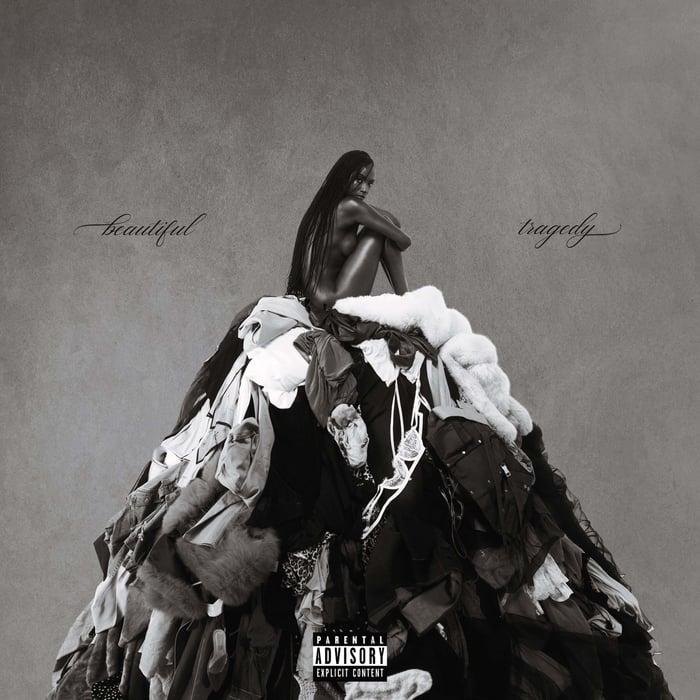
If this album put an image in your head—bus stop wind, a glowing phone screen, that cover staring back—turning it into wall art isn’t a bad way to keep the spell around. You can shop favorite album cover posters at our store: https://www.architeg-prints.com
 | DISCOUNTGET 30% OFF*Use code on your next order:
|
* This post may contain affiliate links, meaning we earn a commission if you make a purchase through these links, at no additional cost to you.