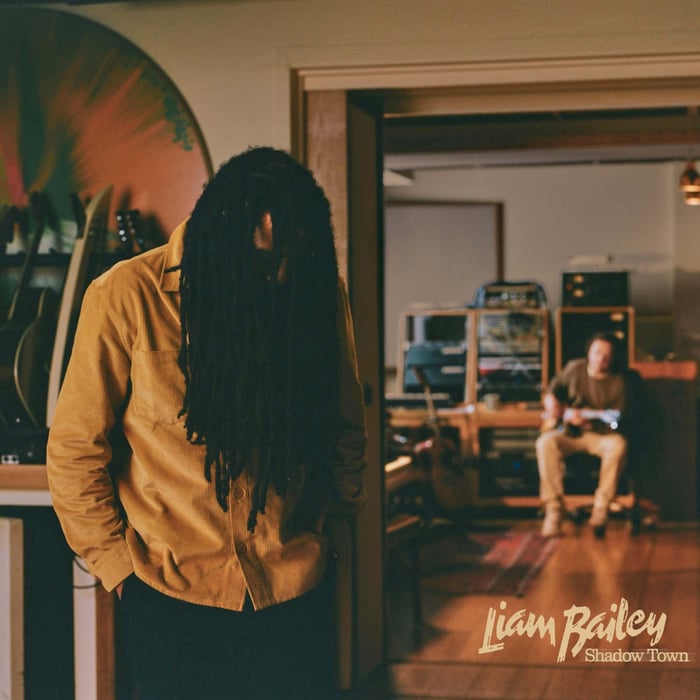
Shadow Town Review: Liam Bailey’s “Anywhere” Album That Refuses a Zip Code


 See more Architeg Prints stories on Google.
Shadow Town Review: Liam Bailey’s “Anywhere” Album That Refuses a Zip Code
Liam Bailey’s Shadow Town strips names, places, and easy identity—then dares you to feel the mess anyway.
First, here’s the cover—and it’s already telling on him
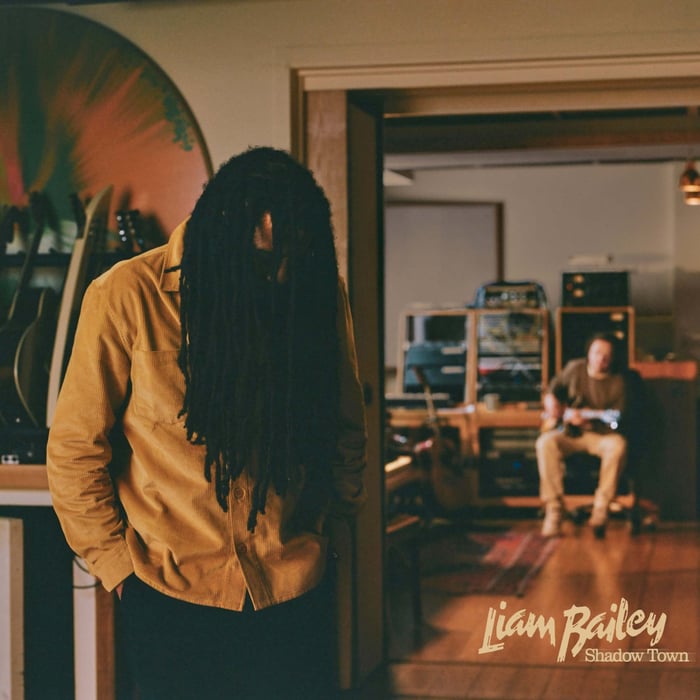
Before a note hits, Shadow Town looks like it belongs to nobody and everybody at once. That’s the point. This record spends 39 minutes dodging the usual biography traps, and the artwork sets you up for that evasive move.
He’s fluent in contradiction, and he learned it early
This album makes more sense when you realize Bailey doesn’t come from one “voice,” he comes from several that never merged. Growing up in a pit village outside Nottingham, he learned three ways of speaking depending on who was in the room: Jamaican Patois with extended family, a Nottingham accent at home, and then something else again after moving through London open-mic life around 2005.
And the telling detail isn’t the accents—it’s the record collection logic behind them. His parents’ shelves put Bob Marley next to The Beatles, Dillinger beside Stevie Wonder. That sort of listening raises you to believe styles aren’t rival gangs; they’re just different tools in the same drawer. You don’t “choose” one and betray the others.
He even built his singing voice the same way: modeling himself after Michael Jackson, Tina Turner, John Lennon—four people who couldn’t possibly be mistaken for each other—before he finally sang in his own accent on “She Hates This Life.” Five albums deep, people still try to file him into neat bins—pastoral soul, British folk, reggae, singer-songwriter—like the goal is to pin him down.
Shadow Town doesn’t play along. It doesn’t even argue with the labels. It simply walks out of the room.
The real trick: Shadow Town removes proper nouns like they’re a liability
Here’s the genuinely strange flex: across eleven songs, there are basically no proper nouns. No Nottingham. No London. No Jamaica. No named streets, no named enemies, no named friends—almost nothing that gives you a fixed location to stand on.
The only proper noun that even sort of shows up is “the gods” in “Gold,” and that barely counts; it lands like an accidental plural rather than a grand mythological statement. The effect is unsettling in a quiet way. It’s like listening to someone confess intensely while refusing to tell you where they live.
And weirdly, it works. I expected this vagueness to feel like a lyrical cheat—like he was hiding behind generalities. But the opposite happens: the missing specifics make the emotions feel less like a diary entry and more like a repeating human problem. If you’re the kind of listener who needs scene-setting, you might call it empty. I hear it as deliberate erasure: Bailey scrubbing off the identity tags that journalists (and fans) keep trying to staple to him.
He keeps using words like “love,” “kill,” “crying,” “gone”—big blunt nouns that should sound corny—and somehow they don’t. Or at least, they don’t for long. The repetition starts to feel like the point: he’s circling a few damaged ideas because he doesn’t have new ones, and that’s what damage does.
The living-room sound isn’t “lo-fi,” it’s privacy—almost to a fault
The album was recorded in producer Jimmy Hogarth’s home studio in Hampstead, and you can hear that domestic closeness immediately. Hogarth produced Bailey’s debut Definitely Now more than a decade ago, and here the setup feels intentionally intimate: Bailey freestyling most of the writing, Hogarth on bass and keys, capturing performances as they happened.
That “caught in the moment” approach is the opposite of those tighter Big Crown-era reggae albums Bailey’s made—records that locked into grooves with polished discipline. Shadow Town doesn’t want polish. It wants the feeling that nobody’s watching.
Chris Vatelaro’s drums and Martin Slattery’s percussion show up like actual humans in a room, not grid-snapped machinery. The record “breathes,” yes—but more importantly, it mumbles to itself. It has the loose confidence of people playing for the sake of playing.
I’ll admit a small doubt here: a few moments flirt with being too casual, like the album is relying on vibe to do heavy lifting that a sharper edit could’ve done better. Not a fatal flaw—more like a smudge on the window. The upside of this approach is real, though: it makes Bailey’s mess feel private instead of performed.
When the album talks about love, it uses the vocabulary of self-destruction
The pivot point for me is “Got to Love You.” Bailey opens with a line that sounds like reassurance—“It’s okay, now honey, I won’t change / It’s okay, now honey, I won’t fake”—and for a second you think: alright, maybe this is the warm track.
Then the chorus arrives and kicks the warmth out from under it:
- “Hold me, touch me…”
- then “Break me, hurt me…”
So love isn’t comfort. Love is proof-by-ruin. The song makes affection sound like a stress test: if you can destroy me and I still say “I love you,” then it must be real. That’s not romance; that’s dependency dressed up as devotion.
“Concrete and Stars” does something similarly nasty. He howls “We’re not worth saving” in the same chorus where he asks why we can’t change ourselves “from this loaded gun we point at ourselves.” It’s a group-hug track that keeps slipping a razor blade into the handshake.
And “Love Don’t Fear Light” traps itself in a loop: Bailey calls himself “a victim of myself again,” admits he’s “always fighting something,” then stays up high emotionally—won’t land the plane, won’t resolve the tension. The album’s big claim, the one it keeps insisting on, is simple and ugly: he’s damaged, he knows it, and he’s not interested in turning it into a redemption story for your convenience.
Nobody gets asked to fix him. That’s either refreshingly adult or deeply stubborn, depending on your tolerance for unresolved pain.
Half the album isn’t even singing to a lover—it’s broadcasting to strangers
If you’re waiting for a tidy relationship narrative, Shadow Town swerves away. A lot of these songs feel addressed to a room full of people who are all quietly unraveling.
“Trauma” opens with spoken-word descriptions of a child whose defenses never formed—clinical and cold—and then drops into a hook that sounds less like songwriting and more like a chant you’d hear in group therapy: “Trying to kill it, kill it, kill it / Killing your life away.” The phrase is so blunt it almost shouldn’t work. But the repetition turns it into a trapdoor: you fall through it, whether you want to or not.
And the origin detail matters: “Trauma” comes from Bailey grabbing a psychology book off the studio library shelf. You can hear that “borrowed language” seep into the song—medical terms sliding into raw vocal improvisation. It’s not academic; it’s scavenged. Like he needed someone else’s vocabulary because his own was failing.
“Northern Lights” points outward. Bailey asks, “Are they making it harder for us?” while describing people in cars with no cause. Then he calls himself a satellite—spinning endlessly—hoping he never breaks. It’s a paranoid image, but also kind of tender: a person trying to stay functional through sheer rotation.
Then there’s “A Perfect Release,” which starts in the grit—waking up in taverns, sleeping on concrete, no money—and ends with a list of natural resources (regular seasons, dependable fresh water, endless fish, pollinators, minerals, soil) capped by: “Make no mistake / There is no going back.”
That closing lands like a quiet apocalypse note. Not cinematic. Administrative. Like the world is ending via checklist.
These songs aren’t letters to one person. They’re dispatches to whoever’s listening—and the implied audience is not okay.
The band’s best move is staying close, not showing off
Hogarth’s guitar sits beside Bailey on nearly every track, not like a spotlight but like a companion that won’t stop humming. It doesn’t “support” him so much as linger next to him, sometimes uninvited.
On “Gold,” Vatelaro’s drums knock slightly behind the beat, giving the hook—where “gone” gets repeated eleven times—room to change meaning every time it comes back around. At first “gone” sounds like loss. Then it sounds like numbness. Then it sounds like threat. Same word, different bruise.
“Right Back Like That” has bass that behaves like a low, stubborn thud under Bailey’s vocal. The verses carry tight anger, then the bridge slides into exhaustion. It’s one of those smart arrangements that doesn’t announce itself; it just shifts the floor under your feet.
Maverick Sabre and DRS show up as guests somewhere in the record, and the funniest part is how little the album cares. Their contributions blend in so thoroughly that the “feature” concept basically disappears. No neon sign, no “special guest moment.” Just other people in the room, apparently.
That’s an arguable decision—and I think it’s the right one. If the album is about stripping labels, why would it suddenly brag about guest names?
The album refuses to solve its own arguments—and that’s the whole stance
Bailey isn’t trying to reconcile himself, and Shadow Town doesn’t pretend otherwise. “A Perfect Release” says love can save all of us. “Concrete and Stars” says we’re not worth saving. The record holds those two positions without picking a winner.
There’s a context Bailey has spoken about elsewhere—wanting to show up on mainstream TV with both the patois and the Nottingham style, to introduce people to other interpretations of Black people. That’s the sentence the album itself refuses to say out loud. Shadow Town won’t “introduce” anything; it won’t be educational packaging. It just sits in the tension between salvation-love and useless-love and stays there.
At first, I thought that refusal was a cop-out—like he didn’t want to commit to an idea. On second listen, it felt more like honesty: some people don’t get to tie their lives into a moral ribbon. The album’s commitment is to staying unfinished.
“Right Back Like That” is the moment he finally stops pretending this is poetic
The coldest line on the record might be on “Right Back Like That”:
“When I get the confidence to suffer / You shouldn’t call me.”That’s not a metaphor. That’s a boundary. Suffering as a skill you build—something you practice privately—while the person who harmed you doesn’t get to watch.
And after two choruses where he tells someone not to say where they are (control, distance, suspicion), the bridge drops to a single sentence: “All I’m trying to do is live again.”
Nothing fancy. No scenery. Just the blunt goal. It’s the closest the album gets to clarity, and it hits harder because everything around it has been fog.
So where does that leave Shadow Town?
If you want the tidy version: this album lands in that rare zone where it feels both intimate and deliberately anonymous. It’s not chasing genre approval, and it’s not making a case for where Bailey “belongs.” It’s a record that sounds like it was made while the outside world wasn’t invited.
Do I think it’s perfect? No. A few stretches drift a little too comfortably in their own haze, and I kept waiting for one more melodic left turn that never quite arrived. But the best moments—“Trauma,” “Got to Love You,” “Right Back Like That”—don’t need polish. They need nerve. And they have it.
Favorite tracks: “Got to Love You,” “Right Back Like That,” “Trauma”
Bailey made Shadow Town like someone refusing to be captioned. It’s a private room with the door half open—and the awkward part is realizing you’re the one leaning in.
Our verdict: People who like emotionally blunt songwriting, lived-in grooves, and albums that won’t “explain themselves” will actually love Shadow Town. If you need big hooks, clear narratives, or lyrics with a GPS coordinate, this will feel like staring at fog and being told it’s a portrait.
FAQ
- Is Shadow Town a reggae album?
It doesn’t behave like one. The rhythms and phrasing nod around, but the record refuses to sit neatly in any one style. - Does the album tell a clear story across the tracklist?
Not really. It feels more like rotating around a few recurring wounds—love, damage, survival—without a plot resolution. - What’s the deal with the lack of proper nouns?
It makes the songs feel unlocated on purpose, like Bailey’s stripping away biography so the feelings can’t be filed away as “about that place.” - Which song hits the hardest on first listen?
“Got to Love You,” because it flips from reassurance to self-destruction so fast it feels like the floor moves. - Are the guest appearances obvious?
No—and that’s the point. Maverick Sabre and DRS blend in like they were simply there, not like they’re selling you a “feature moment.”
If you’re the type who bonds with an album’s visuals as much as its bruises, you can always shop a favorite album cover poster at our store—something from your own personal “shadow town” wall: https://www.architeg-prints.com
 | DISCOUNTGET 30% OFF*Use code on your next order:
|
* This post may contain affiliate links, meaning we earn a commission if you make a purchase through these links, at no additional cost to you.